- 1.Build a prompt library around the questions your potential customers ask AI throughout the buying journey.
- 2.Track a mix of category, comparison, alternative, use-case, educational, and branded prompts.
- 3.Monitor brand mentions, rankings, competitor mentions, sentiment, citations, and AI visibility over time for every prompt.
- 4.Start with 20–50 high-value prompts and track them consistently across the AI platforms your audience uses most.
- 5.Manual tracking works for a small prompt library, while dedicated tools like ZeroRank automate prompt monitoring, preserve response history, and help you expand your prompt library.
ChatGPT users send more than 2.5 billion prompts every day. Many are also turning to Claude, Perplexity, Gemini, and other AI platforms.
If your brand isn't showing up in the prompts that matter to your business, there's a good chance your competitors are.
Measuring and improving your AI visibility starts with tracking the right prompts. These are the buying questions your potential customers are actually asking AI.
In this guide, you'll learn how to identify the right prompts to track, the metrics that matter, and how prompt tracking helps you build a strategy to increase your AI visibility over time.
What should you track for every prompt
Tracking prompts isn't just about checking whether your brand appears in an AI answer. Every tracked prompt gives you valuable insights into how AI platforms recommend brands, which sources they rely on, and how you can influence them to become part of the answer.
Here are the key metrics to monitor for every prompt.
Brand mentions
The most important metric is whether your brand appears in the AI-generated answer.
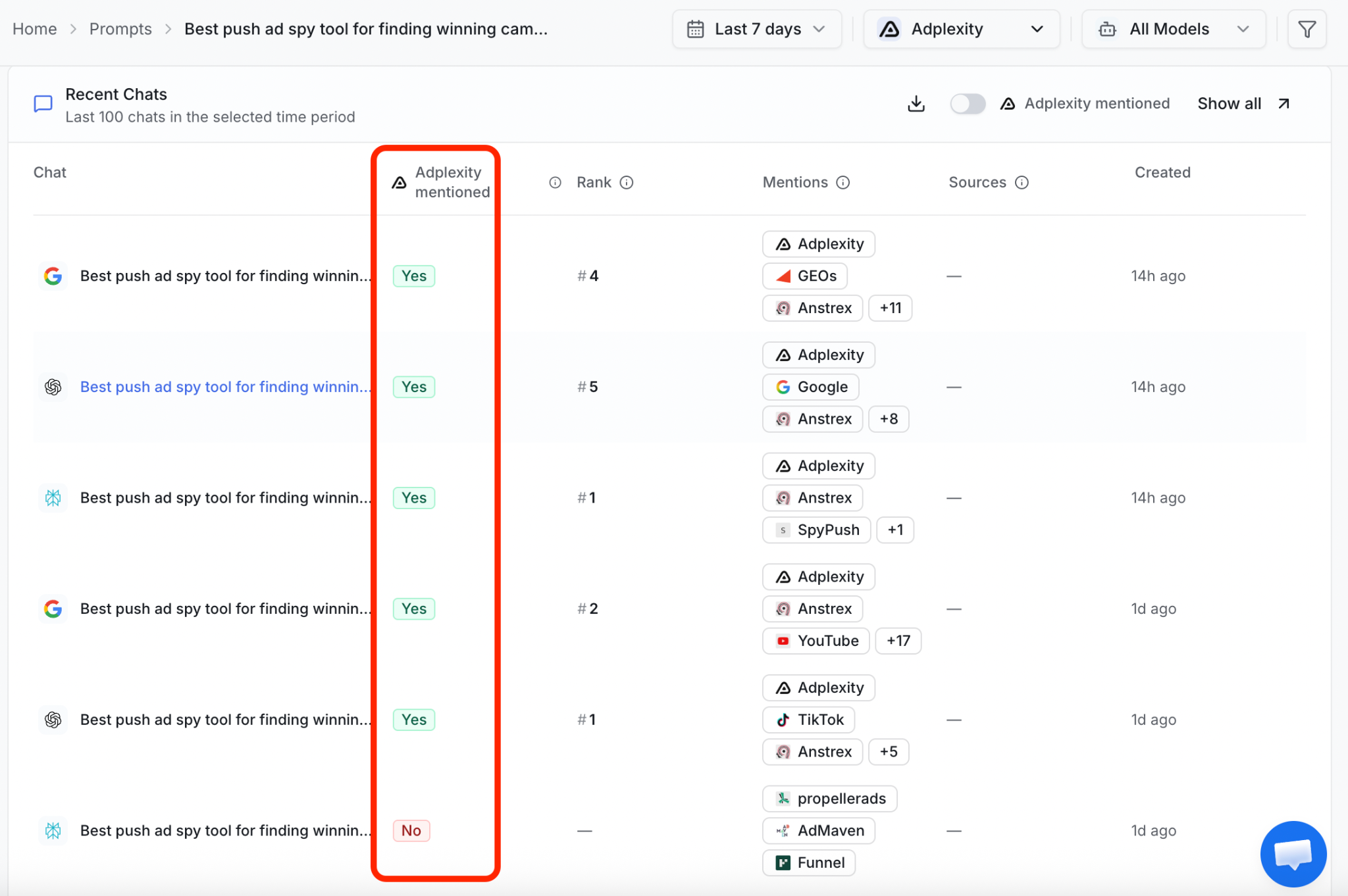
Tracking brand mentions across your prompt library allows you to measure your AI visibility and identify the conversations where you're gaining or losing visibility.
Competitor mentions
Prompt tracking also shows which competitors AI recommends alongside or instead of your brand.
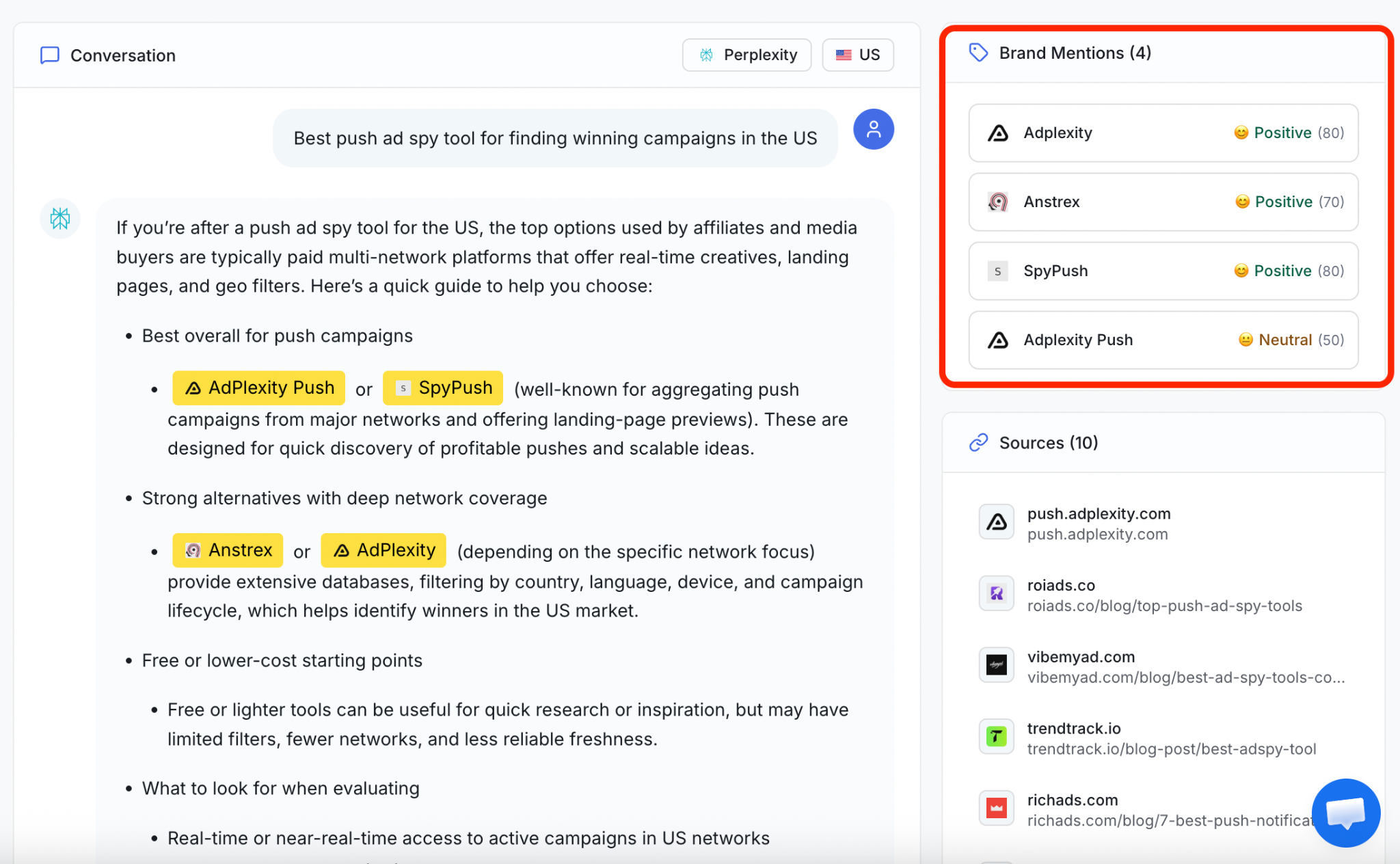
Over time, you'll start to identify patterns. Maybe you perform well for educational prompts but competitors dominate comparison and alternative prompts.
These insights help you prioritize where to focus your optimization efforts.
Brand sentiment
Being mentioned doesn't automatically mean you're being recommended.
AI may describe your brand as easy to use, affordable, enterprise-focused, expensive, or the best option for a specific use case.
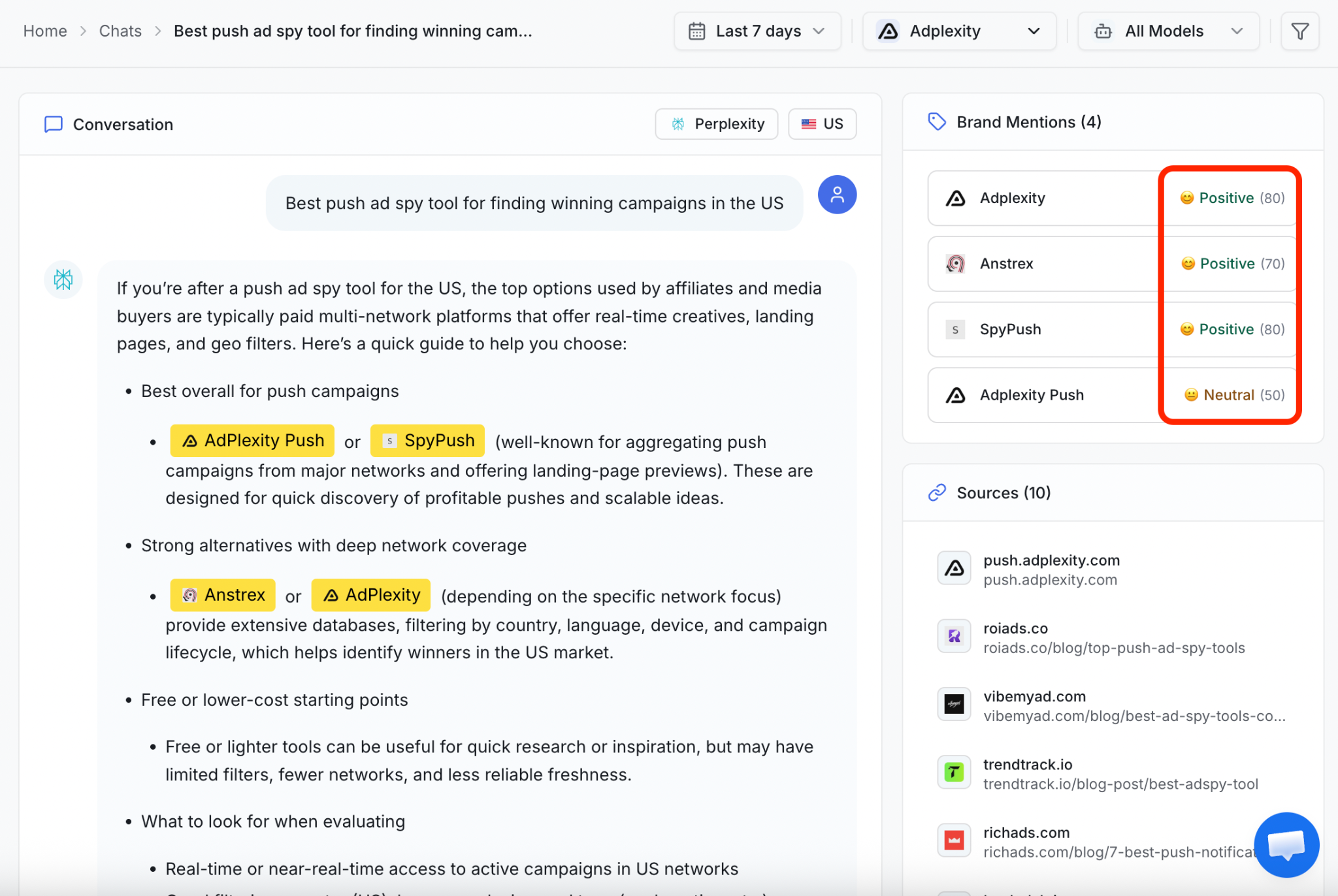
Tracking sentiment helps you understand how AI perceives your brand and whether that perception changes over time.
Citations and sources
One of the most valuable insights from prompt tracking is understanding why AI generated a particular answer.
Review the sources AI cites across your prompt library. Are comparison pages appearing repeatedly? Product documentation? Original research? Reddit discussions?
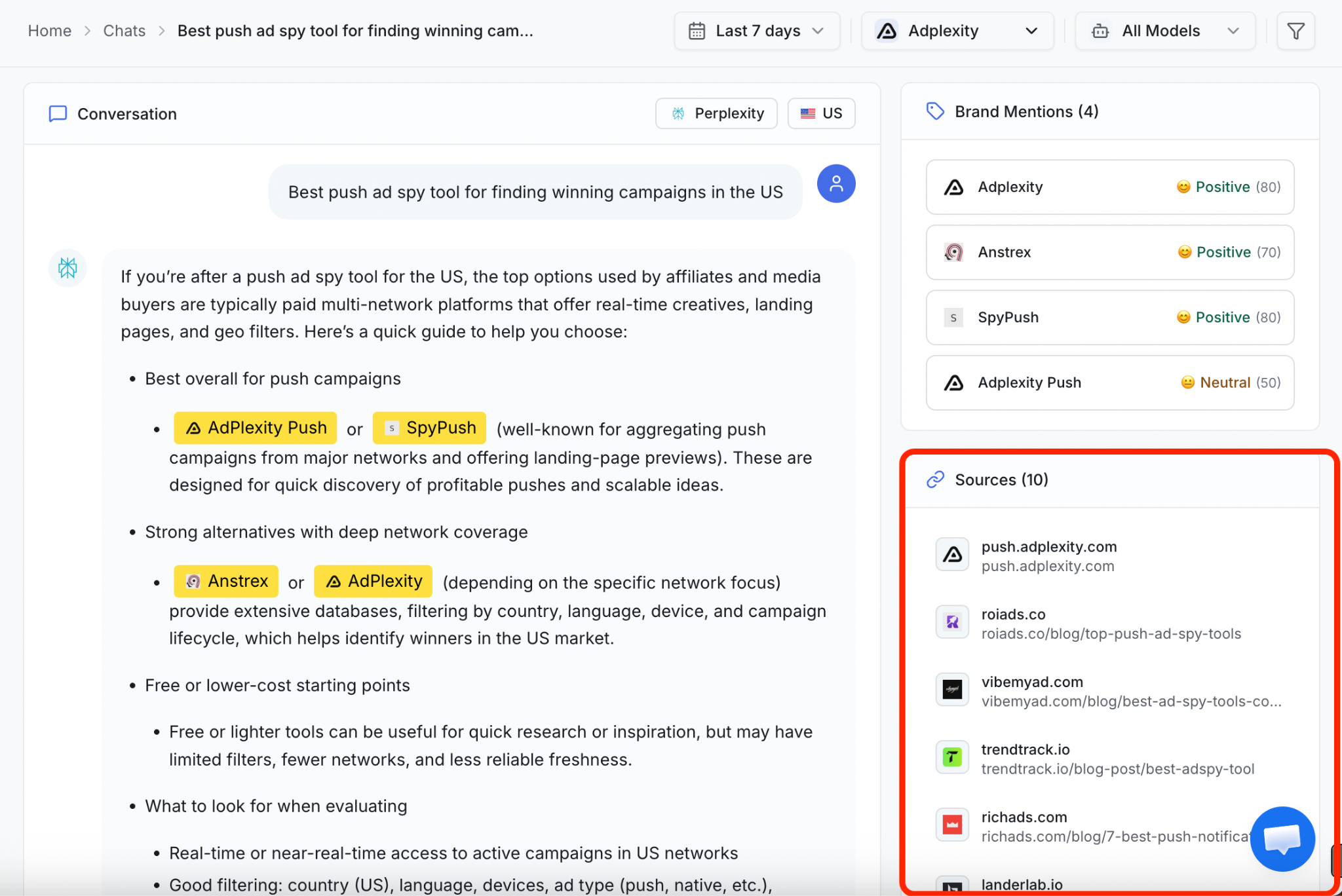
These citation patterns reveal the content AI trusts most in your industry and can become the blueprint for improving your own visibility.
They can also point out outdated or wrong information so you know what might need fixing.
AI rankings
Tracking rankings shows where your brand appears in the AI-generated answer.
Unlike traditional SEO rankings, these aren't fixed positions on a search results page. They reflect the order in which AI recommends brands within its response.
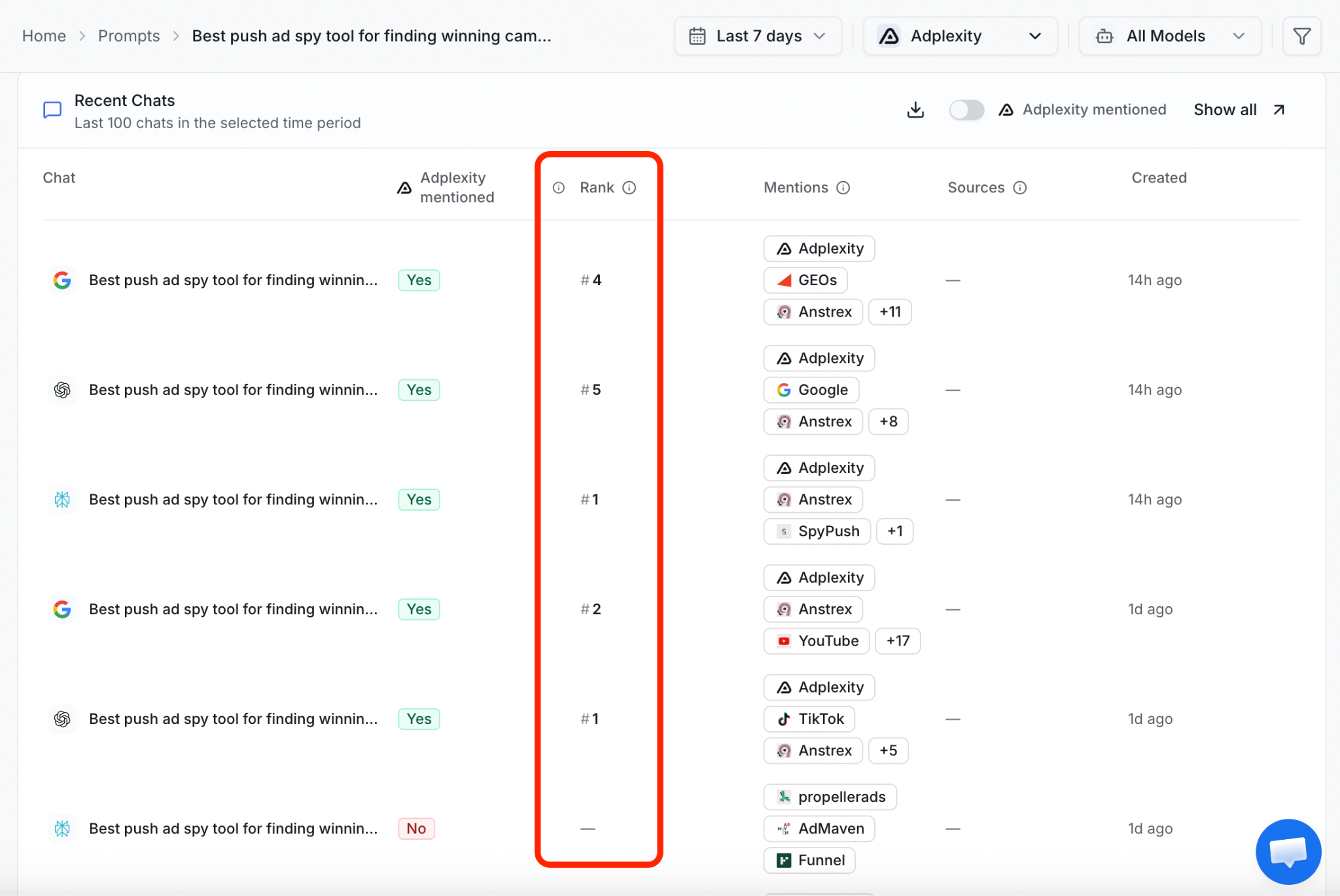
Monitoring rankings over time helps you understand whether your optimization efforts are making your brand more prominent in AI recommendations.
AI visibility over time
Finally, don't look at prompts in isolation.
The real value comes from tracking the same prompts consistently and monitoring how your AI visibility score changes over days, weeks, and months.
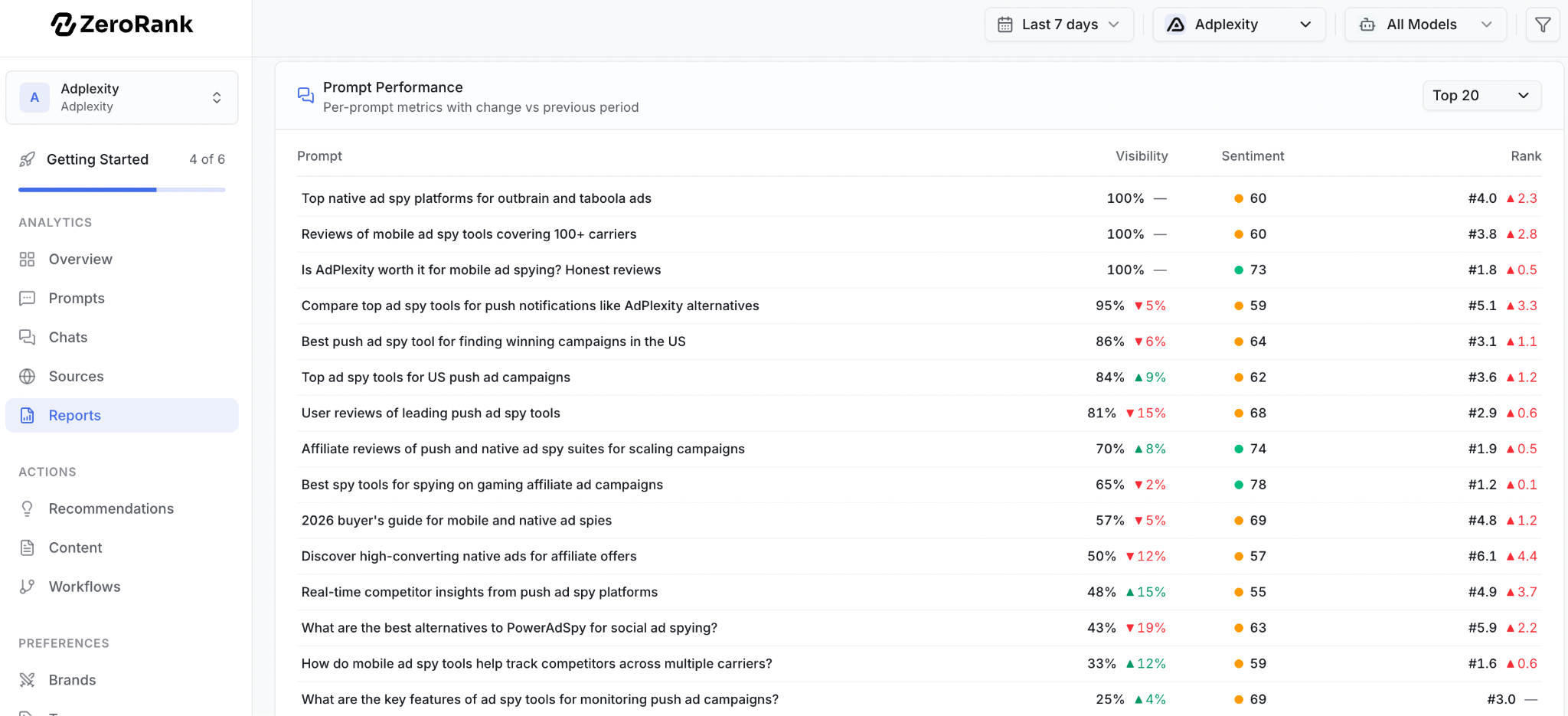
This makes it much easier to measure the impact of your optimization efforts instead of relying on one-off searches.
What prompts should you track?
A well-rounded prompt list should cover every stage of the customer journey, from users discovering your category to those comparing products or looking for alternatives.
In ZeroRank you can see how visible your brand is across each of these prompt categories.
Category prompts
Category prompts are broad discovery questions where users are exploring the market and looking for recommendations.
Examples:
- What are the best CRM tools for a small business?
- Which AI visibility tools are worth using?
- Best rated native ad intelligence platforms 2026
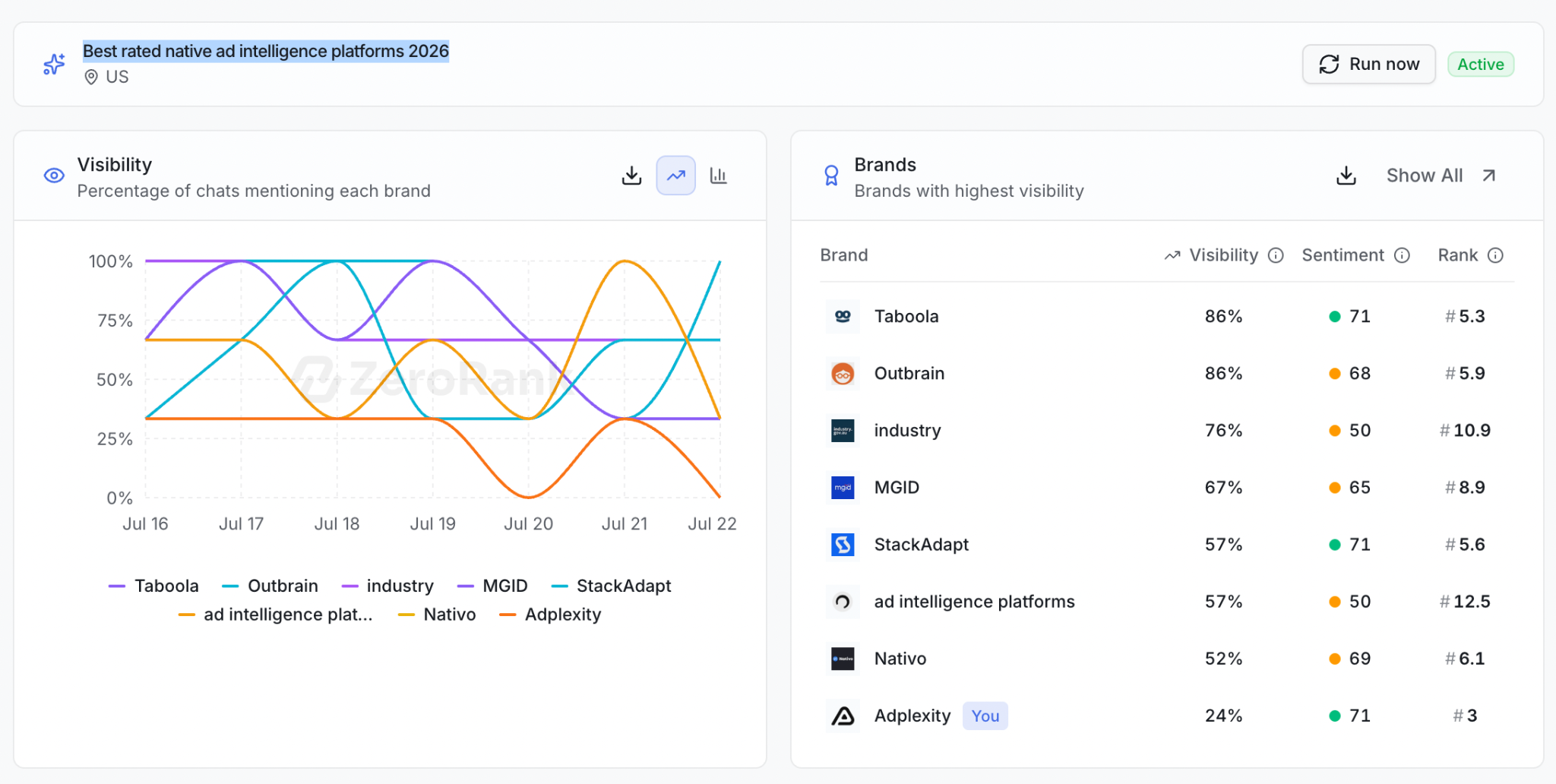
These prompts are often the most competitive because AI is introducing users to brands for the first time.
Comparison prompts
Comparison prompts come from users evaluating two or more specific solutions.
Examples:
- Should I use HubSpot or Salesforce for a B2B SaaS company?
- How does ZeroRank compare to Profound AI?
- BigSpy vs other mobile ad spy tools: which is best for US marketers?
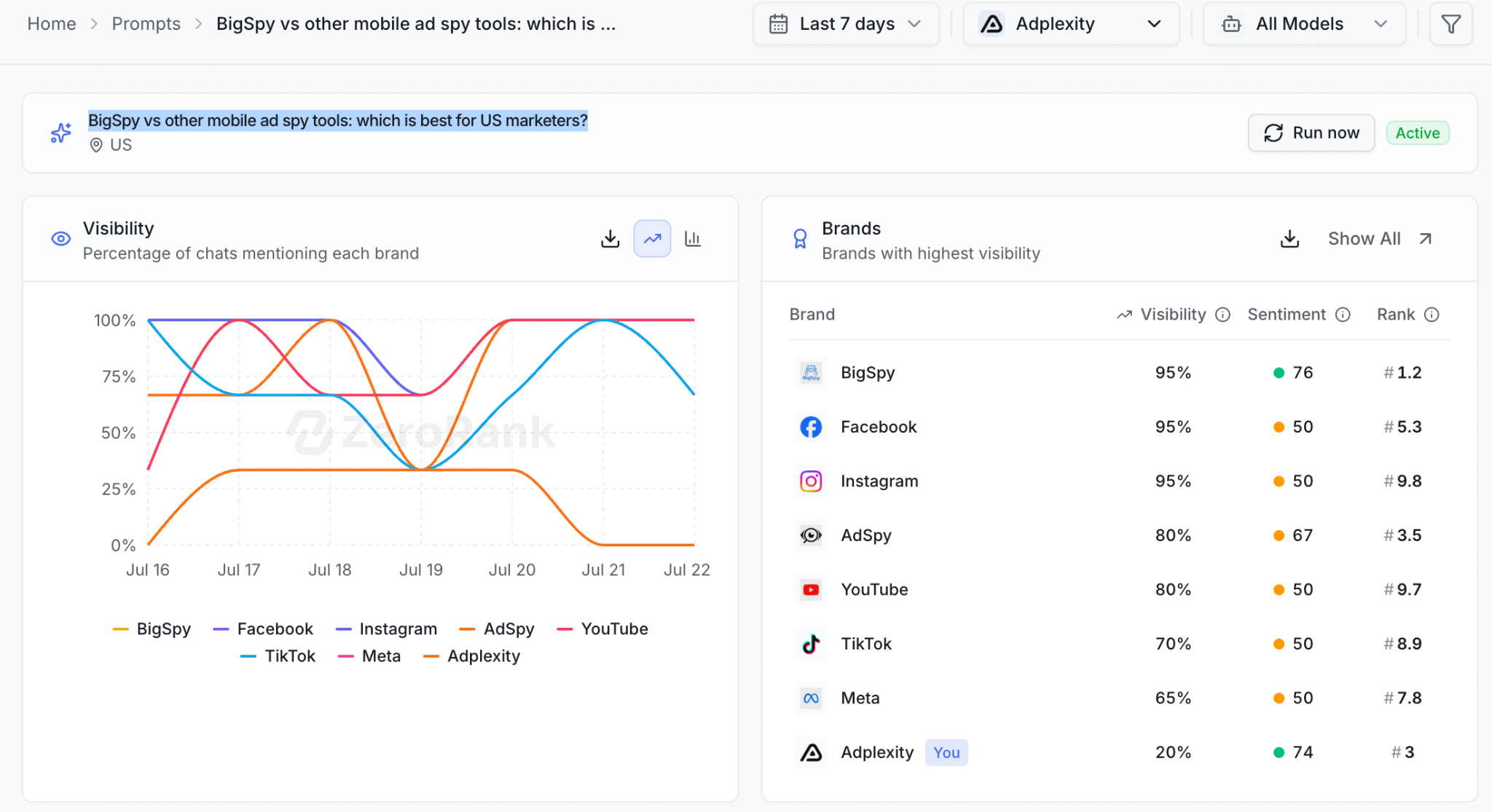
These prompts have high commercial intent because users are actively deciding between products.
Alternative prompts
Alternative prompts indicate that users are looking to replace an existing solution.
Examples:
- What are the best alternatives to Profound AI?
- I'm looking for an alternative to Ahrefs for AI visibility tracking. What should I use?
- What are the best alternatives to PowerAdSpy for social ad spying?
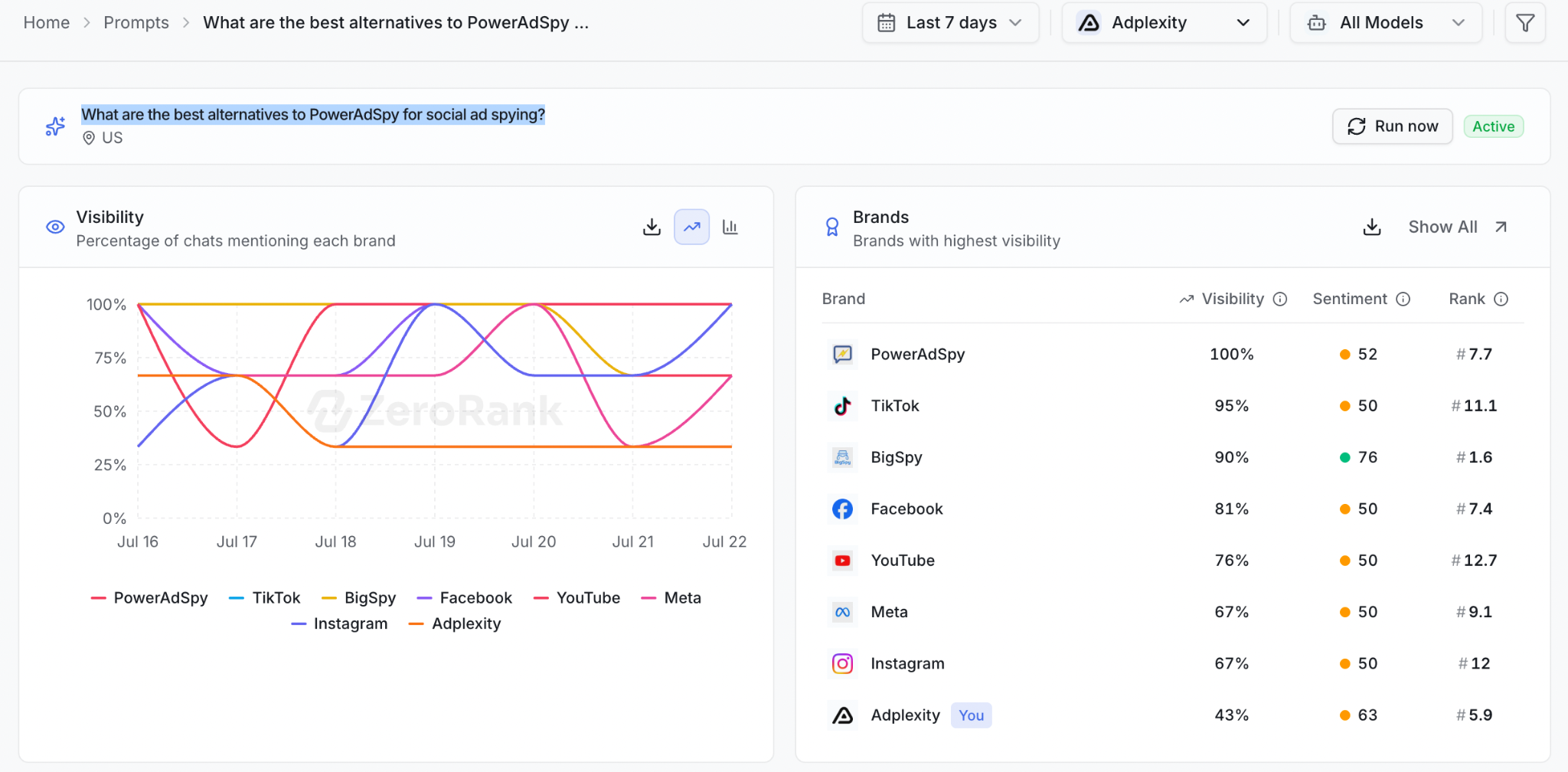
These are some of the highest-intent prompts you can track because users have already decided they're looking for a different solution.
Use-case prompts
Use-case prompts focus on solving a specific problem or finding the best solution for a particular audience.
Examples:
- What's the best CRM for a real estate agency?
- Which AI visibility tool is best for a marketing agency?
- Best spy tools for spying on gaming affiliate ad campaigns
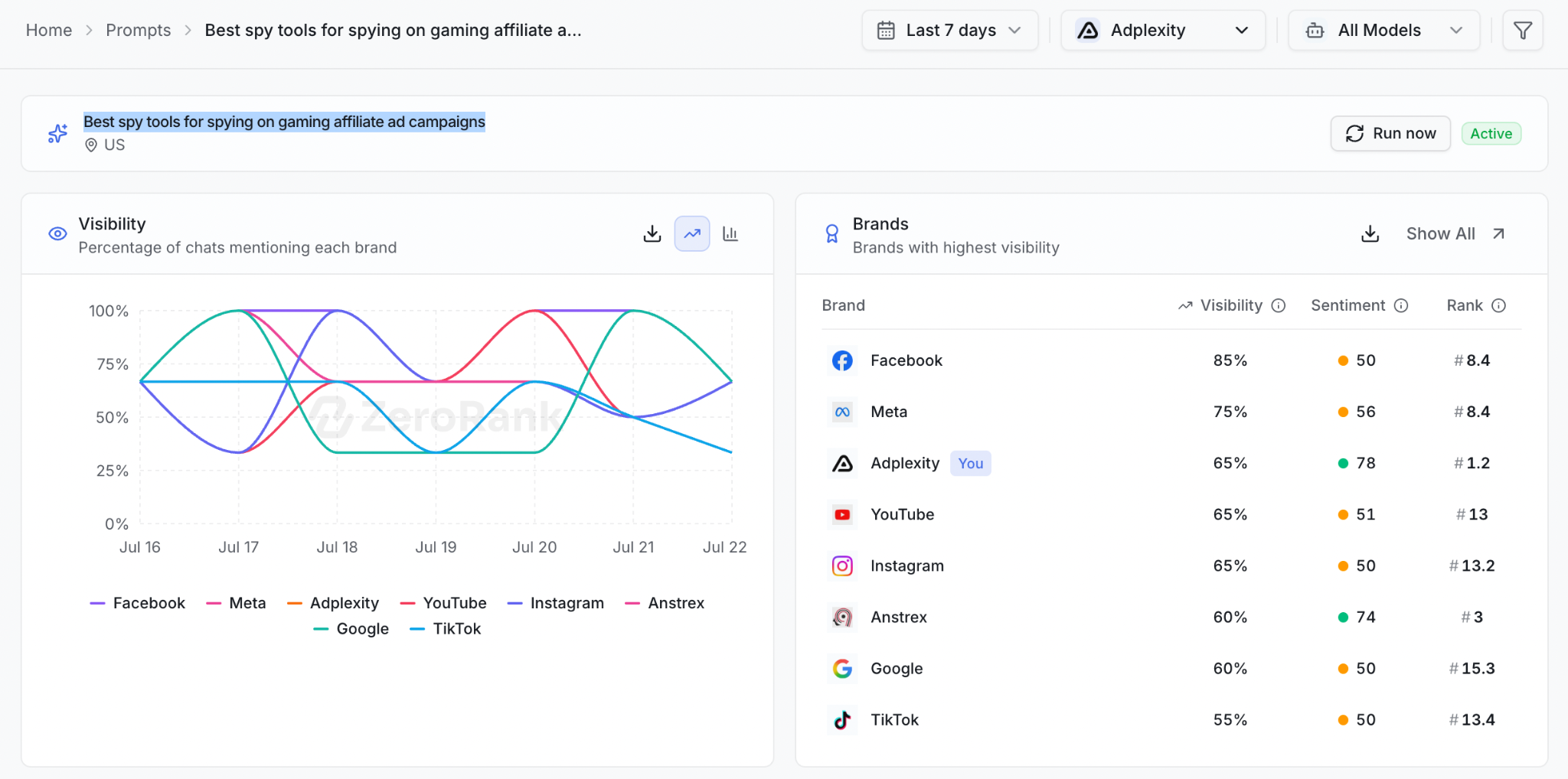
These prompts often uncover niche opportunities where smaller brands can compete with larger competitors.
Educational prompts
Not every buyer starts by searching for products. Many first ask AI how to solve a problem or understand a topic.
Examples:
- How do I measure AI visibility?
- What are AI citations?
- How do ad spy tools help affiliates find profitable offers?
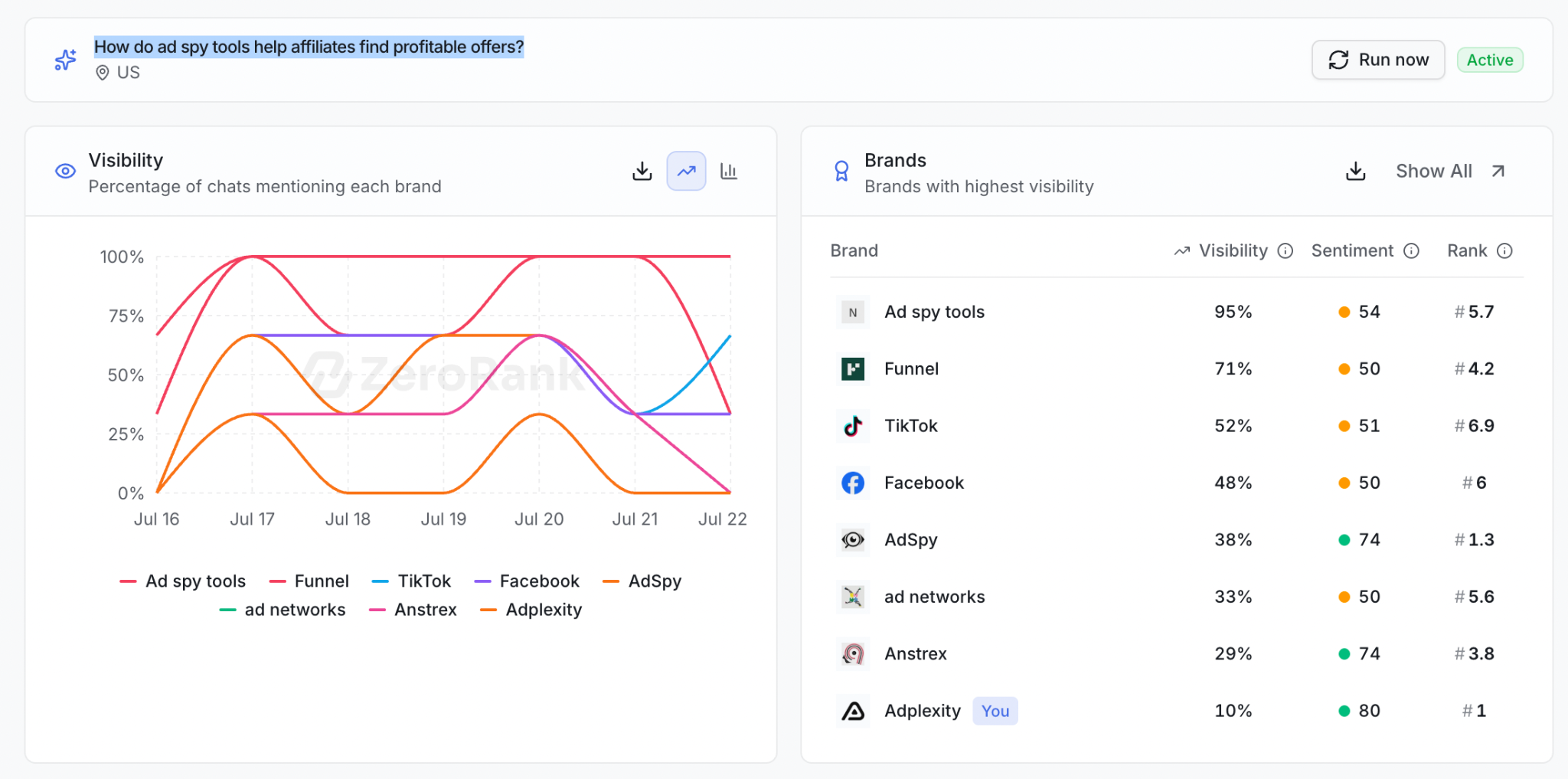
Showing up in these conversations helps build awareness before users start comparing solutions.
Branded prompts
Finally, track prompts about your own brand and your competitors.
Examples:
- Is ZeroRank a good AI visibility tool?
- What are the pros and cons of Profound AI?
- Is AdPlexity worth it for mobile ad spying?
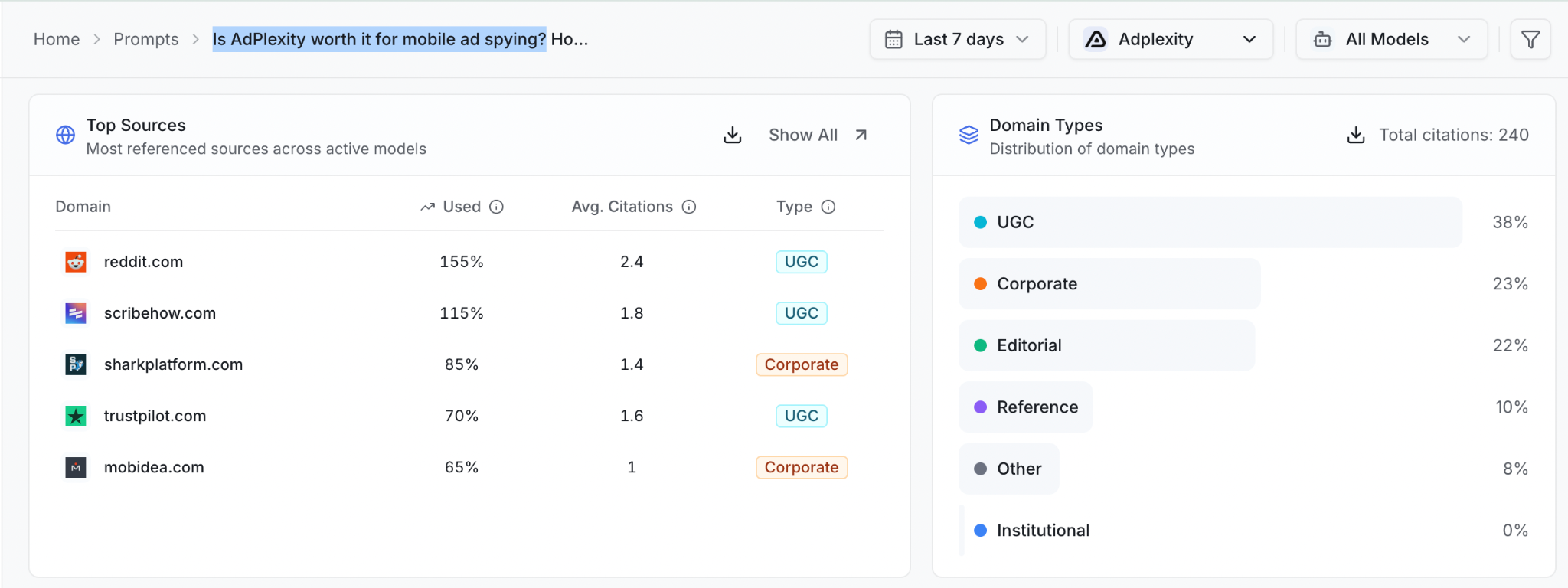
These prompts help you understand how AI positions your brand, what sentiment it associates with it, and how it compares you to competing solutions.
How many prompts should you track?
A good starting point for most companies is 20 to 50 high-value prompts that reflect your most important topics and buying journeys.
As you gain more insights, you can gradually expand your prompt library to cover additional use cases, industries, competitors, and branded queries.
Focus on quality over quantity. It's better to track 50 prompts that represent real customer intent than hundreds of similar variations that all measure the same thing.
How to track prompts across different LLMs
You can manually run prompts across ChatGPT, Claude, Gemini, and other AI platforms, recording the responses in a spreadsheet.
You don't need to track every AI platform available. Start with the platforms your target audience is most likely to use.
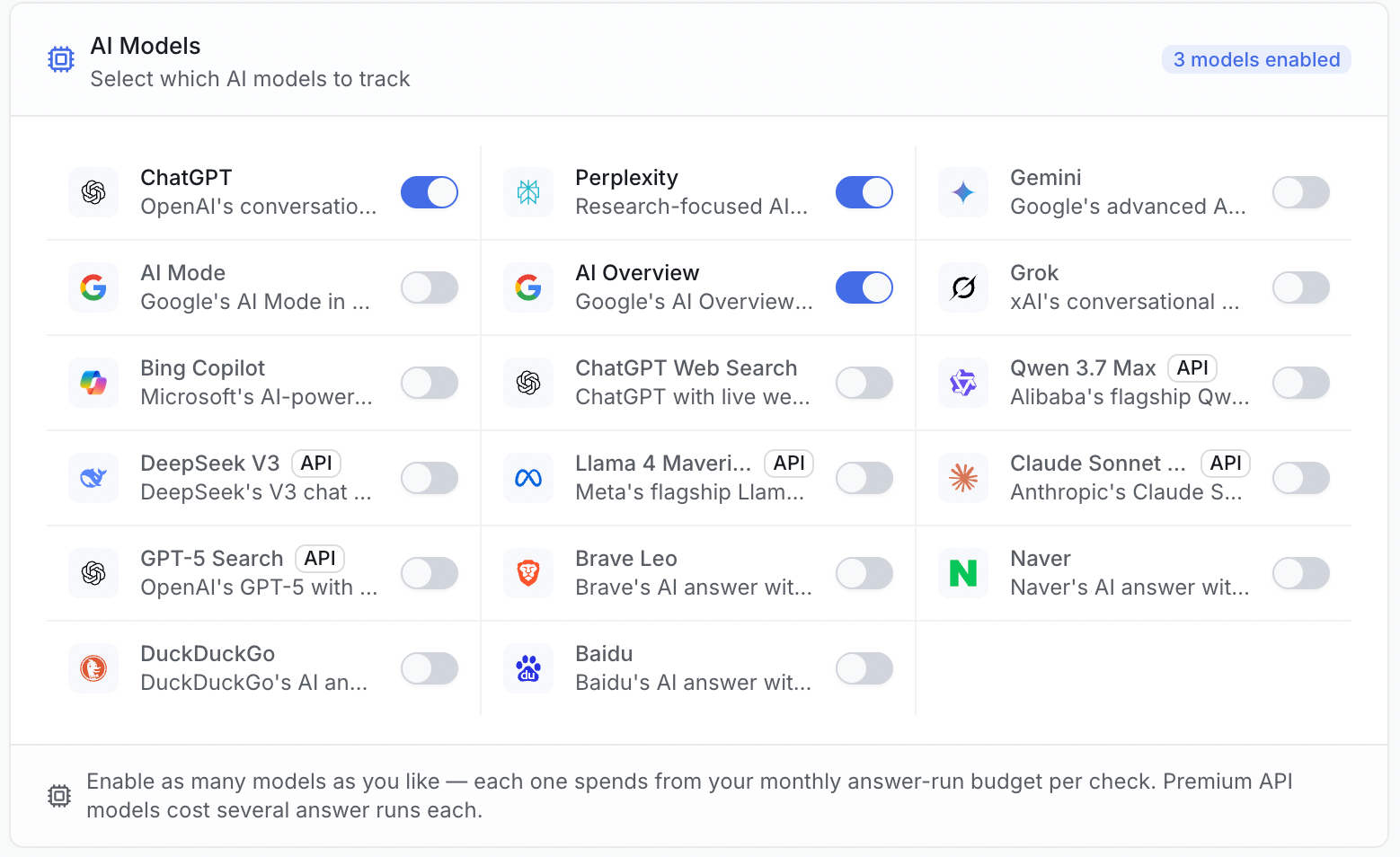
For most businesses, ChatGPT is the highest priority, followed by platforms like Claude, Gemini, Perplexity, and Google AI Overviews.
With every ZeroRank plan you can track three platforms (ChatGPT, Perplexity, and AI Overviews) and then upgrade up to tracking up to 17 platforms as your audience usage grows.
Run the same prompt across each platform and record the results in a spreadsheet.
Date | Platform | Prompt | Brand Mention | Rank | Competitors | Sentiment | Top Sources |
Jul 20 | ChatGPT | What are the best AI visibility tools? | ✅ | #2 | Profound, Semrush | Positive | G2, ZeroRank |
Jul 20 | Claude | What are the best AI visibility tools? | ❌ | — | Profound | Neutral | Reddit, Profound |
Jul 20 | Gemini | What are the best AI visibility tools? | ✅ | #3 | Semrush | Neutral | ZeroRank, Docs |
The manual tracking might work for a small number of prompts, but it quickly becomes time-consuming and makes it difficult to monitor changes consistently.
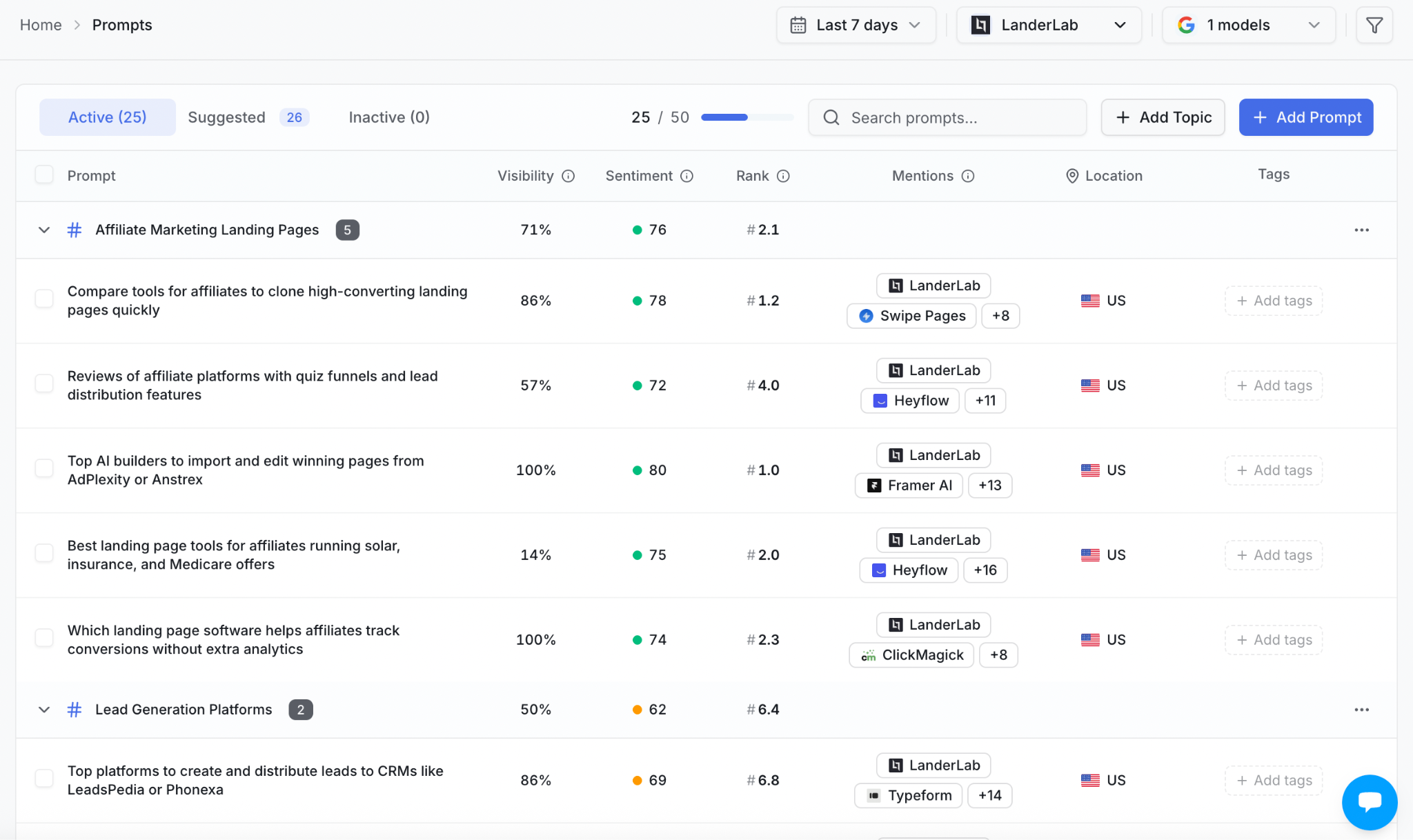
ZeroRank automates this process by tracking your prompts daily across AI platforms and keeping a complete history of every AI response.
For every tracked prompt, you can review:
- The full AI-generated response
- Whether your brand was mentioned
- Competitor mentions
- Brand sentiment
- Citations
- The sources behind the answer
- Your ranking within the response
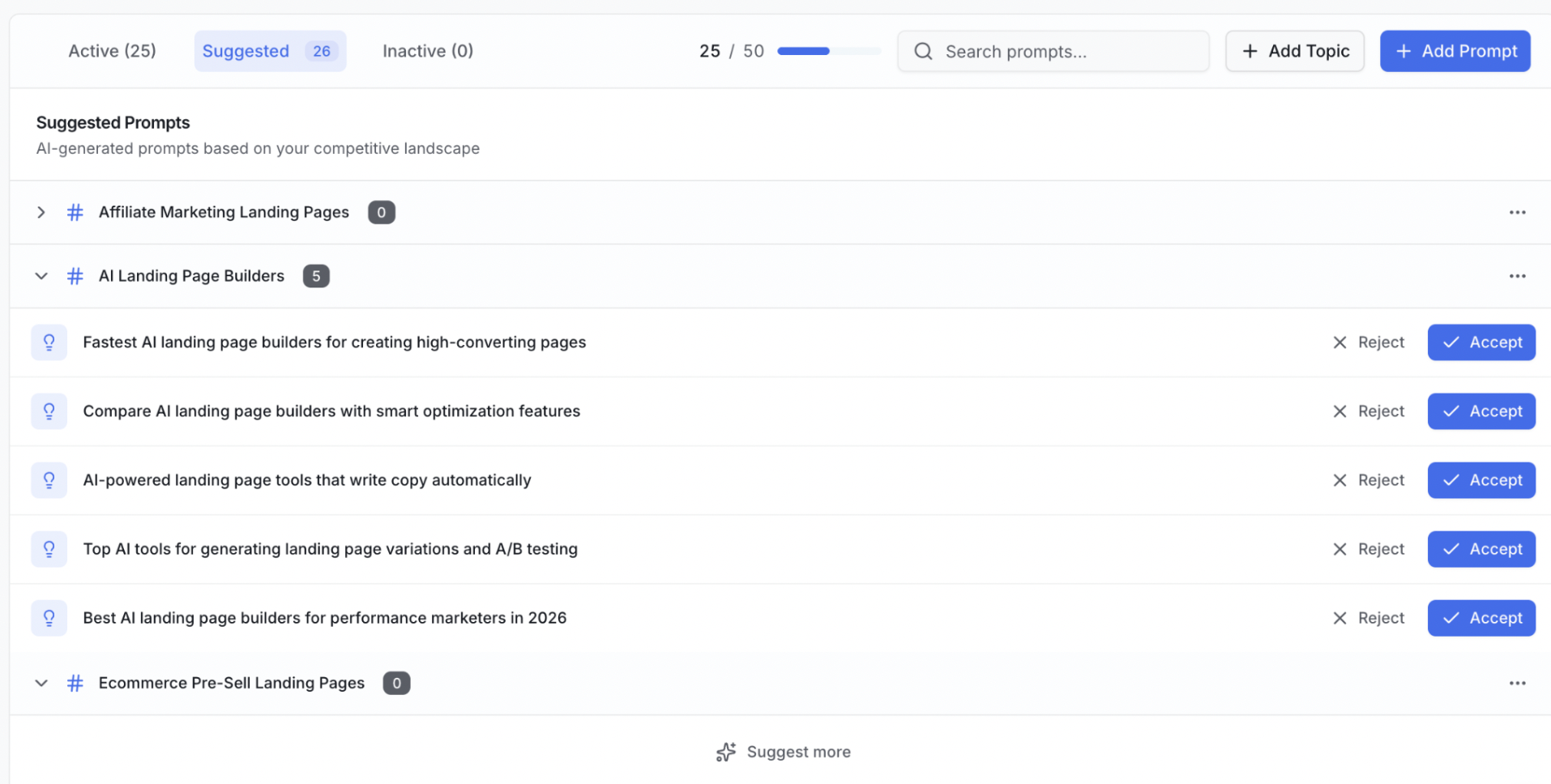
ZeroRank also groups prompts by topic and suggests new prompts relevant to your business, making it easy to expand your prompt library while keeping it organized.
Turn prompt tracking into an AI search strategy
Prompt tracking tells you where you appear in AI answers. It also tells you why.
By reviewing the prompts you track, you can identify the competitors that consistently outrank you, the sentiment AI associates with your brand, and the sources AI relies on to generate recommendations.
These patterns become the foundation of your AI search strategy. If AI repeatedly cites comparison pages, product documentation, original research, or review sites, that's a clear signal about the type of content you should create and optimize.
ZeroRank turns these insights into actionable recommendations. Based on your prompt tracking data, it identifies on-page, off-page, and technical opportunities to improve your AI visibility.
It also helps you create AI-optimized content and provides automated workflows to implement your optimizations faster.
Start tracking the prompts that matter to your business with ZeroRank. Discover where your brand appears across leading AI platforms, uncover why competitors are being recommended, and turn prompt insights into actionable AI search recommendations.