AI Brand Mentions: How to Track and Improve Your Presence in AI Search
Your brand can be recommended by AI platforms without your website ever getting clicked. The real question is: are you actually part of the answers your customers are seeing?

Key Takeaways
- AI brand mentions tell you whether platforms like ChatGPT, Gemini, and Google AI Overviews are actually recommending your company when users ask questions related to your category.
- A mention and a citation are not the same thing. AI platforms can mention your brand without using your website as the source behind the answer.
- Your AI search presence depends heavily on the prompts you track. A brand may perform well for branded searches while barely appearing in broader category conversations.
- The companies improving their AI search presence fastest are not guessing. They identify which sources and content formats already influence AI answers in their category and invest more heavily in those areas.
- Measuring your AI search presence is only useful if you can turn those insights into action through content creation, off-page visibility, and technical optimization.
Tracking brand mentions in AI search means understanding how often platforms like ChatGPT, Google AI Overviews, and Gemini reference your company when users ask questions related to your category.
Traditional SEO metrics do not fully capture this. Rankings and clicks show how your pages perform in search results, but they do not show whether AI platforms are recommending your brand or competitors inside AI-generated answers.
I’ll show you how to track your brand mentions across AI search platforms, identify which sources influence those answers, and use those insights to improve your visibility over time.
What AI brand mention tracking actually measures
A brand mention happens when an AI platform names your company inside an answer.
For example, if Google AI Overviews lists your company as one of the best tools or services in your category, that counts as a brand mention. The AI does not need to link to your website for the mention to matter.
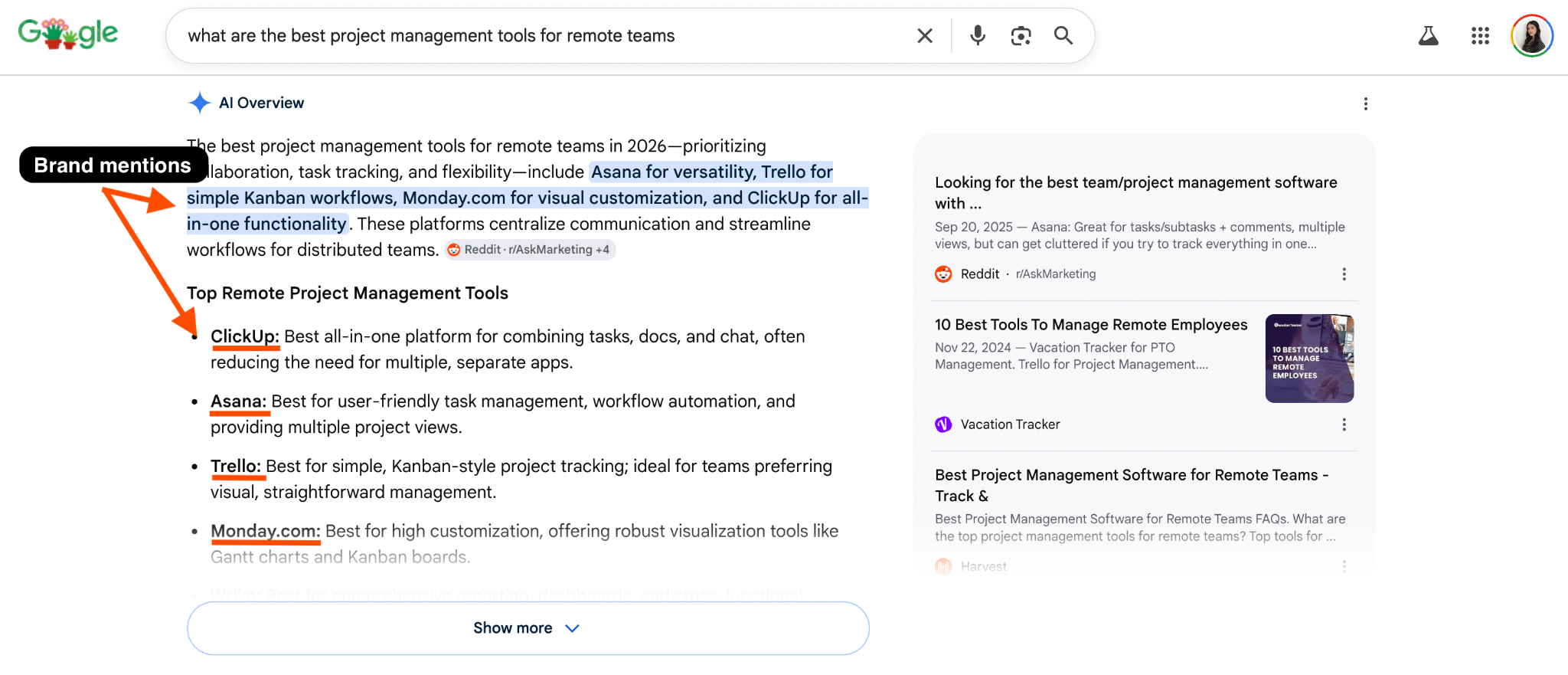
People often confuse brand mentions with citations.
A citation happens when the AI platform references a specific source behind the answer. That source could be your website, a third-party review page, a comparison article, a forum thread, or an industry publication.
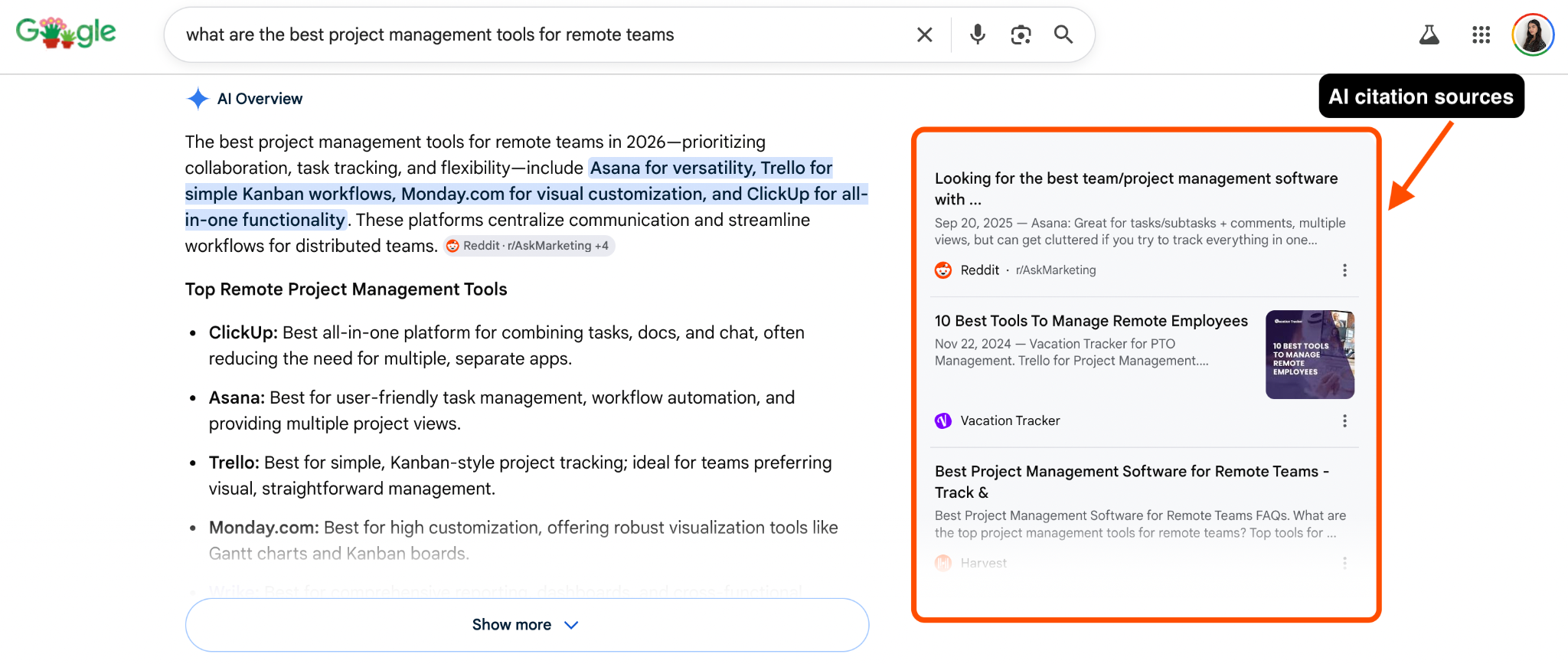
Tracking mentions alone only gives you part of the picture.
You also need to understand:
- Which sources AI platforms cite
- Which competitors appear alongside your brand
- Which prompts generate visibility
- How your brand is positioned in responses
- Whether mentions are positive or negative
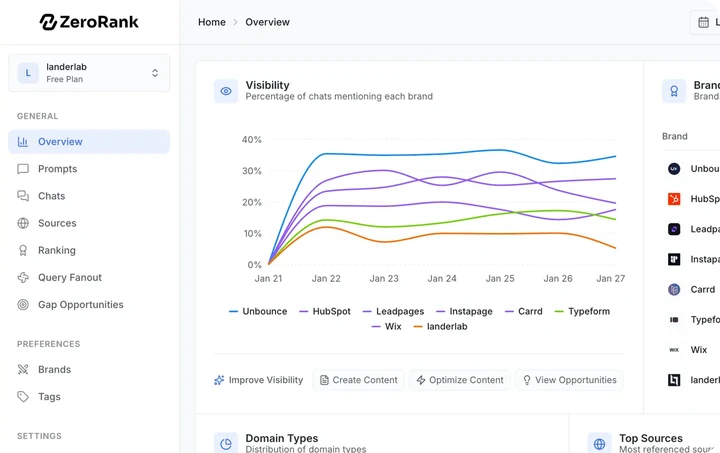
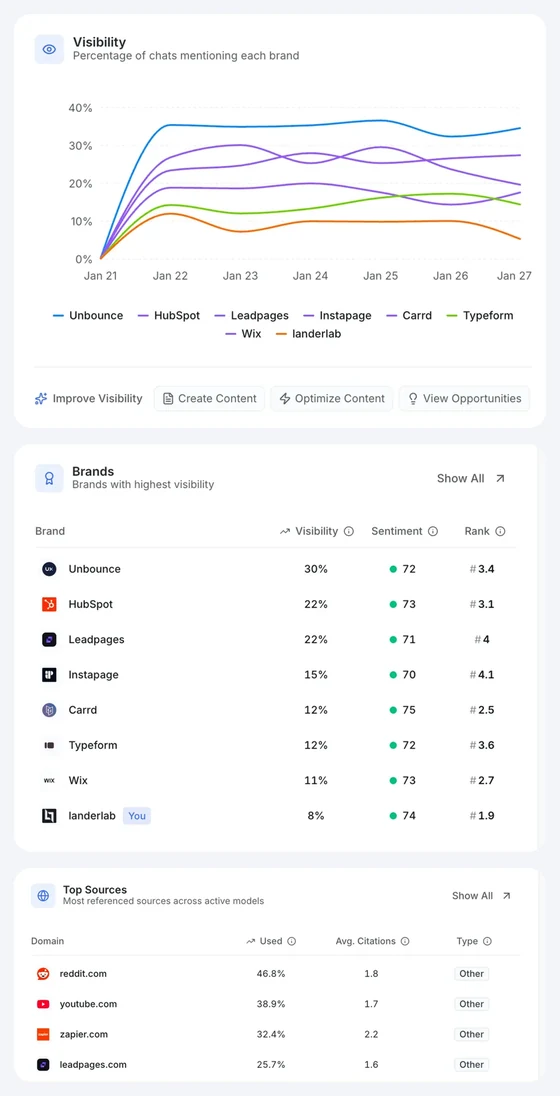
That is why AI visibility tools like ZeroRank combine mentions, citations, sentiment, share of voice, competitor benchmarking, and prompt-level tracking into a broader AI visibility score.
For example, LanderLab has a 35% visibility score, making it the third most popular brand on AI search in its niche.
But that number is not absolute.
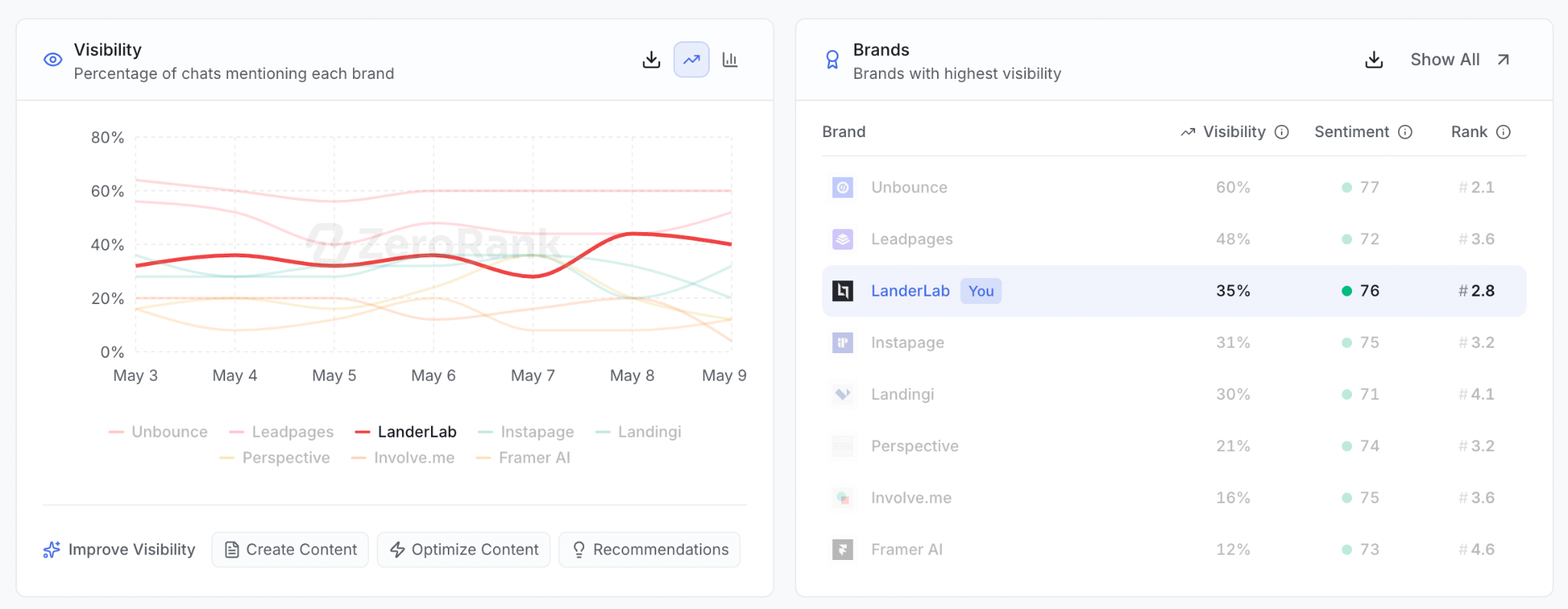
Your visibility depends heavily on the prompts being tracked and the competitors included in the analysis. A brand may appear frequently for branded searches while barely showing up in broader category conversations.
That is why brand mention tracking works best as a comparative measure. The goal is not just to count mentions, but to understand how your brand appears across the AI answers that matter most to your category.
Step 1: Define your AI mention tracking scope
Before you start measuring anything, define exactly what you want to track and compare across AI platforms.
This includes:
- Which AI platforms matter most to your audience
- Which parts of your brand should count as mentions
- Which markets and languages you care about
- Which prompts and competitors you want to track against
A well-defined tracking scope makes it much easier to measure brand mentions consistently and understand how your visibility changes over time.
1.1. Choose which platforms to track
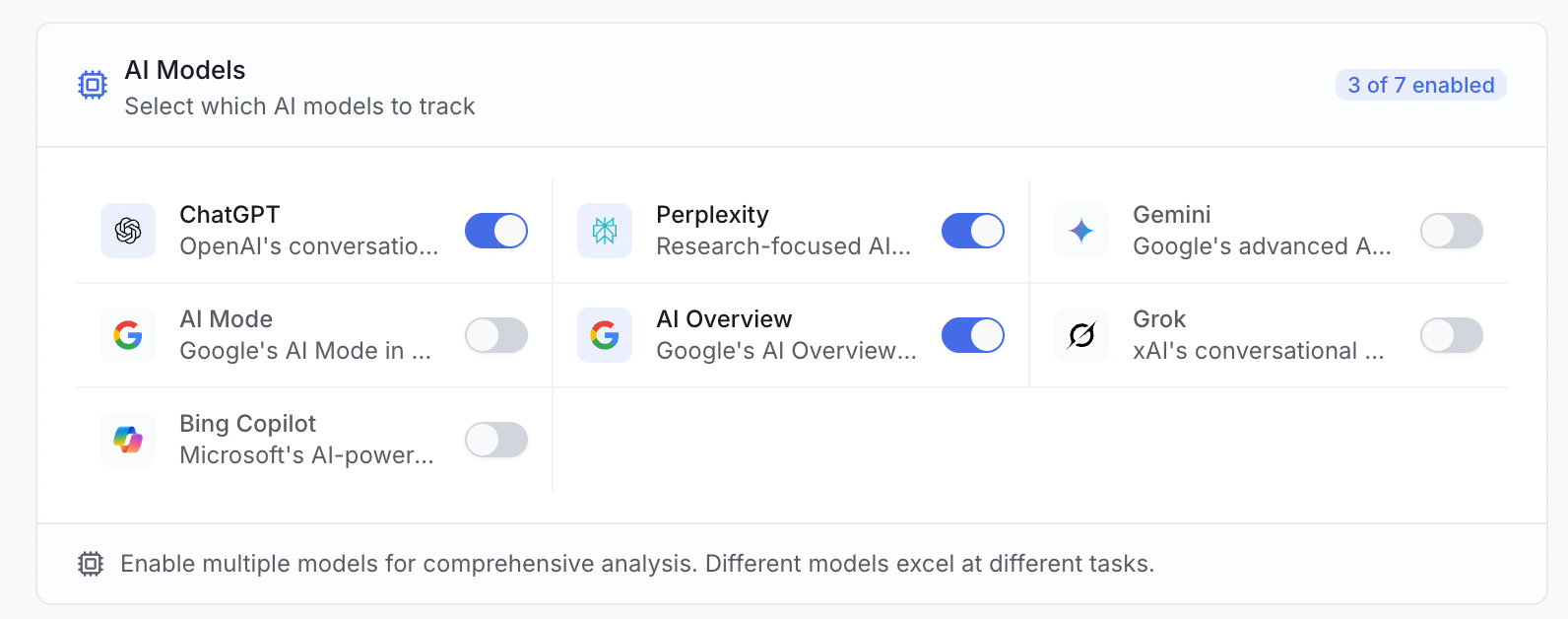
You do not need to track every AI platform to get meaningful visibility data. For most brands, the majority of AI-driven discovery happens through ChatGPT, Google Gemini, and Google AI Overviews.
In early 2026, ChatGPT and Gemini together accounted for roughly 86% of the generative AI chatbot market share (opens in a new tab).
Meanwhile, Google AI Overviews reach over 2 billion monthly users across 200 countries and 40 languages.
Category | Top player(s) | Metric |
|---|---|---|
GenAI chatbot traffic | ChatGPT (64.5%), Gemini (21.5%) | Direct site/app visits |
AI search integration | Google AI Overviews | Reaches 2 billion users via Search |
For most companies, tracking smaller platforms like Claude (2.9% market share) or Perplexity (2.0%) adds little value compared to focusing on where the majority of discovery already happens.
That is why every ZeroRank AI plan includes tracking for ChatGPT, Gemini, and Google AI Overviews by default.
That said, platform choice still depends on user context.
Claude is often preferred by technical teams and executives for deeper research workflows. Perplexity attracts users who prioritize sourced answers and citations. Microsoft Copilot benefits from its integration into Office and enterprise workflows.
If those platforms matter to your buyers, you can expand your tracking accordingly. ZeroRank gives you the option to upgrade and track your visibility across 8 different platforms.
1.2. Define which parts of your brand to track
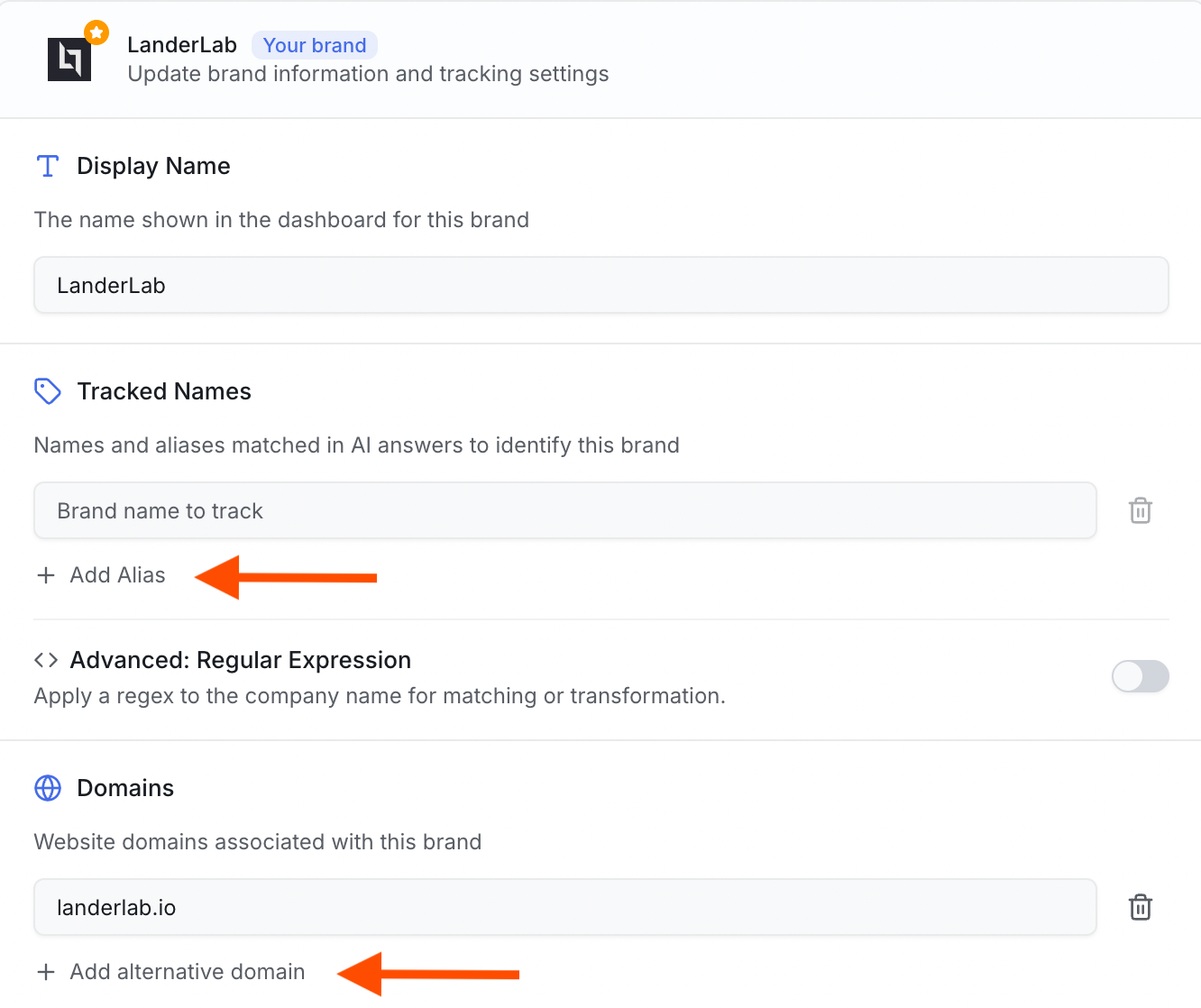
Do not limit your tracking to just your main website. Many companies operate across multiple subdomains, regional sites, or separate web properties that AI platforms may reference independently.
For example, a SaaS company might want to track its main site, documentation subdomain, academy, and regional domains separately to understand where its AI visibility is actually coming from.
You should also define which brand names and aliases should count as matches in AI answers. This can include:
- Company name variations
- Product names
- Acronyms or abbreviations
- Founder or executive names
- Common brand aliases users mention online
Inside ZeroRank, you can track multiple domains and define the names and aliases that should be matched in AI-generated responses, giving you a more accurate picture of your overall visibility.
1.3. Define your geographic and language scope
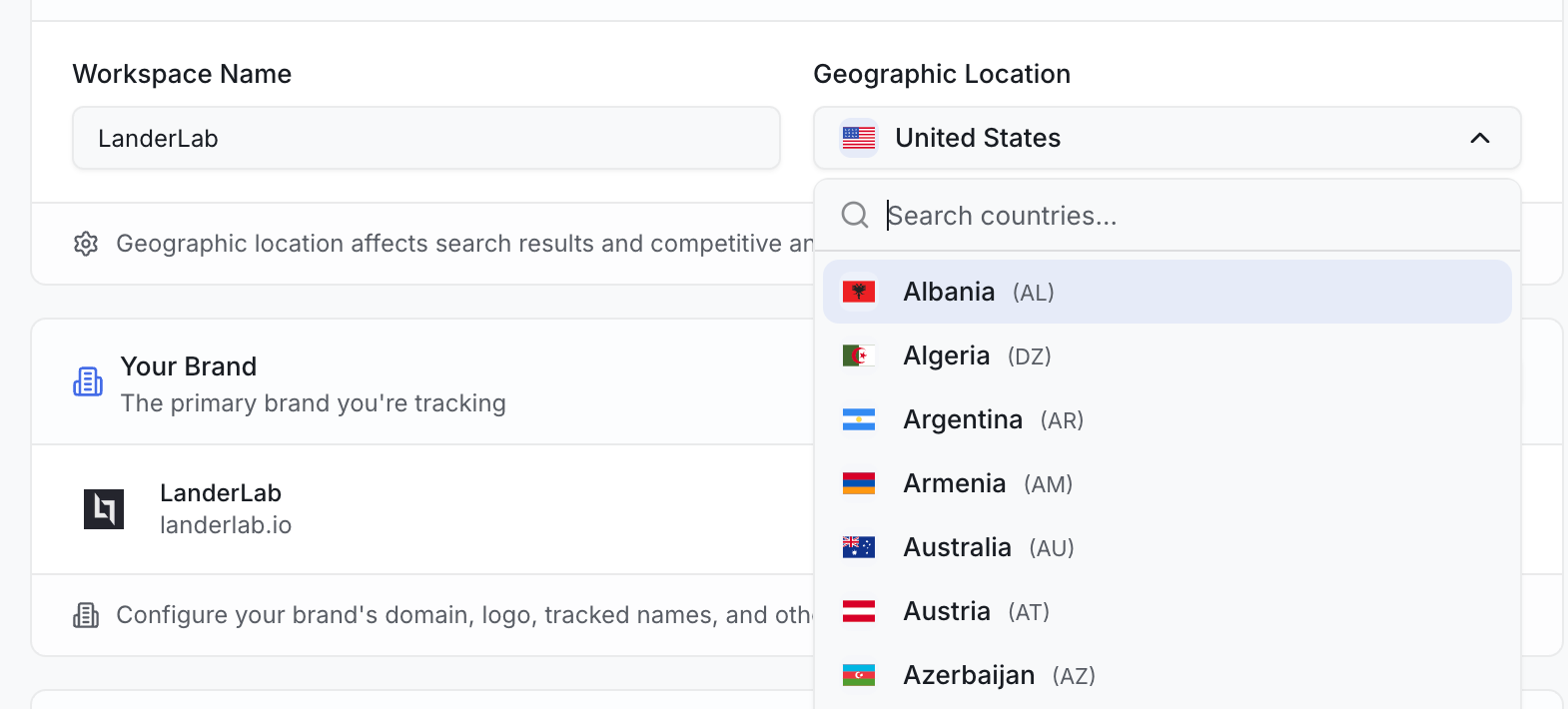
AI visibility can vary significantly by country and language. A brand that appears consistently in US English prompts may have much lower visibility in other regions or languages because AI platforms adapt responses based on local sources, competitors, and user behavior.
If you operate internationally, define upfront:
- Which countries you want to track
- Which languages matter to your audience
- Whether you want a global or market-specific audit
For example, a company targeting both the US and Germany may need separate English and German prompt sets.
In ZeroRank you can set your location inside the Workspace configuration tab.
1.4. Select your target prompts
AI visibility also depends heavily on the prompts you track. A brand may perform well for branded searches while barely appearing in broader category or comparison prompts.
Build a list of 20 to 50 prompts that reflect real customer discovery, including:
- Branded queries
- Unbranded category queries
- Competitor comparisons
- Problem-aware searches
- Alternatives and recommendation prompts
You should also test variations in phrasing, since AI platforms can generate different responses for similar questions.
ZeroRank automatically suggests prompts that are relevant to your domain, category, and competitors. You can select which prompts to track, remove irrelevant suggestions, and add your own prompts manually based on your specific audience and use cases.
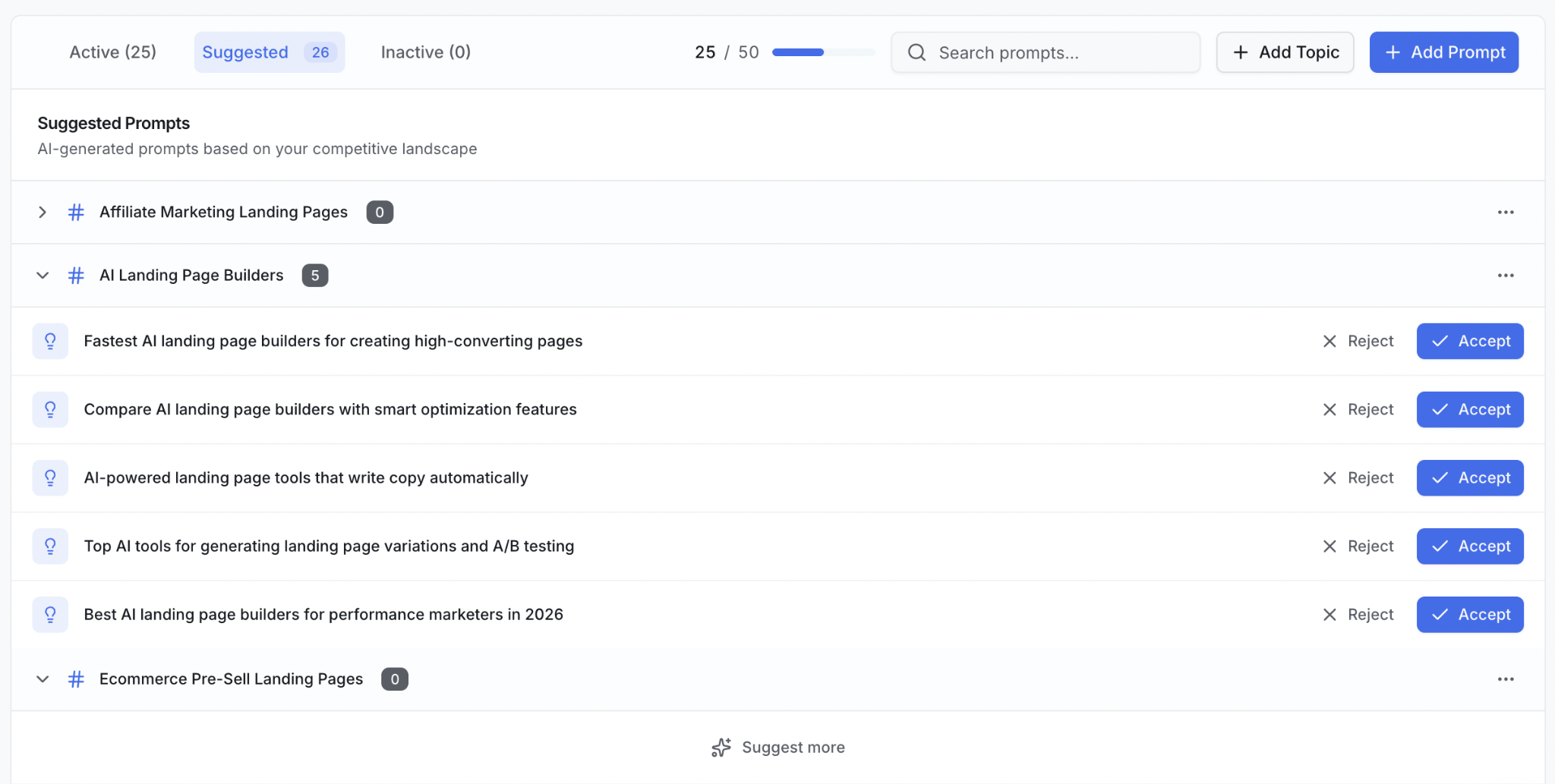
A focused prompt set gives you a more accurate and consistent view of your actual AI visibility over time.
Step 2: Measure your current visibility
With your tracking scope defined, the next step is to measure how your brand currently appears across AI platforms.
You can do this manually by running prompts yourself and documenting the responses, or by using an AI visibility platform that automates the process across multiple models and queries.
The goal is to understand:
- Which prompts mention your brand
- Which AI platforms mention you most often
- Which competitors appear alongside you
- Which sources are driving AI mentions and recommendations
- Where your brand is missing completely
2.1. Review how your brand appears in AI answers
Start by reviewing how your brand appears across your tracked prompts.
Pay attention to:
- Which prompts mention your brand
- Which AI platforms mention you most often
- Which competitors appear alongside or instead of your brand
- How your brand is framed in the response
For manual audits, log your findings in a spreadsheet with the prompt, platform, mention status, competitors, and notes.
Date | Platform | Prompt | Brand Mentioned? | Website Cited? | Brand Positioning / Framing | Competitors Mentioned | Sentiment | Notes |
|---|---|---|---|---|---|---|---|---|
2026-05-10 | ChatGPT | Best AI visibility tools | Yes | Yes | Listed as a leading platform for AEO tracking | Profound AI, Peec AI | Positive | Mentioned alongside competitors in top recommendations |
2026-05-10 | Gemini | How to improve AI search visibility | No | No | Not mentioned | Profound AI, Scrunch AI | Neutral | Competitors dominated recommendations |
2026-05-10 | Google AI Overviews | ZeroRank vs Profound AI | Yes | Yes | Compared directly as an alternative | Profound AI | Positive | Comparison-focused response |
AI visibility tools (opens in a new tab) like ZeroRank AI automate this process by continuously monitoring how your brand appears across AI search conversations over time, without running every query manually.
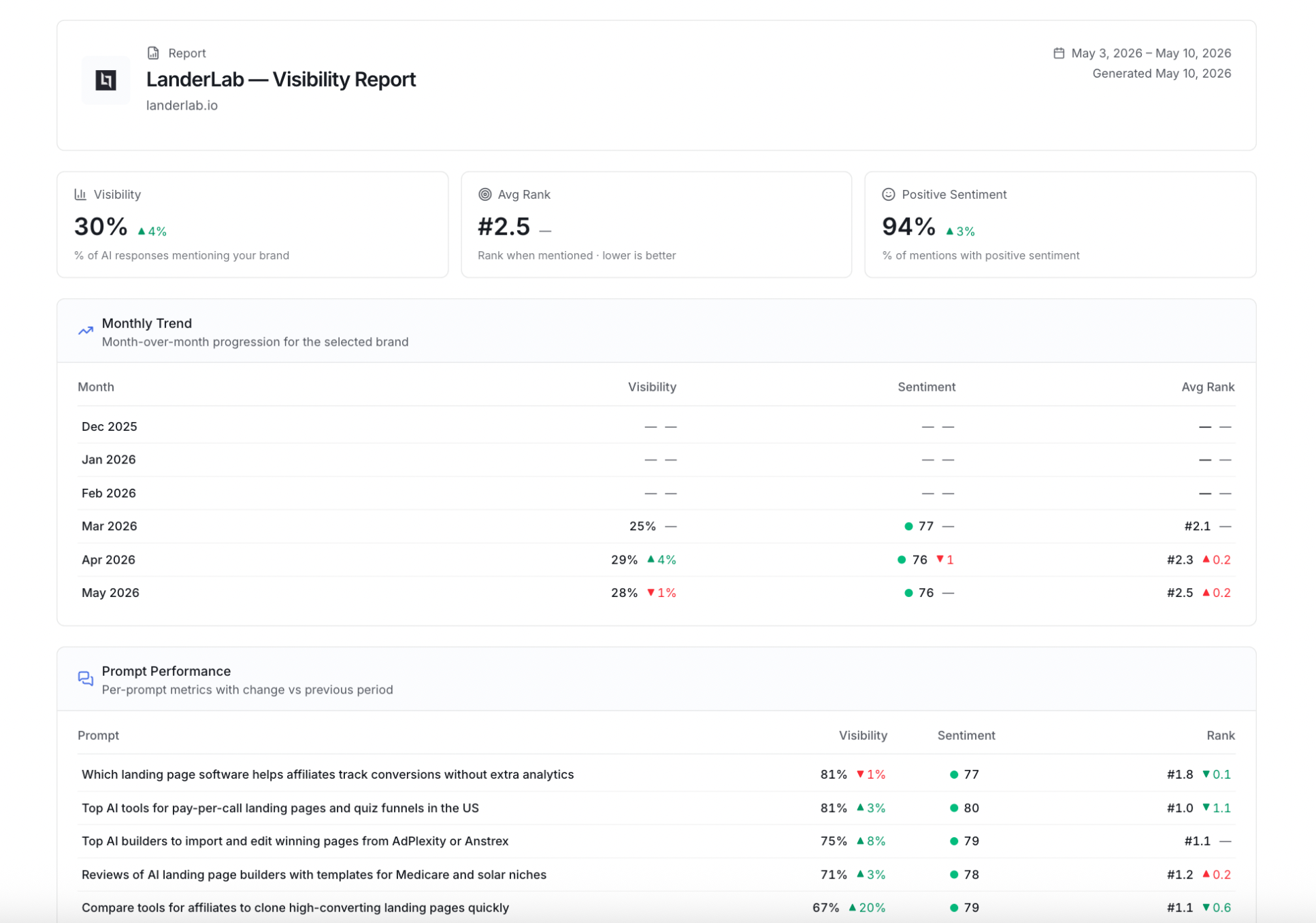
Whether you start manually or with a tool, the goal of this step is the same: establish a clear picture of how your brand currently appears across AI-generated answers.
2.2. Track citations and referenced sources
I’ll say this again: mentions alone do not tell the full story. A brand can be mentioned in an answer without being cited as the source behind it.
Sometimes AI platforms cite your own content directly. Other times they reference:
- Review sites
- Comparison articles
- Forums and communities
- Industry publishers
- Third-party pages mentioning your brand
This is where AI visibility tools become especially useful.
In ZeroRank, the Sources reports show:
- Which pages are cited most often
- Which prompts trigger those citations
- Which AI platforms reference those pages
- Whether citations come from your own site or external sources
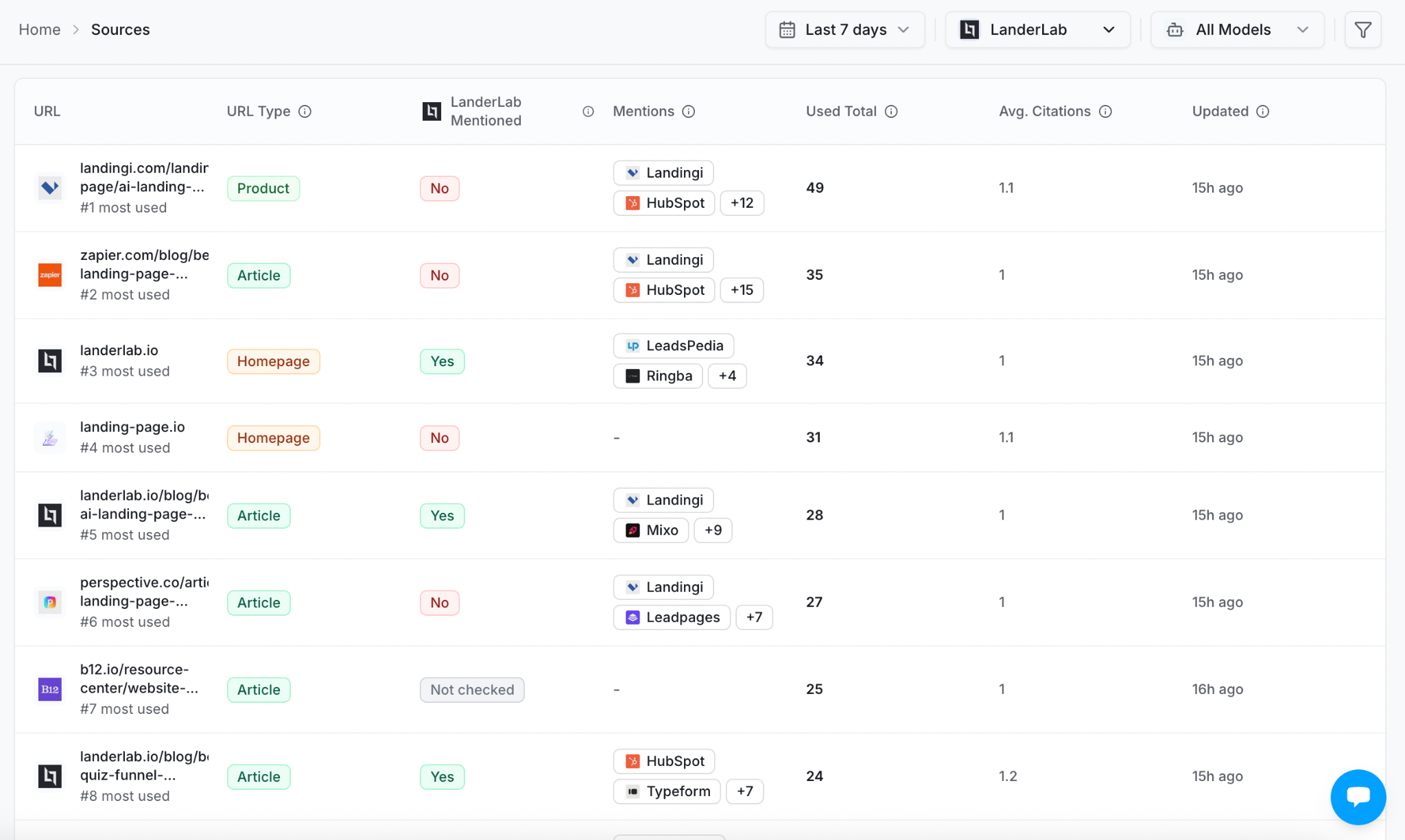
This helps you understand which sources are driving mentions and recommendations in your category.
For example, you may discover that:
- Your documentation pages earn more citations than other parts of your site
- Third-party reviews drive more visibility than your own content
- Competitors are consistently referenced by sources that never mention your brand
2.3. Benchmark against competitors
Brand mentions in AI search are highly competitive. Your presence only matters in relation to the other brands appearing in the same prompts and cited sources.
With ZeroRank, you can compare your visibility against competitors across prompts, platforms, and source domains to identify where you are gaining or losing presence.
Look for:
- Prompts where competitors consistently appear and you do not
- Sources that repeatedly reference competing brands
- Categories or topics dominated by a small group of brands
- Patterns in how AI platforms position competing solutions
Step 3: Turn brand mention insights into action
Once you understand where your brand is being mentioned, cited, and recommended, the next step is deciding where to focus your efforts.
Most AI visibility strategies fall into three buckets:
- Creating and optimizing your own content
- Increasing mentions across third-party sources
- Improving your technical AI readiness
Truth is, you need all three. The goal is to invest more heavily in the strategies, sources, and content formats that are already influencing AI answers.
Let’s go over each of the three strategies and when you need to prioritize them.
3.1. Create and optimize your own content
If AI answers in your category are mostly driven by:
- Blog articles
- Comparison pages
- Research studies
- Category pages
- Documentation content
…then content creation and optimization should become a major focus.
Create more of the formats already earning citations, improve pages that are already performing well, and expand coverage across prompts where competitors appear but you do not.
This was the approach SaaS company LanderLab took. Using ZeroRank, they identified that AI platforms in their category heavily relied on editorial-style content and comparison pages when generating recommendations.
Instead of publishing randomly, they focused specifically on creating and optimizing those formats and within 6 weeks became the #1 cited source (opens in a new tab) in their niche.
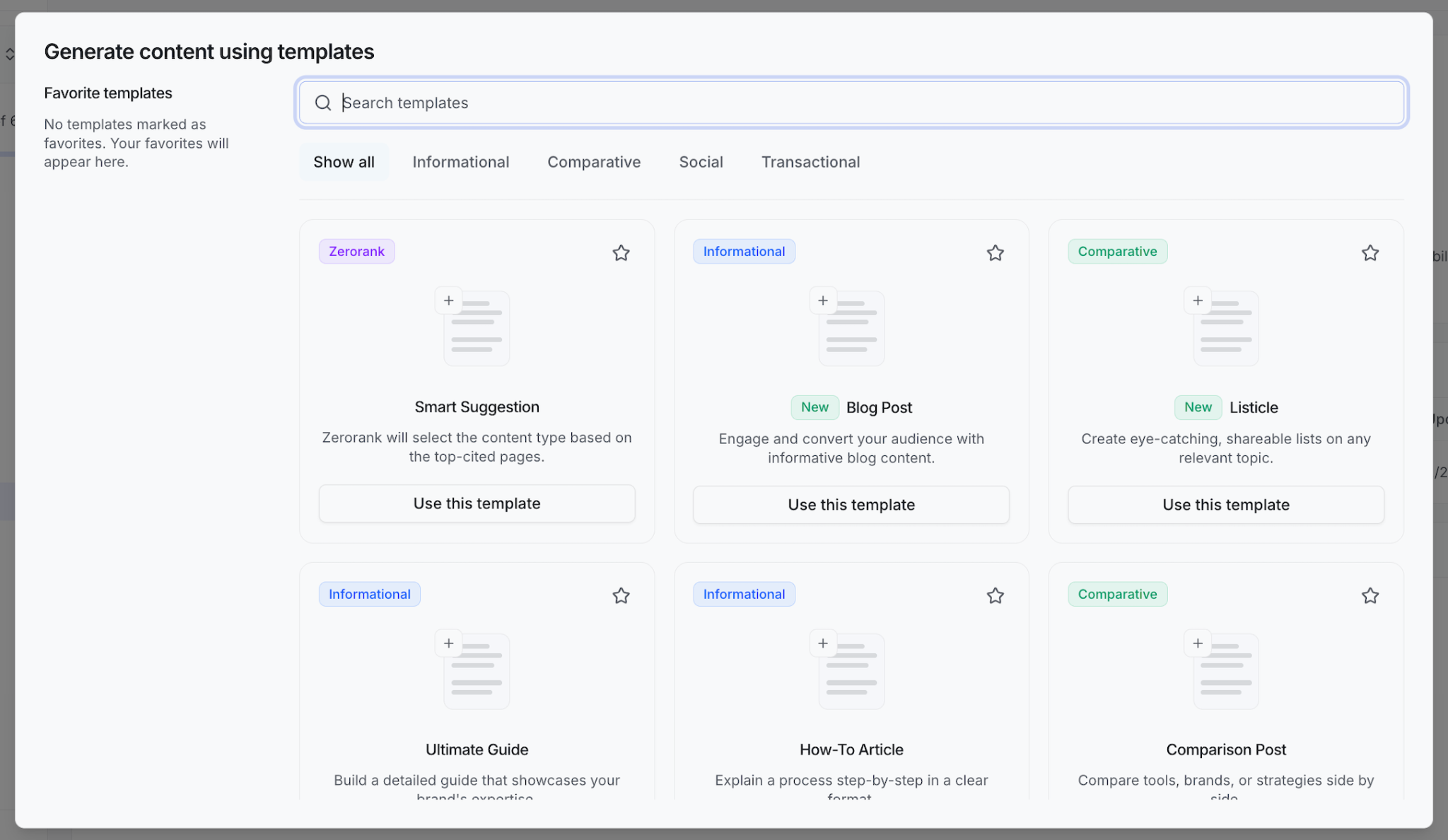
The On-page Recommendations in ZeroRank highlight the content formats and topics most likely to improve your visibility (opens in a new tab).
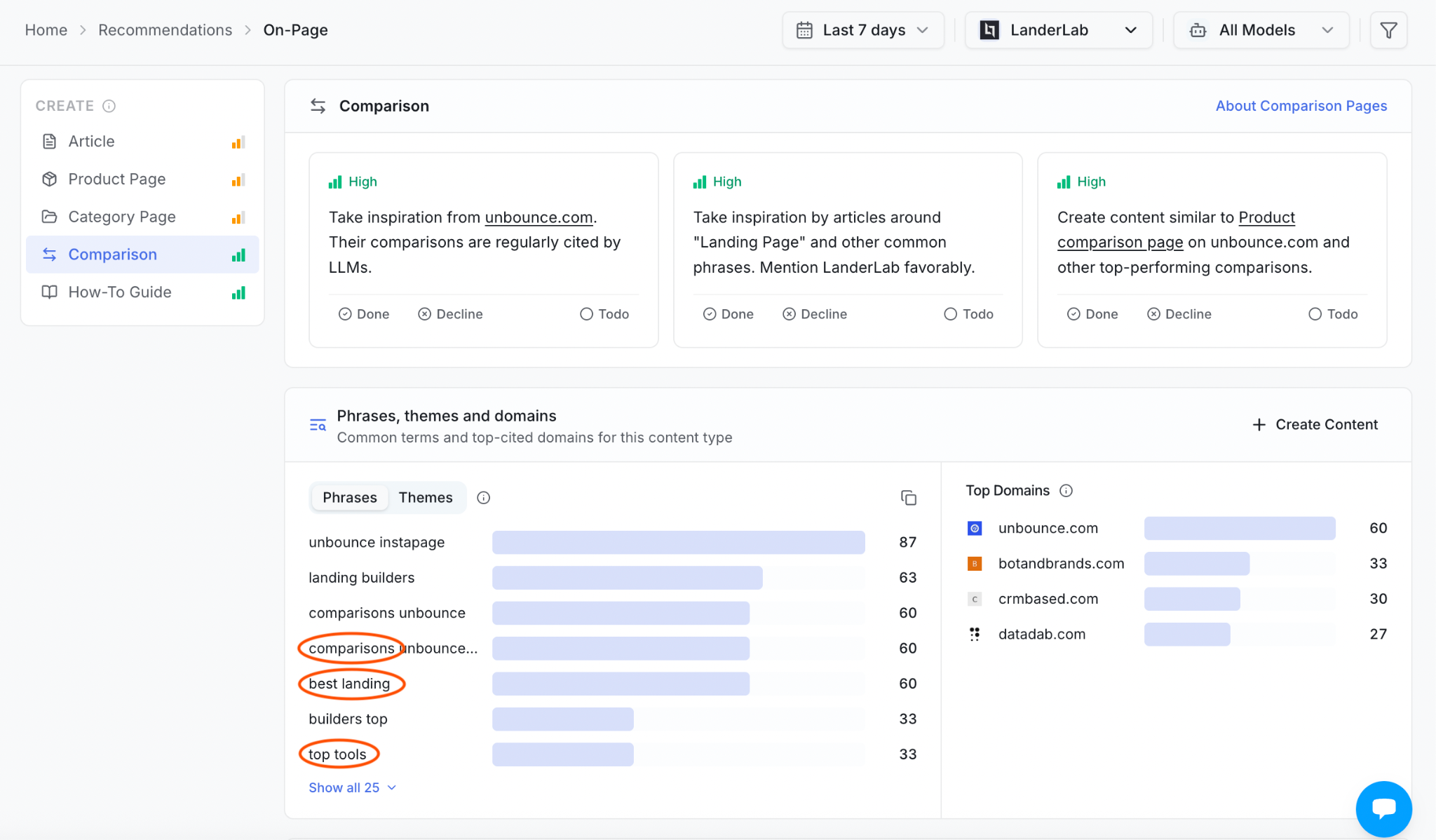
You can then use the Content Templates to generate the first draft and move directly from insights to execution within one platform.
3.2. Increase mentions across third-party sources
In some industries, AI platforms rely more heavily on external publishers, review sites, communities, and comparison articles than company websites themselves.
If competitors consistently appear across those sources, then off-page visibility should become a major focus.
This can include:
- Getting featured in comparison articles
- Increasing mentions on review platforms
- Contributing to industry publications
- Participating in relevant communities and forums
- Improving digital PR and outreach
This was the approach ad intelligence platform Adplexity took. Using ZeroRank, they identified that AI platforms in their category relied heavily on third-party sources when generating recommendations.
Instead of aggressively scaling content production, they focused on increasing their mentions across those external sources and became the most visible brand in its niche (opens in a new tab).
The Off-Page Recommendations in ZeroRank surface the publishers, communities, and source domains already influencing AI answers in your category.
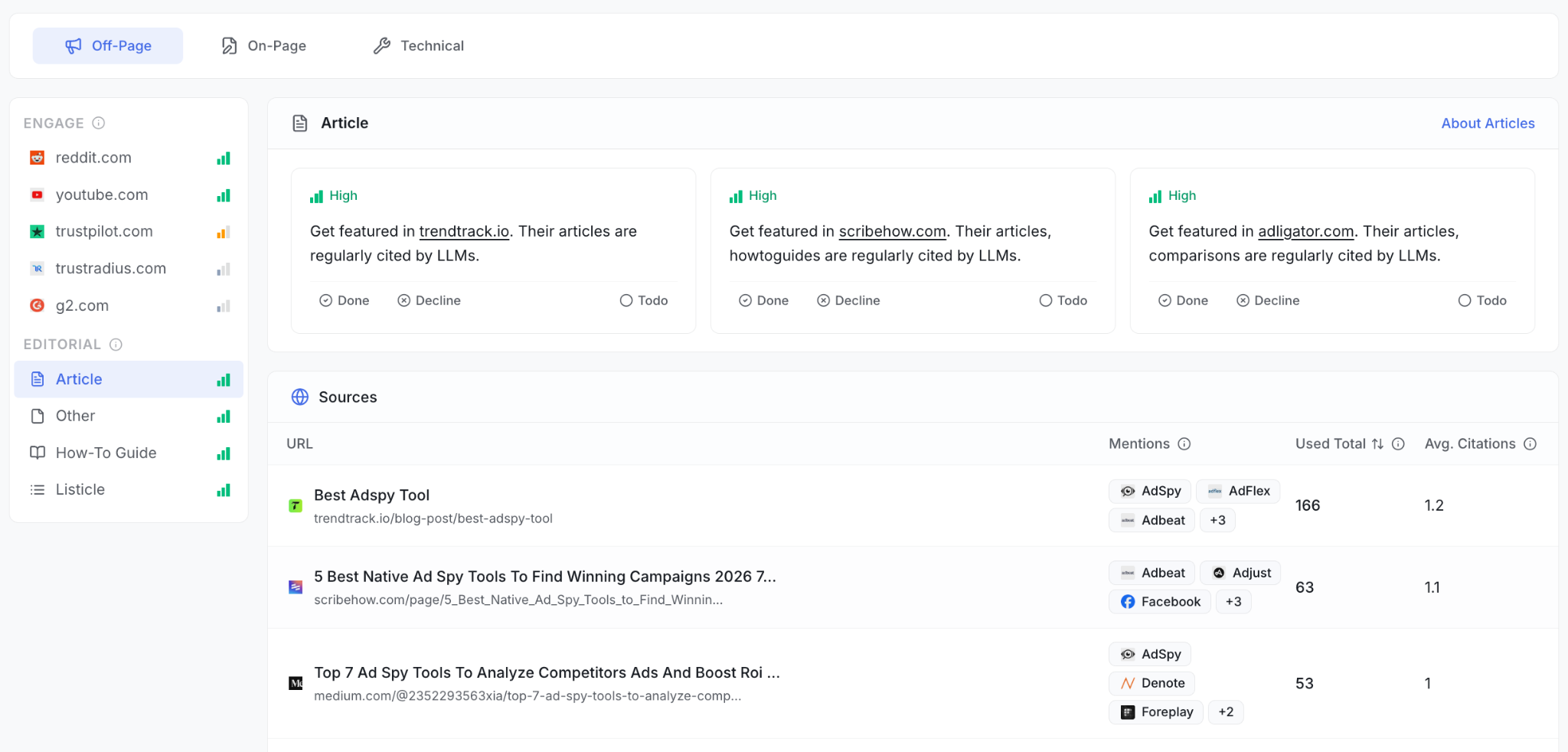
This makes it easier to identify where your brand is missing and prioritize the sources most likely to improve your visibility.
3.3. Improve your technical AI readiness
Strong AI search presence also depends on how easily AI systems can access, understand, and attribute your content.
Technical improvements can include:
- Adding structured data and schema markup
- Improving internal linking and site structure
- Keeping important pages updated
- Optimizing metadata and attribution signals
- Improving crawlability and indexation
- Creating clear documentation and knowledge pages
These optimizations help AI platforms better understand what your pages are about and when they should be cited in responses.
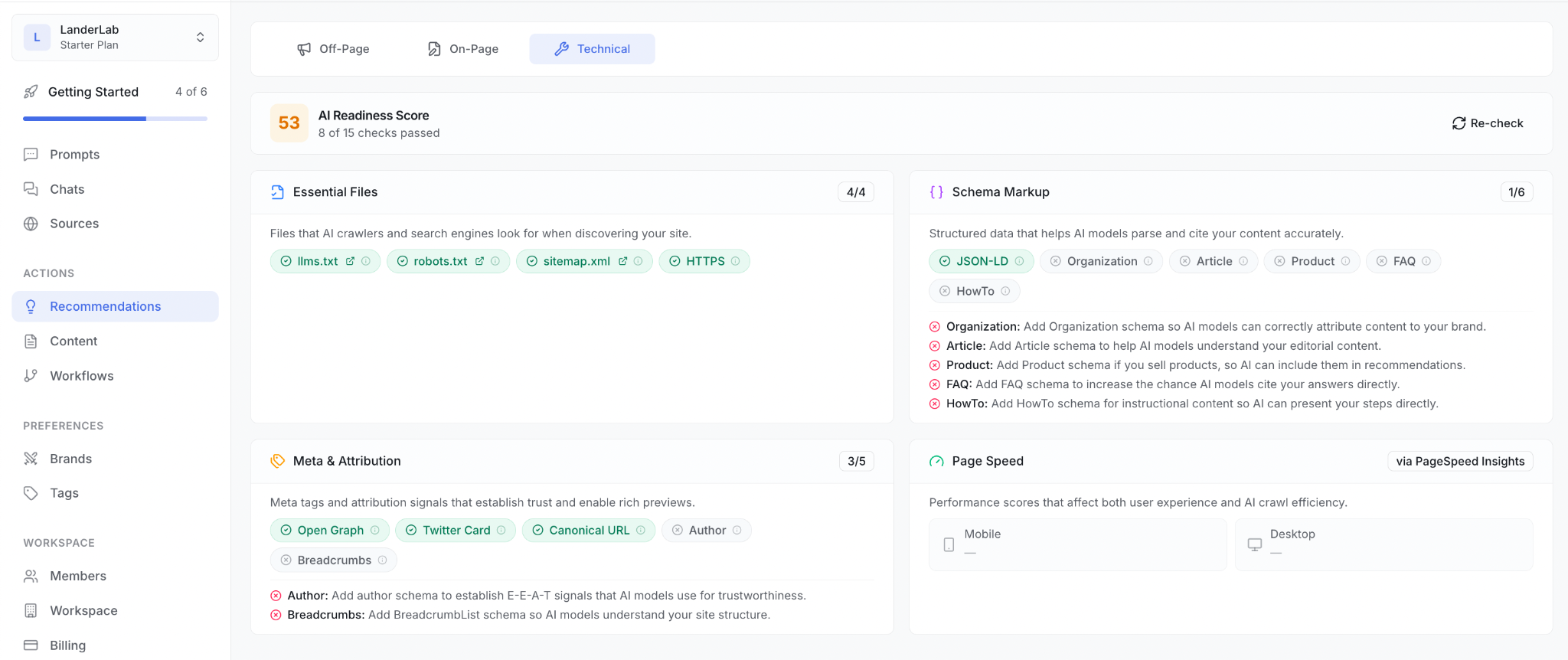
The Technical Recommendations tab in ZeroRank highlights issues that may be limiting your visibility across AI platforms. This can include missing schema markup, weak metadata, crawlability issues, or missing attribution signals.
Final thoughts
The brands that consistently appear in AI answers are usually doing two things well at the same time: they are becoming the recommended brand and becoming one of the sources AI platforms rely on when generating answers.
In some industries, that comes from publishing strong first-party content. In others, it comes from building visibility across third-party sources that already influence AI recommendations.
The important part is understanding what is already driving brand mentions in your category instead of guessing where to invest your efforts.
See where your brand gets mentioned across AI search platforms with ZeroRank. Start your 7-day free trial.
Filed under AI Search Strategies
Head of content and operations. On a mission to make ZeroRank the go-to platform for AI search visibility.
Keep reading
All posts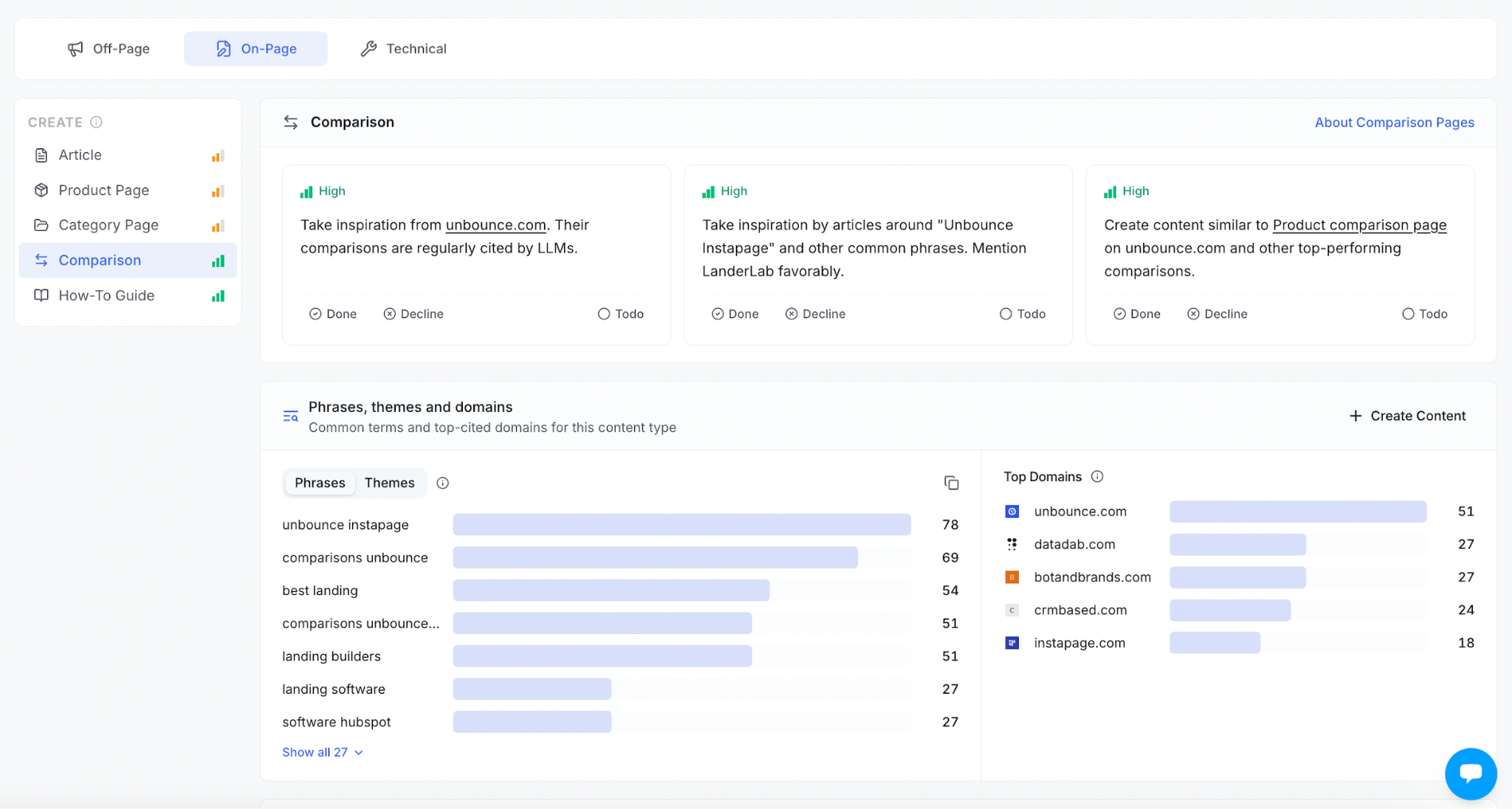 AI Search Strategies
 Answer Engine Optimization (AEO) Checklist
Use this AI search optimization checklist to improve your content, build brand credibility, and fix technical issues so you can get found in AI answers.
 AI Search Strategies
 How to Optimize Content for AI Search: 10 Practical Steps
This guide explains how to find content gaps, create or optimize the right pages, earn more citations, and measure the results with ZeroRank.
 AI Search Strategies
 LLM Prompt Tracking: How to Monitor AI Answers Across ChatGPT, Claude, and More
Tracking the right prompts is the foundation of AI visibility. Learn how to build a high-value prompt library, monitor key metrics across AI platforms, and turn prompt tracking into an effective AI search strategy.