
- 1.AI citations reveal how AI answers are built. They show which websites and content AI platforms trust when generating responses, helping you understand why certain brands are consistently recommended.
- 2.Track the prompts that matter to your business. Analyzing the sources AI cites across your target prompts reveals what already works in your category and where your biggest opportunities lie.
- 3.There are two ways to improve your AI visibility. Either become the source AI trusts by creating the type of content AI already references, or become part of the trusted third-party sources shaping AI answers.
- 4.Your strategy should follow the citation patterns. If AI cites company websites, invest in first-party content. If it relies on editorial publications, review sites, or forums, prioritize off-page visibility.
- 5.Turn citation insights into action. AI visibility platforms like ZeroRank help you track prompts, analyze citation patterns, and generate prioritized on-page and off-page recommendations so you can stop guessing and start optimizing.
AI citations are the websites and content AI platforms like ChatGPT, Claude, Gemini, and Google AI rely on when generating answers.
If you want your brand to appear in AI-generated answers, understanding these citations is essential. They reveal where AI gets its information, which sources it trusts, and ultimately why some brands are mentioned while others are not.
There are two ways to increase your chances of showing up in AI answers:
- Become the source AI trusts by publishing content worth referencing.
- Become part of the sources AI already trusts by building your presence across trusted third-party websites and communities.
Which strategy works best depends on your industry. In this guide, we'll explain how AI citations work, why they matter, and how to identify the approach that's already driving visibility in your category.
What are AI sources?
AI citations are the websites, documents, forums, and other sources that AI platforms reference when generating answers.
Most AI platforms display these as Sources, allowing users to see where the information came from.
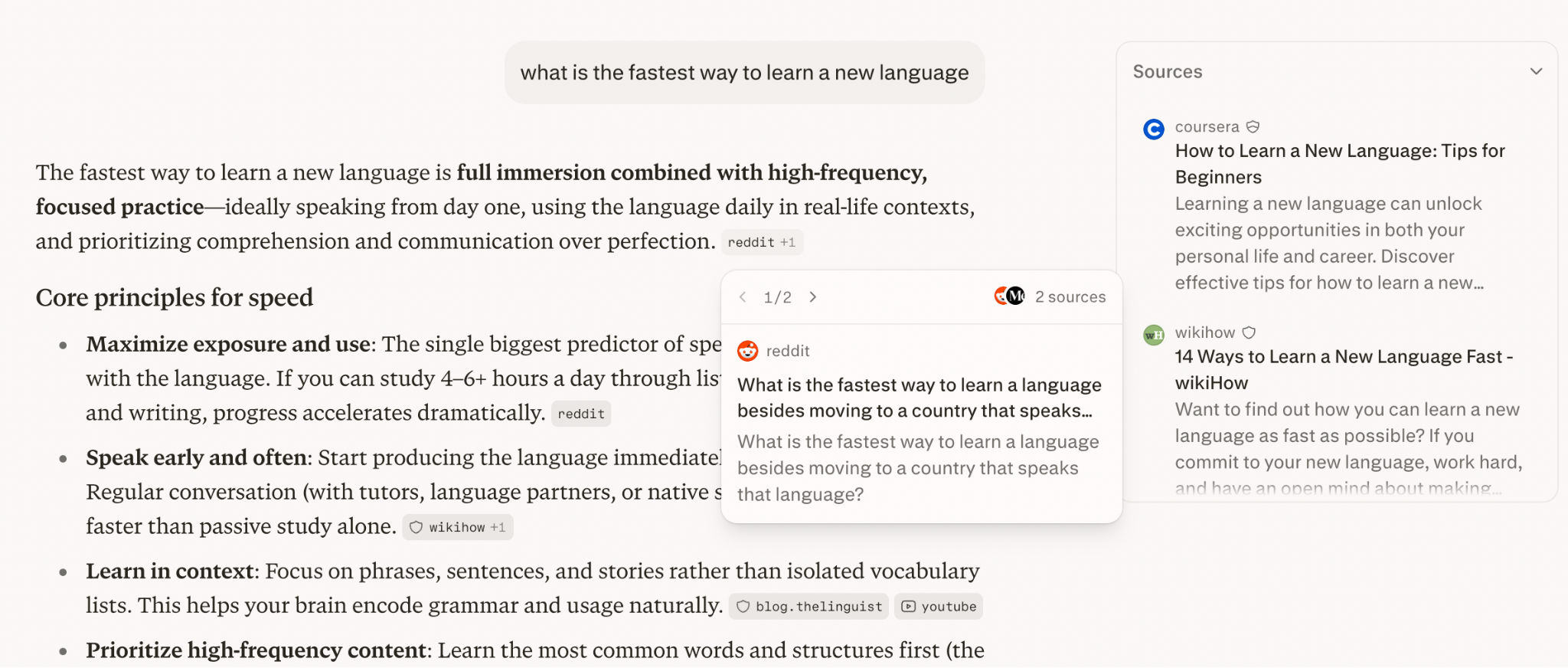
AI citations are different from AI brand mentions. A citation shows where the information came from, while a brand mention shows which brands made it into the final answer.
A brand can be mentioned without its website being cited, and a website can be cited without the brand being explicitly recommended.
For businesses, both matter. Brand mentions measure your visibility in AI-generated answers, while citations help you understand why certain brands appear in those answers and what AI is relying on to generate its responses.
How LLMs choose what to cite
Large Language Models (LLMS) don't publish the exact systems they use to select citations. However, research on retrieval-augmented generation (RAG) and studies of modern AI search systems show that AI generally retrieves information first, then evaluates which sources best support the answer it's generating.
While the exact ranking signals differ between ChatGPT, Claude, Gemini, Google AI, and Perplexity, the same patterns appear consistently.
Relevance comes first
AI doesn't simply look for matching keywords. Instead, it tries to understand the intent behind a question and retrieves the sources that best answer it.
This semantic retrieval approach allows AI to connect related concepts even when different wording is used.
AI favors content that's easy to extract
Clear headings, concise explanations, lists, tables, definitions, and FAQs make information easier for AI to identify and reuse.
Well-structured content is generally easier to retrieve and attribute than long, unstructured marketing copy.
Trust is built through multiple sources
Rather than relying on a single webpage, AI often looks for information that is consistently supported across trusted sources.
If the same facts appear on your website, industry publications, review platforms, and community discussions, AI has more confidence that the information is reliable.
Fresh information matters
For fast-moving topics like AI, software, finance, or current events, search-enabled AI systems tend to prioritize more recent information over outdated content.
Regularly updating key pages, documentation, and research improves the likelihood that AI will rely on them.
The key takeaway is that AI doesn't cite websites randomly. It cites the sources that best answer the user's question and provide trustworthy, verifiable information. That's why analyzing the citations already appearing for your target prompts is so valuable—it shows you exactly what AI considers credible in your category.
Start by understanding what's already working
First, you have to understand what's already working in your category.
Start by tracking the prompts that matter to your business. These are the questions your potential customers ask AI platforms like ChatGPT, Claude, and Gemini.
ZeroRank shows you exactly which sources AI references over time, making it easy to spot patterns like:
- What types of sources are being cited?
- Are you mentioned in those sources?
- Which websites appear across multiple prompts?
- Are competitors being cited from their own websites or from third-party sources?
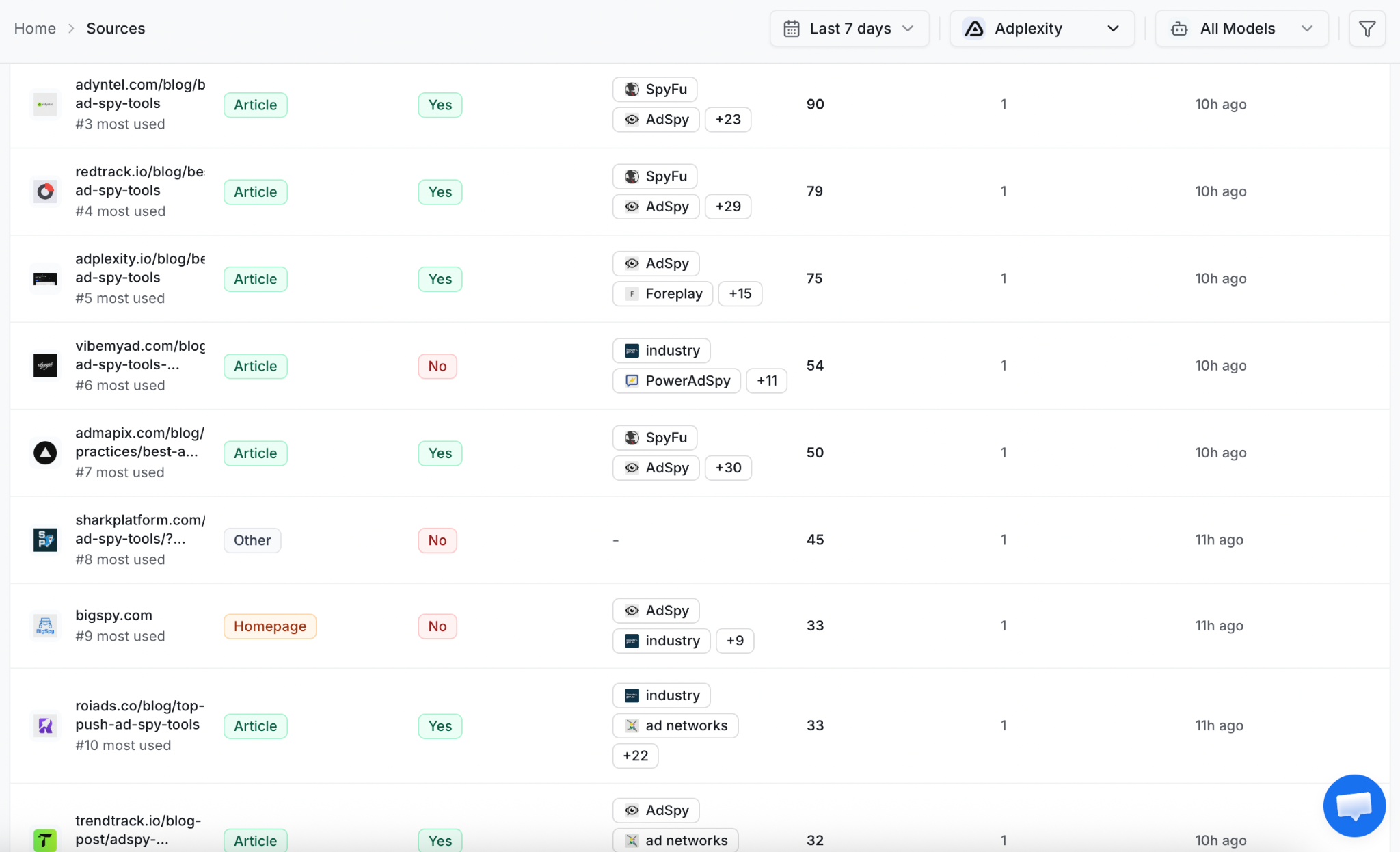
–> If AI is mostly citing company websites, your strategy is to become the source AI trusts.
→ If AI is mostly citing editorial publications, review sites, and forums, your strategy is to become part of the sources AI trusts.
Strategy 1: Become the source AI trusts
If AI consistently cites company websites, documentation, and original research for the prompts you track, your biggest opportunity is to become the source AI trusts.
Look for patterns in the pages that appear across prompts. Are they comparison pages? Use-case guides? Original research? Product documentation?
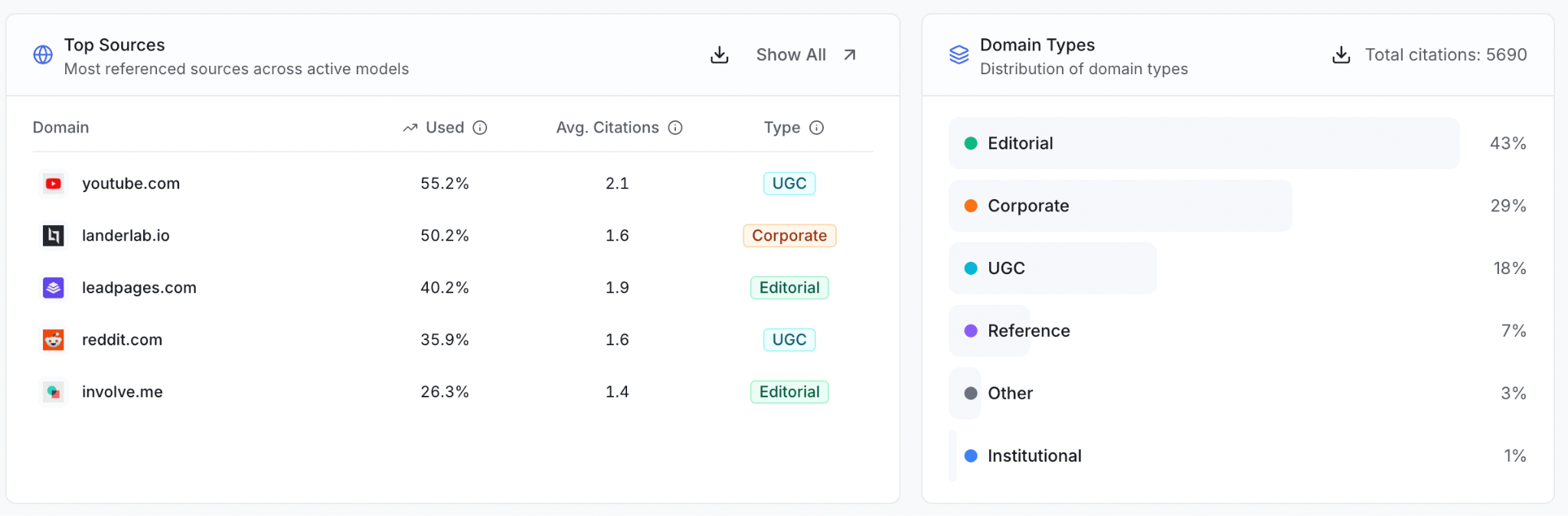
Using ZeroRank, a SaaS company, LanderLab discovered that AI was consistently citing comparison pages, use-case content, and company websites in its category.
As their CEO put it:
“The biggest unlock was seeing the actual answers and the sources behind them. It makes everything much more concrete.”
— Ervin Hoxha, CEO of LanderLab
In just six weeks, LanderLab increased its AI visibility from 5% to 27% (a 440% increase) and became the #1 cited source across key prompts in its niche.
👉 Read the full LanderLab AI search case study.
The team built its content strategy around those citation patterns and scaled production accordingly.
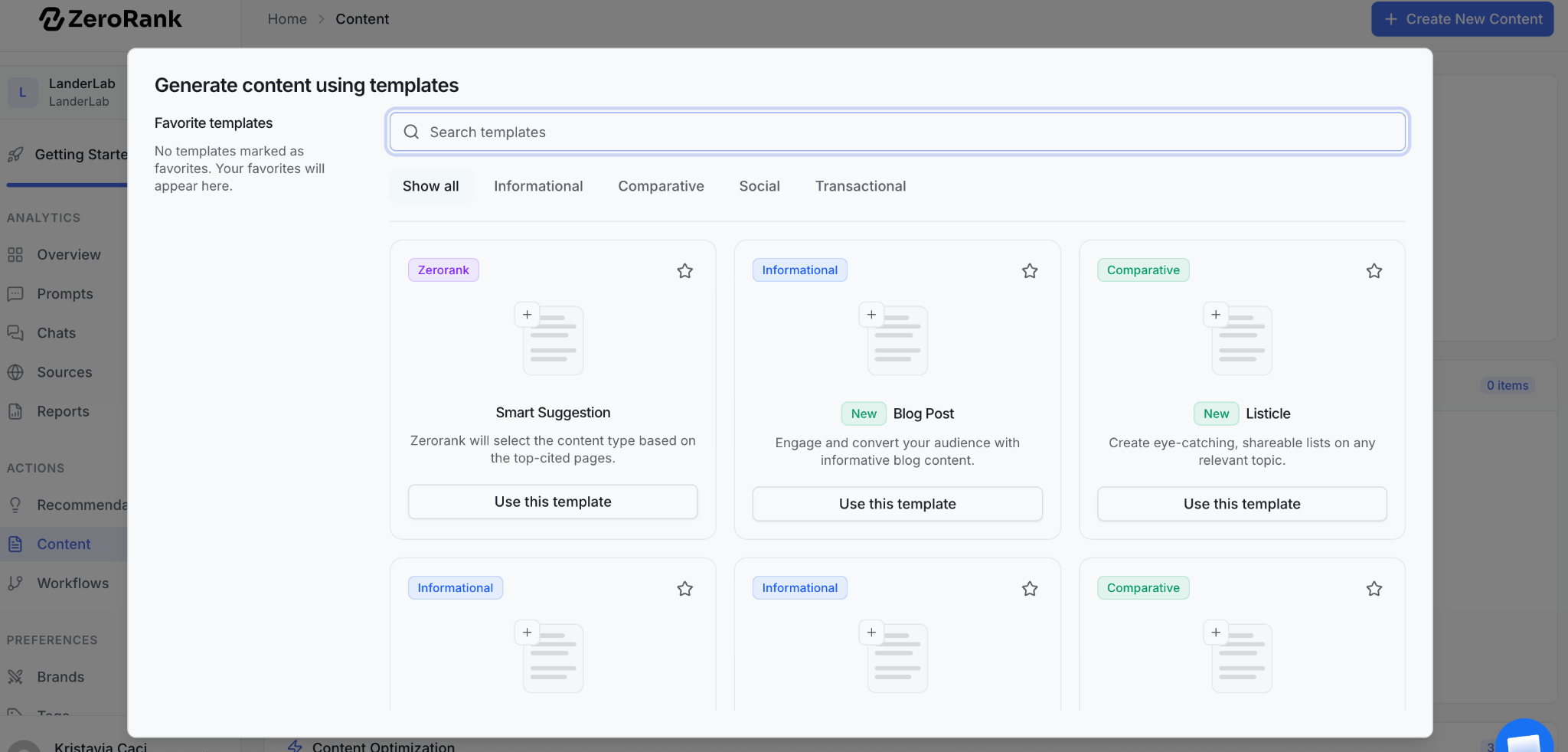
ZeroRank turns these insights into prioritized on-page recommendations, showing you exactly what type of content to create.
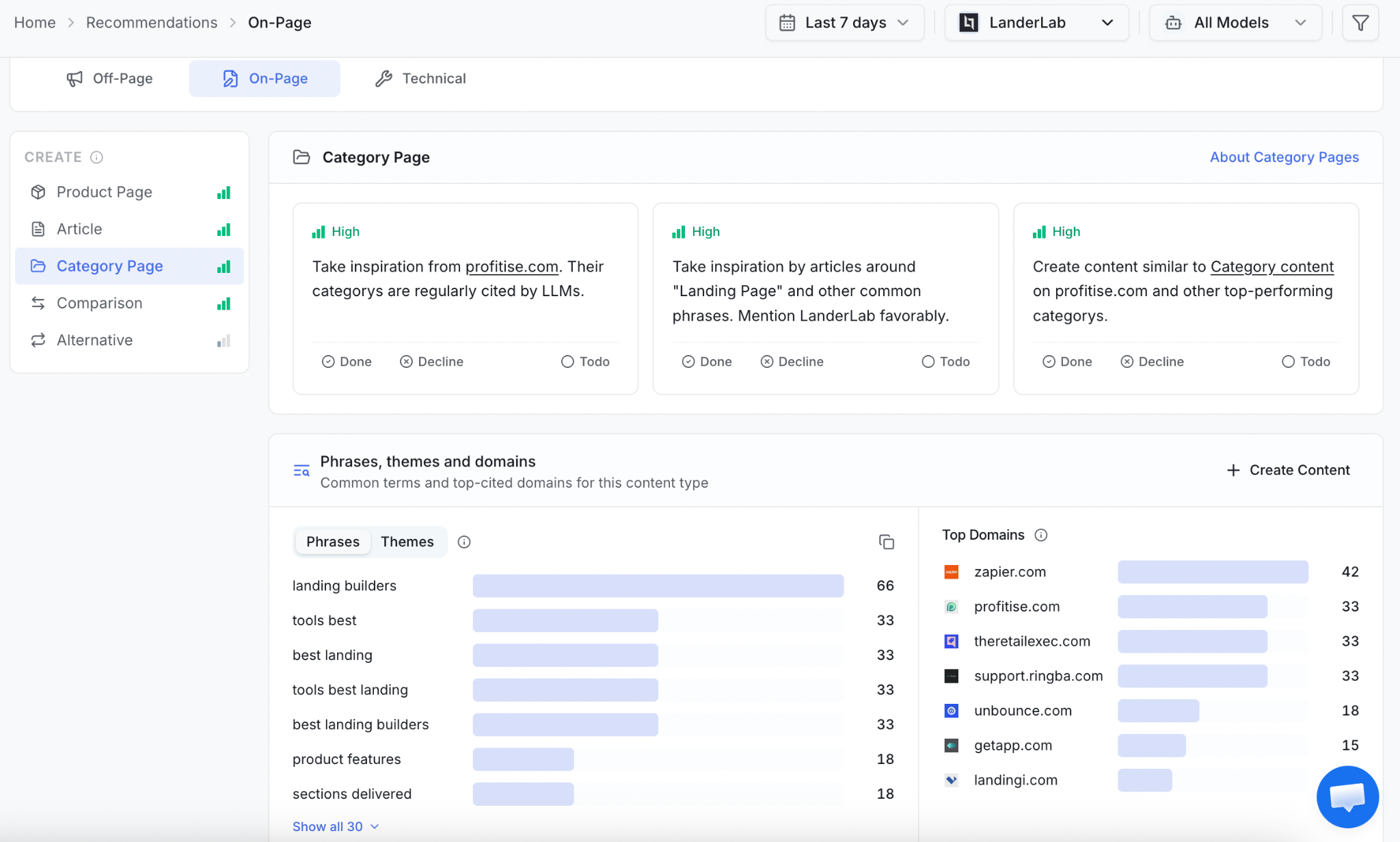
You can then generate optimized content faster with the built-in AEO Content Creation tool.
Strategy 2: Become part of the sources AI trusts
If AI consistently cites editorial publications, review sites, forums, and other third-party pages for the prompts you track, your biggest opportunity is to become part of the sources AI already trusts.
Look for patterns in the pages that appear across prompts. Are they listicles? Review sites? Reddit discussions? Affiliate pages? Industry publications?
Using ZeroRank, Adplexity discovered that AI was consistently pulling information from third-party pages rather than company websites.
As their Marketing & Growth Lead put it:
"We realized pretty quickly this wasn't about ranking our site. It was about showing up in the pages AI already trusts."
— Guido Silbert, Marketing & Growth at Adplexity
In just over two months, Adplexity increased its AI visibility score from 12% to 39% (a 225% increase) and became the #1 cited brand in its category.
👉 Read the full Adplexity AI visibility case study.
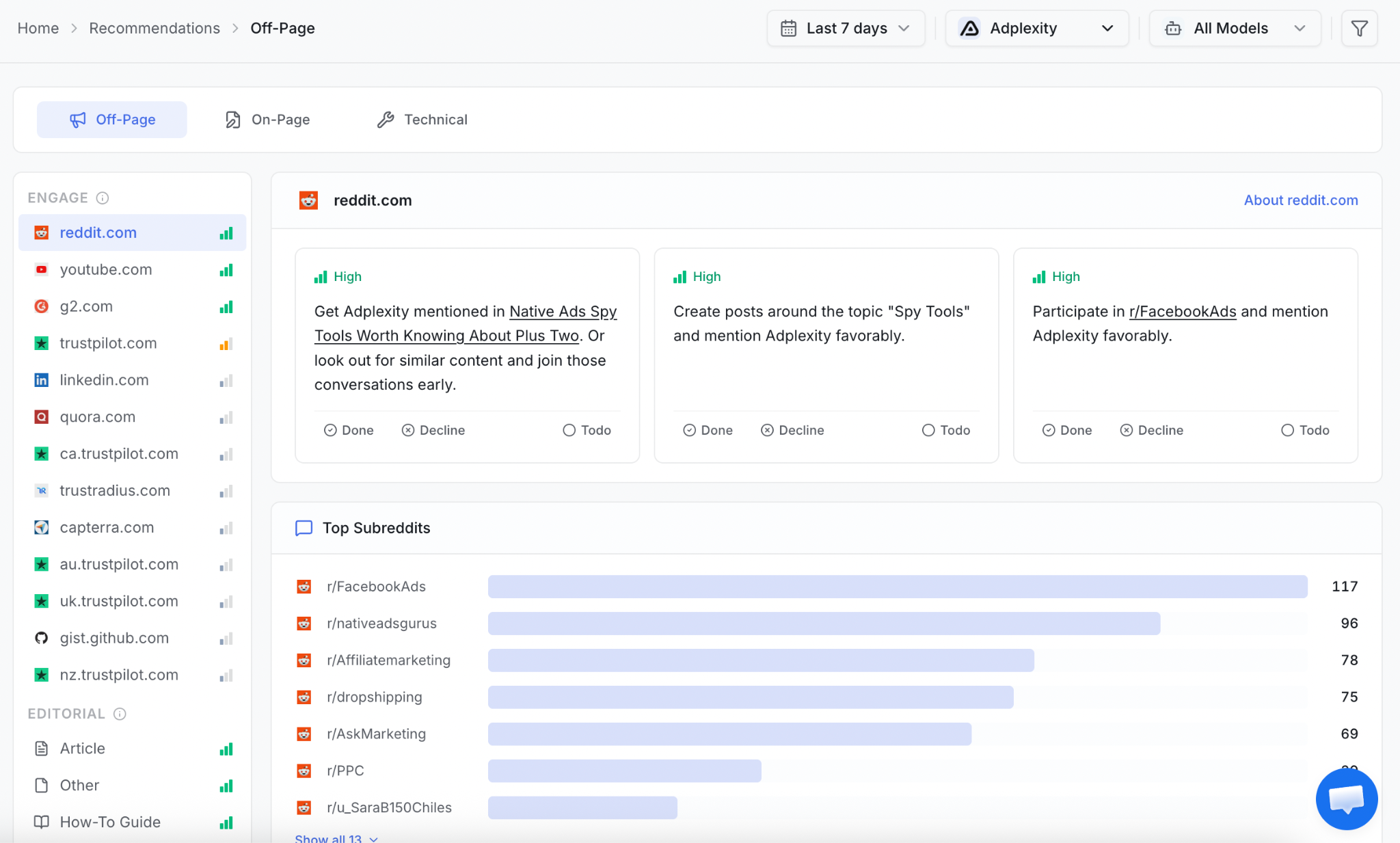
Instead of producing more content, the team focused on increasing its presence across the third-party pages that were already shaping AI answers.
ZeroRank turns these insights into prioritized off-page recommendations, highlighting the pages where your competitors are consistently included, where your brand is missing, and which opportunities are likely to have the biggest impact on your AI visibility.
Turn AI citations into an action plan
The real value of tracking AI citations is knowing what to do with that information.
By tracking the prompts that matter to your business, you can identify the sources shaping AI answers, uncover why competitors are being referenced, and prioritize the opportunities most likely to improve your AI visibility.
Whether your next step is creating new content, earning placements on third-party websites, or improving how your brand is positioned, your strategy should be driven by what AI is already rewarding.
Ready to see what AI is citing in your industry?
Try ZeroRank free and discover the prompts, sources, and recommendations that can help your brand become part of more AI-generated answers


