AI Brand Sentiment: How to Measure and Improve it Across LLMs
Every AI answer shapes how potential customers perceive your brand. But what influences those answers? Learn how to track AI brand sentiment, uncover what's shaping it, and improve how AI talks about your business.

Key Takeaways
- AI brand sentiment measures whether LLMs describe your brand positively, negatively, or neutrally.
- You have to track both overall sentiment and prompt-level sentiment to uncover topic-specific perception gaps.
- Manual sentiment checks are useful for understanding AI responses, but AI visibility platforms provide consistent tracking over time.
- Compare sentiment across multiple LLMs, as different models rely on different sources and can produce different opinions.
- Identify the websites, reviews, and discussions influencing AI responses to understand why sentiment is positive or negative.
- Improve AI brand sentiment by updating outdated information, creating content around recurring concerns, and strengthening your presence on trusted third-party websites.
- Continuously monitor sentiment to measure the impact of content updates, product improvements, and digital PR efforts.
AI doesn't just decide whether to recommend your brand, it also decides how to describe it.
When someone asks ChatGPT whether your product is easy to use, if your pricing is fair, or whether your customer support is good, the answer shapes buying decisions before they ever visit your website.
That's why you should be tracking AI brand sentiment. It helps you understand whether large language models (LLMs) talk about your brand positively, negatively, or neutrally, and more importantly, why.
I’ll walk you through how to measure and improve your sentiment so that LLMs talk more favorably about your brand.
What is AI brand sentiment?
AI brand sentiment is how large language models (LLMs) perceive and describe your brand.
The answer isn't just factual. The LLM forms an opinion by summarizing information from sources like your website, documentation, reviews, Reddit discussions, news articles, and third-party websites.
Depending on what it finds, it may describe your brand positively, negatively, or neutral.
A brand can have a positive overall reputation while still receiving negative or neutral sentiment for specific topics that influence purchasing decisions, such as pricing, customer support, ease of use, or reliability.
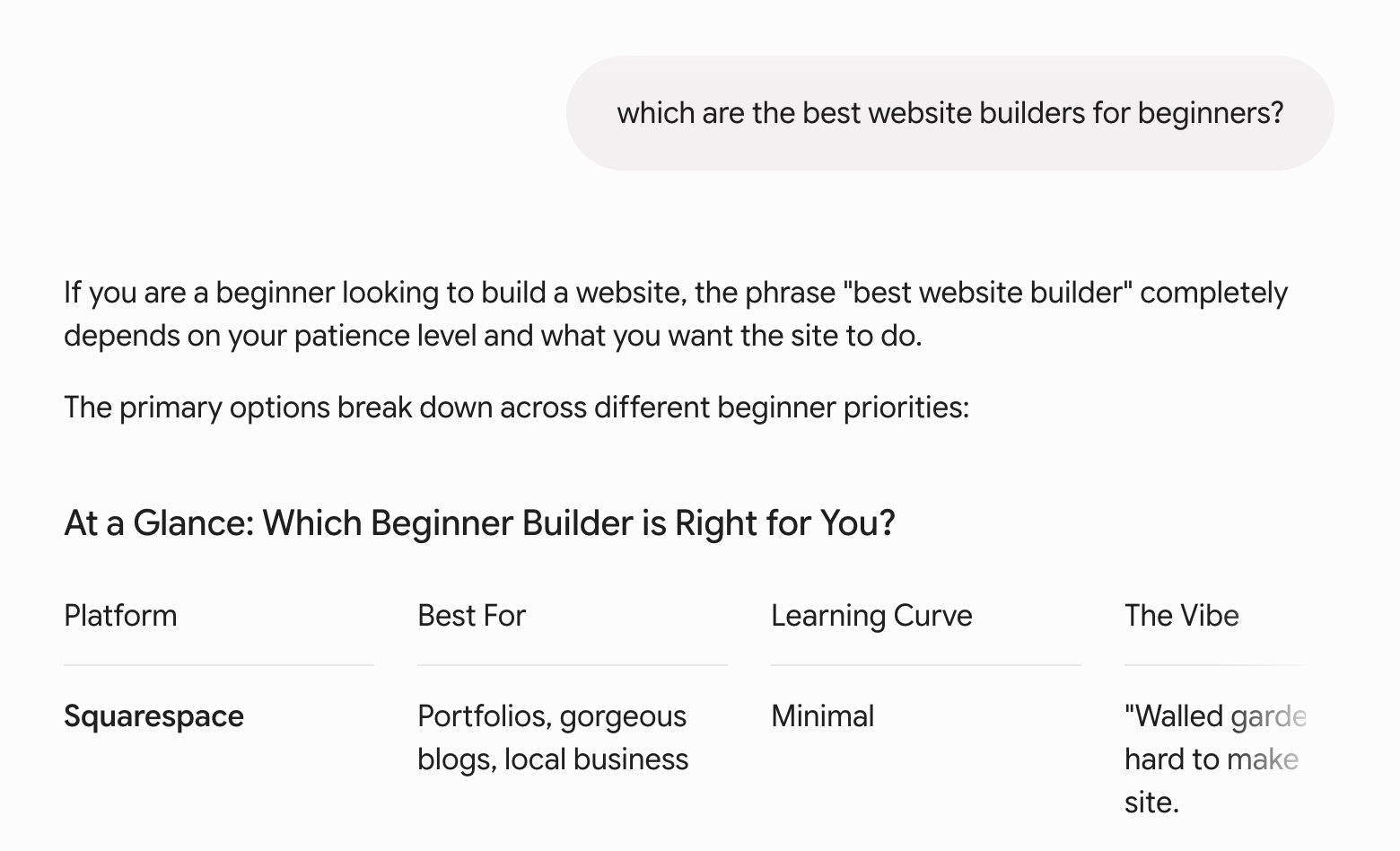
For example, Gemini may recommend Squarespace as one of the best website builders for beginners, contributing to a positive overall sentiment.
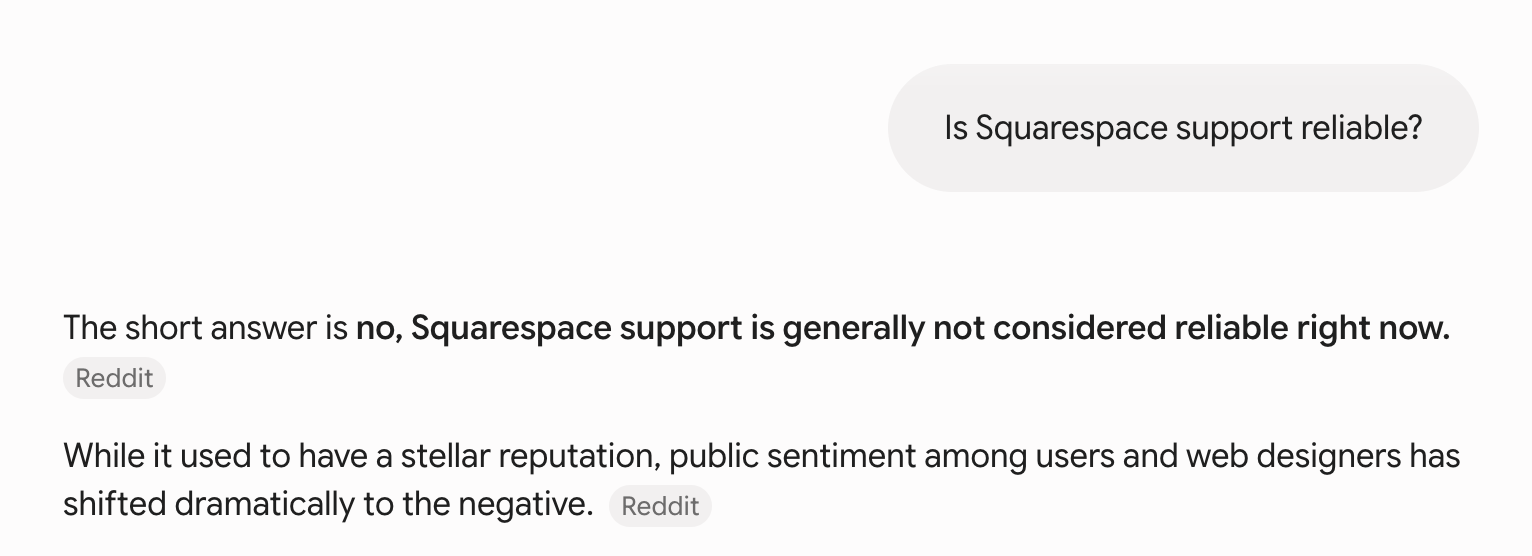
However, when asked whether Squarespace's customer support is reliable, the response is firmly negative.
That's why AI brand sentiment should be viewed at two levels:
- Overall sentiment gives you a high-level view of how AI talks about your brand across all tracked prompts.
- Prompt-level sentiment reveals how AI responds to individual questions, helping you identify the specific topics where perception is positive, neutral, or negative.
Track AI sentiment for the right prompts
The quality of your sentiment analysis depends on the prompts you track.
Start by identifying the key themes that influence purchasing decisions. For most businesses, these include areas such as pricing, customer support, ease of use, reliability, security, features, or integrations.
Once you've identified your themes, create several prompts for each one rather than relying on a single question.
For example, under Customer support, you might track:
- Does Brand X have good customer support?
- Is Brand X's support team responsive?
- Is it easy to get help from Brand X?
For Pricing, you could track:
- Is Brand X worth the price?
- Is Brand X expensive?
- Does Brand X provide good value for money?
You can ask these questions across ChatGPT, Gemini, Claude, Perplexity, and other LLMs, recording whether each response is positive, negative, or somewhere in between.
Keep in mind that AI responses change constantly as models are updated, new reviews are published, documentation changes, and the sources LLMs rely on evolve. The same prompt can also produce different sentiment across different AI models.
AI visibility platforms (opens in a new tab) automate this process by running the same prompts on a regular schedule, classifying each response by sentiment, and tracking how perception changes over time.
In ZeroRank, you can organize prompts using themes and tags such as Reviews, Customer Support, Ease of Use, or Security.
You can see the overall sentiment for each theme and for each prompt. We assign it a score of 0-100, with a higher score being more positive.
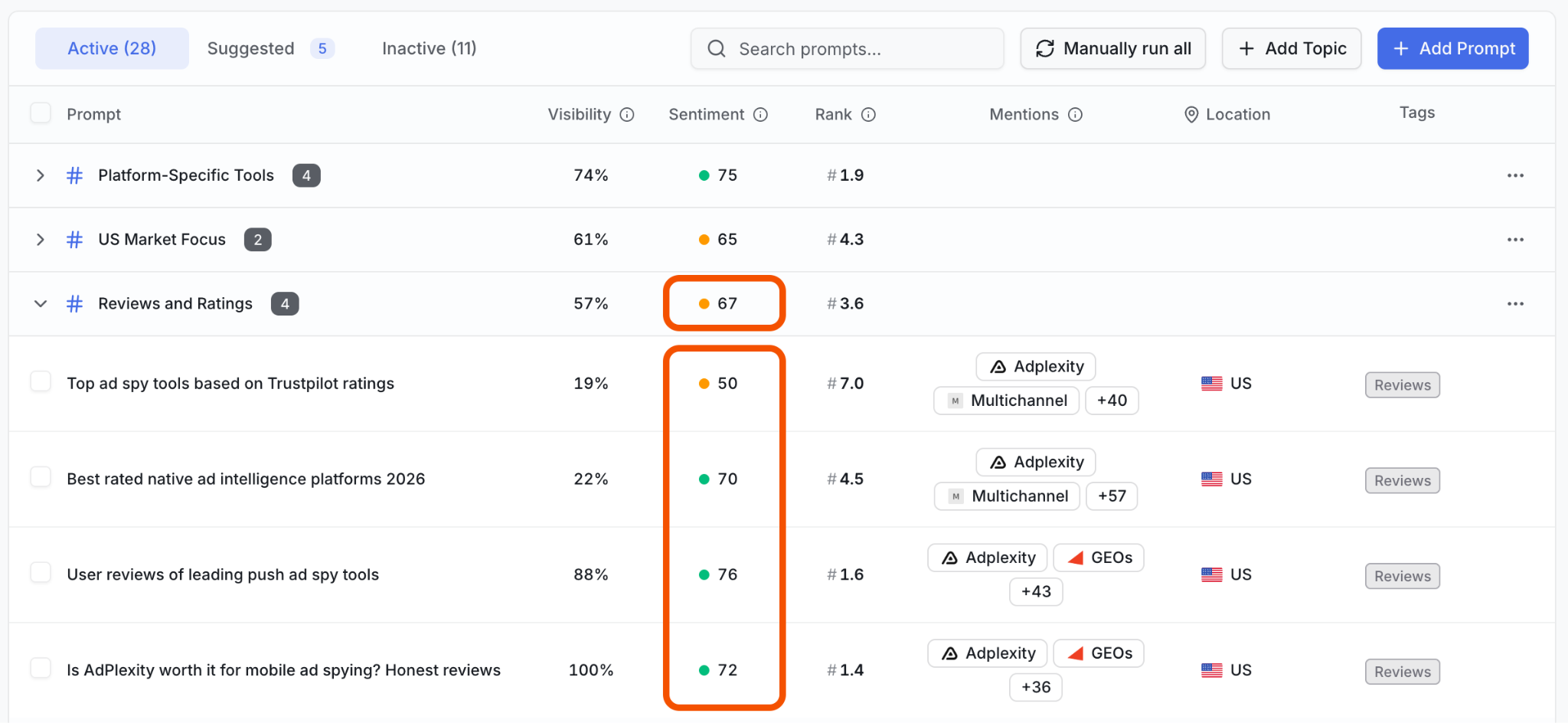
This makes it easy to identify which aspects of your brand need attention. In the example above, we can see the brand has a low sentiment on Trustpilot. So it would be good for them to pay attention to that channel, such as by claiming their profile and proactively asking for reviews.
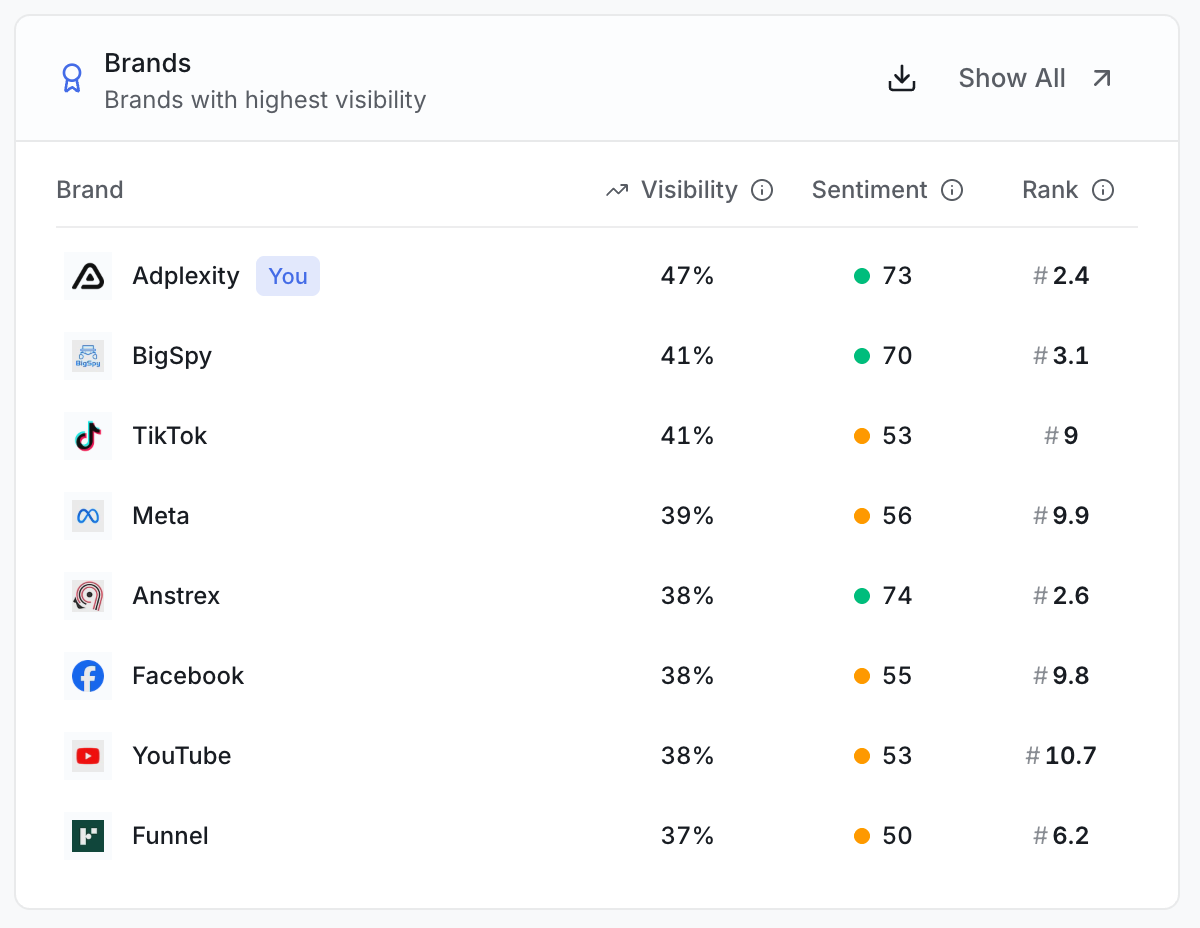
Your overall sentiment is the average of all your prompt sentiment.
In ZeroRank, you can see your overall sentiment in Brand rankings, benchmarked against your top competitors.
Find the sources behind your AI brand sentiment
Measuring sentiment tells you what AI thinks about your brand. The sources tell you why.
When an LLM describes your brand positively or negatively, it's usually influenced by a combination of documentation, review sites, Reddit discussions, news articles, blog posts, YouTube videos, and other third-party sources.
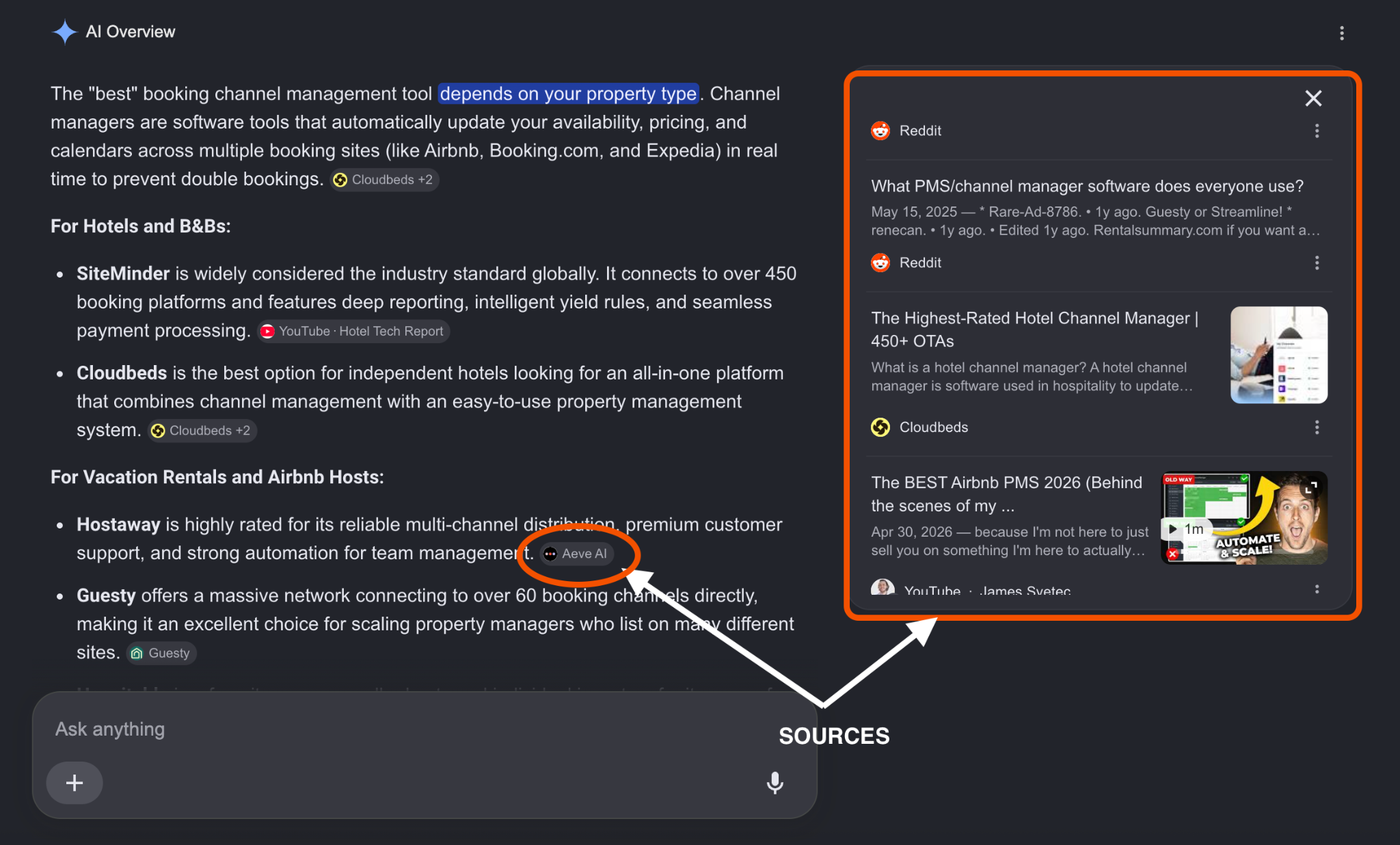
First note the sources of the prompts for which your brand has a negative and neutral sentiment.
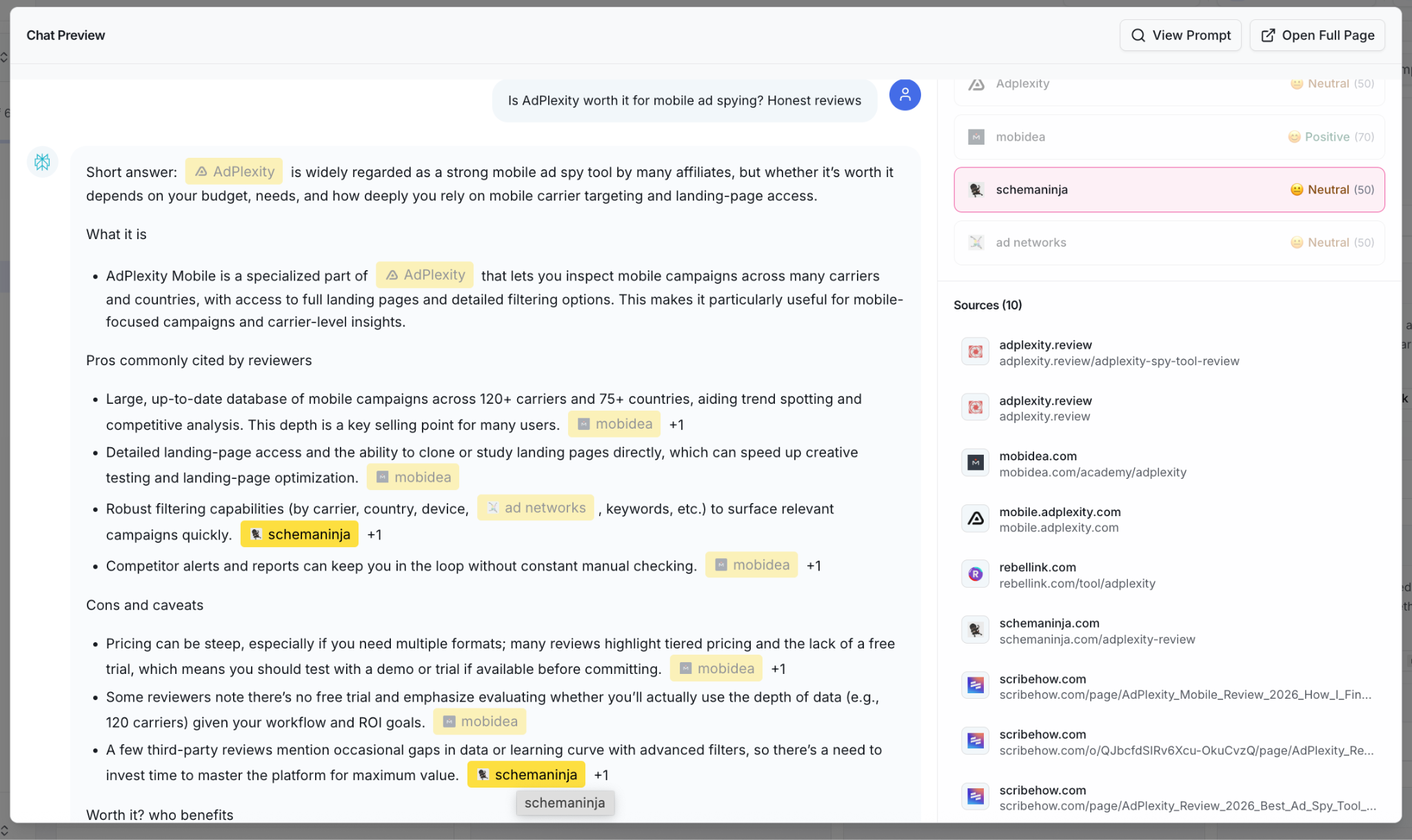
View ZeroRank’s Chats tab to see how different LLMs “rate” your brand across prompts.
Below you can see that for the same prompt, ChatGPT and AI Overviews have a positive sentiment, but Perplexity sees the brand less favorably (50 sentiment score).
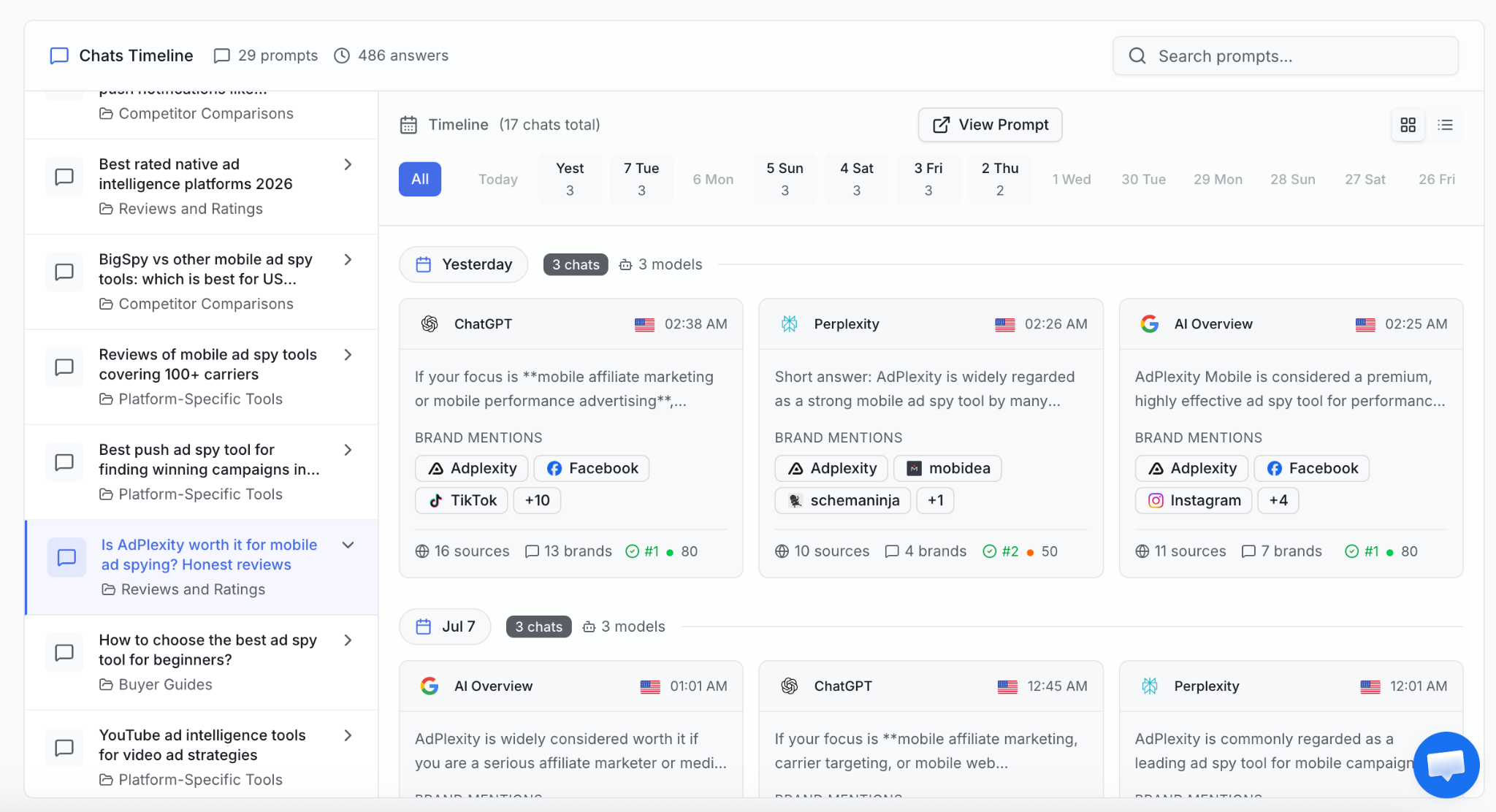
And when you click on the specific prompt, you will see the exact sources shaping the lower sentiment.
How to improve AI brand sentiment
Once you've identified the prompts and sources driving negative sentiment, you can start addressing the underlying issues.
1. Fix inaccurate or outdated sources
From the above analysis, you might find that some LLMs repeatedly cite:
- an outdated comparison article that no longer reflects your product,
- a review site filled with complaints from before a major product update,
- Reddit discussion about an issue you've already fixed,
- or one of your own product pages that has not been updated.
Update your own content where possible, and if a third-party article contains outdated or inaccurate information, reach out to the publisher with the latest details.
2. Create content that answers AI's concerns
Prompt-level sentiment tells you exactly which topics need attention.
If AI consistently says your pricing is confusing, publish a transparent pricing guide or comparison page. If customer support receives neutral or negative sentiment, create content that explains your support channels, response times, or recent improvements. If reliability is a recurring concern, publish case studies, uptime statistics, or customer success stories.
ZeroRank has several content templates. Pick one based on your use case.
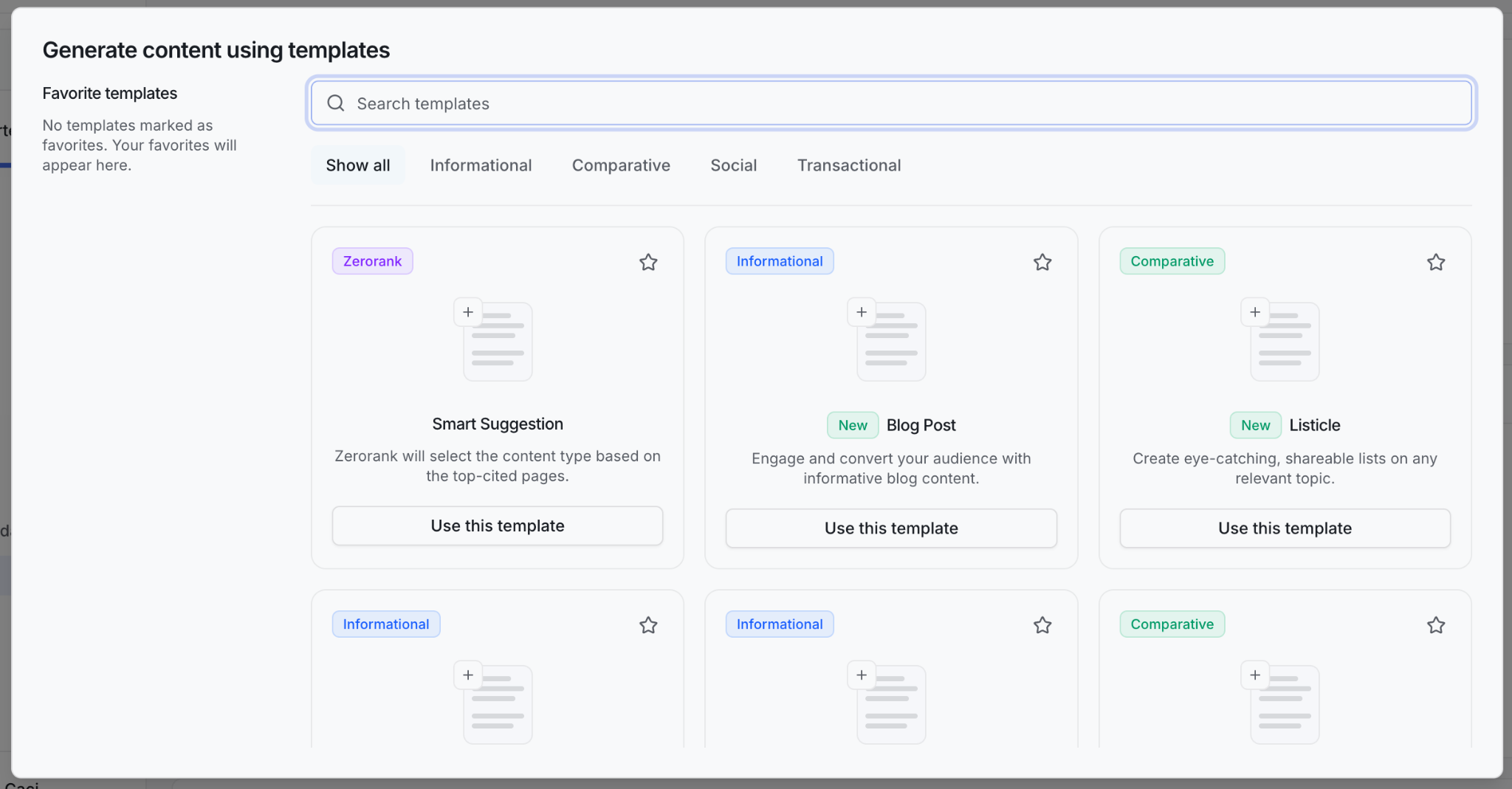
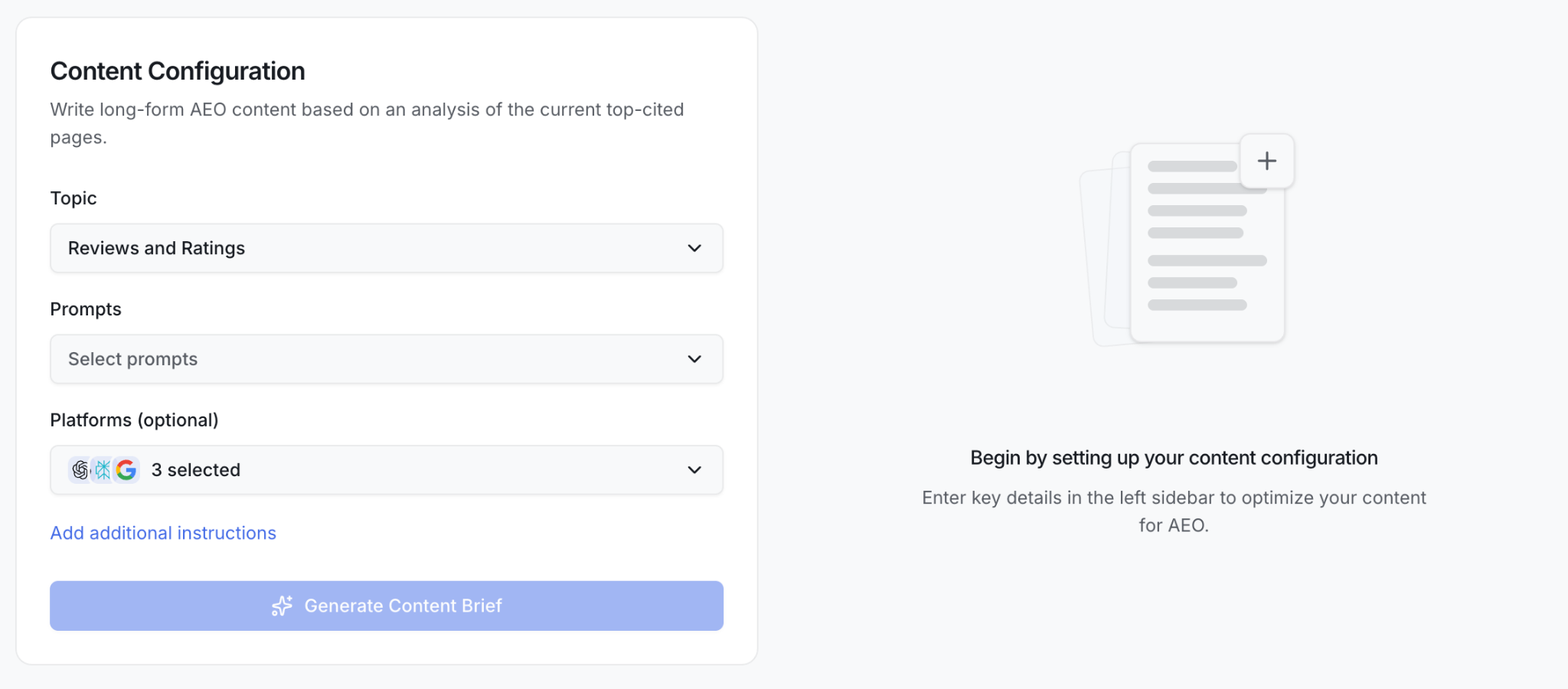
You can further configurate it so that it targets the exact theme and prompt you wish to improve the sentiment of.
3. Strengthen your third-party presence
If your competitors are consistently mentioned in review sites, industry publications, community discussions, and comparison articles while your brand isn't, AI has fewer trusted sources to reference.
Focus on earning mentions where your audience already looks for information:
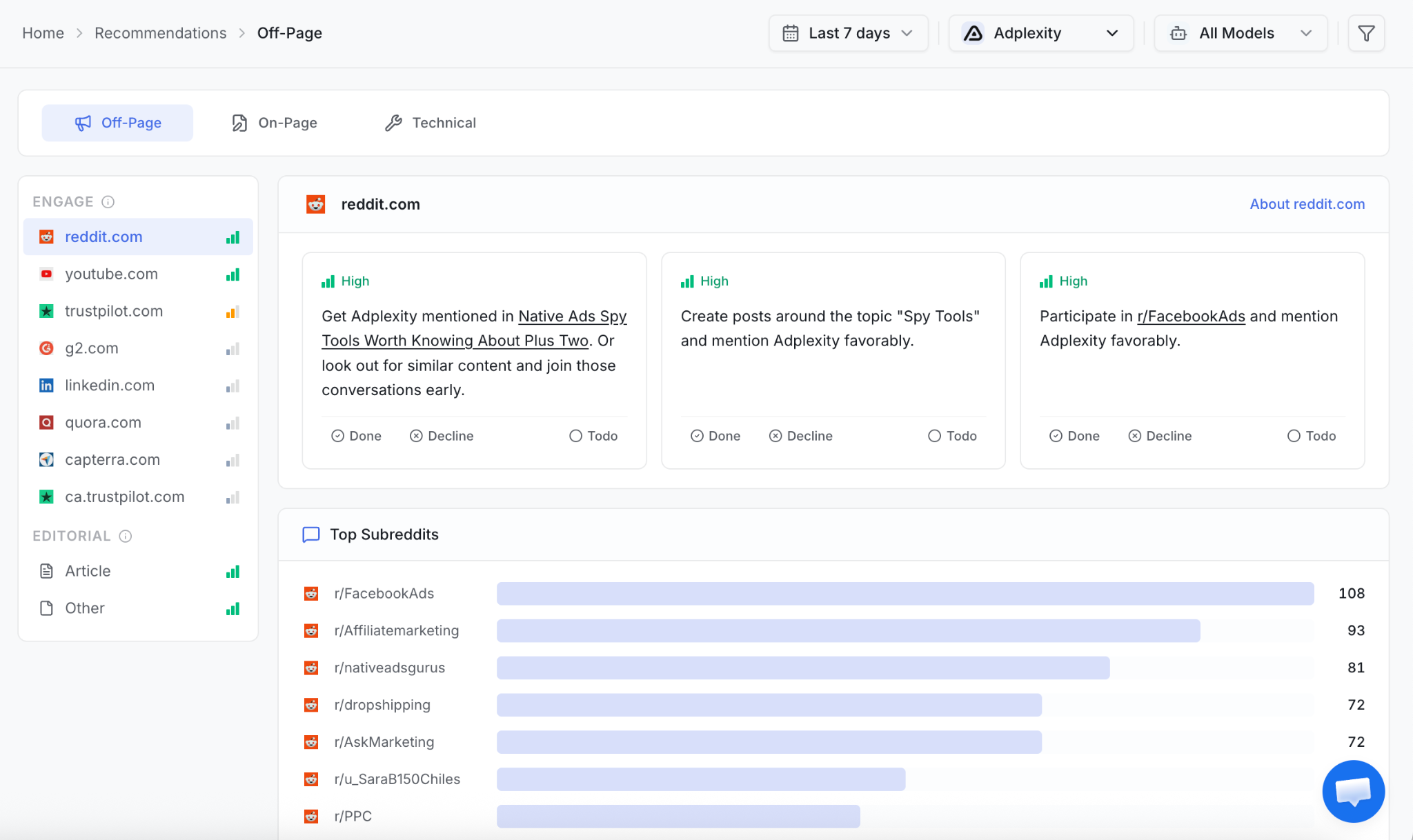
The Off-page Recommendations surface these third-party sources for you. From Reddit discussions to article mentions, every suggestion has a priority based on how important is to shaping AI answers.
4. Separate perception problems from product problems
Sometimes AI is wrong.
Sometimes your customers are right.
If the same complaint appears consistently across reviews, forums, and AI responses, it's usually a product or service issue worth fixing.
Better onboarding, clearer pricing, or faster support will often improve both customer satisfaction and AI brand sentiment over time.
Track sentiment overtime
After updating documentation, improving customer experience, or correcting inaccurate sources, continue tracking the same prompts over time.
You should soon start to see some changes.
This should be a continuous process.
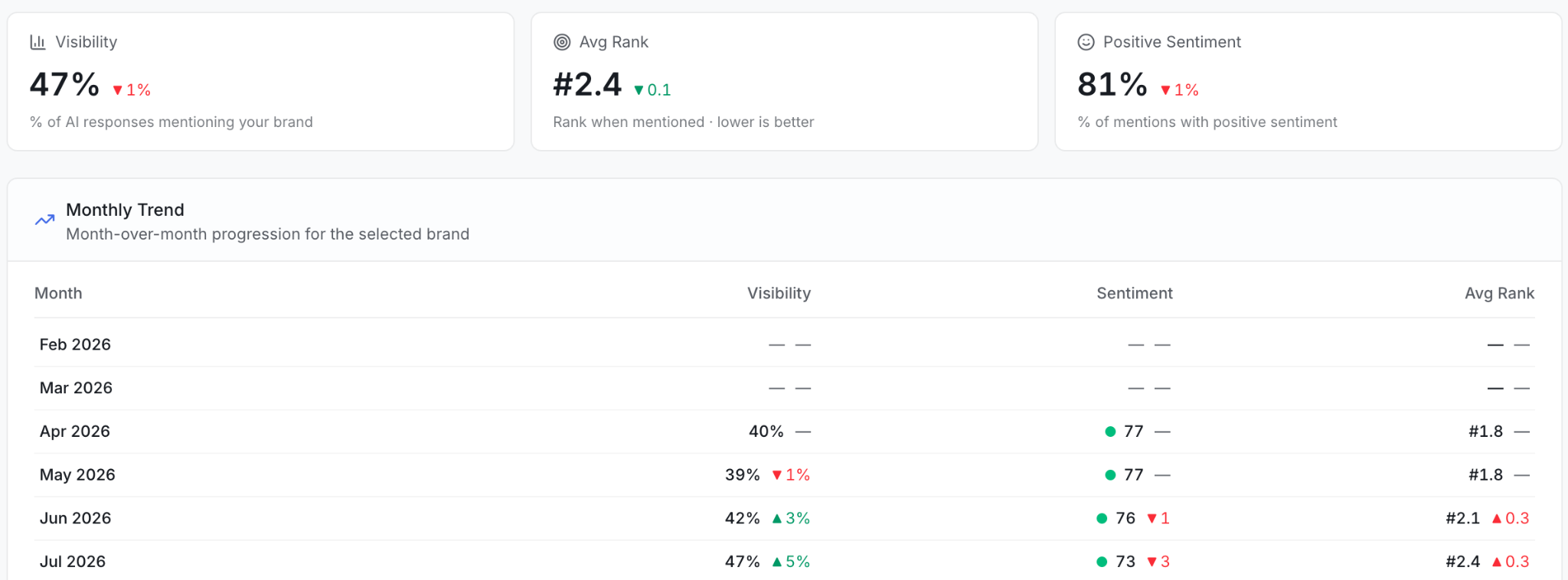
ZeroRank’s Reports give you a snapshot of your sentiment changes over a specified time frame and you can dig deeper into the sentiment of specific prompts.

The Reports also help you identify sentiment drop patterns before they become bigger issues.
Measure and improve your AI brand sentiment with ZeroRank
ZeroRank helps you track AI brand sentiment across 17 LLMs, analyze sentiment by prompt and topic, uncover the sources influencing AI responses, and give you actionable recommendation on improving how LLMs talk about your brand.
Start tracking your brand sentiment with ZeroRank for free.
Filed under AI Search Education
Head of content and operations. On a mission to make ZeroRank the go-to platform for AI search visibility.
Keep reading
All posts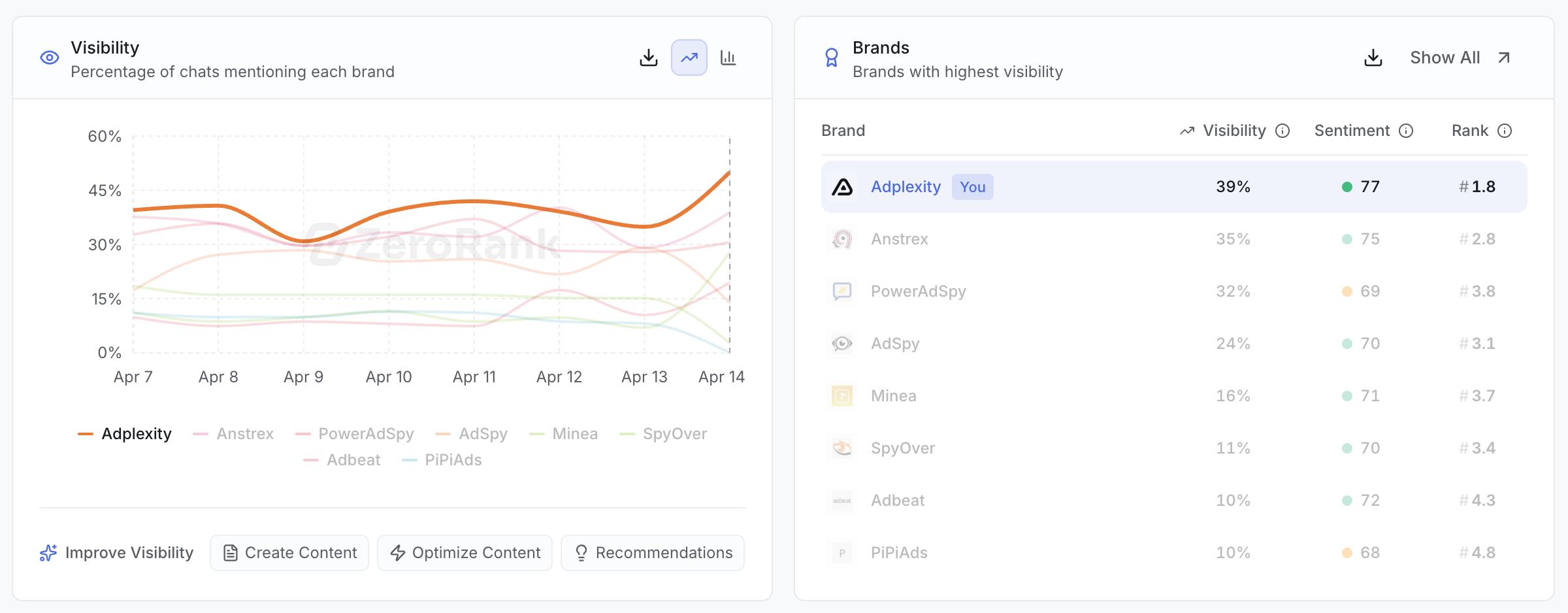 AI Search Education
 AI Search Analytics: What to Track and How to Use the Data
Learn how to use AI search analytics to track visibility, research prompts, analyze sources, and turn your findings into practical improvements.

 AI Search Education
 The 14 Best GEO Agencies for SaaS in 2026 (Pricing and G2 Ratings Verified)
We verified pricing pages, G2 and Clutch ratings, and AI search deliverables for 14 GEO agencies serving SaaS. Six publish no price. See who fits your budget.
 AI Search Education
 GEO vs. SEO: What’s the Difference?
GEO vs. SEO explained with practical examples. Learn how AI search optimization differs from traditional SEO and how to improve your AI visibility.