AI Visibility Case Study: Becoming the #1 AI-Cited Brand [Adplexity]
In just over two months, Adplexity grew its AI visibility from ~12% to 39%, becoming the most cited brand in its category. Here's how they made it happen with ZeroRank.

Adplexity (opens in a new tab) has been a well-known player in the ad intelligence space for years.
But like many established companies, they ran into a new problem: being known didn’t mean being recommended in AI answers.
When they started using ZeroRank, they were sitting at ~12% visibility across key prompts, meaning they were only appearing in a small fraction of relevant AI-generated answers.
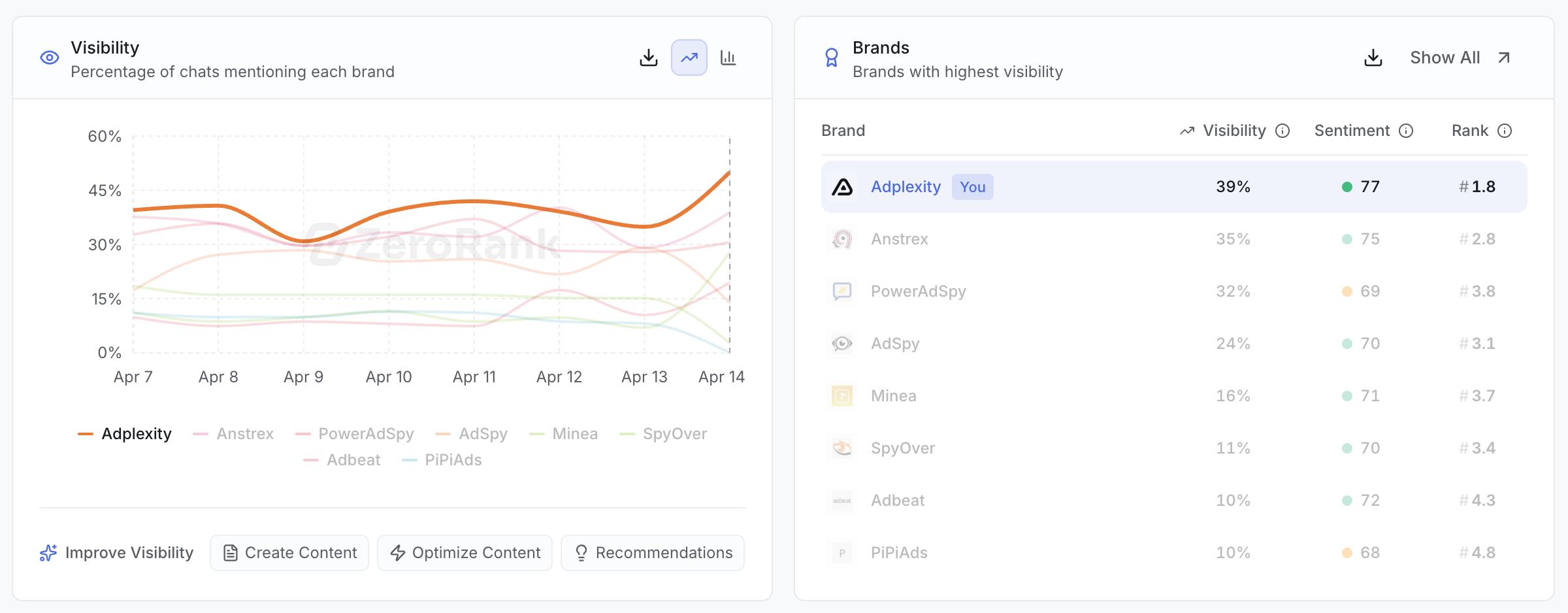
Today, Adplexity is the #1 cited brand in its category, and growing:
- 39% visibility across key prompts
- 1.8 ranking position for high-intent queries
- Highest sentiment score in the category (77)
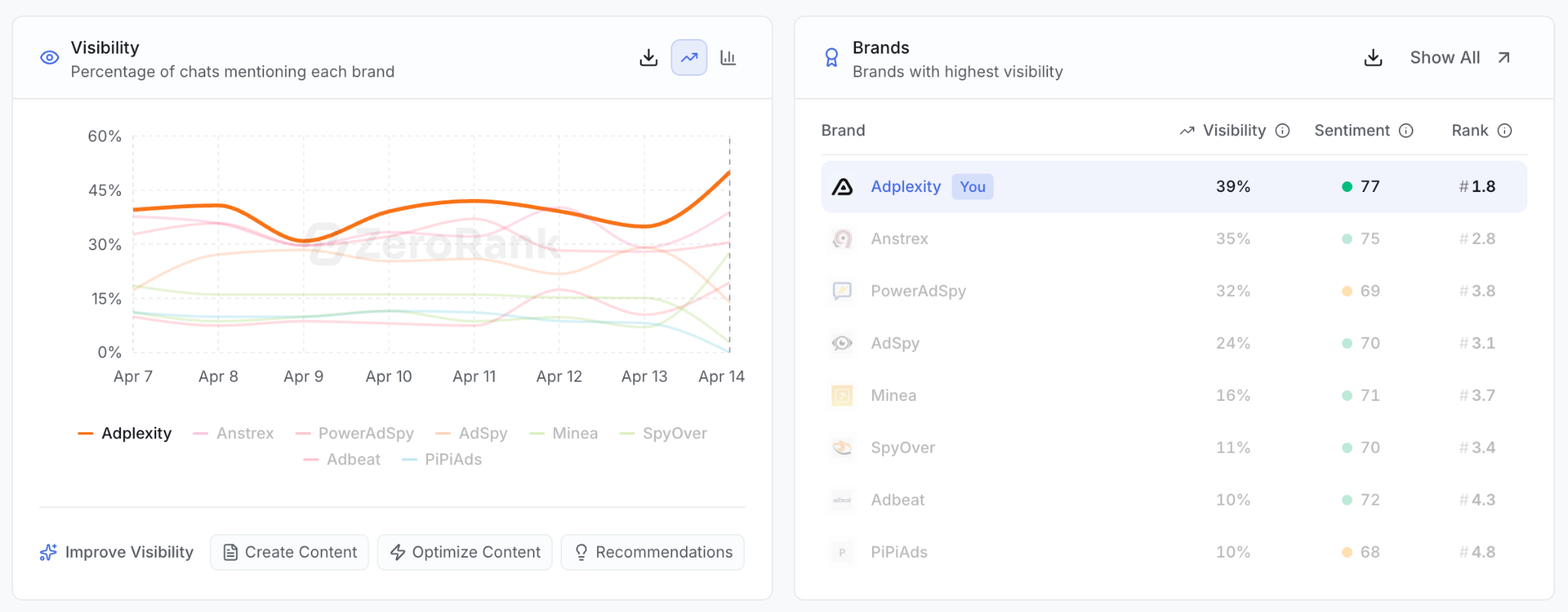
That’s a 225% AI visibility increase in just over two months.
And it didn’t come from producing more content. It came from shifting how they approached visibility altogether.
The pattern that shaped their AI search strategy
Adplexity is an established brand with strong visibility in traditional channels.
But inside ZeroRank, a different picture emerged.
They weren’t consistently showing up across real prompts like:
- “Top native ad spy platforms for outbrain and taboola ads”
- “User reviews of leading push ad spy tools”
- “Social ad spy tools targeting US Facebook audiences”
💡Note: User prompts can be veeeery specific, use-case driven, and close to a decision.
When they looked at how those answers were built, the pattern was clear:
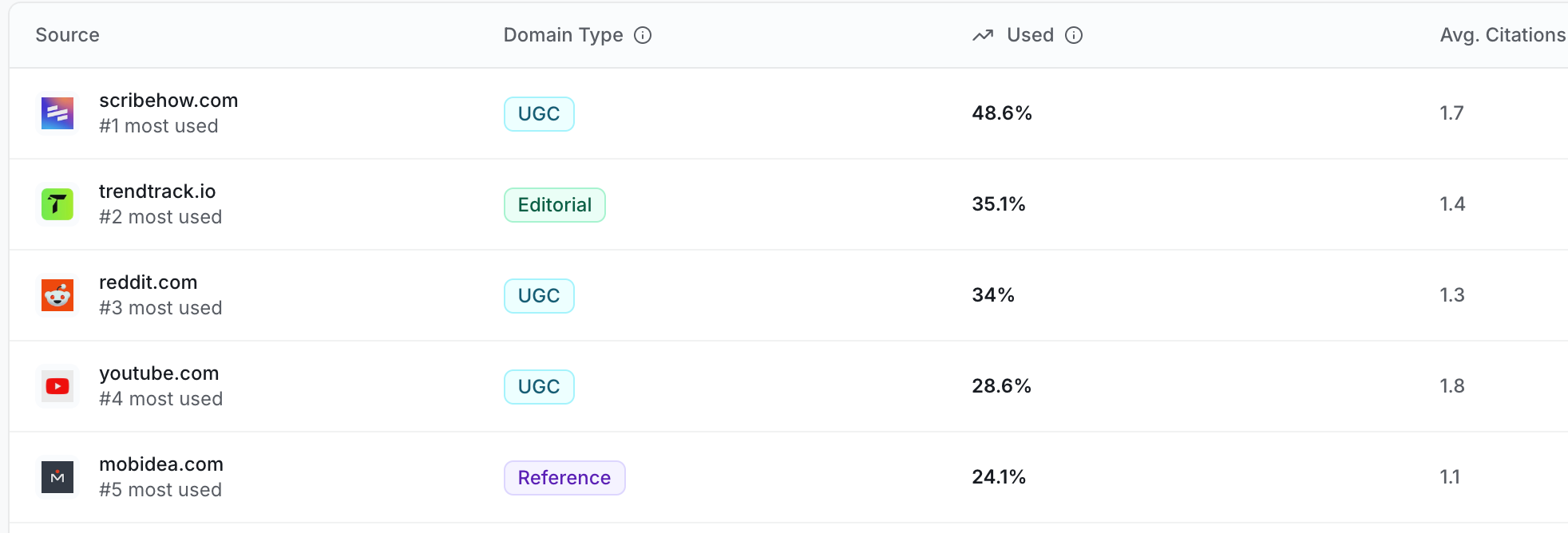
- top sources were UGC platforms and review-style pages
- listicles and comparisons were often pulled from third-party sites
- editorial or branded content played a much smaller role
“We realized pretty quickly this wasn’t about ranking our site. It was about showing up in the pages AI already trusts.”
Guido Silbert, Marketing & Growth at Adplexity
This is where their strategy shifted.
Not more content. More presence across the third-party sources shaping answers.
Building presence across the pages that shape AI answers
Using ZeroRank’s Recommendations tab, they built a working list of:
- high-impact URLs showing up across multiple prompts
- pages where competitors were consistently included
- pages where Adplexity was missing or under-positioned
They focused on the same pages that kept showing up in answers (see: ‘Used Total 'column below).
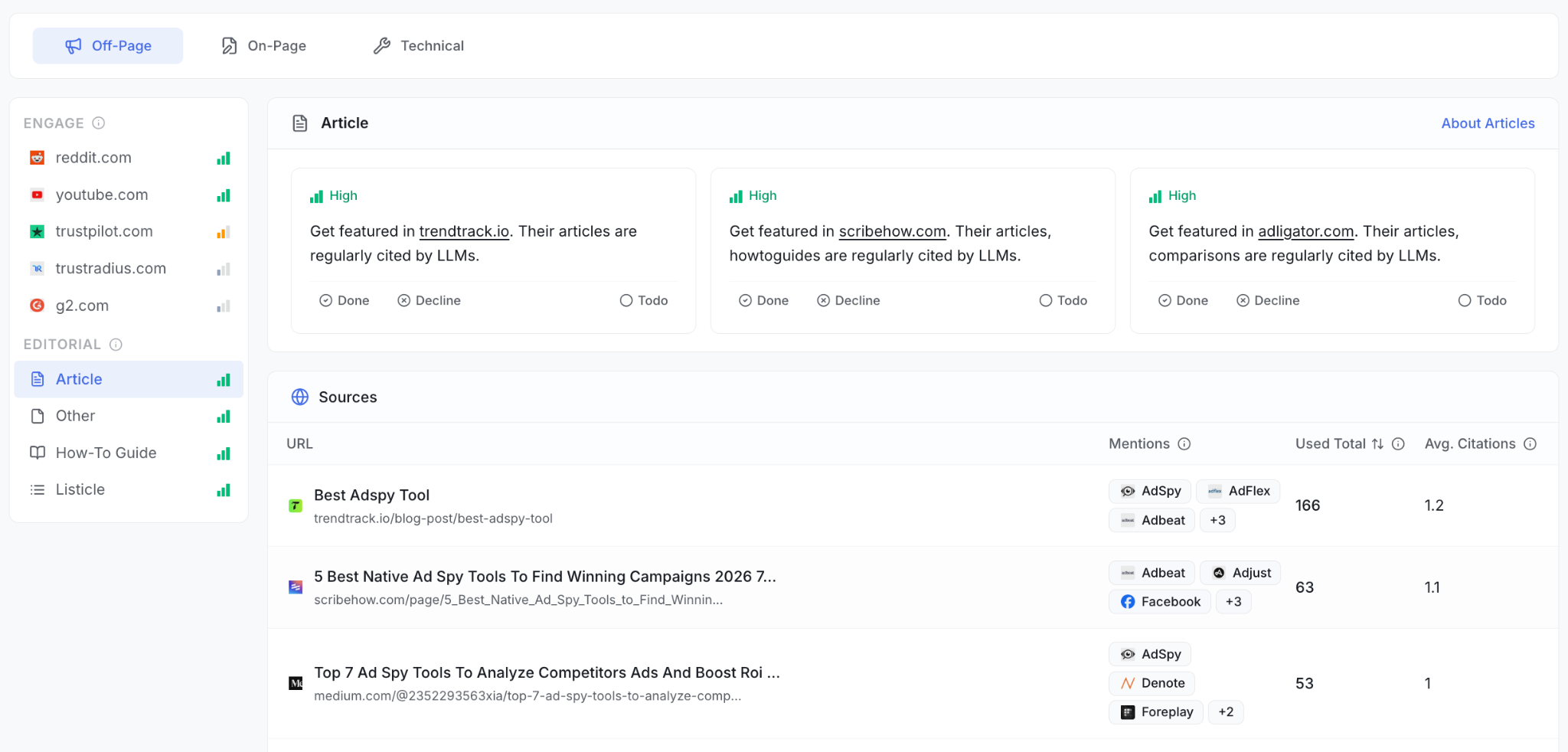
From there, execution was straightforward:
- Reaching out to publishers to get included in existing listicles
- Securing placements on affiliate-driven pages where needed
- Pushing updates on outdated comparisons where competitors dominated
- Improving how they were positioned inside the page
“Once we had the list of pages, it stopped being a strategy question. It was just execution.”
— Guido Silbert, Marketing & Growth at Adplexity
Positioning across use cases (not just inclusion)
Getting into the right pages increased visibility.
But how Adplexity was positioned inside those pages is what made the difference.
Across listicles and comparisons, they focused on:
- being tied to specific use cases (“best for native ads”, “strong for Facebook ad spying”)
- appearing in top positions, not just included
- being described consistently across sources
This is what allowed them to show up across different types of prompts, not just one.
For example:
- feature-based prompts → “best tools for Facebook ads”
- use-case prompts → “tools for spying on competitors’ native ads”
- validation prompts → “user reviews of push ad spy tools”
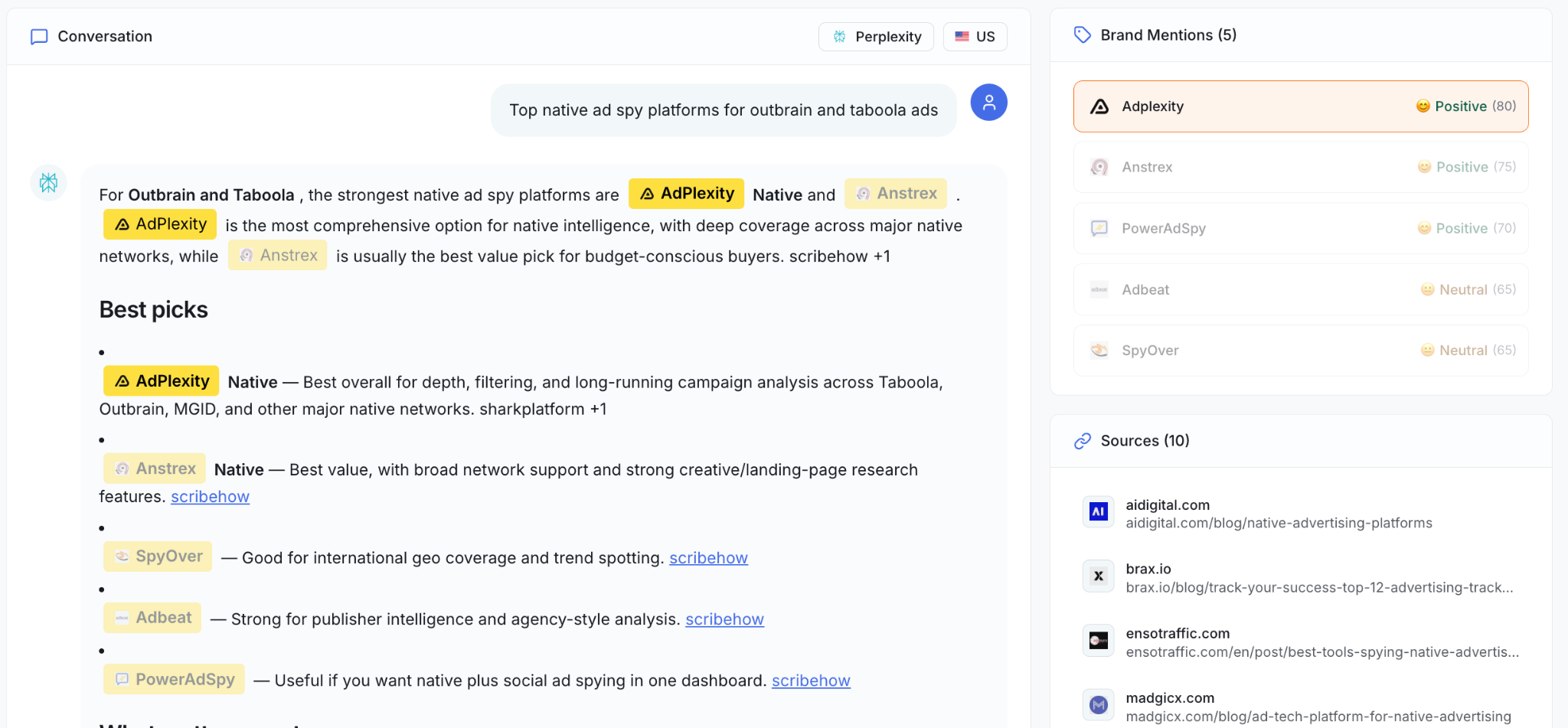
This approach is what drove their 77 sentiment score (highest in category).
Not just more mentions, but better, more aligned ones.
Compounding impact: from visibility to acquisition
As Adplexity increased its presence across these third-party pages, visibility didn’t grow one prompt at a time.
It moved across the entire category.
The same URLs kept showing up across multiple queries, so every new placement carried over into several prompts at once.
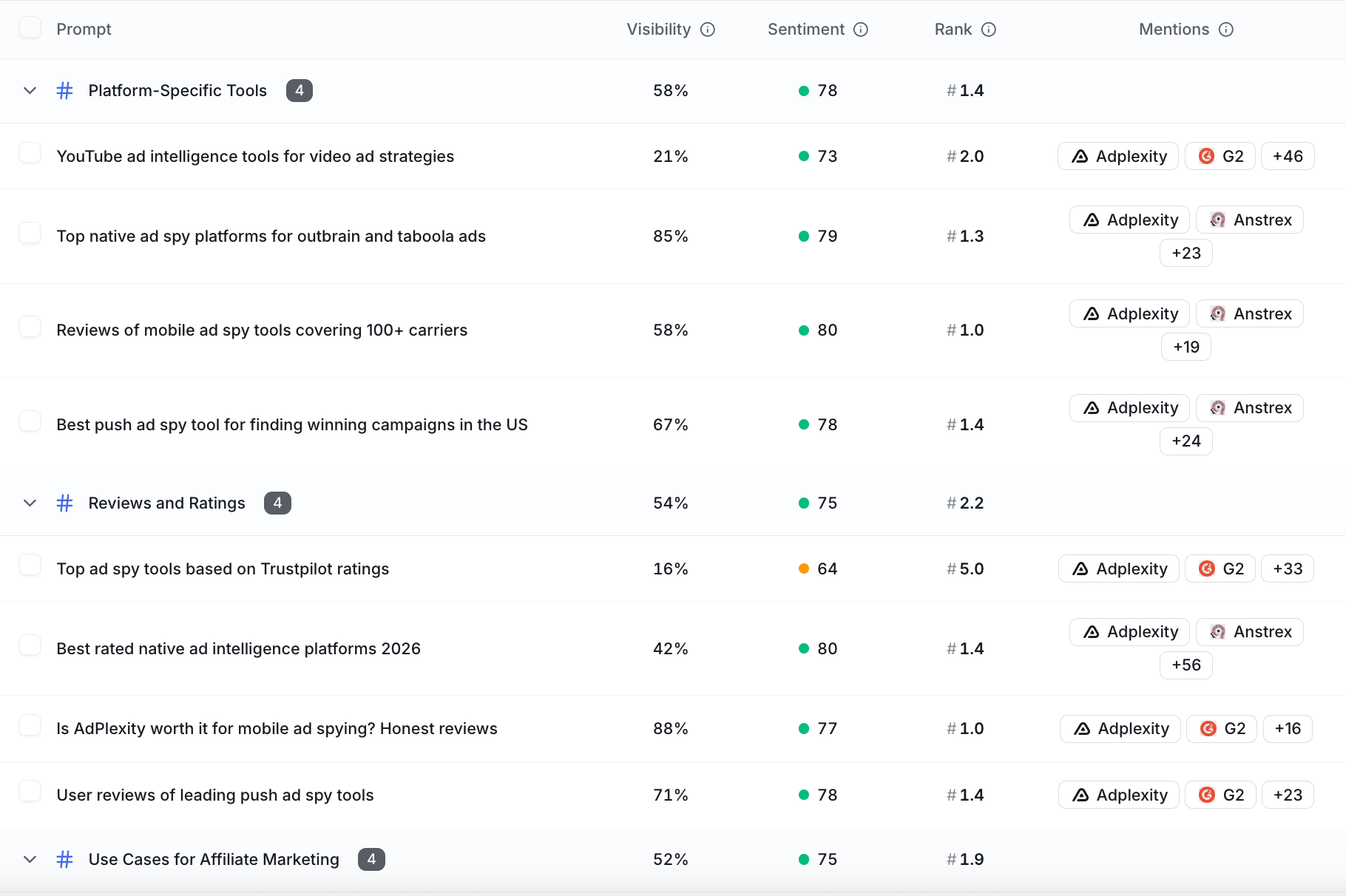
Users coming through AI answers were already comparing tools, familiar with the category, and much closer to making a decision.
“We started seeing users come in already knowing the space and where we fit. The conversation was completely different.”
— Guido Silbert, Marketing & Growth at Adplexity
That translated into:
- a noticeable increase in high-intent demo requests
- more users arriving already aware of Adplexity vs competitors
At that point, AI search stopped being just a visibility channel.
It became a qualified acquisition channel.
Takeaway
AI answers are not built from your website alone.
Most teams default to producing more content.
And in some cases, that is the right move (just look at the LanderLab case study (opens in a new tab)).
Ideally, you should do both, create new content and get mentions. However, it’s important to first focus on what drives the biggest impact.
So, the starting point should be understanding what’s already working in your category
- What types of sources are getting cited?
- Which pages keep showing up across prompts?
- Where are competitors consistently included?
If AI is pulling from editorial content → create more of it.
If it’s pulling from third-party pages → focus on being present there.
Adplexity didn’t try to out-publish competitors.
They looked at how answers were actually built and aligned their efforts with that.
That’s what moved them from ~12% visibility to category leader.
Get similar results with ZeroRank
If you’re not part of the sources AI uses, you’re not part of the answer.
ZeroRank helps you:
- See the exact prompts your buyers are asking
- Identify the pages influencing those answers
- Understand where you’re missing
- Turn that into a clear execution plan
Start your free trial (opens in a new tab) and get your AI visibility report in seconds.
Filed under Case Studies
Head of content and operations. On a mission to make ZeroRank the go-to platform for AI search visibility.
Keep reading
All posts Case Studies
 AI Search Case Study: 440% Visibility Increase In Just 6 Weeks [LanderLab]
LanderLab turned AI search into a real acquisition channel, growing from 5% to 27% visibility and becoming one of the most cited sources in its niche.
 AI Search Tools
 Peec AI Pricing: What You Get for Your Money in 2026
What does Peec AI actually give you for the price? We break down its plans, tracking limits, model add-ons, and agency pricing, then compare the value with ZeroRank AI to help you choose the right tool for your budget.
 AI Search Education
 AI Search Analytics: What to Track and How to Use the Data
Learn how to use AI search analytics to track visibility, research prompts, analyze sources, and turn your findings into practical improvements.