How to Optimize for Google AI Overviews: 6 Strategies That Work
Google AI Overviews are changing which websites get seen first in search. Learn how to improve your chances of being cited with practical strategies for SEO, content structure, topical authority, and AI visibility monitoring.

Key Takeaways
- Google AI Overviews pull information from trusted, well-structured, and authoritative sources across the web.
- Pages that already rank well organically are significantly more likely to be cited in AI Overviews.
- Technical SEO still matters. Your content needs to be crawlable, indexable, fast, and properly structured.
- Content depth and topical authority are increasingly important for AI visibility.
- Formatting plays a major role. Clear headings, short paragraphs, lists, and direct answers improve AI readability.
- Fresh content performs better in AI Overviews, especially for fast-changing topics.
- Off-page signals like backlinks, mentions, reviews, and editorial coverage help strengthen authority.
- Monitoring which prompts and sources dominate your niche helps you prioritize the right AI search strategy.
Google AI Overviews are quickly becoming one of the most important visibility spots in search.
When users search for products, services, or questions, Google now often generates an AI summary before showing traditional search results. The websites cited inside those summaries gain visibility, authority, and influence over buying decisions.
So how do you increase your chances of being featured?
In this guide, I’ll break down the ranking signals, content strategies, SEO practices, and source patterns that influence AI Overviews, along with practical ways to optimize your content for inclusion.
What are Google AI Overviews?
Google AI Overviews (AIOs) are AI-generated summaries that appear at the top of search engine results pages (SERPs) for certain queries.
Powered by Google’s Gemini large language models, these summaries pull together information from multiple sources across the web and present a consolidated answer directly on the results page.
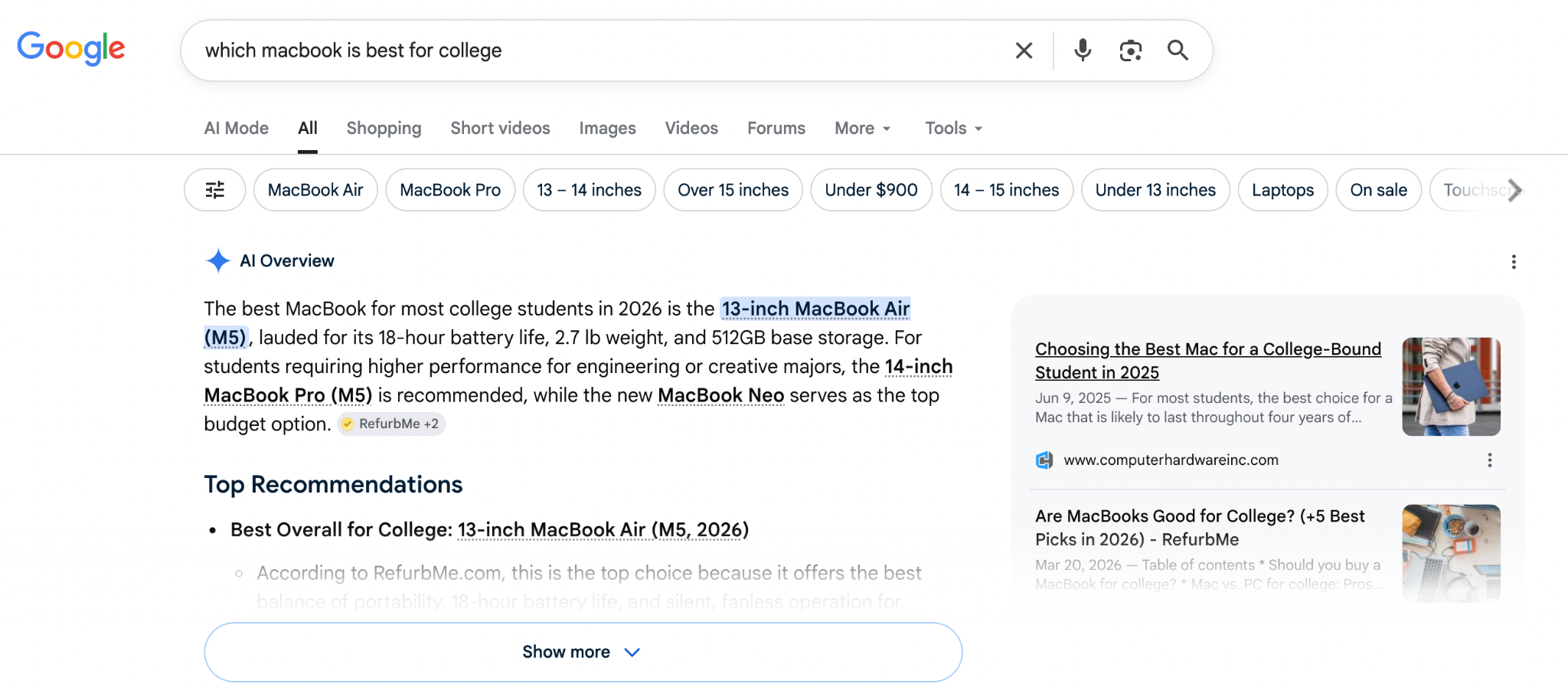
Users can expand the overview to see the sources Google used to generate the response, and they can click through to those sources for more detail.
The feature was initially tested through Google’s Search Generative Experience (SGE) program before being officially rolled out to all U.S. users in May 2024. It has since expanded to over 200 countries and territories and supports more than 40 languages.
AI Overviews are distinct from AI Mode, a newer and more expansive AI-powered search experience that Google introduced in 2025.
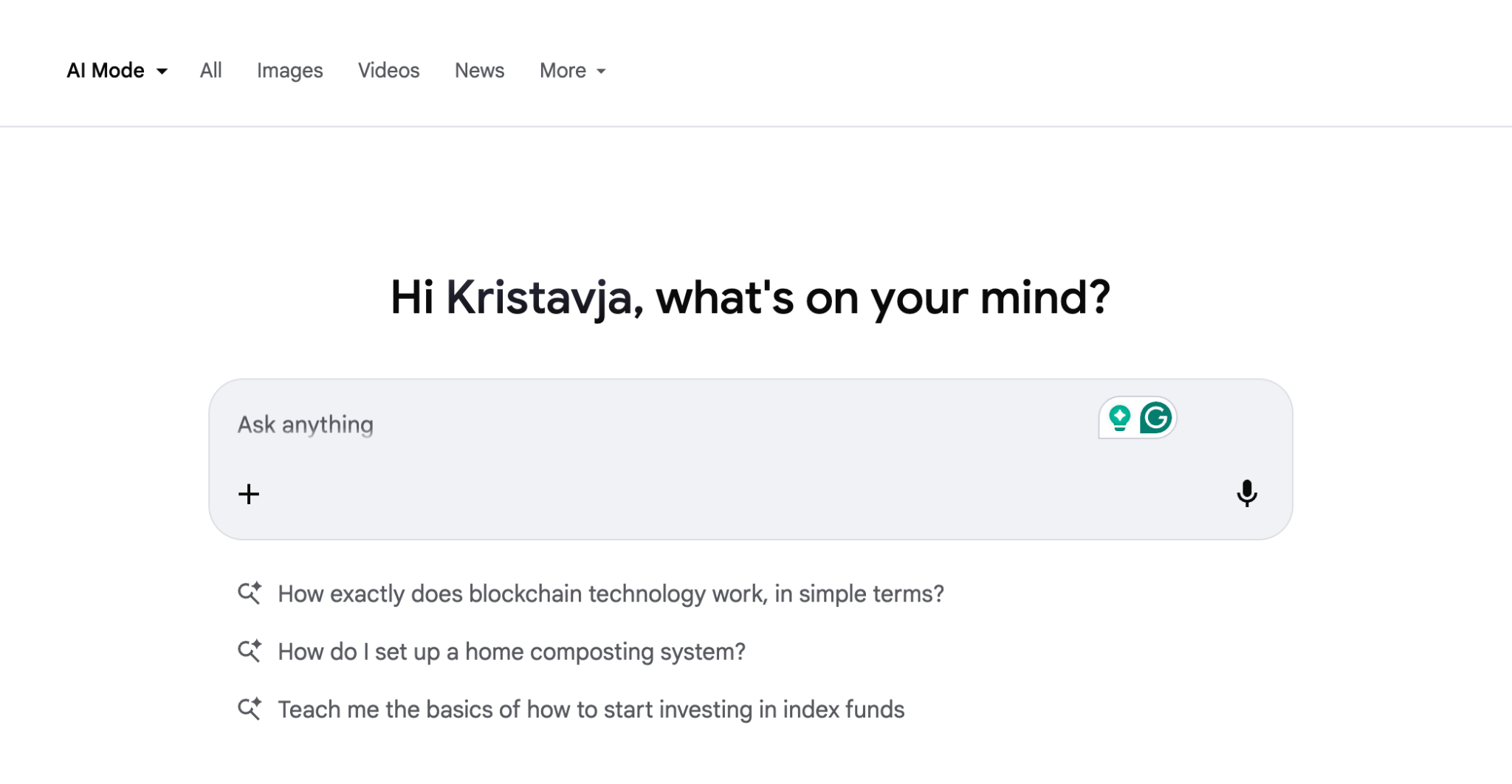
While both rely on generative AI, AI Overviews are integrated directly into standard search results, whereas AI Mode represents a more immersive, conversational interface.
Why AI Overviews matter for your website
The rise of AI Overviews has significant implications for organic traffic and brand visibility. Because these summaries appear above traditional blue-link results, they capture user attention immediately.
Research from Pew Research Center (opens in a new tab) suggests that users click traditional search result links just 8% of the time when an AI Overview is present, compared to 15% when there is no AI Overview. That is a meaningful drop in click-through rates.
However, the picture is more nuanced than it first appears.
Being cited as a source within an AI Overview, even without a direct click, positions your brand prominently at the top of the SERP. It signals authority and trustworthiness to users who may later seek out your website directly. And when your site is linked within the AI Overview itself, it can drive highly engaged traffic.
Google has also noted that visitors who arrive from AI Overview results tend to spend more time on websites, suggesting these clicks carry higher quality (opens in a new tab) than average.
Beyond traffic, AI Overviews are increasingly appearing for a broader range of query types. Research from Semrush (opens in a new tab) shows that keywords triggering AI Overviews shifted from being 89% informational in October 2024 to just 57% informational by October 2025. Commercial, navigational, and transactional queries are now triggering AI Overviews more frequently as well.
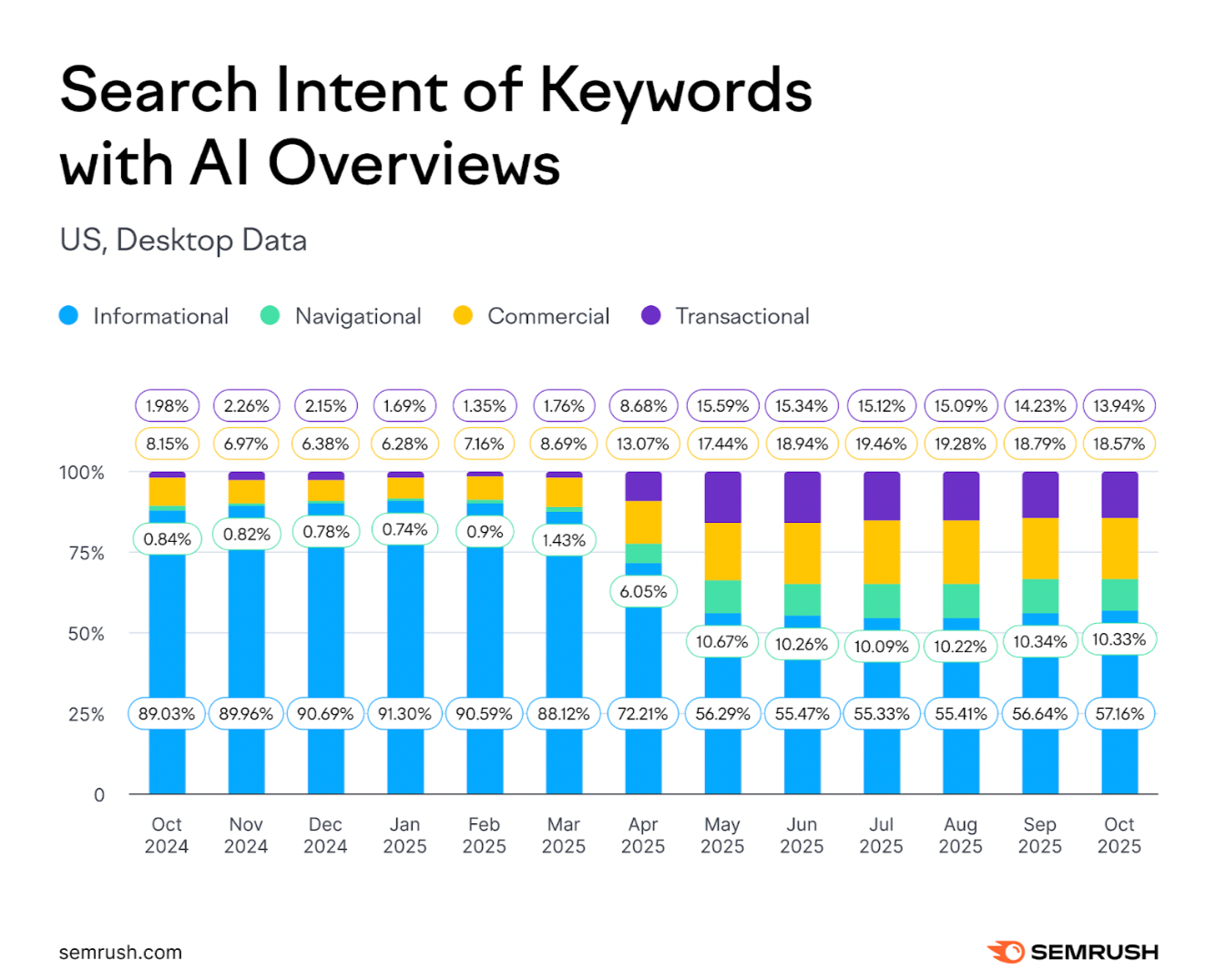
So appearing as the answer is becoming increasingly important. Even if people don’t click on your site, they base their buying decisions on the AI Overview recommendations.
How Google selects sources for AI Overviews
Before diving into optimization tactics, it helps to understand how Google decides which sources to include in AI Overviews.
Google’s systems evaluate signals like:
- Content quality
- Source authority
- Relevance to the query
- Content structure
- Traditional organic rankings
The AI also uses a process sometimes called “query fan-out,” where it runs multiple related searches simultaneously to build a more comprehensive response.
This means your content does not just need to answer one question well. It needs to be part of a broader, authoritative body of work on a topic.
6 strategies to optimize for AI Overviews
Here are 6 tips you can follow to optimize your content so that it appears as the source or answer in AI Overviews.
1. Start with strong technical SEO foundations
Before any content strategy can succeed, your pages need to be discoverable. Google cannot include content in AI Overviews that it cannot crawl and index.
Focus on the technical fundamentals first:
- Ensure your robots.txt file is not blocking important pages
- Remove accidental noindex tags
- Fix broken links and 4XX errors
- Improve page speed
- Optimize for mobile devices
- Use HTTPS
Structured data is another important piece.
Implement schema markup such as:
- Article
- FAQ
- HowTo
- Review
This helps Google better interpret your content and extract information accurately.
A technically sound website gives Google’s crawlers the clearest possible path to your content, which is the first step toward AI Overview inclusion.
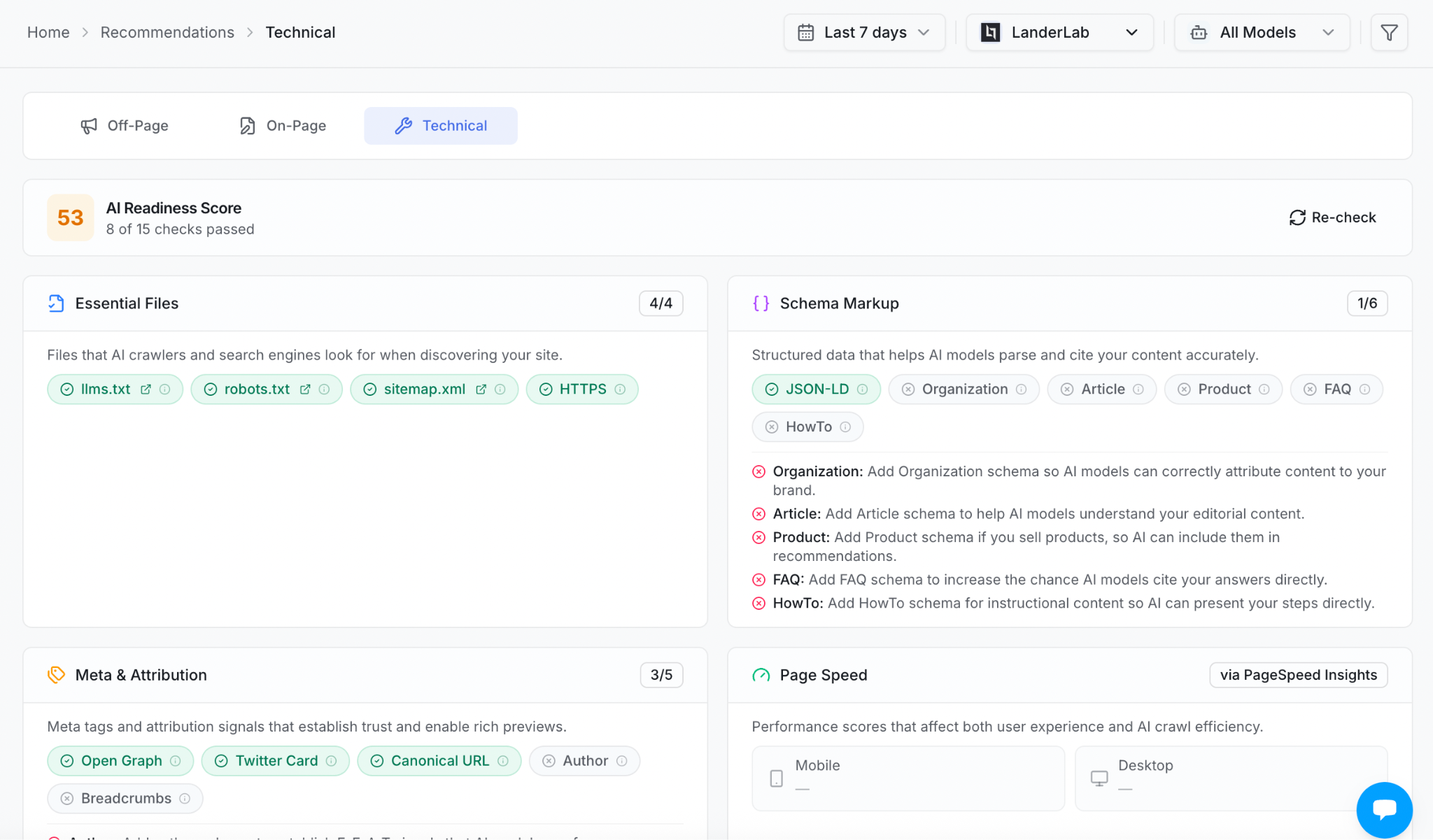
Inside ZeroRank you can find clear technical recommendations on which areas you need to focus.
2. Build authority through EEAT and digital PR
Google’s AI systems favor trustworthy and authoritative sources. So off-page SEO is equally important.
This aligns closely with EEAT:
- Experience
- Expertise
- Authoritativeness
- Trustworthiness
Here are some tips to build your authority:
Demonstrate author expertise
- Use real author names
- Add detailed author bios
- Include credentials and professional experience
Fact-check everything
- Cite primary sources
- Link to original research
- Verify claims carefully
Invest in digital PR
- Earn backlinks from reputable websites
- Publish original studies
- Contribute expert commentary
- Appear in industry publications
Build brand presence
- Stay active on social platforms
- Participate in industry discussions
- Build mentions across the web
The stronger your authority signals, the more likely your content is to be trusted and cited by AI systems.
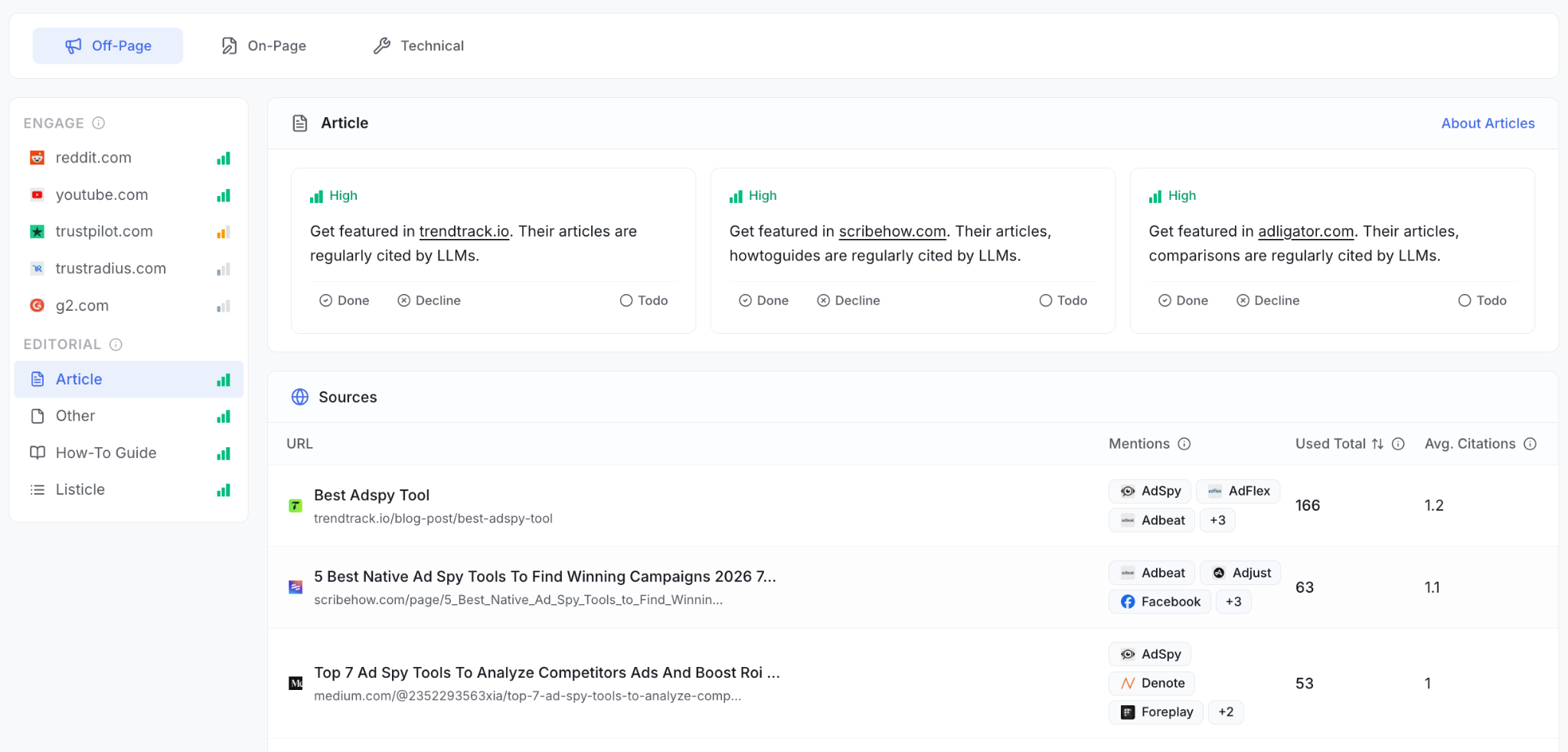
In some niches, forums may be more important while in others, Google may give more importance to review sites or editorial pieces.
The off-page recommendations in ZeroRank show you exactly where to focus your efforts first.
3. Perform consistent, ongoing on-page SEO
There is a strong correlation between organic rankings and AI Overview citations. So you cannot ignore the on-page area to complete the SEO trifecta.
Several studies show that pages ranking in the top 10 organic results are significantly more likely to appear in AI Overviews than pages ranking lower.
On-page SEO depends entirely on you. So before publishing a piece of content, prepare a checklist that covers:
- Optimized title tags
- Strong meta descriptions
- Proper heading structure
- Keyword-focused URLs
- Internal linking
4. Create comprehensive, clustered content
Google’s AI Overviews are designed to provide complete answers. Surface-level content is far less likely to be selected.
One of the best ways to build topical authority is through content clustering.
For example, if your core topic is “AI Visibility” (as is the case with ZeroRank), supporting articles could include:
- AI visibility tools (opens in a new tab)
- How to track AI mentions
- AI search optimization
- AI Overview ranking factors
- LLM visibility monitoring
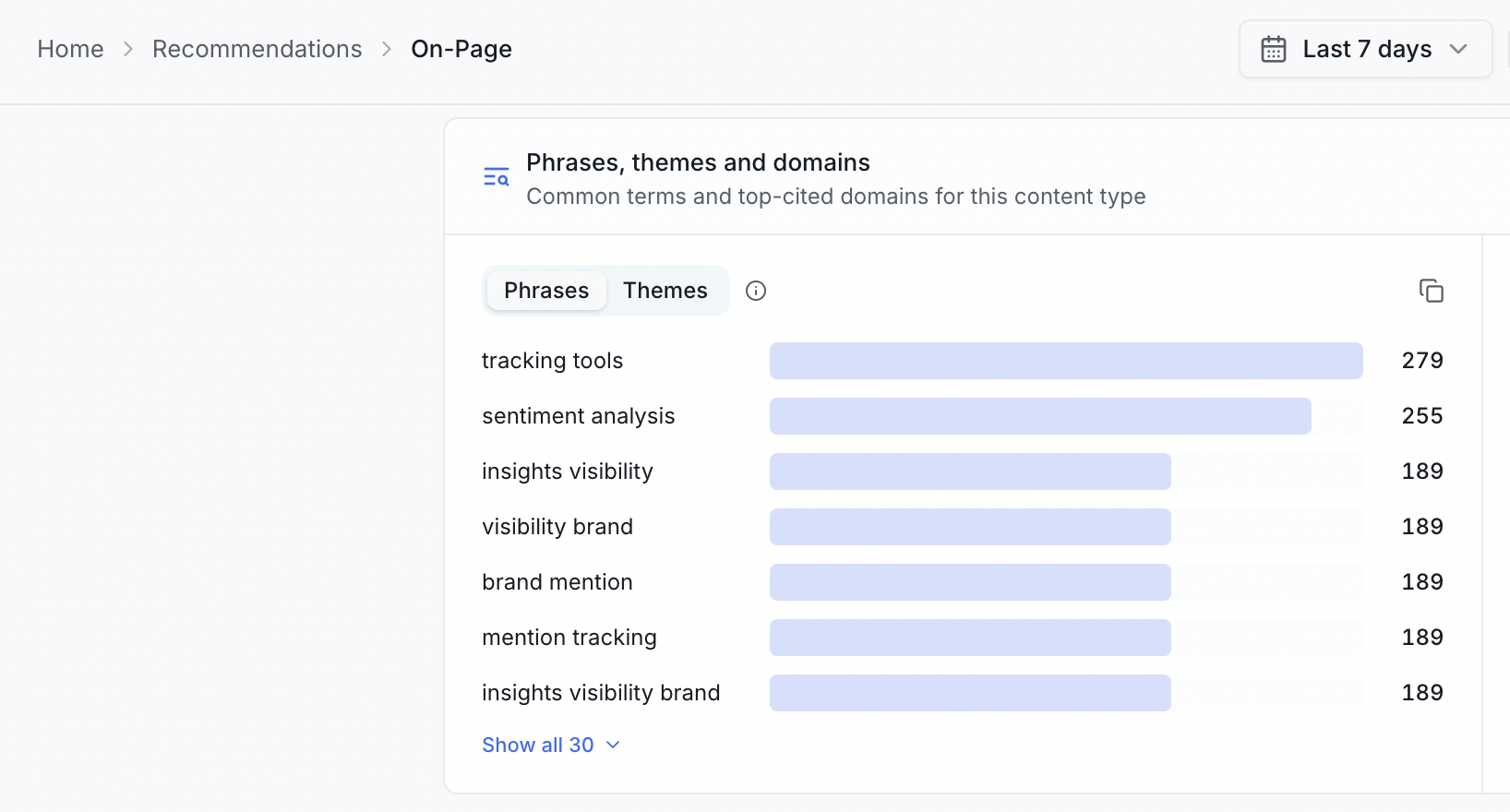
ZeroRank shows you which themes to cover on the on-page recommendations tab.
These articles should internally link to each other and reinforce the overall topic expertise of your website.
Within each article:
- Cover multiple perspectives
- Include credible statistics
- Cite original research
- Add expert insights
- Back up claims with evidence
This kind of deep, interconnected content helps position your site as a trusted source for AI systems.
5. Structure your content for AI readability
Formatting matters just as much as the content itself.
AI systems process well-structured content more effectively, and certain formatting patterns are more likely to be extracted into AI-generated summaries.
Here are some best practices for AI-friendly formatting:
- Answer the main question early: Place the direct answer near the top of the article.
- Use clear heading structure: Use descriptive H1s, H2s, and H3s. Question-based headings work especially well.
- Keep paragraphs short: Aim for 2–3 sentence paragraphs.
- Use lists and numbered steps: Bullet points and numbered lists are frequently pulled into AI Overviews.
- Include definition sections: “What is…” sections with concise explanations perform well.
- Add summary sections: A TL;DR or key takeaway section gives AI systems condensed, quotable information.
Keep in mind that different content types require different structure. Starting with a content template can help you get the right formatting in place.
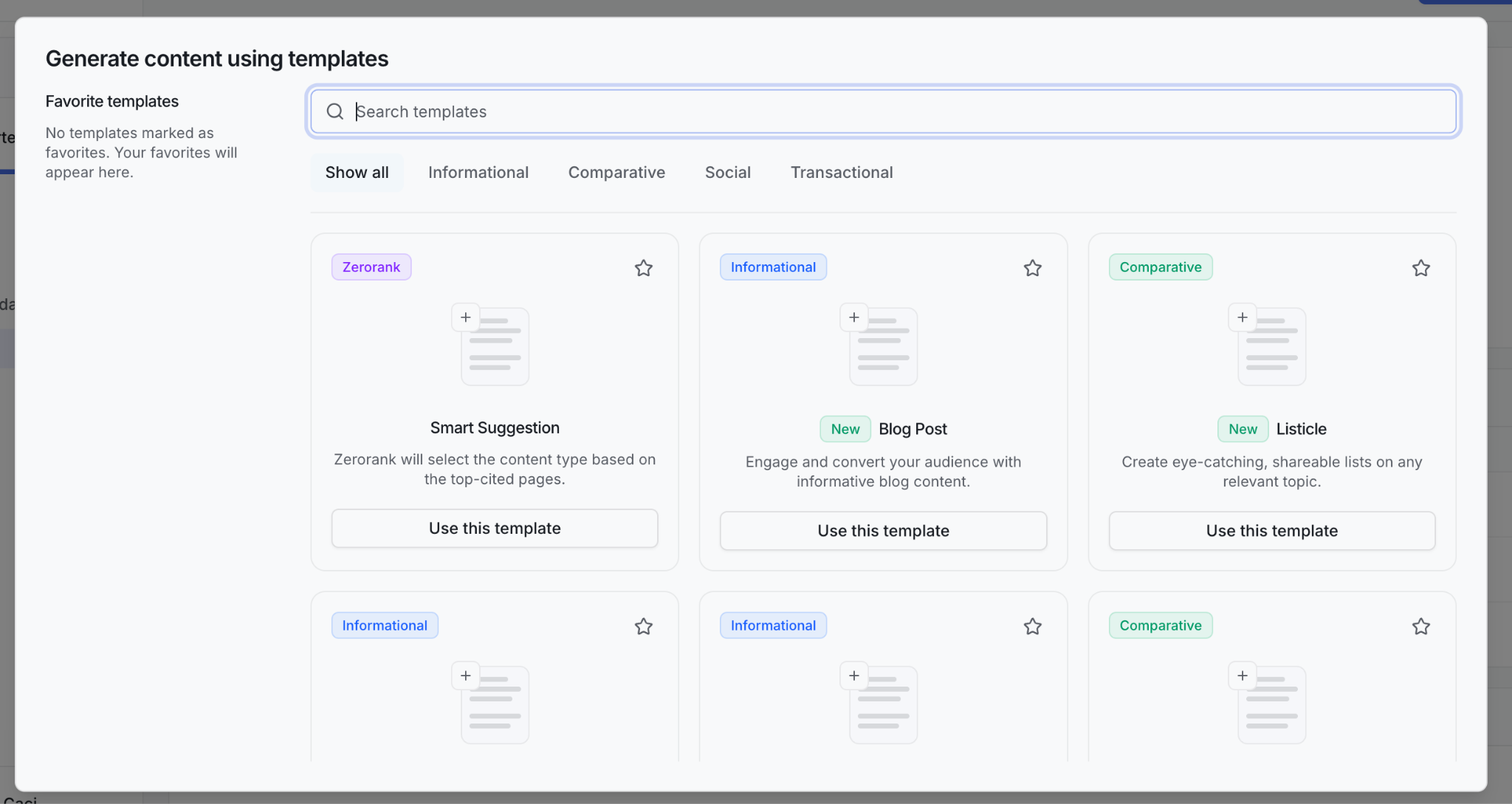
You can then add your unique data and perspectives to the article.
6. Keep your content fresh and updated
Content freshness plays a meaningful role in AI Overview selection.
Research published by Wellows (opens in a new tab) noted that 23% of content featured in AI Overviews is less than 30 days old, indicating a high sensitivity to recent developments.
The practical takeaway is simple:
Do not only publish new content. Regularly update your existing pages.
That includes:
- Refreshing statistics
- Updating examples
- Expanding sections
- Covering new developments
- Improving outdated information
ZeroRank’s AEO Content Refresh workflow gives you optimization tips and applies them to your article.
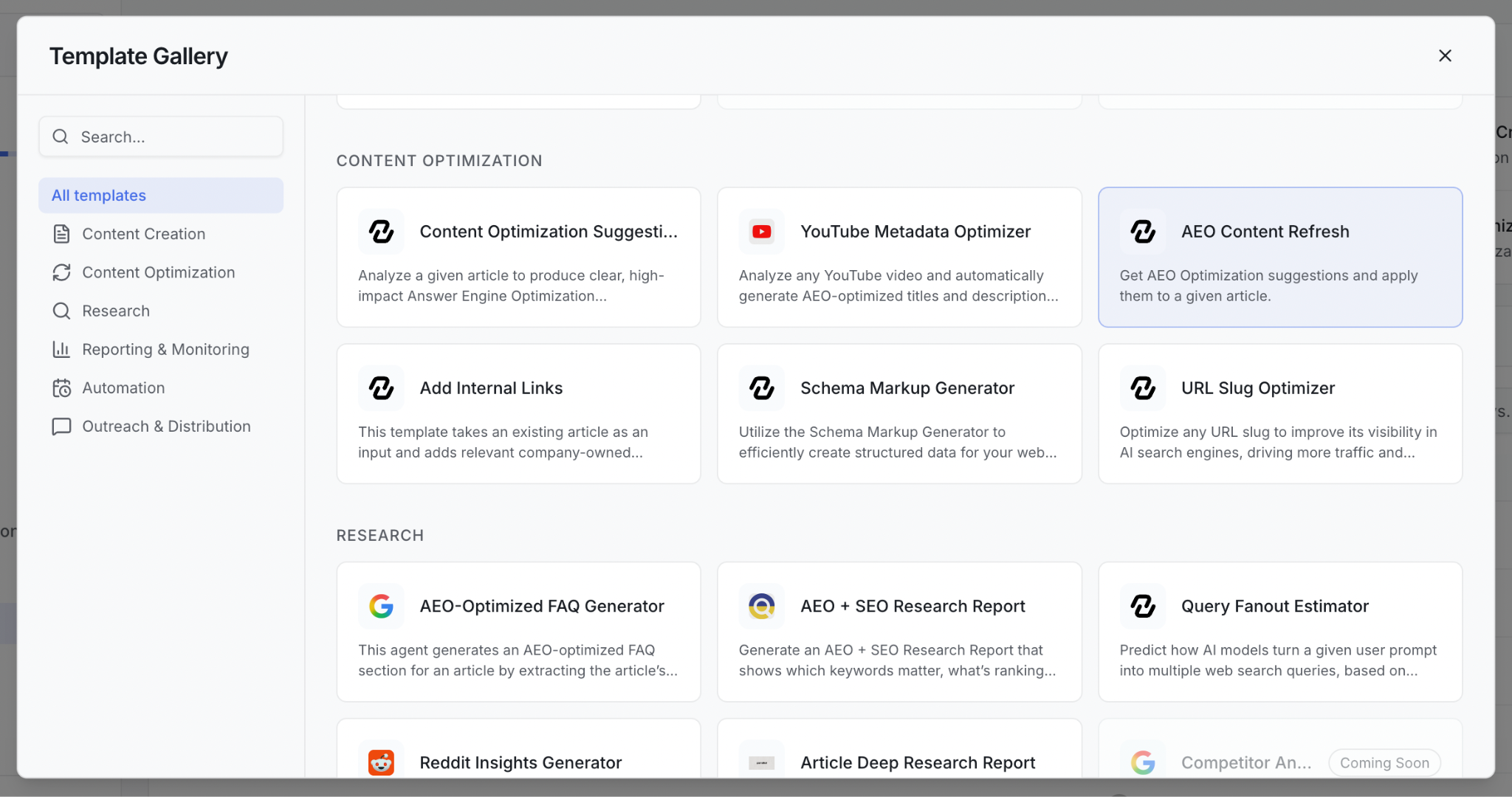
Prioritize updating pages that already rank well organically, since those are the pages most likely to earn AI Overview visibility.
How to monitor your AI Overview performance
AI Overview optimization is not a one-time project.
You need ongoing monitoring to understand:
- Which pages are getting cited
- Which queries trigger AI Overviews
- What content formats perform best
- How AI traffic behaves
Traditional SEO monitoring tools won’t give you this overview. You need to use tools that support AI Overview monitoring, such as ZeroRank.
Inside ZeroRank you can view your performance across different LLMs, and also filter by AI Overviews alone.
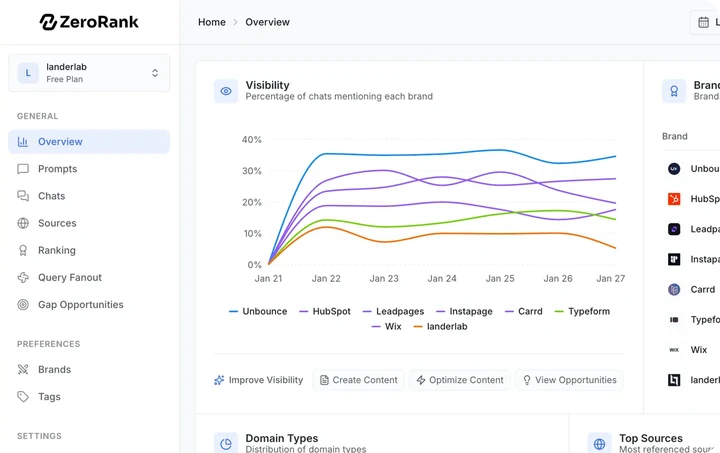
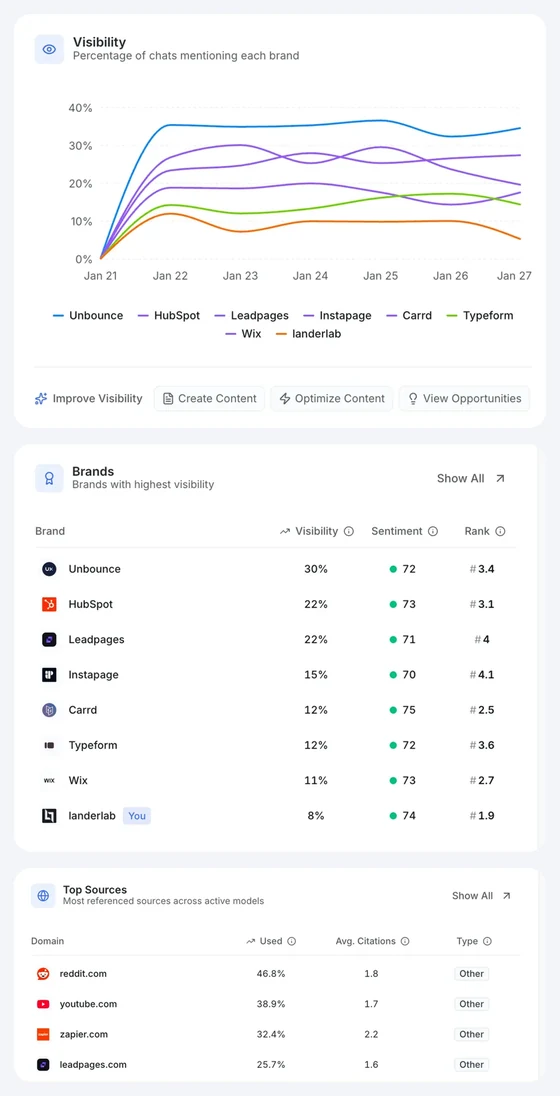
In the Overview tab you can see your overall performance, including your AI visibility score. See how your brand is doing compared to competitors and what type of sources dominate in your niche.
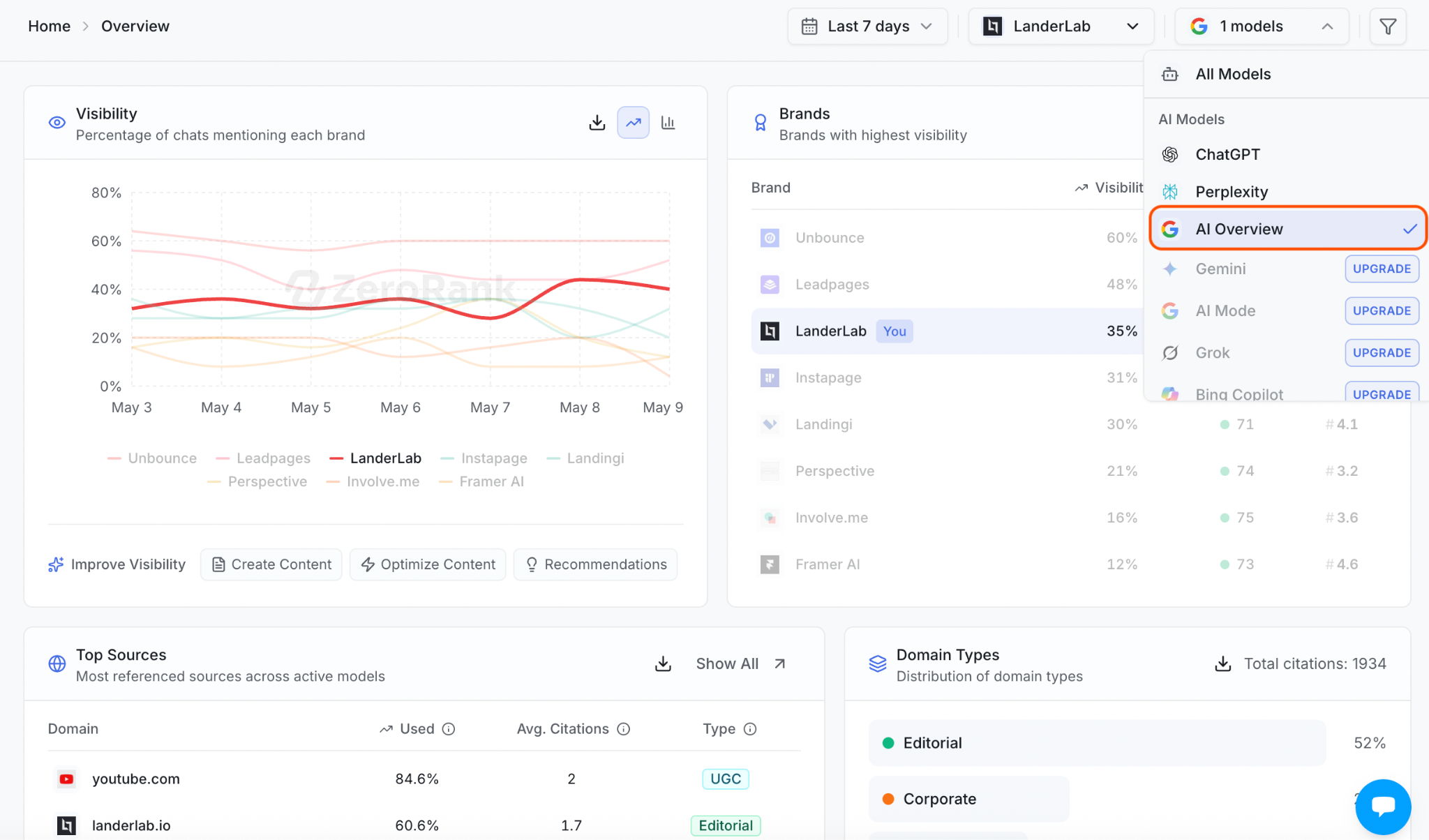
Use this view for benchmarking.
Then you can dig deeper into the specific Prompts that trigger your brand mentions in AI Overviews, and the ones that don’t. Once again, you can filter by AIOs alone.
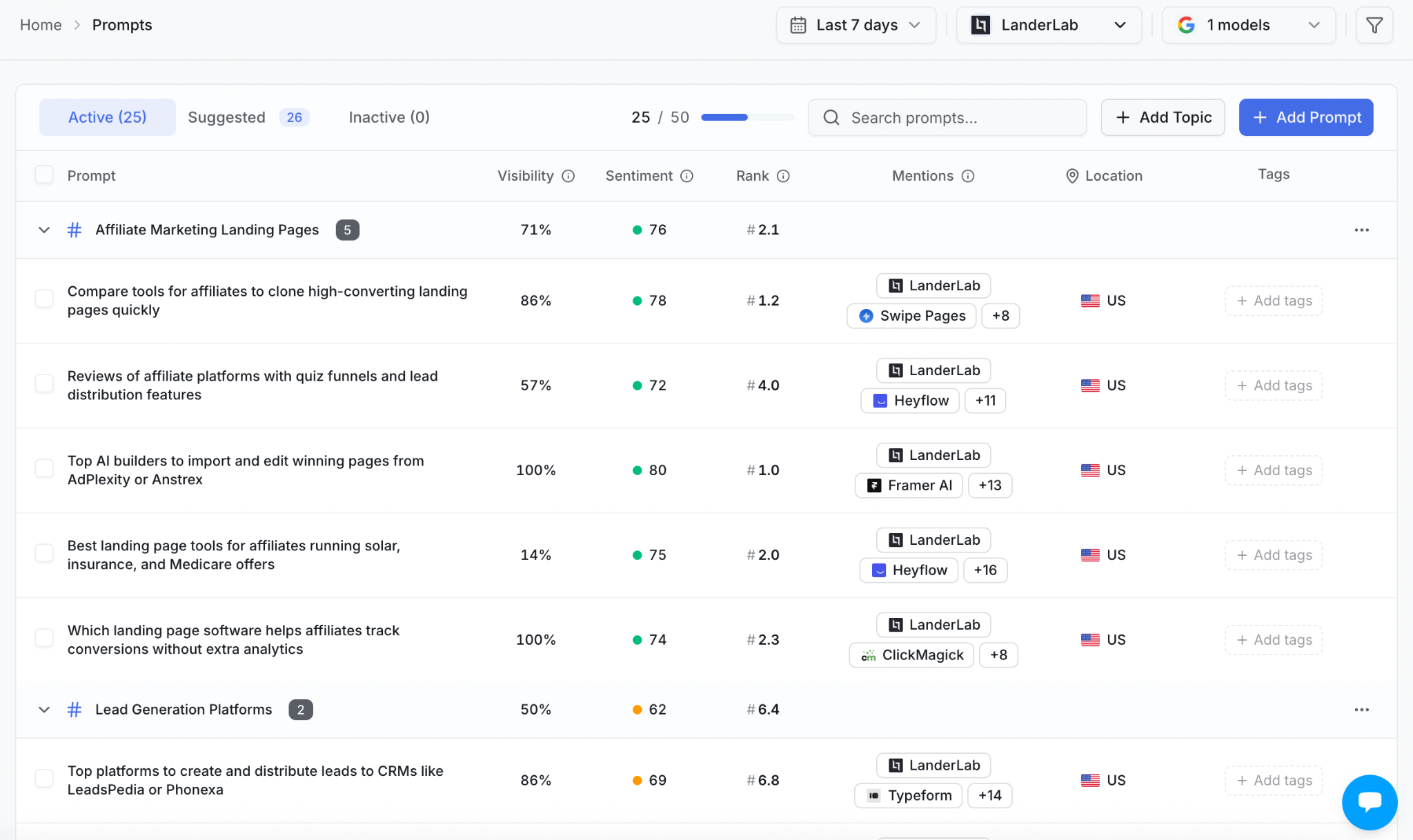
Here you can see for which prompts you are not being mentioned. And then you can look deeper into the Chats to understand the type of content that AIOs are referencing for those prompts.
For instance, LanderLab is not being mentioned for an important prompt like “Which AI landing page tool is fastest for creating responsive pages without coding”.
In the Chats, they can see which brands are being mentioned instead and from where AIOs are pulling these sources.
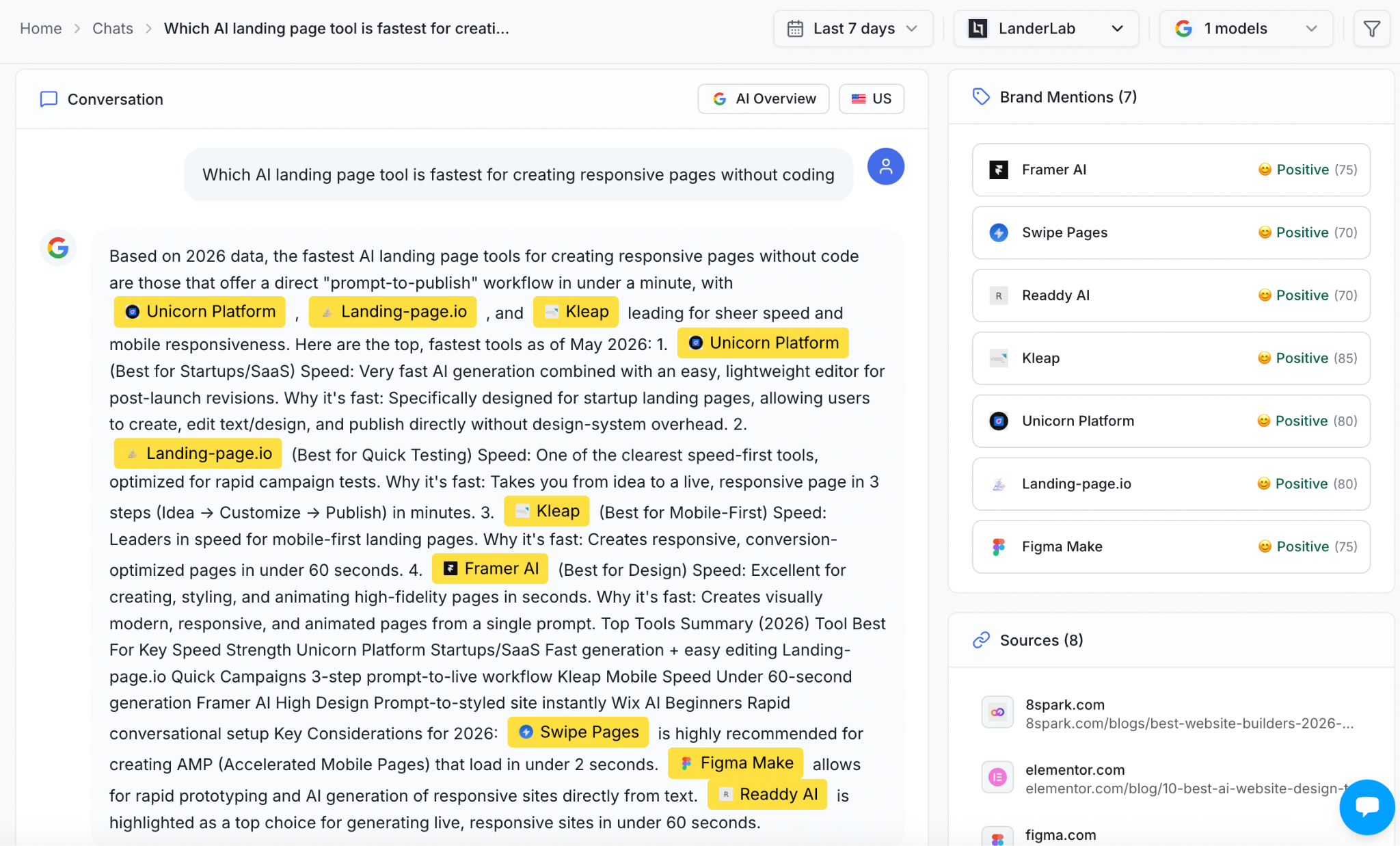
Based on the source type, you can then create that type of content yourself or you can try to get mentioned on it.
You should also monitor the overall Sources that are dominating your niche. This will guide your overall AI search strategy.
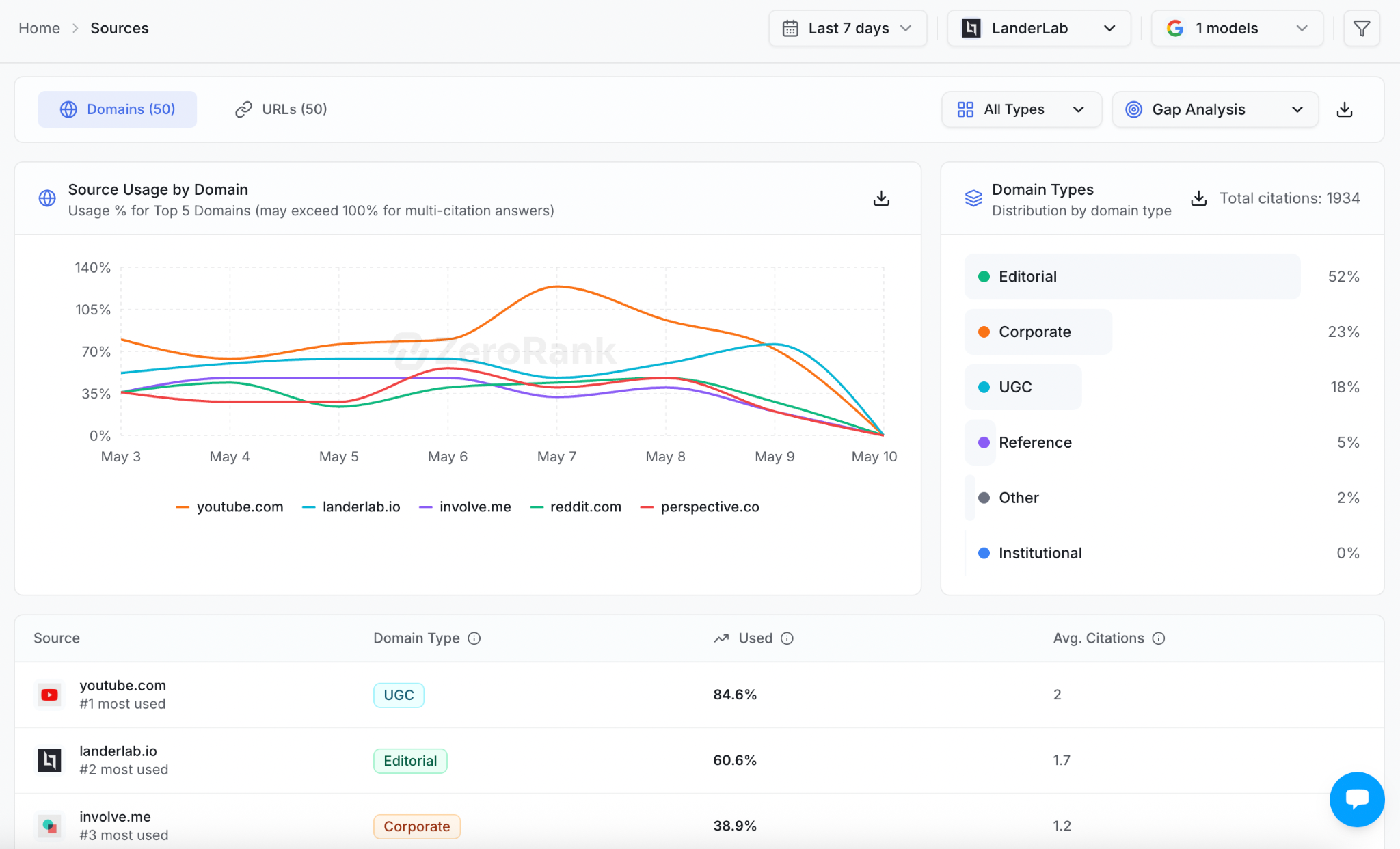
If the dominating sources are editorial brand pages, you can focus on creating the same. This is how LanderLab became the #1 cited source in the industry (opens in a new tab).
But if the dominating sources are third-party forums or review sites, then your strategy should initially shift to getting mentioned across those sources. This is the strategy that made Adplexity the most visible brand in AI search (opens in a new tab).
Most of the time, you need a mix of both of these strategies. But prioritization is what will give you the best results in the least amount of time.
Final thoughts
AI Overviews represent a major shift in how Google delivers information to users.
Yes, they may reduce clicks for some queries. But they also create a new opportunity to appear directly at the top of the search experience.
The good news is that the path to AI Overview optimization is largely the same as strong SEO overall:
- Build solid technical foundations
- Create genuinely useful content
- Structure information clearly
- Demonstrate expertise and trust
- Earn authority across the web
- Keep your content updated
The difference is that you also need to understand which prompts, sources, and content types AI platforms actually rely on in your niche.
If you want to track your AI visibility, analyze competitor citations, and discover the opportunities most likely to improve your presence in AI search, try ZeroRank AI for free.
Filed under AI Search Strategies
Head of content and operations. On a mission to make ZeroRank the go-to platform for AI search visibility.
Keep reading
All posts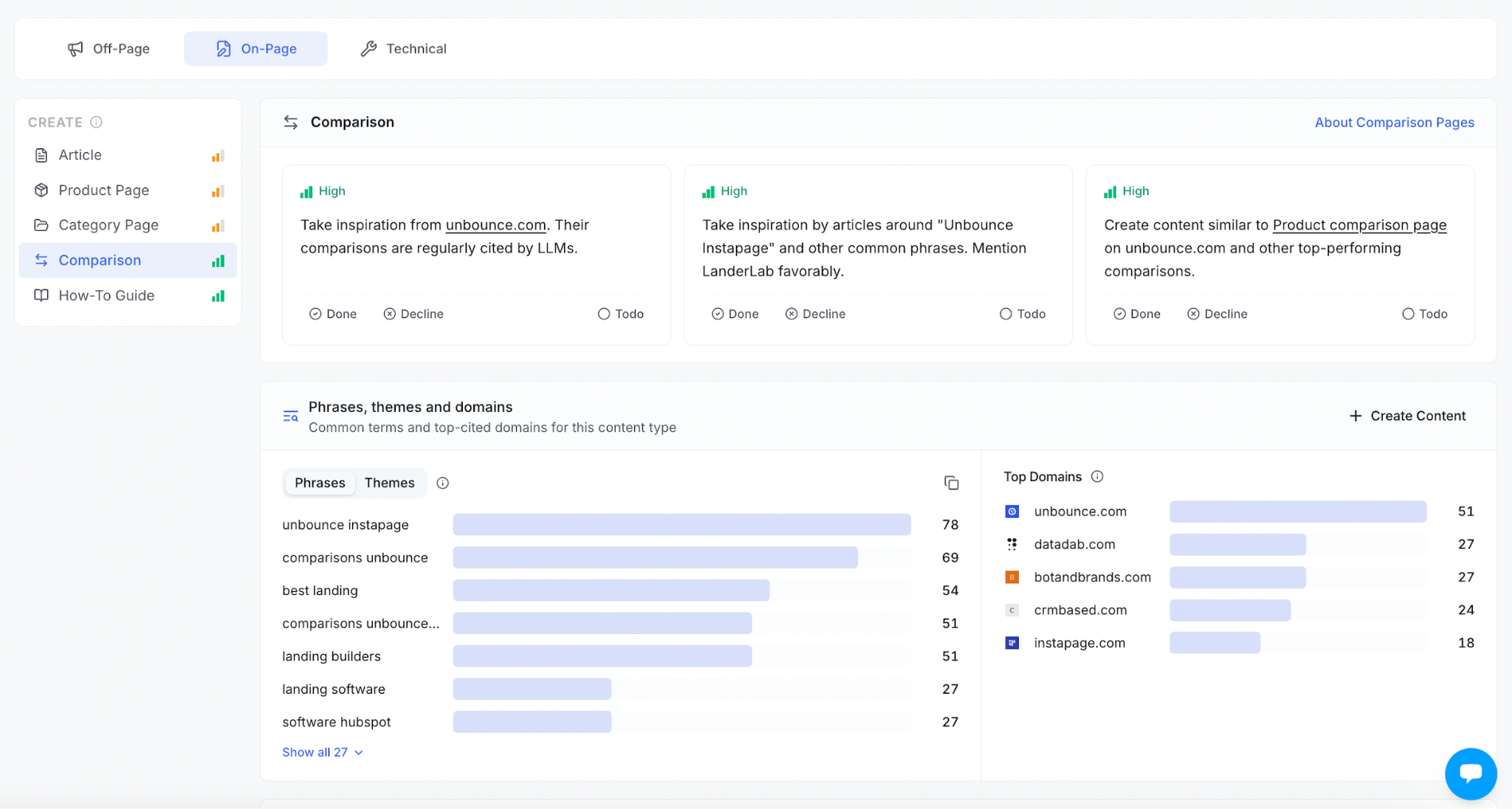 AI Search Strategies
 Answer Engine Optimization (AEO) Checklist
Use this AI search optimization checklist to improve your content, build brand credibility, and fix technical issues so you can get found in AI answers.
 AI Search Strategies
 How to Optimize Content for AI Search: 10 Practical Steps
This guide explains how to find content gaps, create or optimize the right pages, earn more citations, and measure the results with ZeroRank.
 AI Search Strategies
 LLM Prompt Tracking: How to Monitor AI Answers Across ChatGPT, Claude, and More
Tracking the right prompts is the foundation of AI visibility. Learn how to build a high-value prompt library, monitor key metrics across AI platforms, and turn prompt tracking into an effective AI search strategy.