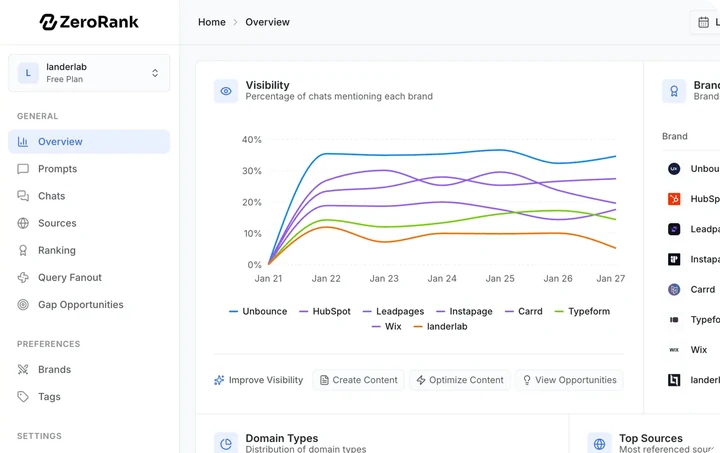
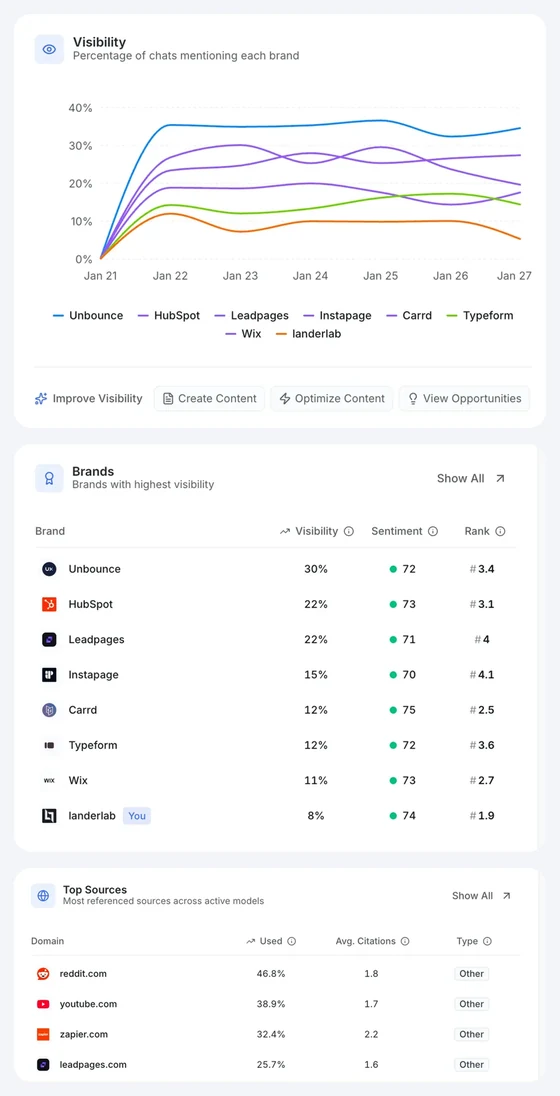
AI Search Competitor Analysis: Find the Gaps Worth Closing
A competitor mention is a starting point. This guide shows how to inspect the answer, find the useful source evidence and choose the next change.

Key Takeaways
- Compare competitors on the same buyer questions, markets and platforms.
- Separate being named, being recommended and being cited.
- Inspect exact source pages before choosing content or outreach work.
- Prioritize gaps that affect a buying decision your product can serve.
- Keep a stable question set and record what actually changed.
Your competitor appears in ChatGPT's answer. Your company doesn't.
The obvious reaction is to publish another comparison article. But first, find out what the answer is doing. Is it recommending the competitor for an integration you also support? Quoting a useful explanation from its documentation? Repeating an old product claim?
Those findings call for different work. AI search competitor analysis helps you move from “they showed up” to a specific change worth making.
What is AI search competitor analysis?
It is the process of comparing how AI answers present your company and competing options for questions your buyers ask. You review the recommendations, product descriptions and linked sources, then decide where your own information needs to improve.
It complements traditional SEO competitor research. Search rankings help you understand which pages are discoverable. Reading an AI answer shows which options are presented together and what reasons the answer gives for choosing them.
You do not need to monitor every possible competitor. Start with the companies your buyers actually compare, then add relevant alternatives that repeatedly appear in collected answers.
Start with a buyer decision
A broad category question often produces a broad list. A useful competitive question includes the situation that determines the shortlist.
Imagine a small online retailer choosing email software. “Best email platform” gives you a general category. “Which email platform supports Shopify and lets a two-person team migrate existing automations?” exposes a buying decision.
Build a small set covering discovery, comparison and validation. For this fictional retailer:
- Which email platforms suit a small Shopify store?
- Which options can migrate existing automations?
- How do the leading options compare on migration support?
- What are the limitations of the shortlist?
- Which tools can a two-person team maintain?
These are illustrative questions, not observed demand measurements. Replace the constraints with ones you hear in sales, onboarding or support.
ZeroRank Prompt Research (opens in a new tab) can help you find related questions and examine available demand estimates. Review the suggestions before tracking them. Keep questions that your product can meaningfully answer.
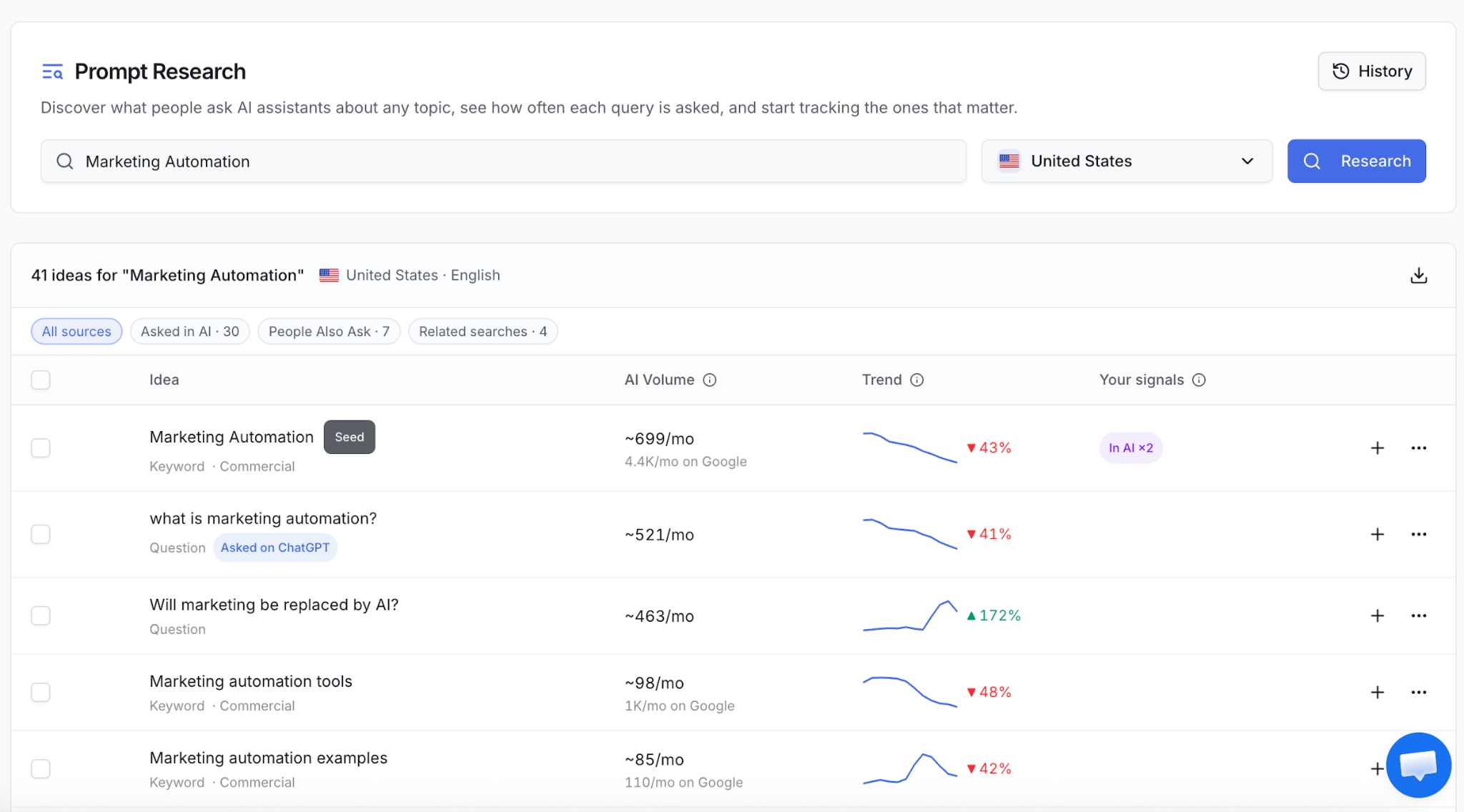
Prompt Research separates question sources and demand estimates. Use it to develop the question list, then check whether each question represents your buyers.
Keep the comparison fair
Use the same question, market, language and platform when comparing brands. Save the answer date and collection method.
Questions containing your brand name belong in a separate group. “Is Acme a good migration tool?” checks consideration and factual accuracy. A category question without a brand name checks whether Acme is discovered at all.
Keep a stable core of questions for later comparisons. If you add a new group midway through the month, report it separately until you have comparable history. Otherwise, a change in your question mix can look like a change in performance.
Choose a sustainable collection schedule. You need enough repeated observations to investigate a pattern, not a large collection bill from checking every possible variation.
Read what role each brand plays
A name appearing in an answer is not automatically a recommendation. A research company might supply the evidence while another product gets the shortlist position.
For each important answer, record:
- Was your company named?
- Was it presented as a suitable choice?
- Was its website linked as a source?
- Which alternatives were recommended, and why?
- Were any product facts wrong or missing?
Our guide to AI visibility metrics (opens in a new tab) explains how these measures fit together. In your competitive review, use them to locate the answers that deserve closer attention.
An average rank can conceal absence. If a tool calculates rank only when your brand appears, a good average does not mean it appears consistently. Look at the collected answers and their coverage alongside summary scores.
Inspect the pages behind the answer
Open the exact source URLs. Check the section that supports the recommendation, the page's date and whether its information is current.
In ZeroRank, use Sources to find the pages used in collected answers, then inspect the relevant answers and individual pages. A domain-level list is a starting point; an exact page gives you something to evaluate.
Save useful URLs with bookmarks and tags in the Source Library. Keep a short list for each buying question so you can revisit the same evidence when you review the next answer or prepare a content brief.
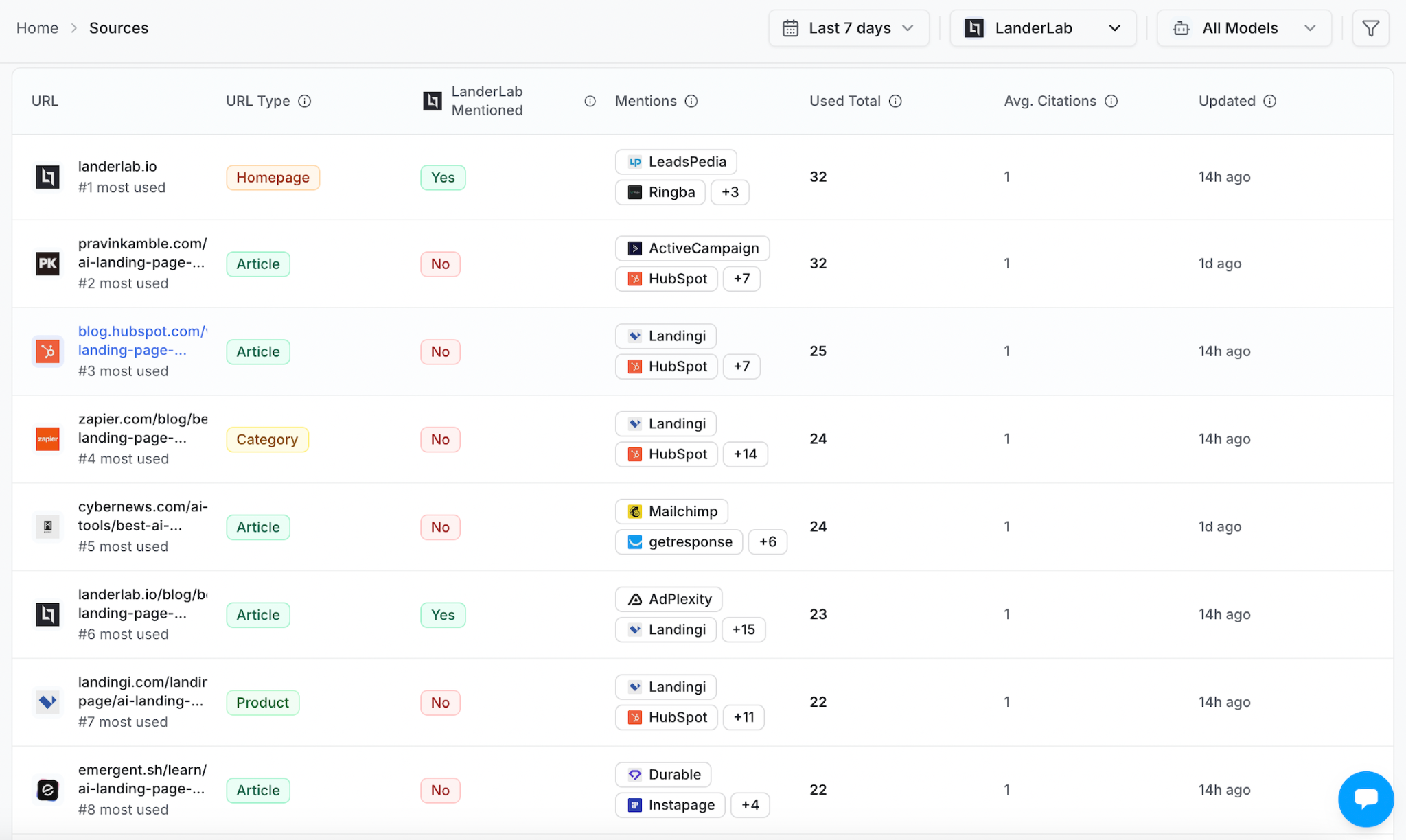
The Sources view shows which pages appear in the collected answers and whether the selected brand is mentioned on them. Check the page before deciding it is a useful placement opportunity.
Look for differences you can act on. Does a competitor explain import formats? Show an implementation example? Describe limitations clearly? Is an independent comparison missing a capability your product already offers?
This is where citation gap analysis (opens in a new tab) becomes useful: compare the information buyers receive with the information available about your company.
3Bug Media's local-business example (opens in a new tab) illustrates the distinction. The agency describes a restoration business appearing in answers while its website was absent from the leading cited sources. Its follow-up involved the questions and sources behind those answers. That suggests content work beyond simply increasing brand mentions.
Turn the finding into the right task
Return to the fictional email-platform comparison. Suppose competing sources explain which automation steps survive an import, but your migration guide only says “easy migration.”
The useful task is to document supported imports, unsupported steps and the work a customer must do. Ask the product team for accurate details. Add an example and link the relevant integration instructions.
Other findings need different actions:
- Wrong product facts: correct the maintained product or documentation page.
- Missing buyer explanation: improve the page that should answer the question.
- Relevant independent comparison: prepare an accurate, article-specific contribution.
- Inaccessible page: investigate the technical issue before rewriting the copy.
ZeroRank's optimization tools (opens in a new tab) can help develop recommendations and content changes from these findings. Write the task in ordinary language so someone can implement it: “Add the supported import formats” is clearer than “improve competitive visibility.”
Ask Copilot for a focused competitive brief
Give the analysis a clear scope. For example:
“Compare our brand with the competitors in the saved answers for our Shopify migration questions. Use the last complete comparison period available. Separate mentions, recommendations and website citations. Show three important gaps with the question, platform, answer date and exact source page. Recommend five specific actions, prioritizing changes to existing content. Flag missing coverage and unsupported product claims.”
You can work through the findings conversationally in ZeroRank. MCP and the API can also connect supported data and actions with other tools. If you arrange a recurring review externally, keep the question set and reporting definitions consistent.
The output should point back to evidence. Read it, check the product facts and choose the work with the clearest buyer benefit.
Measure the change you actually shipped
Record the page, exact edit and verified publication date. Then compare the same questions, platforms and markets over a suitable period.
A newly added paragraph does not establish a causal explanation for every later answer. Competitor changes, model behavior and source selection can move too. Keep the evidence so you can distinguish a persistent pattern from one encouraging screenshot.
Track relevant visits, signups or qualified enquiries separately. Neither a citation nor a recommendation proves that a particular buyer visited your site.
FAQs
How many competitors should I compare?
Start with a manageable shortlist from real buying conversations and collected answers. Add another company when it changes a decision, not just to make the chart larger.
Should I copy the pages AI cites?
Use them to understand the information needed. Then provide your own accurate explanation, experience and evidence. Copying the format alone will not make your page useful.
Can a competitor mention tell me how much traffic it receives?
No. A collected answer does not reveal that competitor's visits or conversions.
Find one competitive gap you can close
Choose a buyer question, inspect the answer and open its sources. Identify the missing fact or explanation, then improve the page best placed to answer it.
Start your competitive analysis in ZeroRank and turn the next competitor mention into a clear next step.
Filed under AI Search Strategies
Keep reading
All posts AI Search Strategies
AI Search Reporting for Agencies [Template Included]
Turn AI visibility data into a client conversation: real answers, direct practitioner quotes, competitive gaps and a copyable monthly reporting template.
 AI Search Strategies
AI Citation Gap Analysis: Stop Losing Ground to Competitors
Find where AI answers cite competitors, investigate the sources behind them, and turn citation gaps into content updates, outreach and repeatable tracking.

 AI Search Strategies
Answer Engine Optimization (AEO) Checklist
Use this AI search optimization checklist to improve your content, build brand credibility, and fix technical issues so you can get found in AI answers.