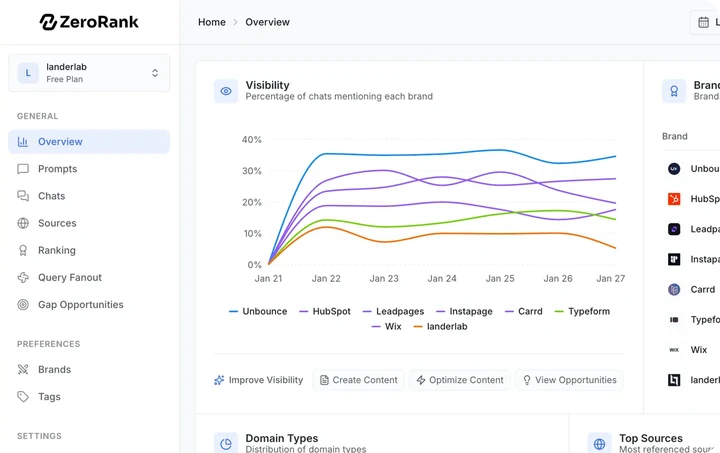
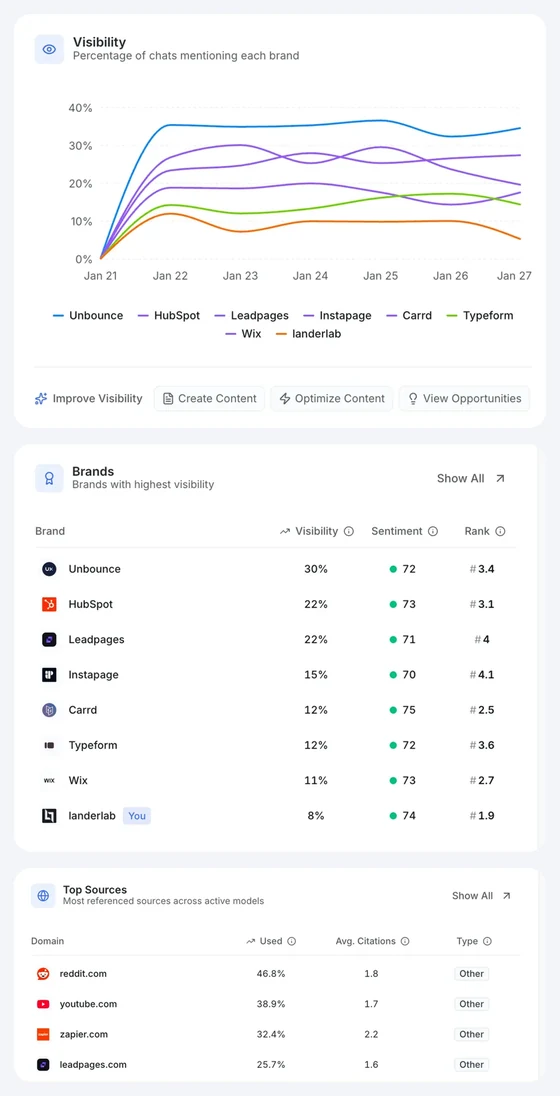
How to Choose an AI Search Optimization Platform in 2026
AI search is already shaping how buyers discover and choose products. This guide breaks down how to choose the right platform to track, understand, and improve where your brand shows up in AI answers.

Key Takeaways
- You cannot track AI visibility manually
- Most AI search optimization tools measure visibility, but don’t help you improve it
- The best platforms connect insights → action → execution
- Your choice should depend on your team needs
If someone asks ChatGPT to recommend a tool in your category, will your product show up?
For most companies, the honest answer is: they don't know. And that's the problem.
AI search platforms like ChatGPT, Gemini, Perplexity, Google's AI Overviews are now a real discovery channel. Buyers are asking questions and acting on the answers. They're not always clicking through to websites. They're trusting what the AI says.
In fact, around 93% of AI search sessions (opens in a new tab) end without a visit to a website. And Google's AI Overviews now appear in over 21% of all searches (opens in a new tab).
The brands that show up in those answers win attention. The ones that don't, don't.
That's why AI search optimization platforms exist. But the market is filling up fast, and most tools don't do what they claim. Some only track visibility. Some only fix technical issues. Very few actually help you improve where you show up.
This guide breaks down what to look for, which tools are worth considering, and how to choose the right one for your team.
Do you actually need an AI visibility tool?
Short answer- yes, you do need an AI visibility tool if you wish to stay relevant in 2026.
If your pipeline depends upon inbound, brand discovery, or product-led growth then AI search is already part of the buyer journey. Now to understand whether your brand is getting cited by AI platforms or not, you need a tool to track that — just like you needed SEO tools to track your search engine visibility.
The problem is, you can’t track this manually. Here’s why:
- AI answers change constantly. The same query returns different results across platforms, sessions, and even times of day.
- There's no "page 1" to check. Visibility looks completely different on ChatGPT vs Gemini vs Perplexity.
- There's no trend data. A one-off check tells you nothing about whether you're improving or slipping.
That’s why you need an AI visibility tool to help with tracking. And not only.
The right AI visibility tool can help you act on the insights as well, and connects to your workflows.
The 3 types of AI Search Optimization tools
Not all AI search optimization tools solve the same problem. Before you evaluate any platform, it helps to know which category it actually falls into.
1. AI visibility tracking tools
These show where you appear across AI platforms and how you stack up against competitors. Useful for visibility reporting. Not enough if you want to actually move the needle.
2. Technical optimization tools
These focus on crawlability, site structure, and making sure AI bots can access your content. They fix access issues — but fixing access doesn't mean AI will recommend you.
3. AI tracking & execution platforms
These combine tracking, recommendations, content, and workflows in one place. They're built to improve visibility (opens in a new tab), not just measure it. This is where the category is heading.
Most teams start with a tracking tool and quickly hit a ceiling. You know where you stand. You just don't know what to do about it.
Type | What it does | Good for | Not good for |
|---|---|---|---|
AI visibility tracking tools | Shows where you appear and how you compare | Visibility reporting | Improving visibility |
Technical optimization tools | Fixes crawlability and site structure | Making content accessible to AI bots | Influencing AI recommendations |
AI tracking & execution platforms | Tracking + recommendations + content + workflows | Actively improving AI visibility | ____ |
What matters when choosing an AI Search Optimization platform
Here's what separates a useful platform from an expensive dashboard.
1. Coverage across AI models
If a tool only tracks ChatGPT (opens in a new tab), you're missing most of the picture. Gemini, Perplexity, Claude, and Google's AI Overviews all surface different answers for the same query. A brand that dominates on ChatGPT can be invisible on Perplexity.
I've seen this firsthand inside ZeroRank. The same prompt, completely different results across platforms.
Like in this example where LanderLab (opens in a new tab) is recommended as a tool on Perplexity and Google AI Overviews, but not on ChatGPT.
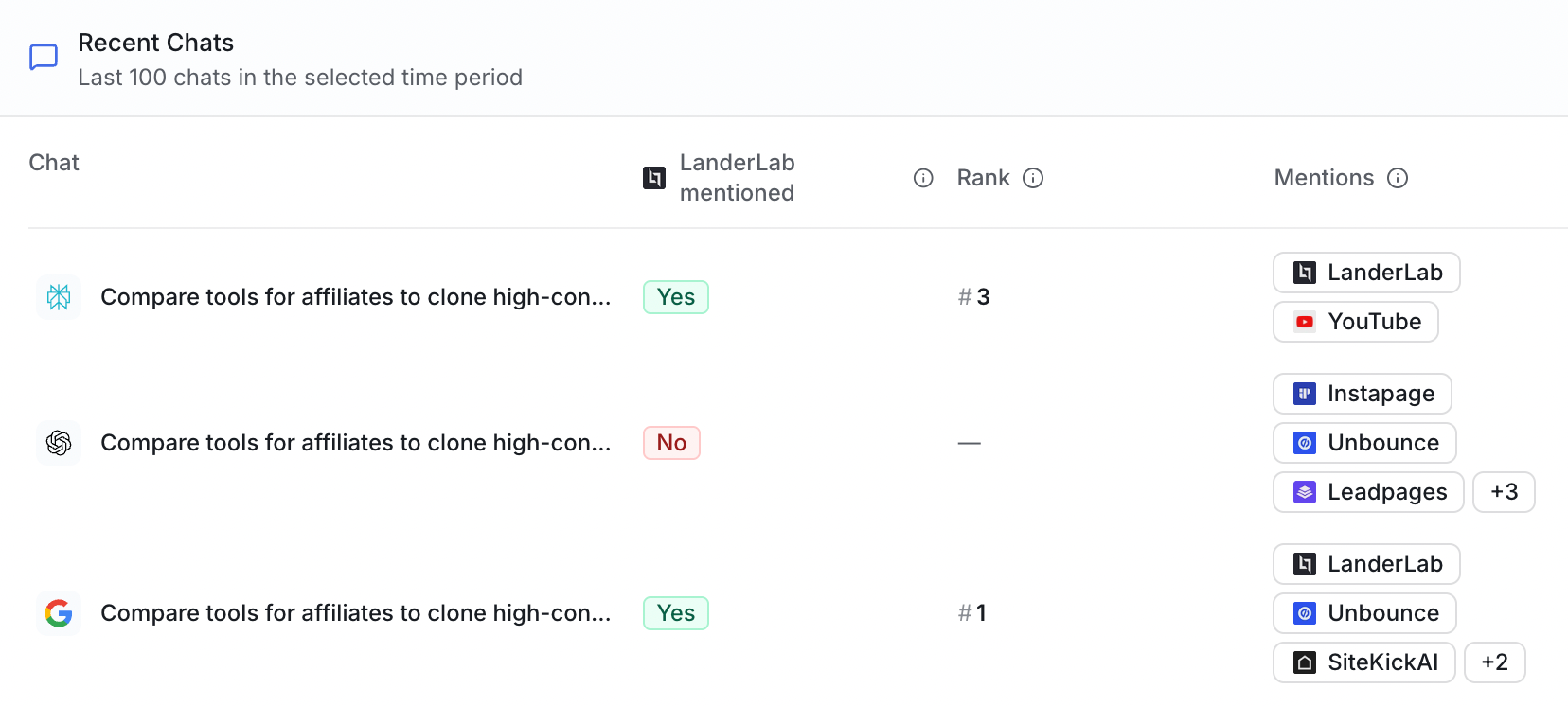
If you're only watching one AI model, you're blind to the rest.
2. Source and citation visibility
Knowing you're not showing up isn't enough. You need to know why. Which sources is AI pulling from? Which of your pages are influencing answers — and which aren't?
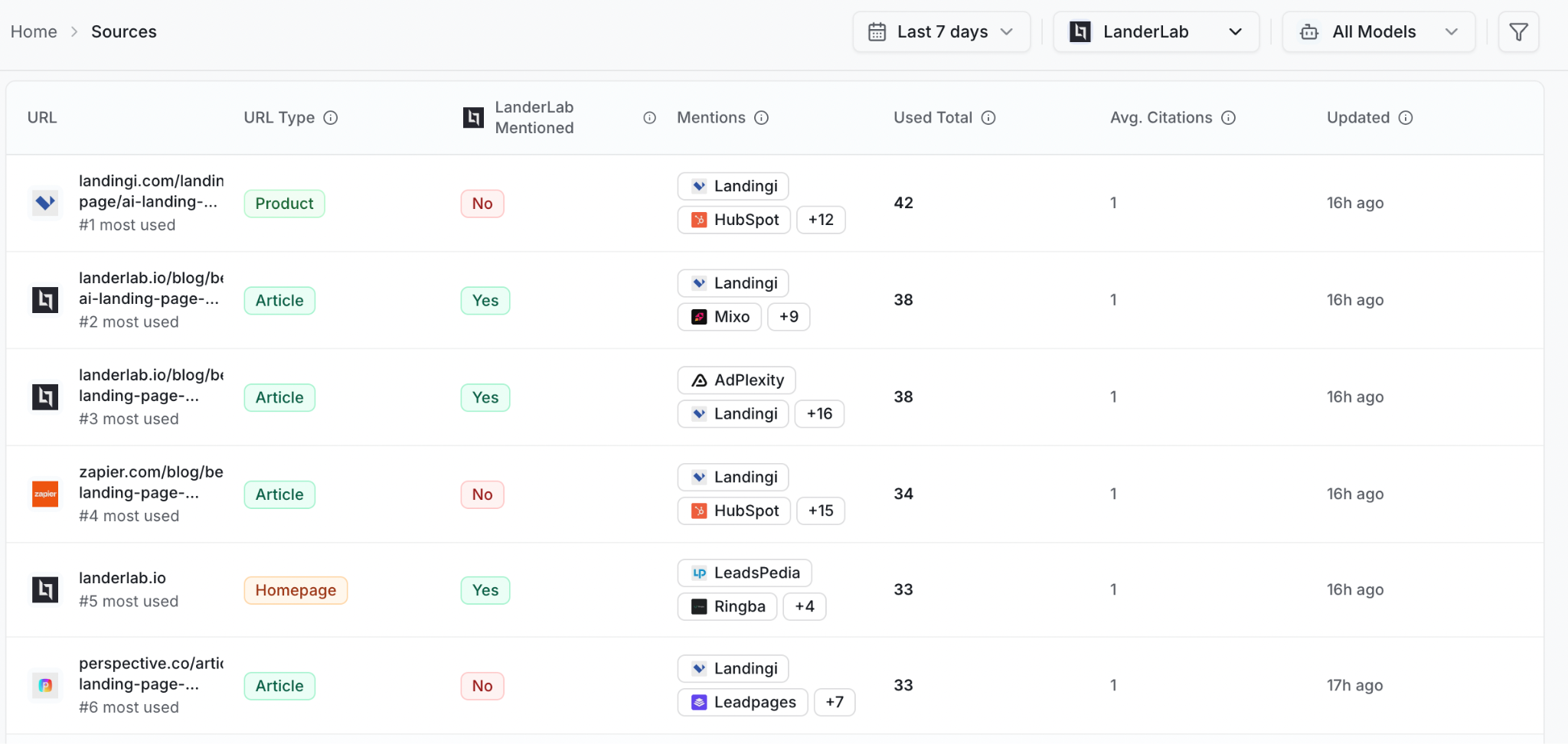
This is how you actually move the needle. Citation visibility tells you where to focus.
3. Competitive benchmarking
Who is AI recommending instead of you? On which platforms? For which prompts?
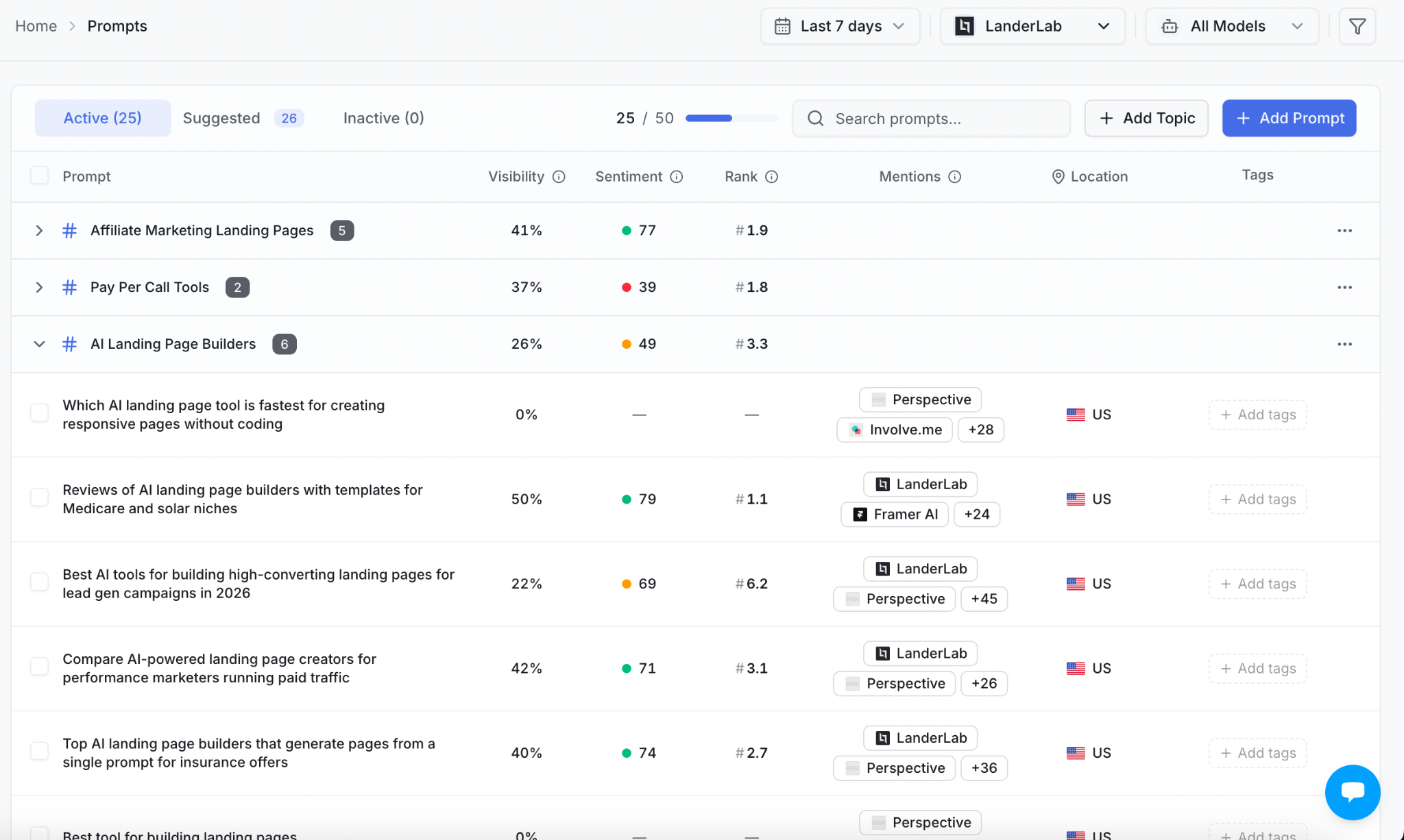
This is the data most teams don't have — and it's some of the most useful. You can't close a gap you can't see.
4. Actionability
This is where most tools fall short. They hand you a dashboard and leave you to figure out the rest. What you actually need is: clear recommendations, specific content opportunities, where to get mentioned, and what to fix first.
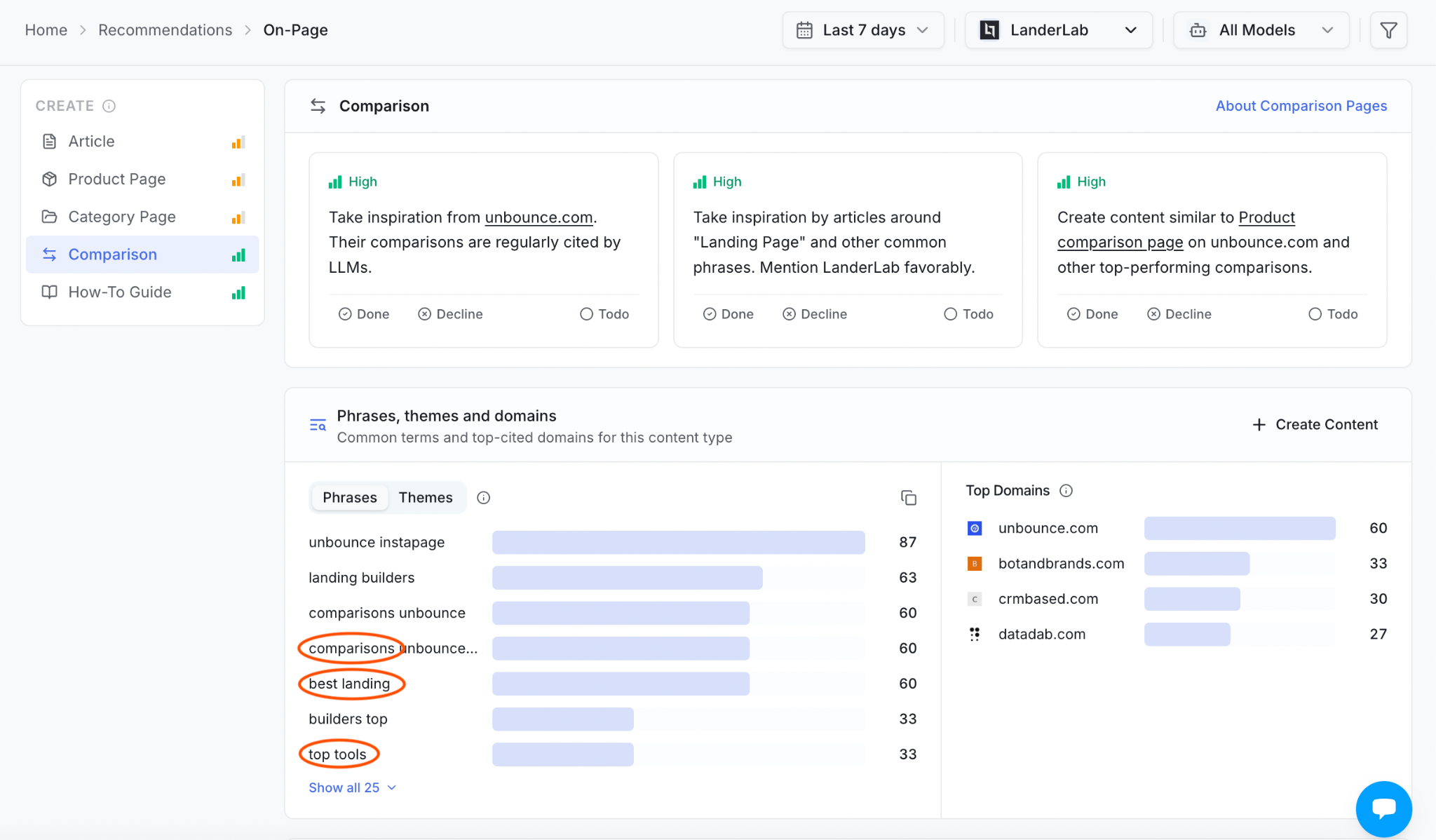
Data without action doesn't move visibility.
5. Execution layer
Insights are only useful if you can act on them without switching tools. Look for built-in content creation, optimization workflows, and automation.
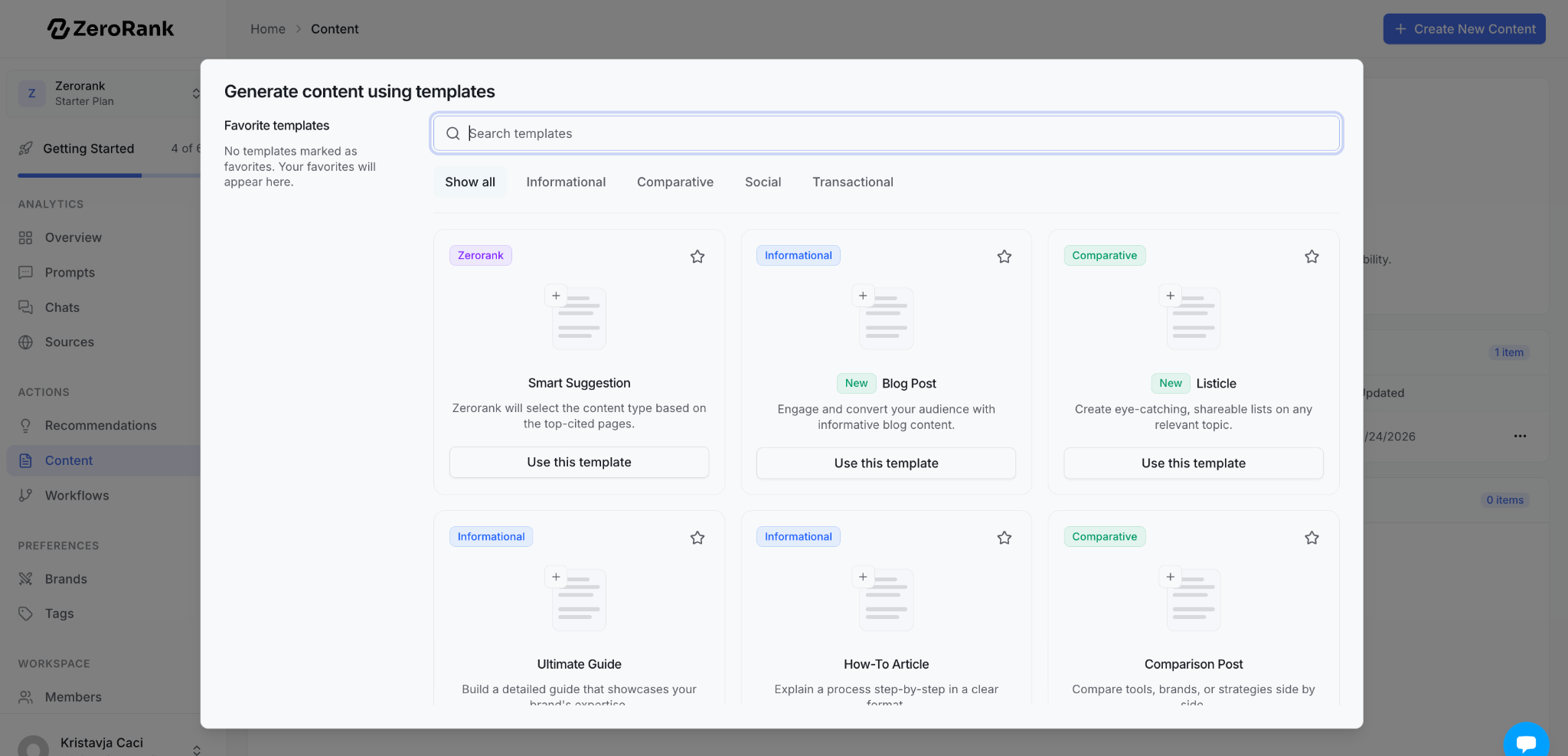
The fewer context switches, the faster you move.
6. Integrations
Your CMS, your data tools, your reporting stack. A platform that lives in isolation adds friction. Look for connectors that fit how your team already works.
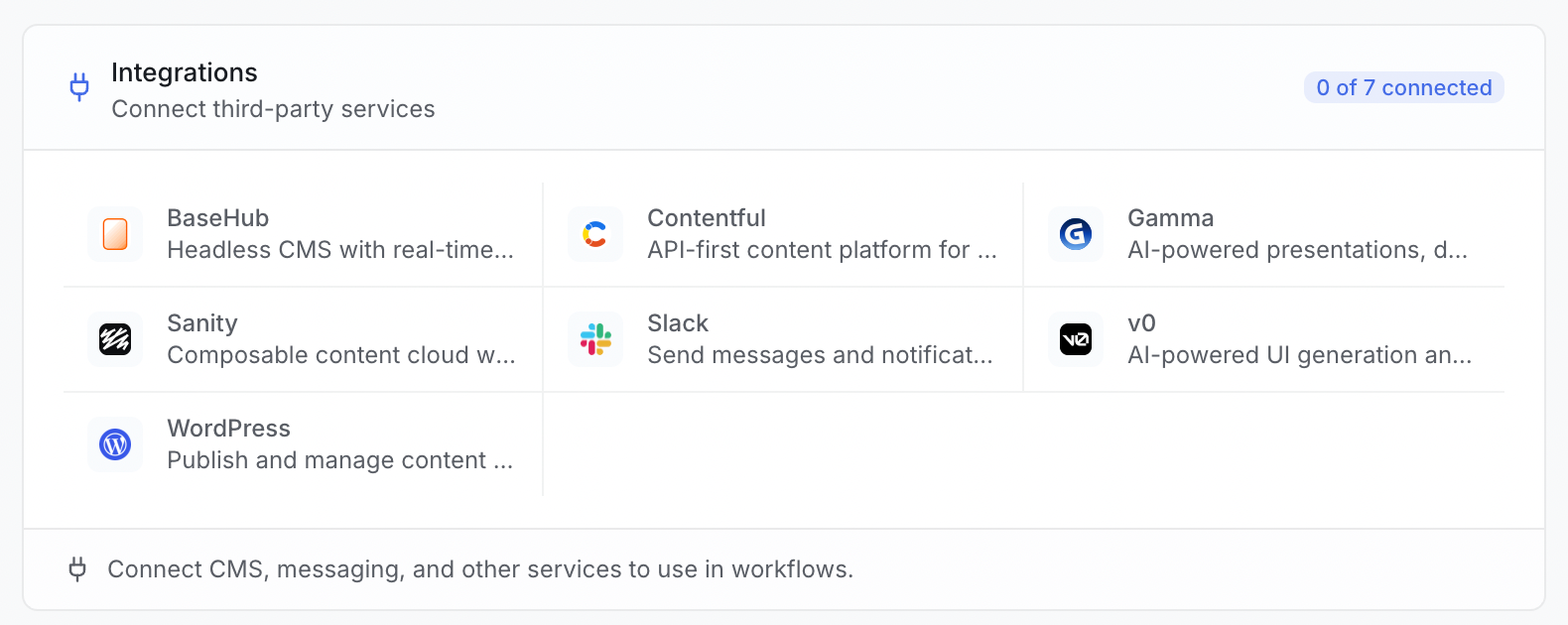
7. Product velocity
This space changes fast. A tool that hasn't shipped meaningful updates in three months is already falling behind. Check the changelog.
Look for an active roadmap. The best platforms in this category are shipping weekly.
Top AI Search Optimization tools in 2026
I tested and evaluated dozens of platforms in this space.
To narrow it down, I looked at how each tool handles prompt tracking, citation visibility, competitive benchmarking, actionability, and execution — the things that actually matter when you're trying to improve AI visibility, not just report on it.
These seven made the cut based on hands-on testing, product capabilities, and real-world usability.
1. ZeroRank - best end-to-end AI search optimization platform
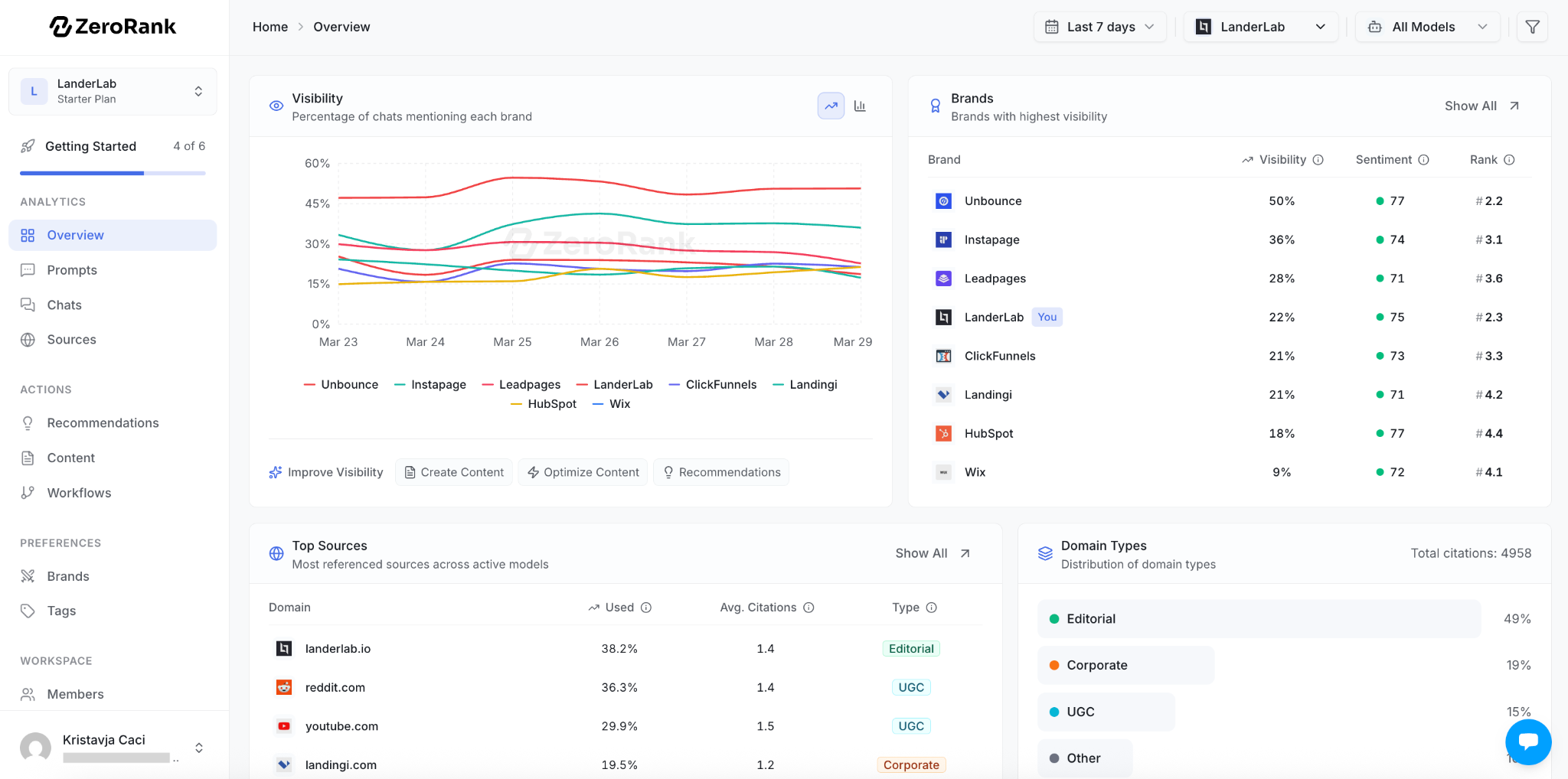
ZeroRank is built for teams that want to know where they stand and they want to do something about it. It combines prompt tracking, source analysis, competitive benchmarking, and a full execution layer in one platform.
Strengths:
- Tracks visibility across ChatGPT, Perplexity, and Google AI Overviews with real AI chat logs
- Shows exactly which sources AI platforms are citing in your category, and which of your pages are influencing answers
- Three-part recommendation system (Off-Page, On-Page, Technical) that tells you specifically what to fix, create, and where to get mentioned
- Built-in AEO content creation so you can act on insights without switching tools
- Competitive benchmarking across 500+ brands with sentiment and rank tracking
- Unlimited team seats and unlimited countries on every plan — starting at $76/month
Weaknesses:
- Not a replacement for traditional SEO tools
Choose if: You want enterprise-level AI visibility tracking, recommendations, and built-in execution tools without the enterprise price tag. Starts at $76/month with unlimited seats and unlimited countries.
2. Profound - best for enterprise reporting
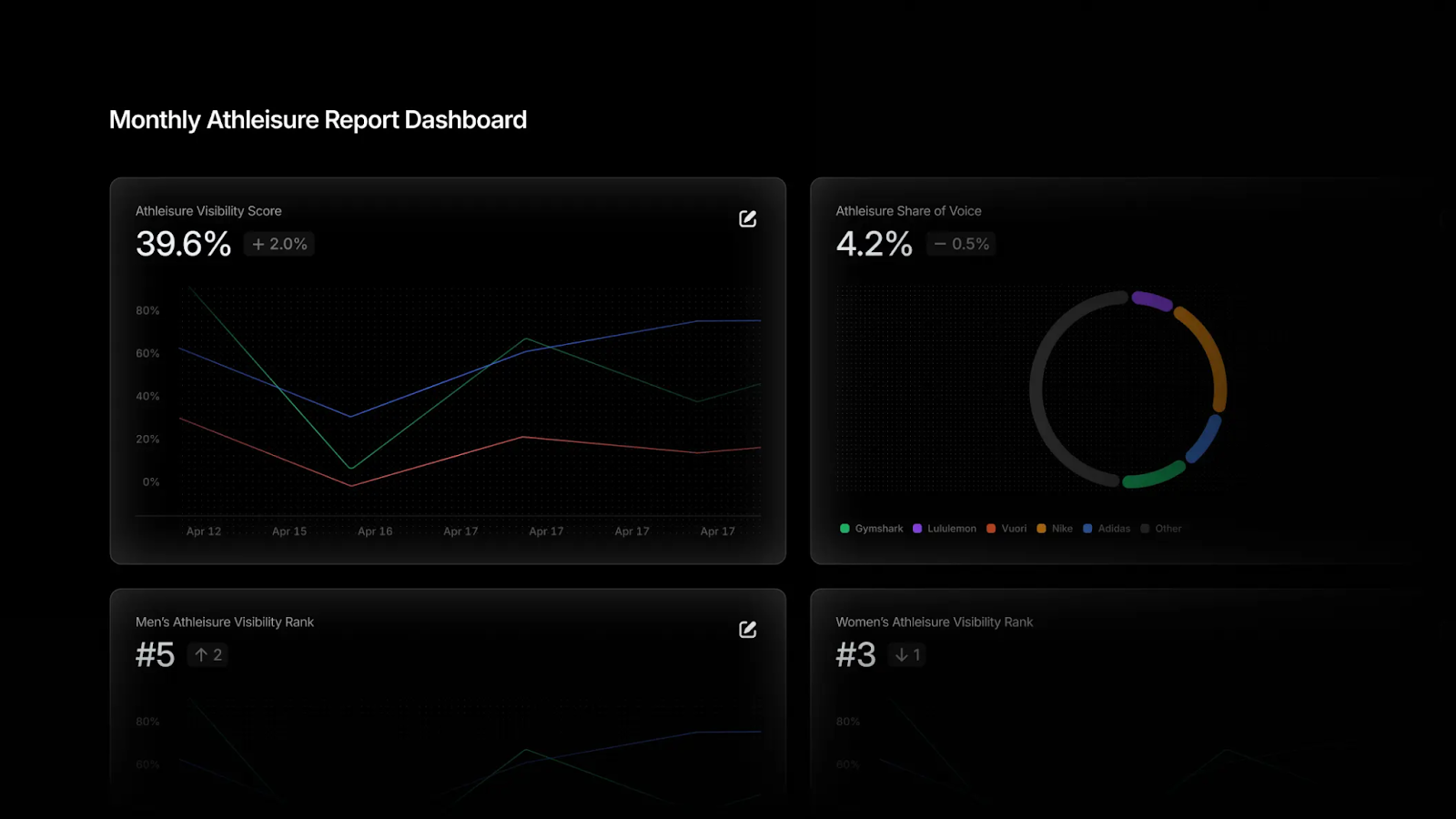
Profound is built for large organizations that need deep analytics, compliance, and wide AI platform coverage. It tracks brand visibility across 10+ AI engines including ChatGPT, Perplexity, Gemini, Grok, DeepSeek, and Meta AI and pairs that data with content creation workflows and agent-based automation.
Strengths:
- Widest AI platform coverage of any tool on this list (10+ engines)
- Conversation Explorer surfaces real AI search volume data showing what people are actually asking across platforms
- SOC 2 Type II and HIPAA compliant, which matters for regulated industries
- Named G2 Leader in the AEO category, Winter 2025
- Strong content generation layer with Profound Agents for workflow automation
Weaknesses:
- One of the most expensive tools in the category. Growth plan runs $399/month, well above average
- Powerful but complex; teams without dedicated resources may not get full value from it
Choose if: You're an enterprise team that needs the deepest analytics, multi-platform coverage, and compliance certifications and have the budget to match.
3. Scrunch AI - best for technical AI optimization
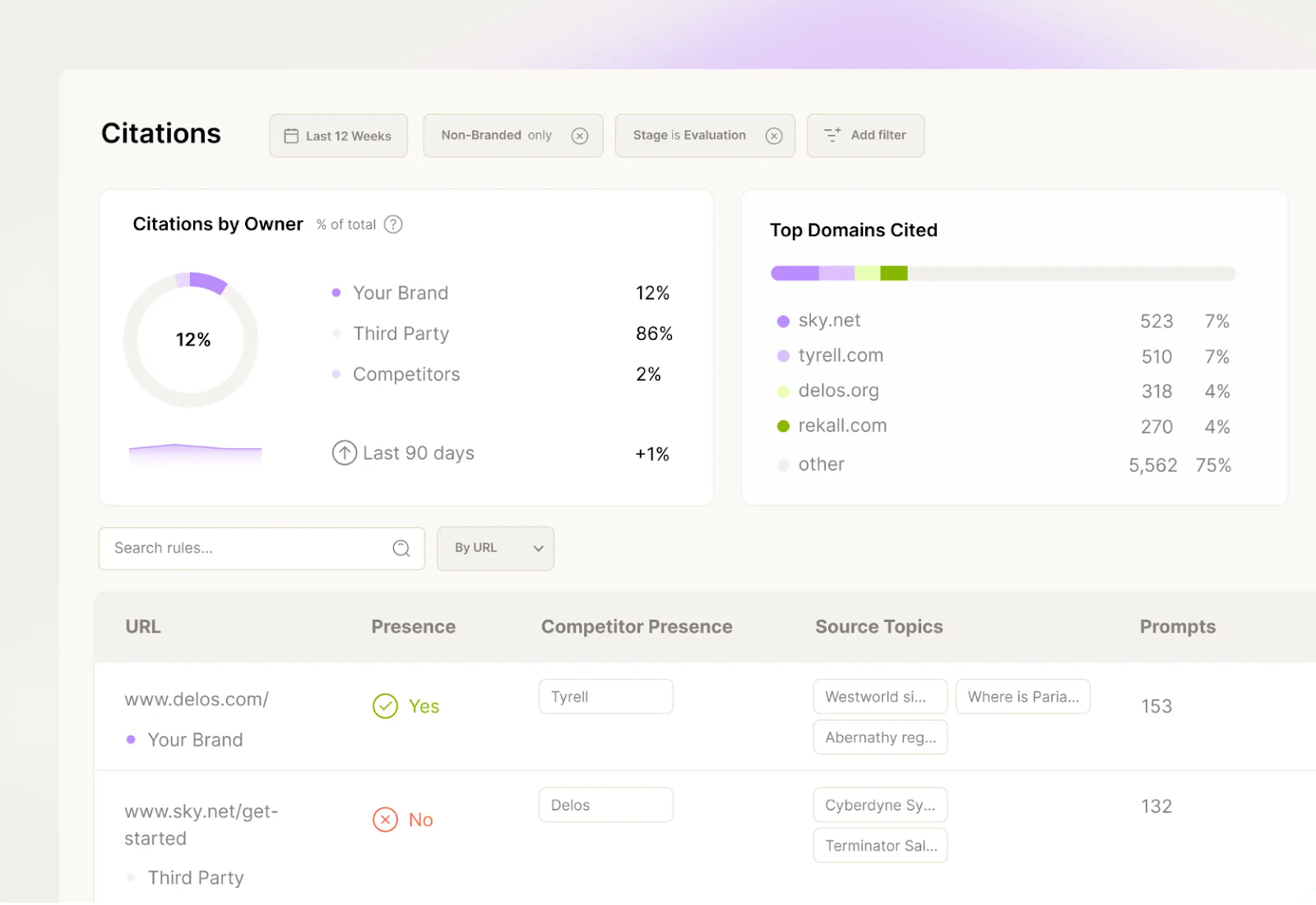
Scrunch AI focuses on helping brands understand how AI bots crawl and interpret their site, then fixing what's in the way. It tracks visibility across multiple AI platforms and recently launched its Agent Experience Platform (AXP), which creates an AI-optimized layer of your site specifically for AI crawlers.
Strengths:
- Solid multi-platform coverage across ChatGPT, Perplexity, Google AI Overviews, Meta AI, Claude, and more
- AI bot traffic monitoring shows exactly how AI crawlers are interacting with your site in real time
- Strong enterprise features including SOC 2 Type II compliance, RBAC, and multi-brand support
- Journey mapping helps visualize how AI agents interpret your customer touchpoints
- Backed by $19M in funding with an active product roadmap
Weaknesses:
- Stops at analytics and monitoring. Once you have the insights, execution happens elsewhere
- AXP, the platform's most compelling new feature, is still in limited rollout and not yet available to all customers
Choose if: You're a technical team or agency that wants deep AI crawlability insights and broad platform coverage, and has an in-house content team to act on the data.
4. Peec AI - best for teams getting started with AI visibility
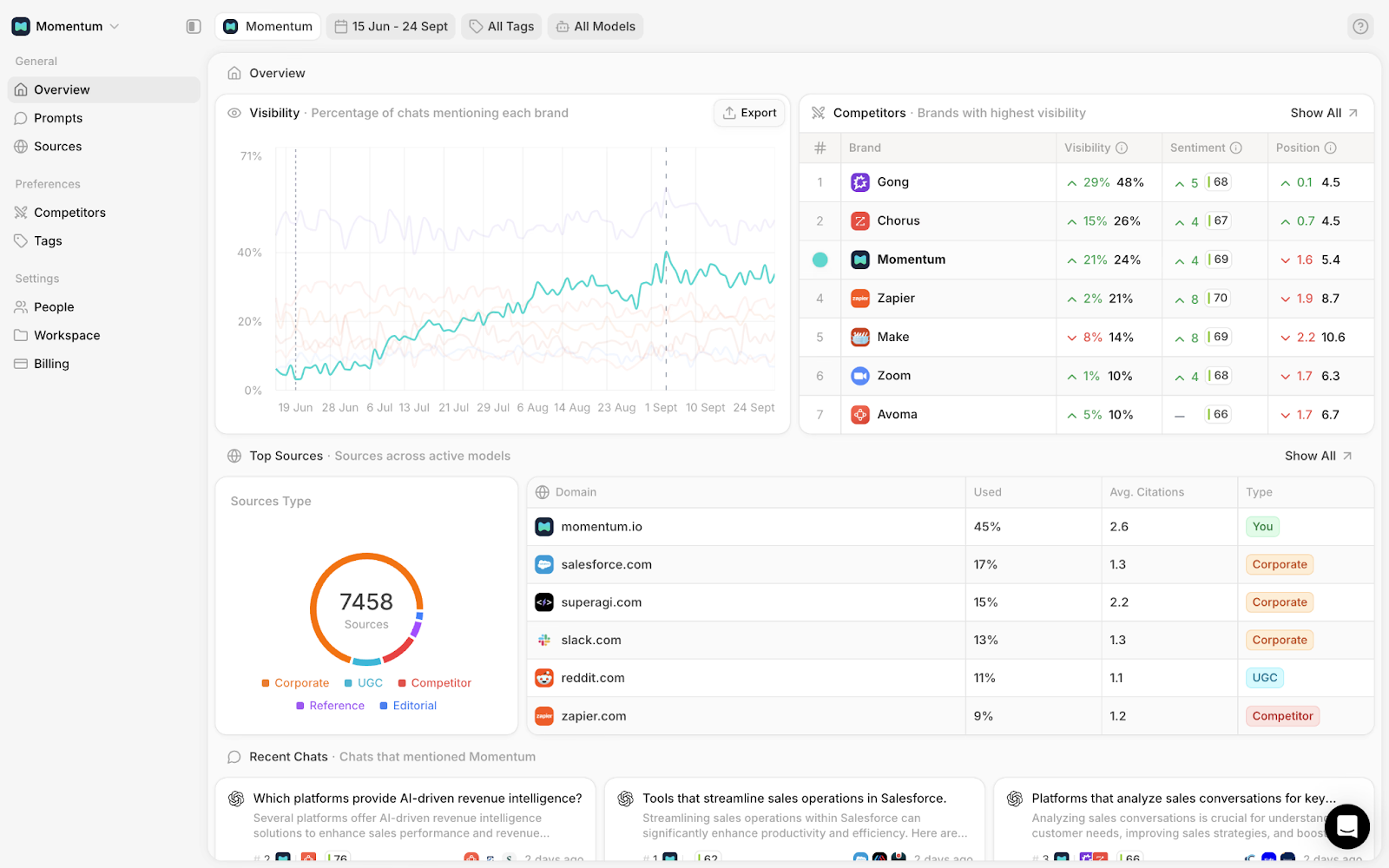
Peec AI is a clean, focused monitoring platform built for marketing teams that want to get up and running quickly. It tracks brand visibility, sentiment, and citations across major AI platforms without overwhelming you with features you don't need yet.
Strengths:
- Simple, intuitive setup — most teams are tracking prompts within minutes
- Daily tracking across ChatGPT, Perplexity, and Google AI Overviews with sentiment analysis included on all plans
- Competitive benchmarking shows which sources are winning citations in your category
- Unlimited team seats and unlimited countries on all plans
- Strong momentum — 1,300+ brands onboarded since launching in February 2025, with $29M raised to date
Weaknesses:
- Tracking additional AI platforms like Claude, Gemini, or Grok costs extra per model, which adds up quickly
- No content creation, recommendations, or execution layer. It tells you where you stand but not what to do next
Choose if: You're early in your AEO journey and want a simple, affordable way to start tracking AI visibility before committing to a more complex platform. Starts at $95/month for brands.
5. Ahrefs Brand Radar - best for SEO teams adding AI tracking
Ahrefs Brand Radar is the AEO add-on for teams already living in the Ahrefs ecosystem. It brings the same data-heavy approach Ahrefs is known for to AI visibility tracking, with a large prompt database and solid benchmarking across major platforms.
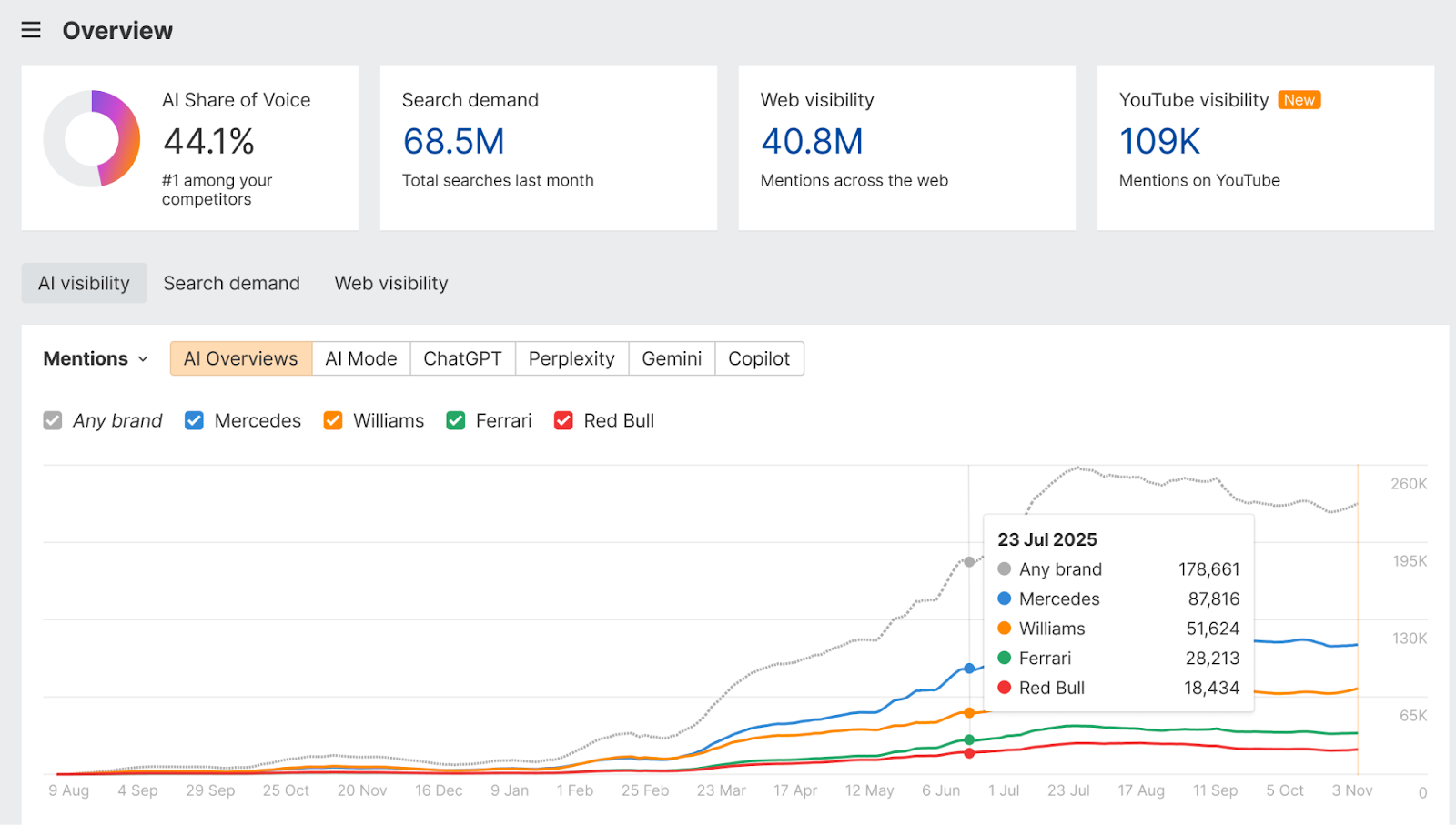
Strengths:
- Built on Ahrefs' established data infrastructure, so the underlying data quality is strong
- Large prompt database with visibility tracking across ChatGPT, Gemini, Perplexity, and Google AI Overviews
- Familiar interface for SEO teams already using Ahrefs
- Competitive benchmarking and share of voice tracking included
Weaknesses:
- No execution layer. It shows you the data but stops there — no recommendations, no content tools, no "what to do next"
- Priced as a premium add-on on top of an existing Ahrefs subscription, which makes it expensive if AI tracking is your primary use case
Choose if: You're already an Ahrefs user and want to layer AI visibility tracking into your existing workflow without switching platforms.
6. AirOps - best for content-first teams
AirOps is primarily a content workflow and automation platform that has expanded into AI search optimization. If your biggest bottleneck is producing AEO content at scale rather than tracking visibility, it's worth a look.
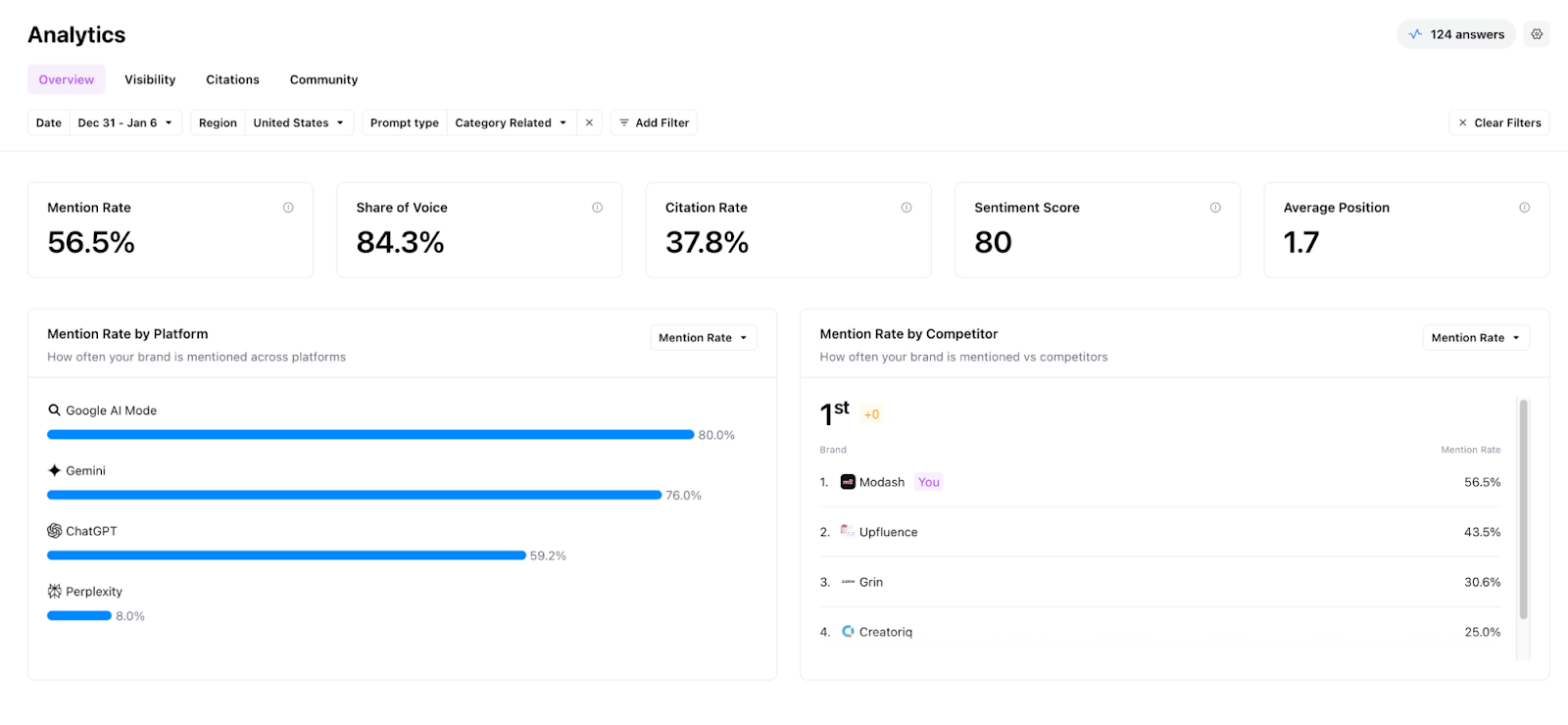
Strengths:
- Strong content generation and workflow automation built specifically for SEO and AEO use cases
- Lets teams build repeatable content pipelines at scale without starting from scratch each time
- Integrates well with existing tools and CMS platforms
- Useful for agencies managing high content volume across multiple clients
Weaknesses:
- Weak on the visibility and tracking side. It's a content tool that touches AEO, not a dedicated AI search optimization platform
- If you need to understand where you stand before you start creating, you'll need a separate tool for that
Choose if: Your team already has a visibility tracking setup and your main challenge is producing optimized content consistently at scale.
7. AthenaHQ - best for agencies and growth stage teams
AthenaHQ is a GEO platform founded by alumni from Google Search and DeepMind. It covers the full cycle from visibility tracking to content optimization, with a proprietary citation engine that predicts how likely your content is to be cited across AI platforms.
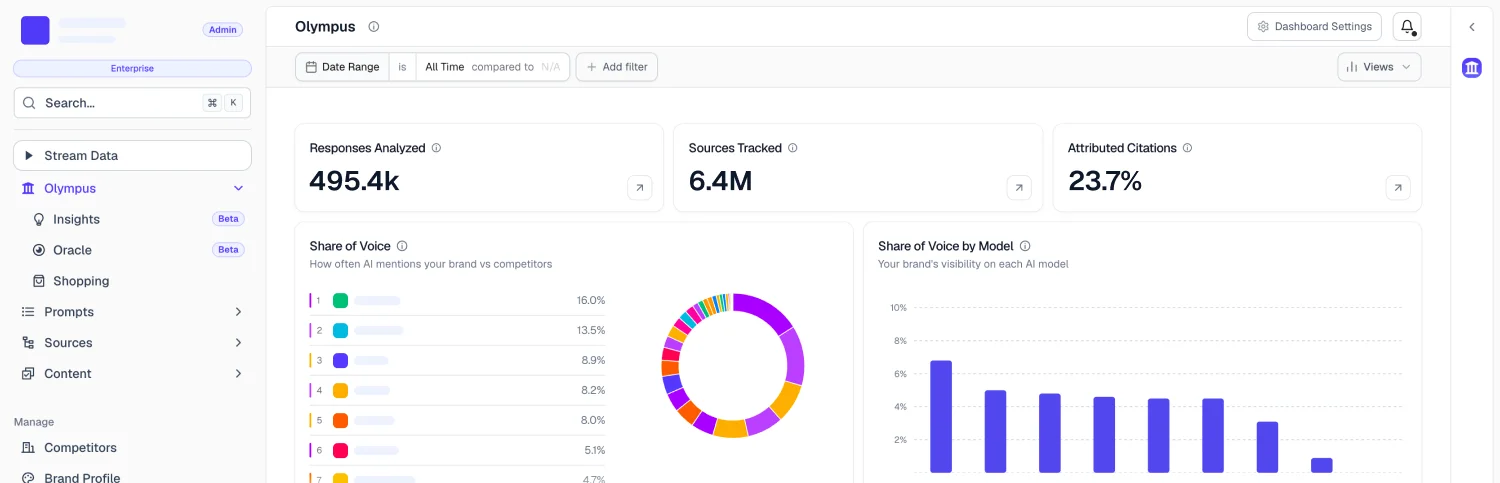
Strengths:
- Tracks visibility across ChatGPT, Perplexity, Claude, Gemini, AI Overviews, and AI Mode (up to 8 platforms)
- Proprietary Citation Engine (ACE) analyzes citation probability patterns to help prioritize optimization efforts
- Action center translates visibility data into specific content and optimization tasks
- PR and affiliate tracking built in alongside core GEO features
- Starts at $295/month with unlimited seats, making it more accessible than Profound but quite steep compared to some other tools on the list
Weaknesses:
- Smaller customer base and less third-party validation compared to more established players in this list
- Some features like prompt volume estimation are proprietary, making it harder to cross-verify data independently
Choose if: You're an agency or growth-stage team that wants an insights-to-action workflow .
AI Search Optimization tools: side-by-side comparison
Every tool in this list approaches AI search optimization differently. Here's how they stack up across the criteria that actually matter.
Tool | Best For | Core Strength | Biggest Limitation | Actionability | LLM Coverage |
ZeroRank | Teams that want insights + execution | End-to-end: tracking + recommendations + workflows | Newer player in the category | ⭐⭐⭐⭐⭐ | ChatGPT, Perplexity, Gemini, Google AI Mode, Google AI Overview, Grok, and Bing Copilot |
Profound | Enterprise reporting | Deep analytics, compliance, 10+ platform coverage | Complex and expensive | ⭐⭐⭐⭐ | 10+ engines |
Scrunch AI | Technical AI optimization | AI bot monitoring, crawlability, site-level fixes | No execution layer | ⭐⭐ | ChatGPT, Perplexity, Google AI Overviews, Meta AI, Claude and more |
Ahrefs Brand Radar | SEO teams adding AI tracking | Strong data infrastructure, large prompt database | No recommendations or execution | ⭐⭐ | ChatGPT, Gemini, Perplexity, Google AI Overviews |
Peec AI | Teams getting started with AEO | Simple setup, fast onboarding, clean interface | No execution layer, extra cost per AI platform | ⭐ | ChatGPT, Perplexity, Google AI Overviews (others at extra cost) |
AirOps | Content-first teams | Content workflows and automation at scale | Weak visibility tracking | ⭐⭐⭐⭐ | ChatGP, Gemini, Perplexity, AI Mode |
AthenaHQ | Agencies and growth-stage teams | Wide platform coverage, citation engine, action center | Less third-party validation | ⭐⭐⭐ | ChatGPT, Perplexity, Claude, Gemini, AI Overviews, AI Mode |
Picking the right tool for your needs
Most tools will show you where you stand. The right one depends on how you plan to use it.
If you only need visibility data, a tracking tool is enough. You’ll see where you appear, which prompts matter, and who’s getting cited instead of you.
If your goal is to improve visibility, you’ll need more than reporting. Look for platforms that connect insights to action, so you can turn gaps into content, sources, and fixes without switching tools.
Beyond that, the decision usually comes down to how your team operates:
- Teams and agencies: Look for unlimited seats, multi-brand tracking, and flexible reporting. Per-seat pricing and rigid limits break quickly at scale.
- Enterprise teams: Prioritize coverage, integrations, and security. You’ll likely need broader model tracking, API access, and compatibility with your existing stack.
- Content-heavy teams: Execution matters more. Built-in content workflows and automation will save time and keep things consistent.
In the end, the best platform is the one that fits how your team actually works and helps you move from insight to outcome.
Final thoughts
The way buyers discover brands has changed. AI search is the new front door.
Most teams will start by tracking visibility. That's a reasonable first step. But tracking tells you where you stand. It doesn't move you forward.
The teams that win in AI search will be the ones that treat visibility as something to actively shape, not just measure. That means understanding which sources AI pulls from, knowing where competitors are winning, and having a system to act on that information consistently.
The right tool depends on where you are. If you're just getting started, a simple tracking tool gets you oriented. If you're ready to actually improve your visibility, you need a platform that connects insight to action to execution.
That's the gap most tools don't close. And that's exactly what ZeroRank is built for.
Try ZeroRank free and get your AI search visibility score in 60 seconds. Plus, the steps to improve it.
Filed under AI Search Tools
B2B SaaS writer and content marketer with over 7 years of experience helping brands create content that drives traffic and conversions. She has bylines in Entrepreneur, Sprout Social, Buffer, and GoDaddy.
Keep reading
All posts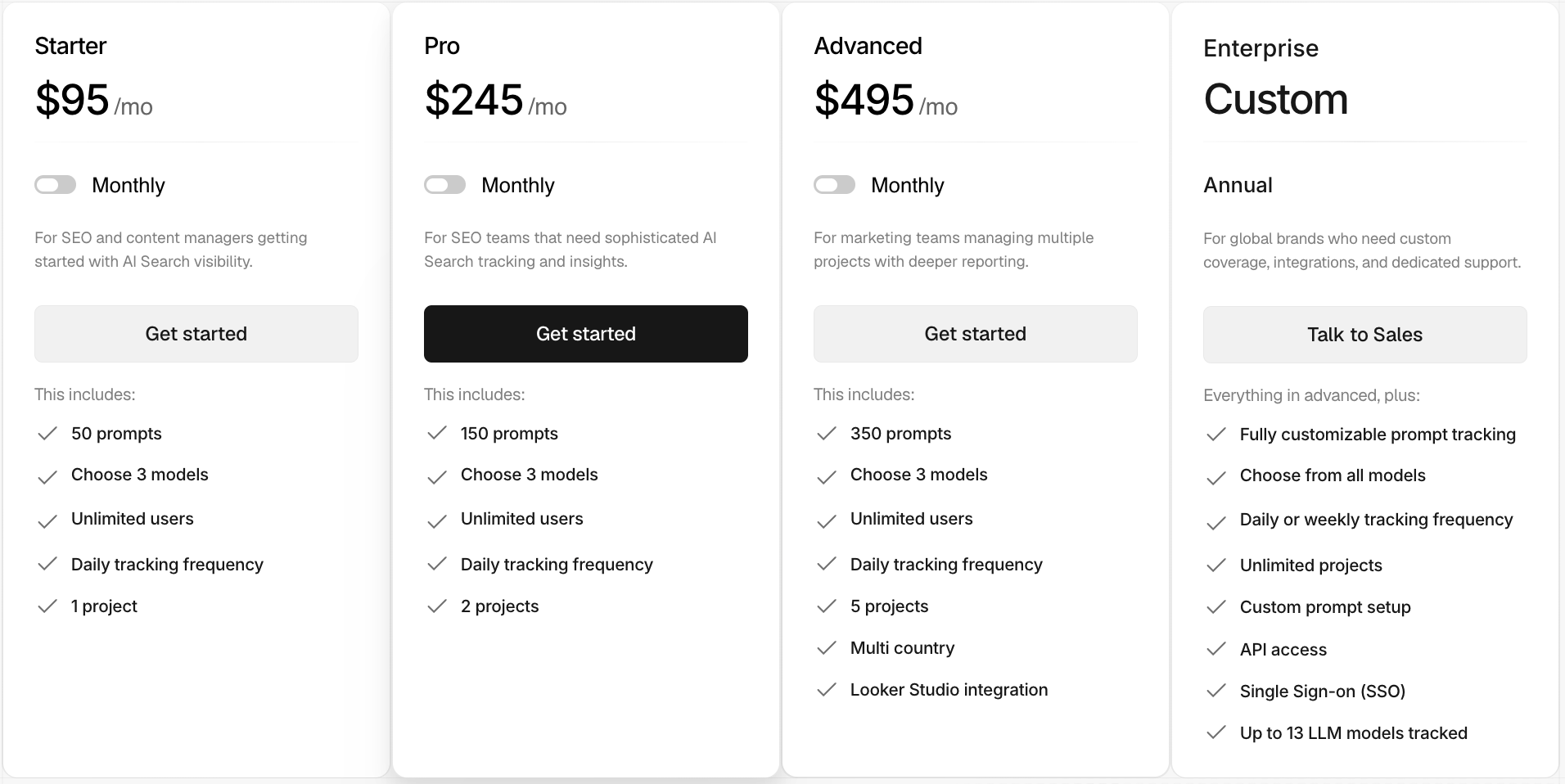 AI Search Tools
 Peec AI Pricing: What You Get for Your Money in 2026
What does Peec AI actually give you for the price? We break down its plans, tracking limits, model add-ons, and agency pricing, then compare the value with ZeroRank AI to help you choose the right tool for your budget.

 AI Search Tools
 8 Best AI Visibility Tracking Tools for Agencies
Compare the best AI visibility tracking tools for agencies based on client workspaces, white-label reporting, platform coverage, pricing, and the ability to turn insights into action.
 AI Search Tools
 Scrunch AI Pricing & Review: Is It The Right Choice For You?
Scrunch is a powerful but expensive AI visibility platform built for brands and agencies with more technical needs. This guide breaks down Scrunch AI pricing, what each plan includes, what users say, and why ZeroRank AI may be the better choice for most teams.