- 1.AI search engines recommend brands based on the signals they find across the web.
- 2.You need to track where you show up, which competitors appear instead, and which sources AI cites.
- 3.Build topical authority by covering your subject deeply, not by publishing random content.
- 4.Structure content clearly with direct answers, headings, summaries, and factual support.
- 5.Name your brand, products, tools, and people clearly because entities matter.
- 6.Build presence beyond your site through reviews, listicles, directories, publications, and communities.
- 7.Fix the technical basics so AI systems can crawl and understand your pages: clean HTML, fast pages, schema, and accessible content.
- 8.Keep important pages fresh because newer content can get picked more often.
There’s something happening right now that most businesses aren’t fully aware of.
Someone opens ChatGPT and asks, “What’s the best project management tool for a remote team?”
They don’t get a list of links. They get a direct answer with specific brands, explanations, and sometimes sources.
That’s how search works now.
If your brand isn’t included in those AI-generated answers, you’re invisible to a growing share of potential customers, even if you rank well in traditional search.
This shift is already here.
The discipline behind adapting to it is called Answer Engine Optimization(AEO) or Generative Engine Optimization (GEO) — the practice of making your brand more likely to be cited, referenced, and recommended by AI systems.
This guide walks you through how to do that.
How AI Search Engines Decide What to Recommend
AI search engines don’t just pull one page and show it. They generate answers by combining information from multiple sources.
When we look at the top cited sources across brands in ZeroRank AI, we keep seeing the same signals show up:
- how often a brand is mentioned across credible sources
- whether information about the brand is consistent
- how deep and useful the content is
- how easy the site is to access and process
- whether there’s social proof (reviews, mentions, discussions)
- how much authority the brand has on a topic
Different studies which we refer to throughout this article also support this.
The brands that get recommended aren’t always the biggest. They’re the ones that show up clearly and consistently across these signals.
Tip 1: Establish Your Baseline
Before changing anything, you need to understand where you stand. You can do this manually or use an AI visibility tracking tool.
If you’re starting manually, list 10–15 real questions your customers might ask AI tools. Not keywords, actual questions, like:
- “What’s the best [category] for [use case]?”
- “How do I solve [problem]?”
- “Which tools are worth paying for in 2026?”
Run these queries in ChatGPT, Perplexity, and Google AI Overviews.
Track:
- which brands show up
- which sources are cited
- where competitors appear instead of you
You’d have to do this repeatedly as things change fast. That’s why the manual way can be tedious and inefficient.
ZeroRank can give you a clear overview of your prompt visibility.
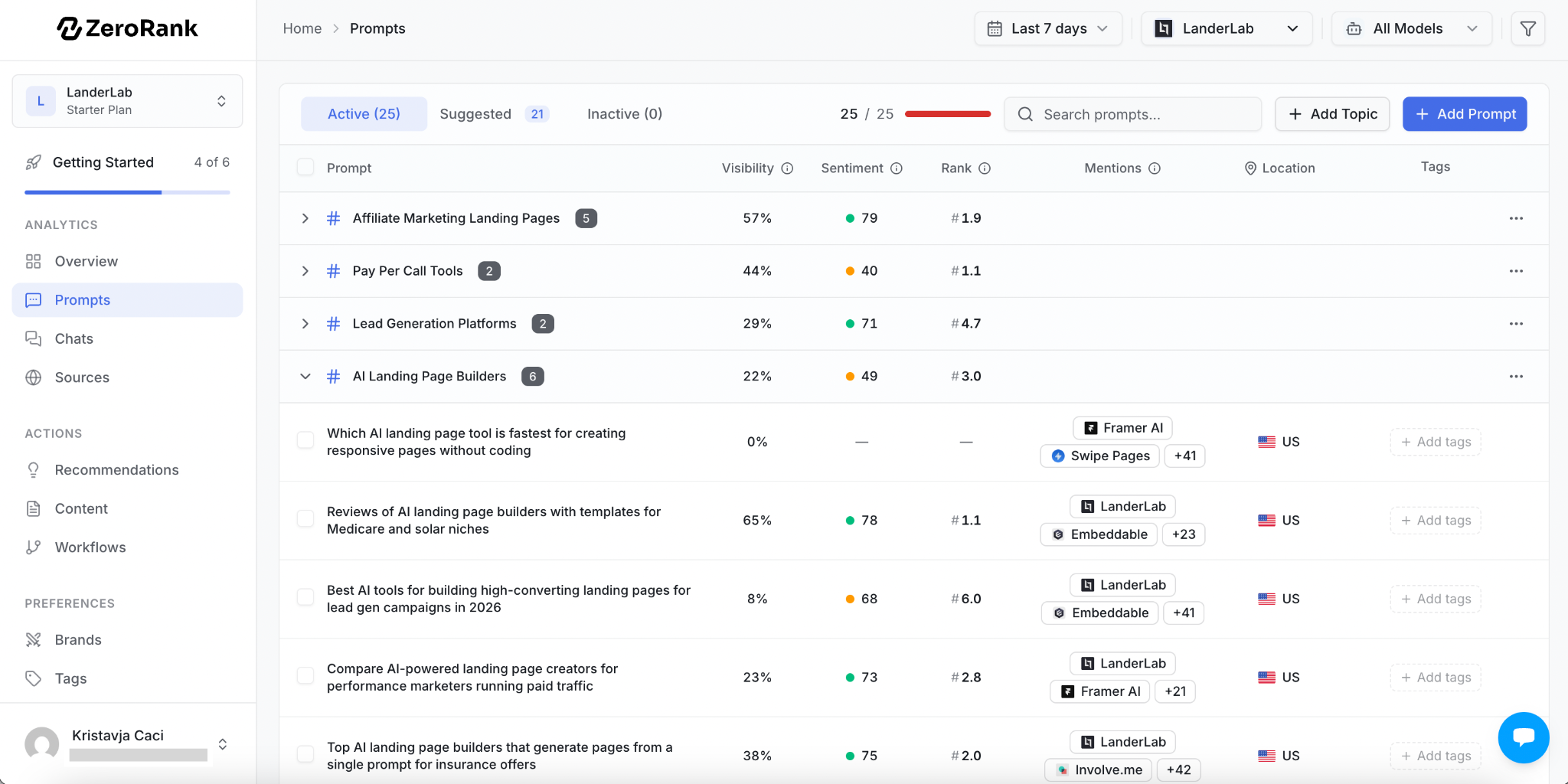
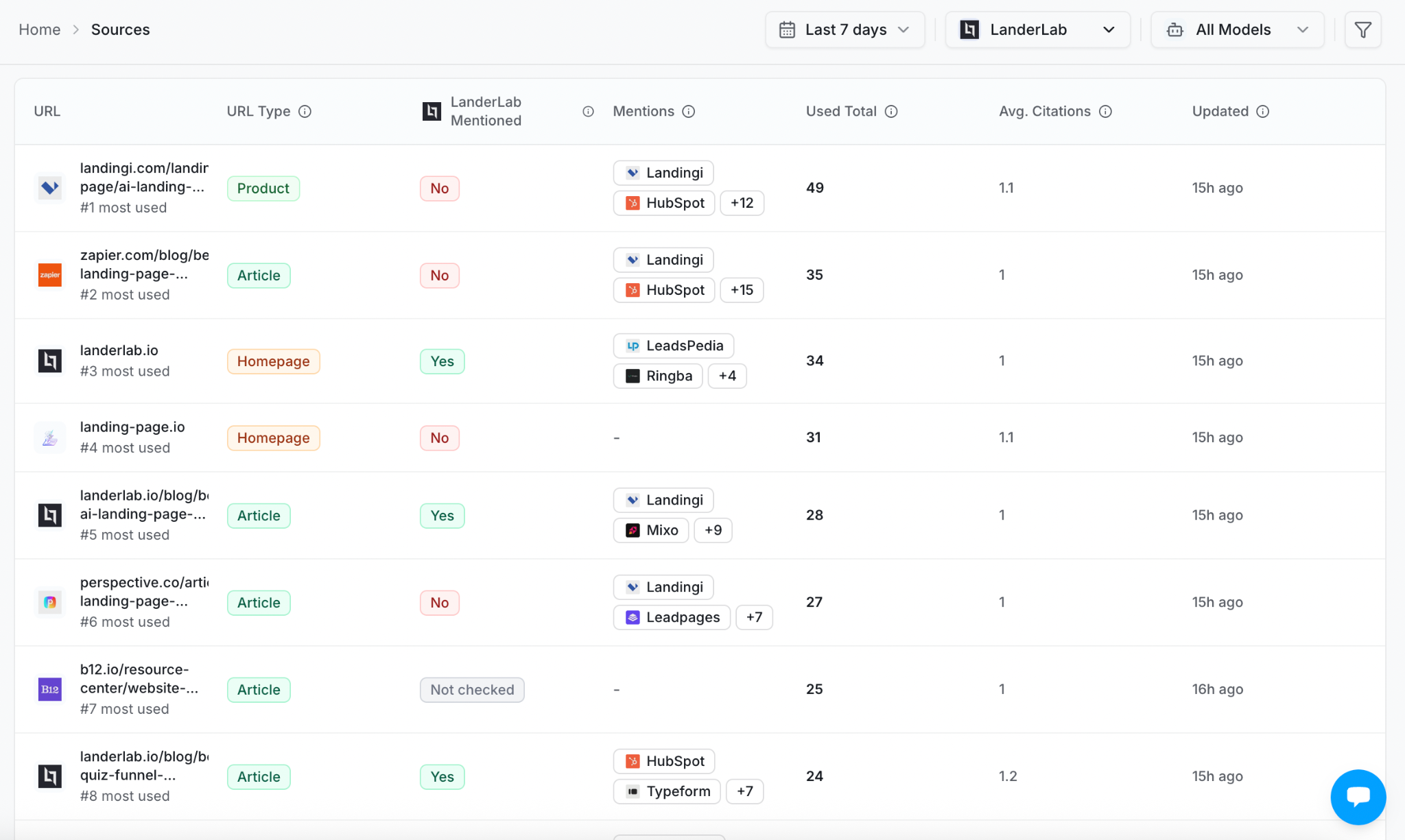
You also see at a glance all the cited sources for each prompt. Then your AEO strategy becomes clear: create content similar to the one that is being cited or try to get featured in that content.
Tip 2: Build Topical Authority
One of the strongest signals for AI recommendations is topical authority.
This means being a clear, reliable source on a specific subject.
Publishing a single blog post doesn’t make you an authority.
Building a set of content that covers a topic deeply from multiple angles does.
That includes:
- guides
- comparisons
- case studies
- FAQs
- detailed breakdowns
The goal is depth, not volume.
This takes time, but it’s one of the most durable advantages you can build.
And nowadays you can rely on content creation and automation tools to speed-up the process.
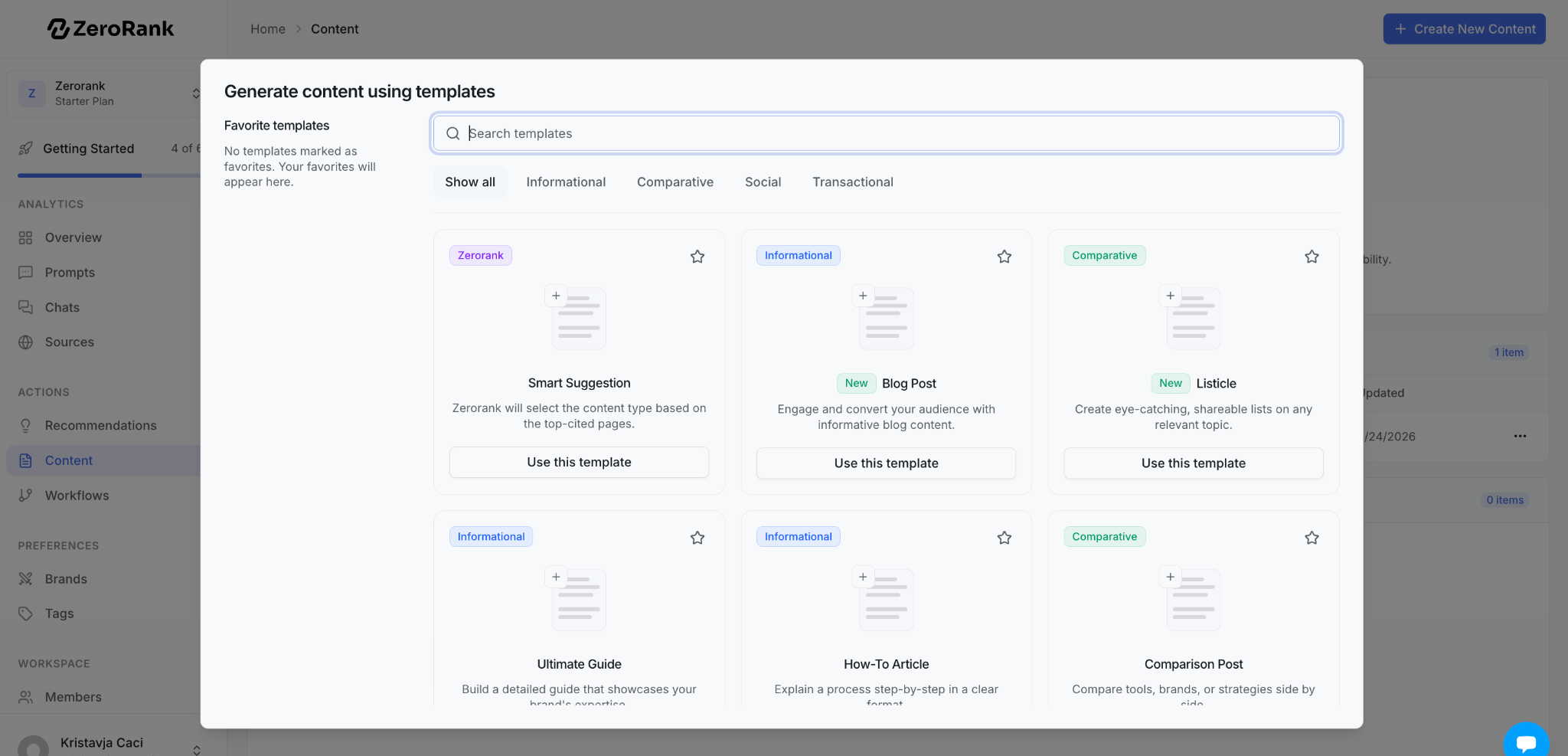
ZeroRank’s content templates help you create a comprehensive first draft that is fully optimized for AI search engines.
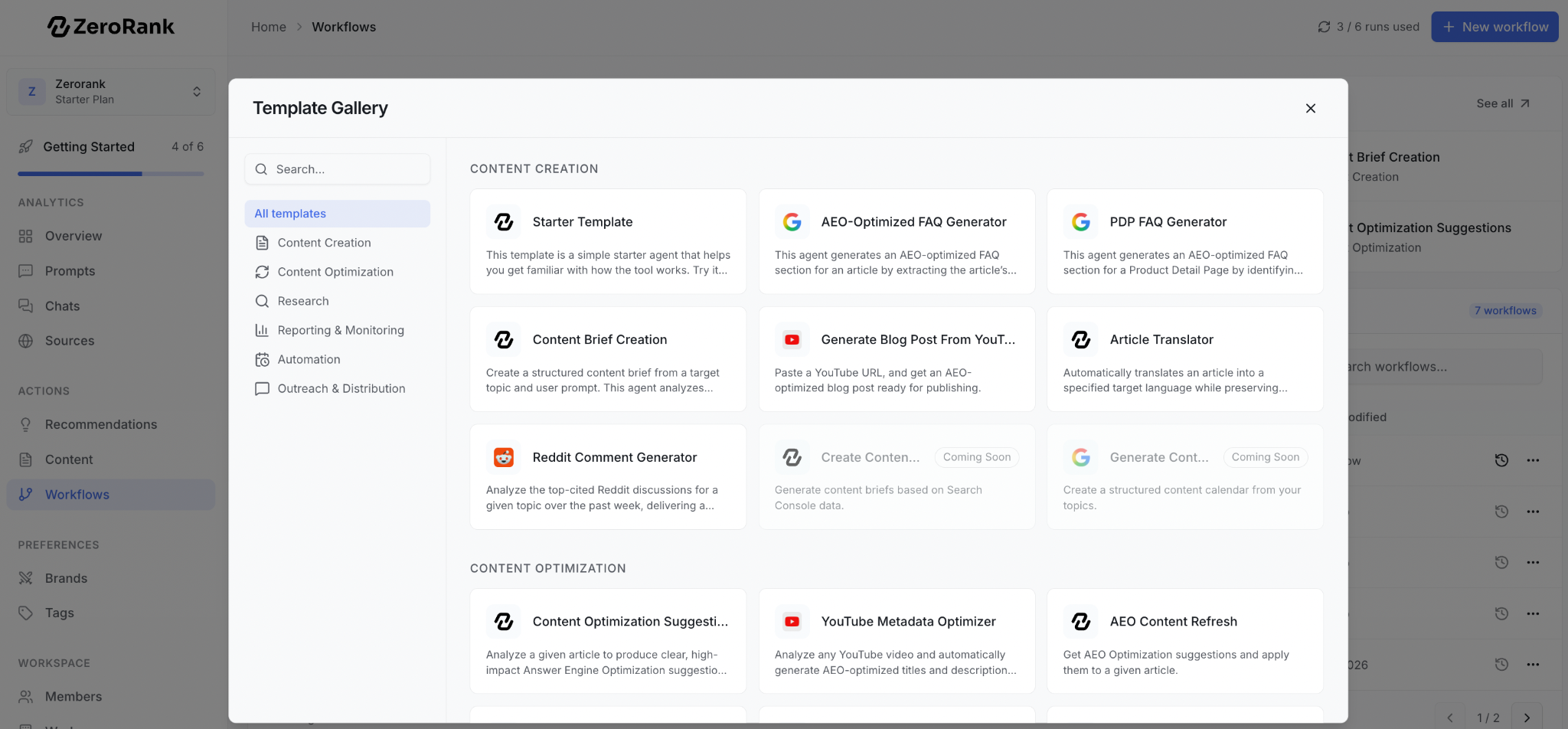
And if you’d like to go one step further, you can fully automate different parts of your process, from brief and article creation, to content repurposing across channels.
Tip 3: Create Content That AI Can Use
Not all content performs equally in AI search.
The content that gets cited tends to follow a few patterns.
1. Lead with the answer
Important information should appear early.
AI systems often pull from the beginning of a section. In fact, according to GrowthMemo, 44.2% of all AI citations come from the top third of a page.
So don’t bury key points deep in the text. A good practice is to add a Summary, TL;DR section or table overviews at the top of your article.
2. Structure your content clearly
An AirOps study found that content that is scannable and easier to extract information from attracts more citations.
In practice, this means your content should have:
- clear headings
- short paragraphs
- bullet points
- structured sections
3. Use question-based structure
FAQ sections and question-based headings are also shown to boost your chances of getting picked up by AI search engines.
People search in questions, so your content should reflect that.
Use headings like:
- “What is…”
- “How does…”
- “Which tools…”
Then answer directly in the first sentence.
4. Support your claims
In a study by SurferSEO, top cited pages cover 62% more facts than the pages that don't get cited by AI models.
This shows that AI systems prefer content that is:
- specific
- factual
- supported by evidence
Use data, references, and real examples where possible.
Tip 4: Optimize for Entities
An analysis from RESONEO suggests that AI tools like ChatGPT are building their own internal knowledge graphs by recognizing and connecting entities such as people, companies, brands, products, and software.
In simple terms, the model is mapping relationships between named things. While entity optimization is not a new thing in the world of search engine optimization (SEO), now it matters even more for GEO.
To improve visibility:
- mention your brand clearly (not just “we”)
- name products, tools, and concepts explicitly
- keep your brand information consistent across platforms
This helps AI connect your brand across different sources.
Tip 5: Build Presence Beyond Your Website
AI systems look at how widely your brand appears across the internet.
If you only exist on your own site, your credibility is limited.
You need presence across:
- directories and listings
- review platforms (G2, Trustpilot, etc.)
- industry publications
- comparison and “best of” articles
These external sources often influence AI recommendations more than your own content.
For example, ad intelligence brand AdPlexity relied on a third-party outreach strategy and became the #1 mentioned brand in its niche in just over 2 months.
Tip 6: Get Mentioned in Communities
User-generated content matters. Platforms like Reddit and YouTube constantly appear as top AI sources across industries.
Specifically, AI tools often pull from:
- forums
- discussions
- real user conversations
These are treated as more authentic than branded content.
ZeroRank surfaces these conversations for you under the Off-page recommendation tab.
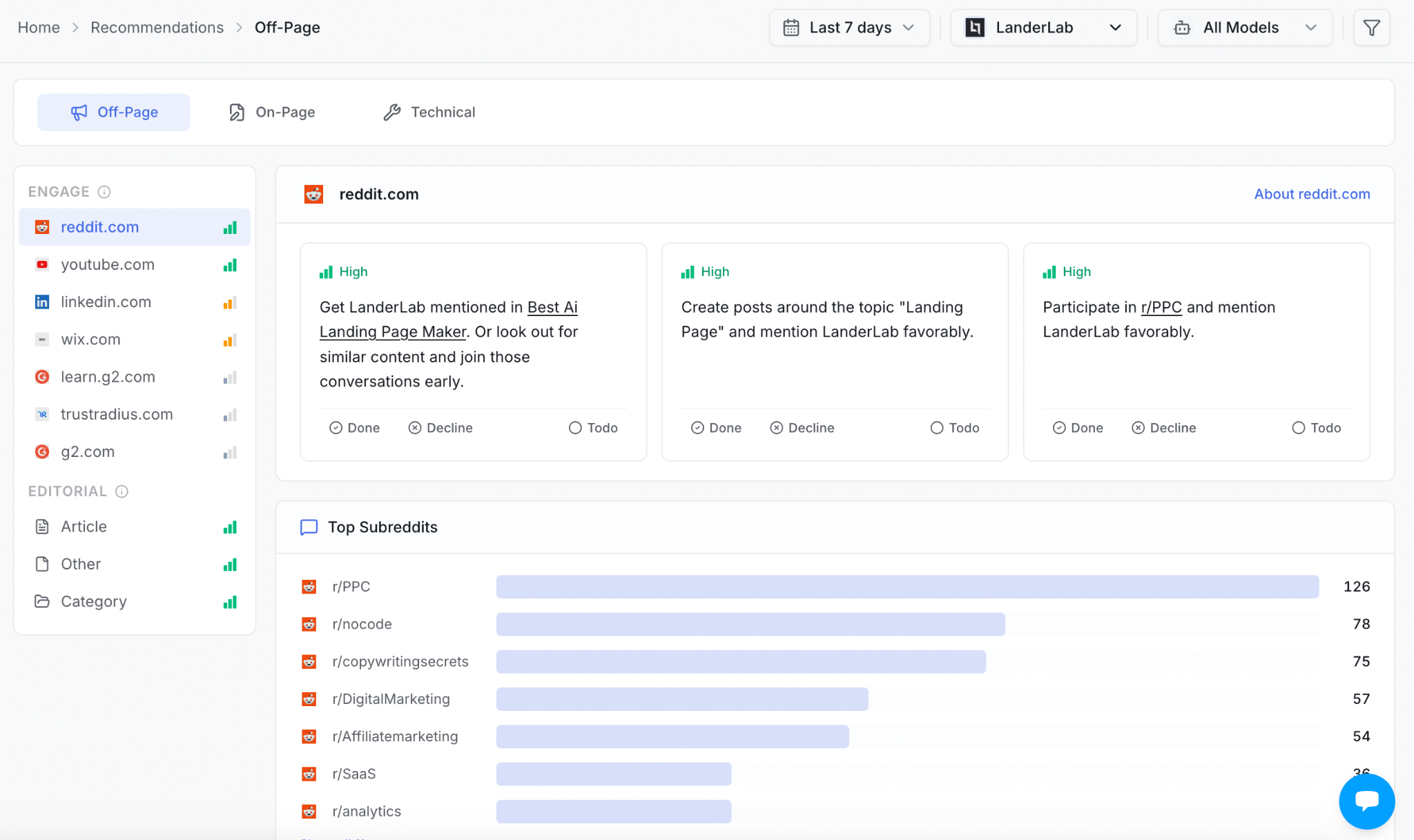
The goal isn’t to spam or promote aggressively.
Instead:
- participate in relevant communities
- answer questions honestly
- contribute useful information
Over time, this creates natural mentions that AI systems pick up.
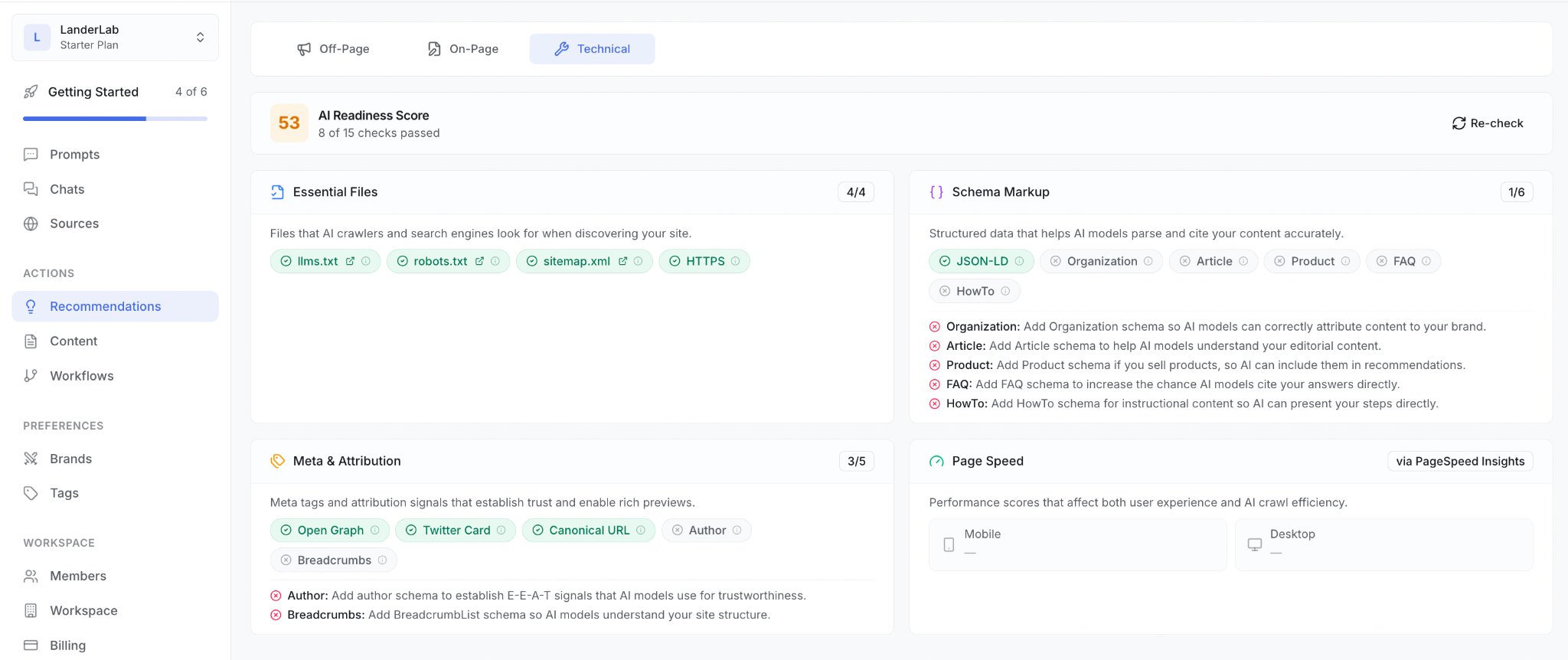
Tip 7: Fix Technical Issues
If your site is hard to crawl or understand, your content won’t perform well, regardless of quality.
Focus on:
- Page speed — slow pages reduce visibility
- Clean HTML — avoid relying too much on JavaScript
- Structured data — use schema to clarify your content
The Technical recommendations tab in ZeroRank shows you exactly where you are lacking.
These are standard SEO practices, but they matter just as much for AI search.
Tip 8: Keep Your Content Fresh
AI models tend to favor newer content.
In one study, researchers kept the content exactly the same and only changed the dates. The newer versions often ranked higher, with some jumping up to 95 positions, even though nothing else changed.
In practice, this means older content can lose visibility just because it looks outdated.
To stay competitive:
- update key pages regularly
- refresh stats and examples
- revisit content that used to perform well
Inside ZeroRank you can find concrete recommendations on how to refresh your existing pages.
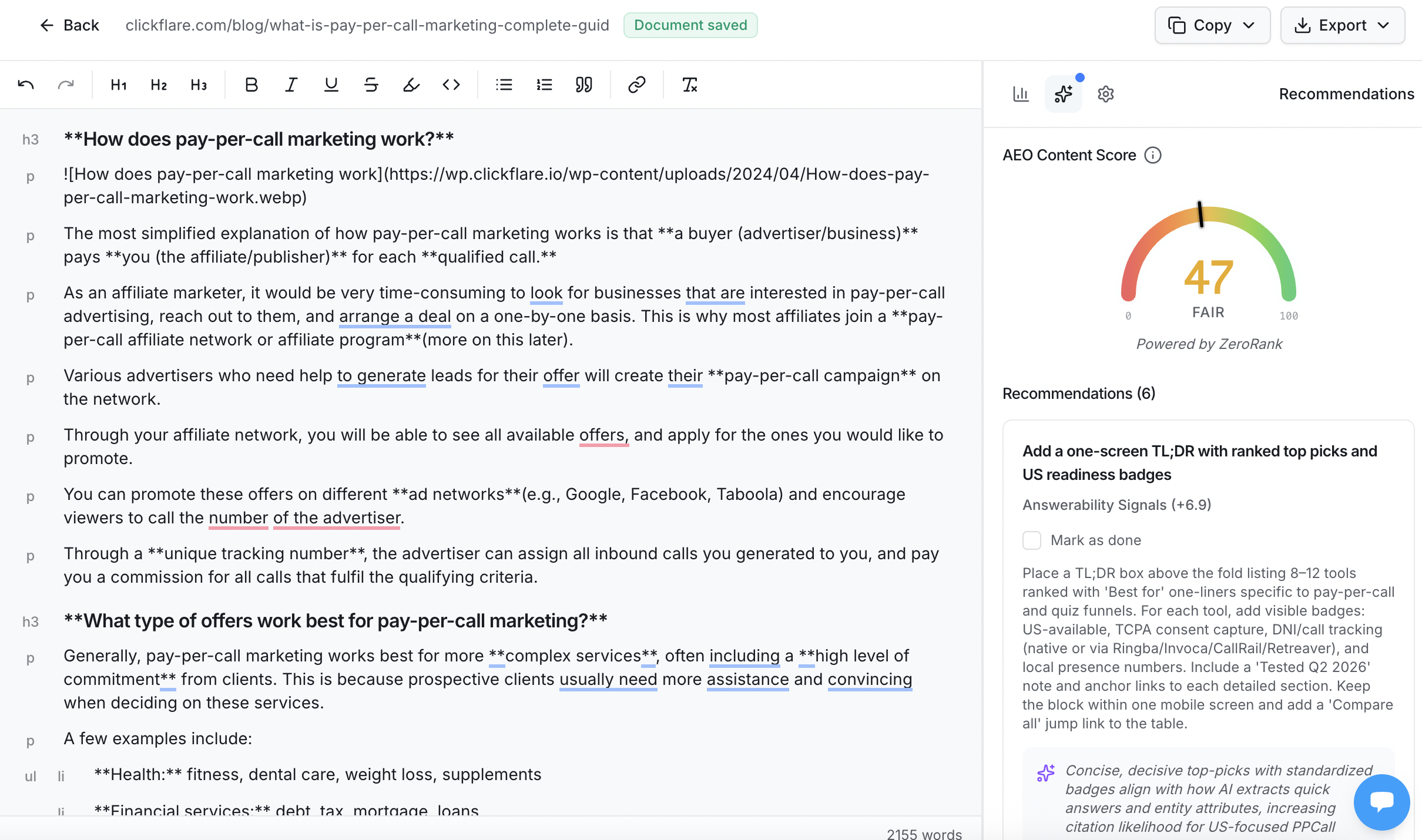
Freshness won’t fix weak content, but ignoring it can hurt even your best pages.
Final Thoughts
Generative Engine Optimization is still early.
Most companies haven’t fully adapted yet, which creates an opportunity.
The brands that win in AI search are not using tricks. They are consistent, credible, and useful.
And they build on that over time.
The question isn’t whether AI search matters.
It’s whether your brand will be visible when someone asks for a recommendation in your category.
The process to get there is simple: understand where you appear, find the gaps, and improve.
ZeroRank AI helps you do all three.
Sign up for a free ZeroRank trial and get your AI visibility report in seconds.