- 1.The best AI search optimization tools go beyond monitoring to help you create or improve content, earn citations, and resolve technical issues affecting AI visibility.
- 2.ZeroRank AI is the best overall option, combining prompt research, visibility tracking, prioritized recommendations, content optimization, and automated workflows.
- 3.Content-focused tools like Writesonic GEO, Orchly AI, and Geoptie help teams create and optimize pages based on identified visibility gaps.
- 4.Technical and workflow-focused platforms like Scrunch AI, AthenaHQ, and Rankshift are better suited to complex websites, enterprise teams, or agencies.
- 5.When comparing platforms, consider whether they provide actionable recommendations, cover the AI engines your audience uses, and measure the results of your optimization work.
AI search engine optimization tools help you improve how your brand appears in answers generated by ChatGPT, Gemini, Perplexity, Claude, Google AI Overviews, and other AI platforms.
They identify visibility gaps, recommend specific improvements, help optimize or create content, uncover third-party citation opportunities, and address technical issues that may prevent AI platforms from accessing and understanding your website.
In this guide, we compare seven tools that combine AI visibility data with practical optimization capabilities.
Best AI search engine optimization tools at a glance
Tool | Best for | Starting price | Main optimization strength | Main limitation |
ZeroRank AI | Turning AI visibility into action | $89/month | Prioritized recommendations, AI content optimization, automated workflows, and prompt research | Doesn’t replace a complete traditional SEO platform |
Writesonic GEO | AI content creation and optimization | Custom | Turns citation and content gaps into optimized content workflows | Its broad content suite may be excessive for teams that only need AI search optimization. |
Scrunch AI | Technical AI search optimization | $250/month | Serves AI agents a structured, optimized version of your website | Expensive and technically complex for smaller teams |
AthenaHQ | Enterprise optimization workflows | $295/month | Action Center for converting visibility gaps into optimization tasks | Entry price is relatively high |
Orchly AI | Autonomous SEO and AEO agents | $49/month | Agents create, optimize, refresh, and publish content | Automated content and website changes still require careful human review. |
Geoptie | Affordable all-in-one GEO optimization | $49/month | Unlimited content generation and GEO audits alongside monitoring | Covers fewer AI platforms than some competitors |
Rankshift | Agencies combining tracking and optimization | €77/month | AI content writer, workflow integrations, and AI crawler analytics | Credit-based usage requires planning |
How we evaluated these tools
We focused specifically on platforms that help businesses improve AI search visibility—not tools that primarily provide another monitoring dashboard.
Each tool was evaluated based on:
- Actionable recommendations tied to actual visibility gaps
- AI content creation and optimization capabilities
- Technical optimization and AI crawler analysis
- Citation and third-party source opportunities
- Workflow automation and integrations
- AI platform coverage
- Pricing and scalability
- Ability to measure whether optimization work improves visibility
Monitoring still matters because you need a baseline and a way to measure progress. However, every platform included here provides an additional optimization layer that helps teams act on what they discover.
1. ZeroRank AI — Best overall for turning AI visibility into action
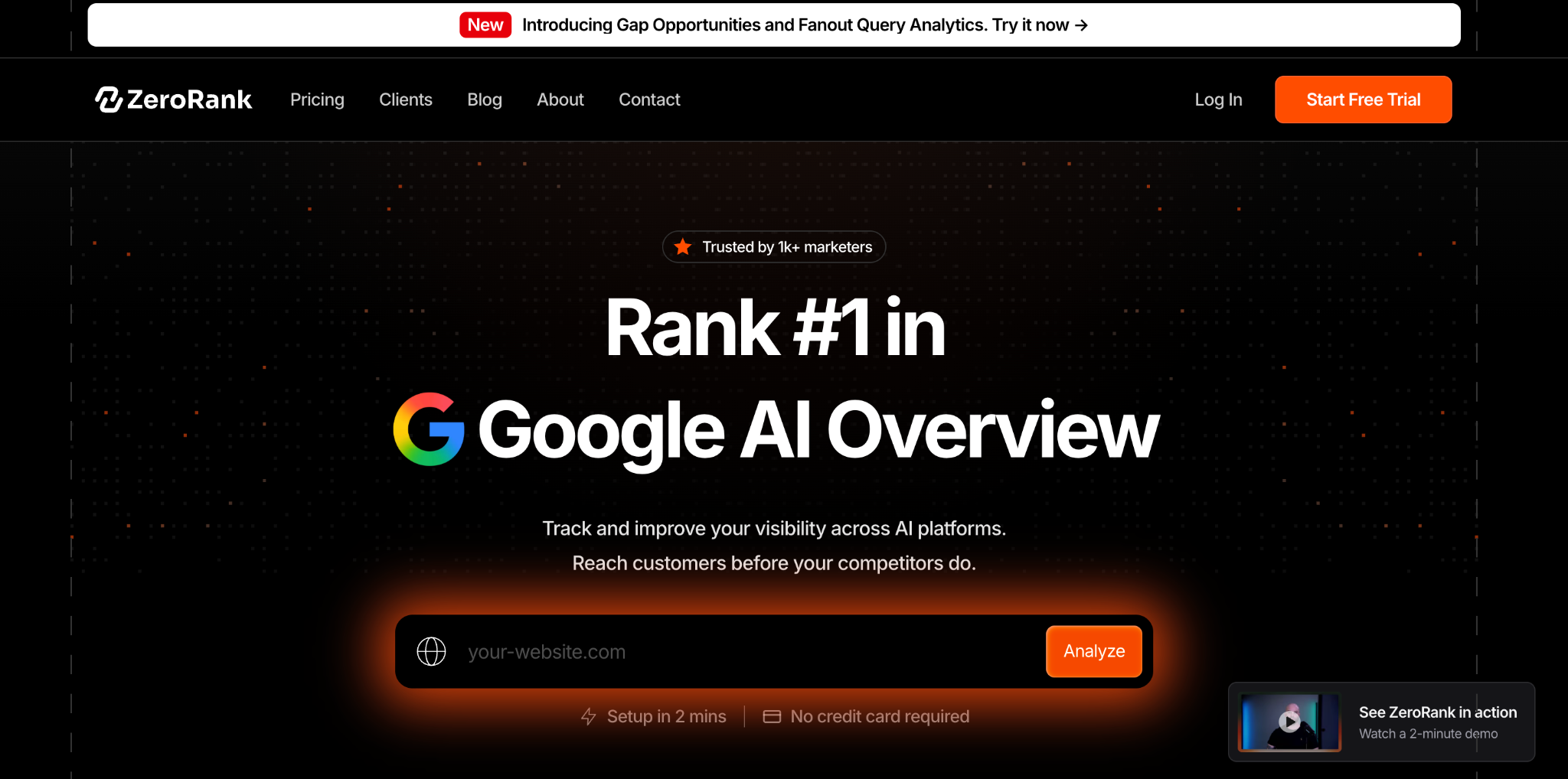
ZeroRank AI is the best overall choice for teams that want to manage the complete AI search optimization process—from finding the right prompts to measuring results and implementing improvements.
The platform monitors your brand’s visibility across up to 17 AI platforms, including ChatGPT, Claude, Gemini, Perplexity, Google AI Overviews, Google AI Mode, Microsoft Copilot, and Grok. It tracks visibility score, mentions, citations, sentiment, rankings, competitors, and the complete answers generated for your prompts.
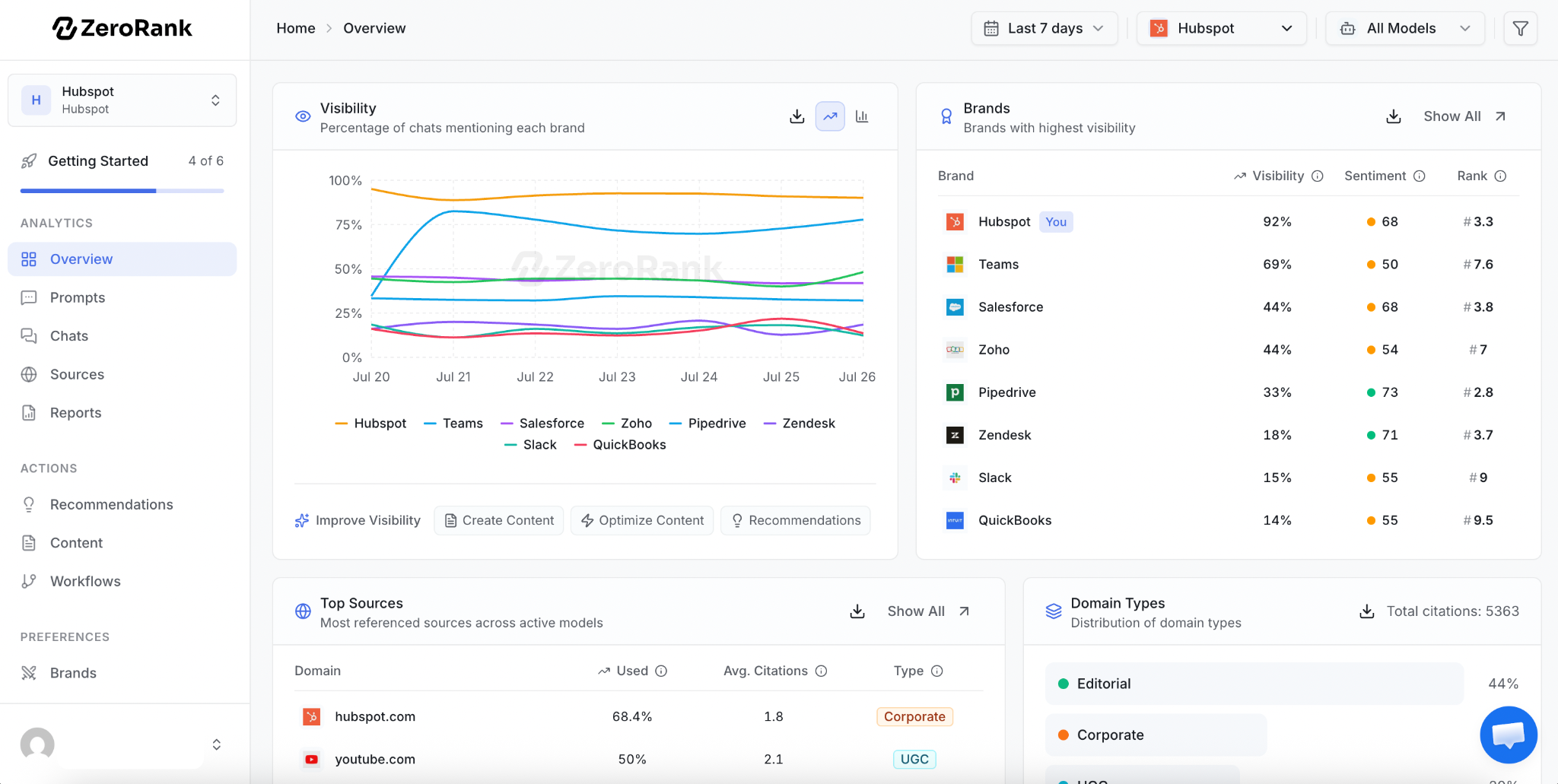
Where ZeroRank stands out is what happens after the data comes in.
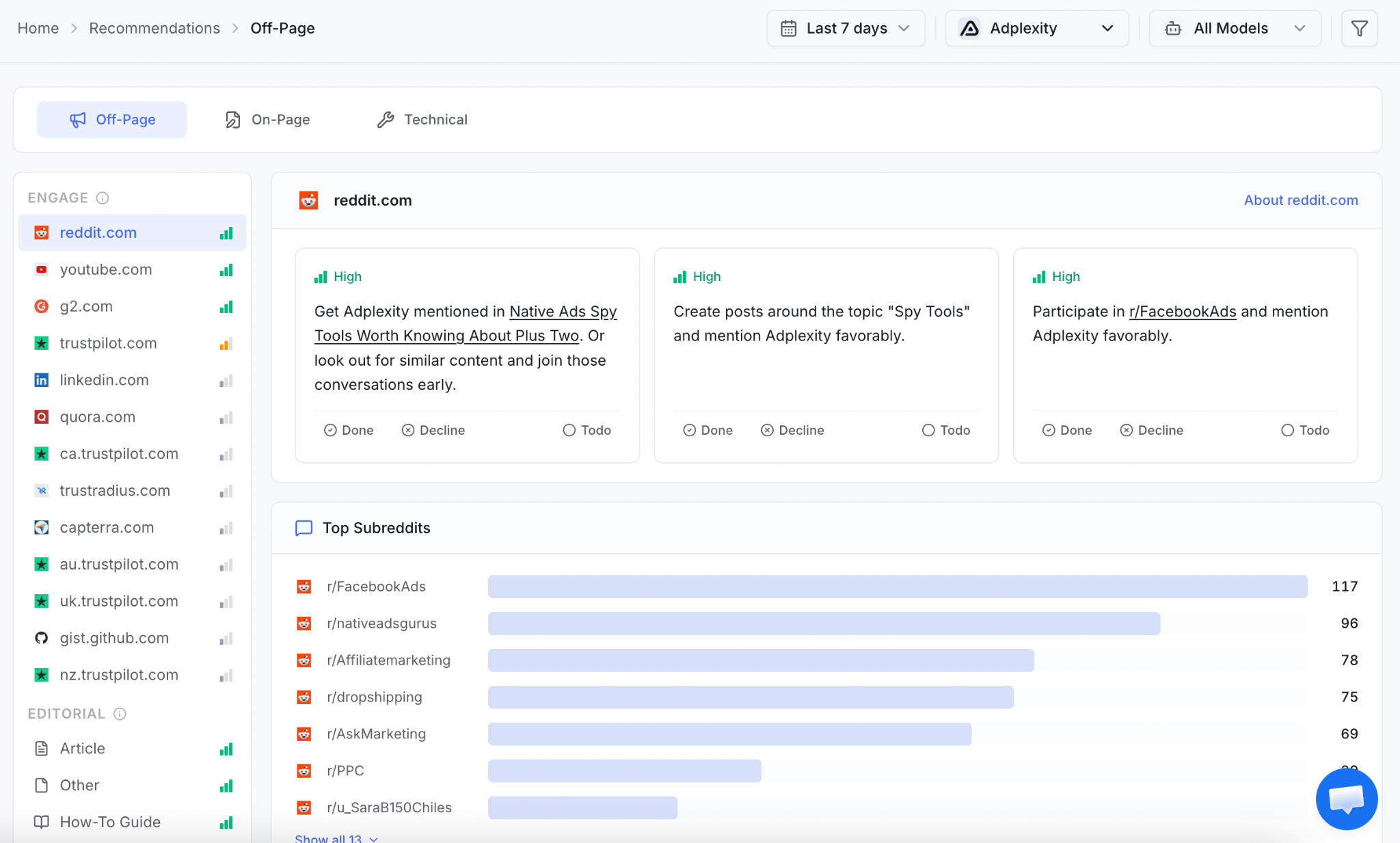
The platform identifies your biggest visibility gaps and turns them into prioritized on-page, off-page, and technical recommendations. These recommendations help you understand whether you need to improve an existing page, create new content, strengthen your presence on third-party sources, or fix technical issues affecting AI crawlers.
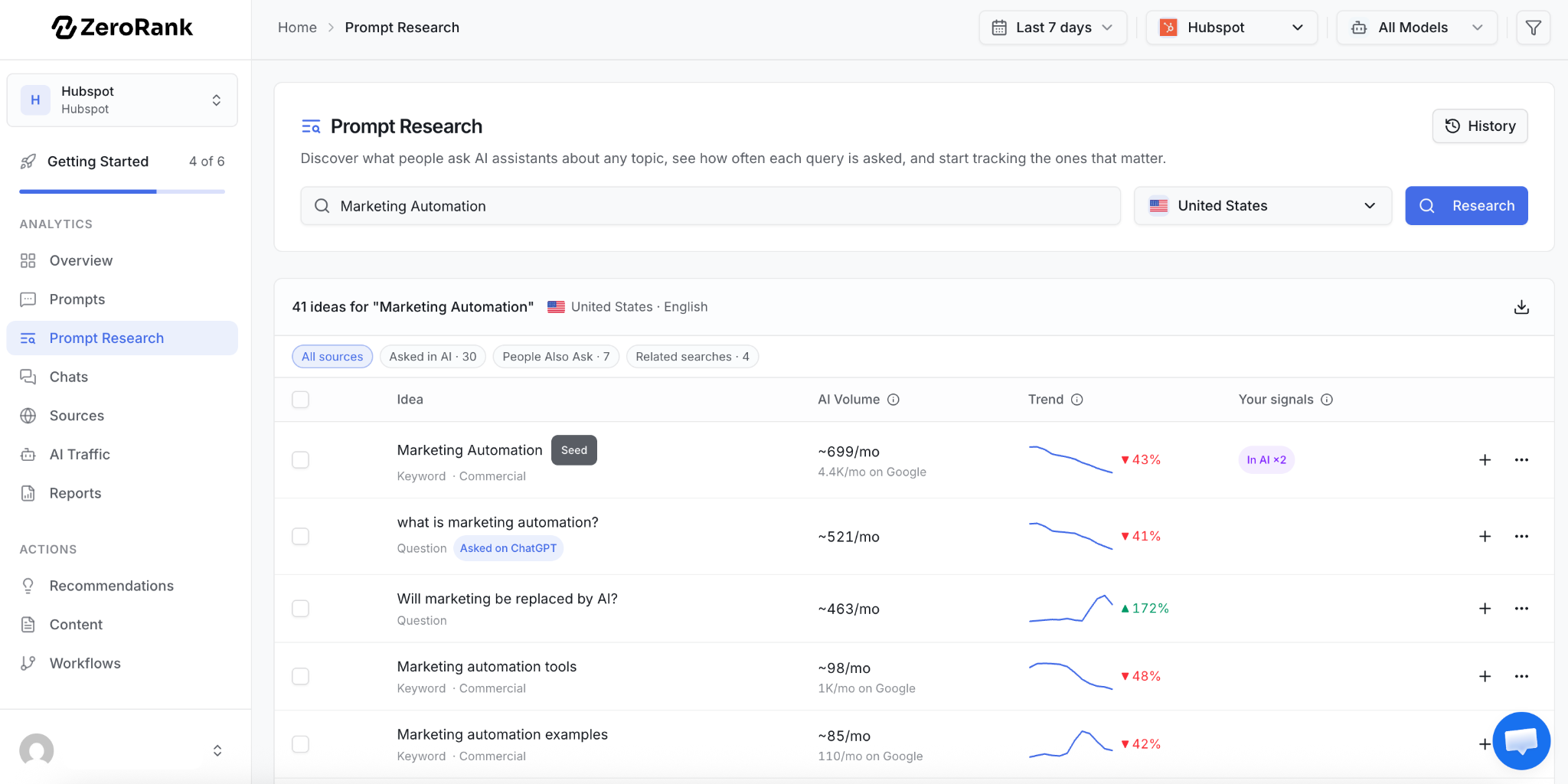
ZeroRank’s Prompt Research feature also helps you find questions worth optimizing for using real data from AI platforms, Google People Also Ask, related searches, keyword databases, competitor rankings, and Google Search Console.
Each prompt can include estimated AI search volume, search intent, trends, and your existing visibility, helping you prioritize opportunities with genuine demand.
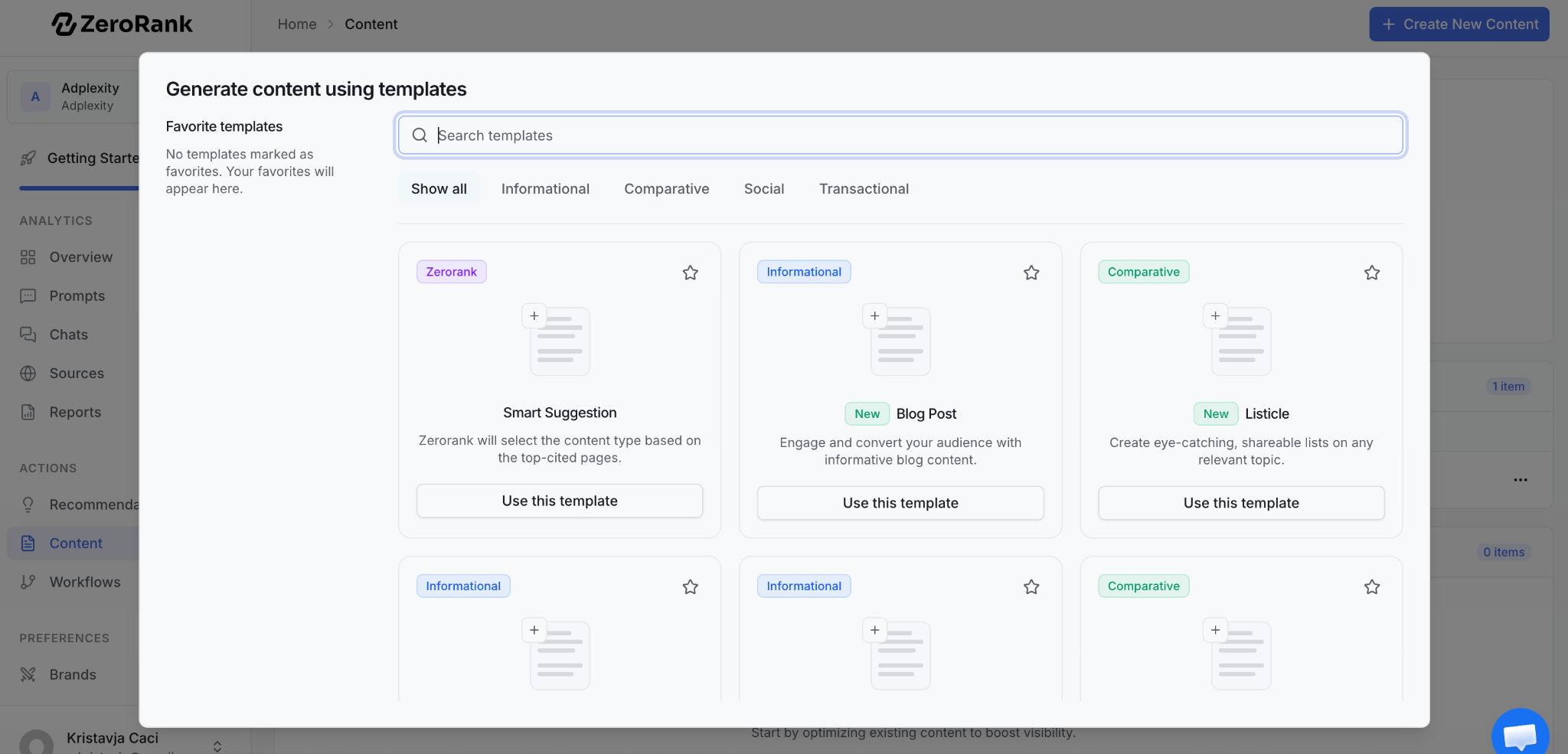
You can then use the AI Content Optimizer, AEO content templates, automated workflows, and ZeroRank MCP to implement improvements.
Google Analytics and Search Console integrations connect visibility data with AI referral traffic, landing-page performance, engagement, and conversions.
Why it stands out
- Tracks visibility across up to 17 AI platforms
- Finds prompts using real query and AI search data
- Provides prioritized on-page, off-page, and technical recommendations
- Identifies competitor and citation gaps
- Creates and optimizes content for AI search
- Automates repetitive optimization workflows
- Connects AI visibility with traffic and conversions
- Includes unlimited seats and countries
Limitations
- It doesn’t replace traditional SEO tools for advanced backlink analysis or broad keyword research.
Pricing: Starts at $89 per month, with a seven-day free trial.
2. Writesonic GEO — Best for AI content creation and optimization
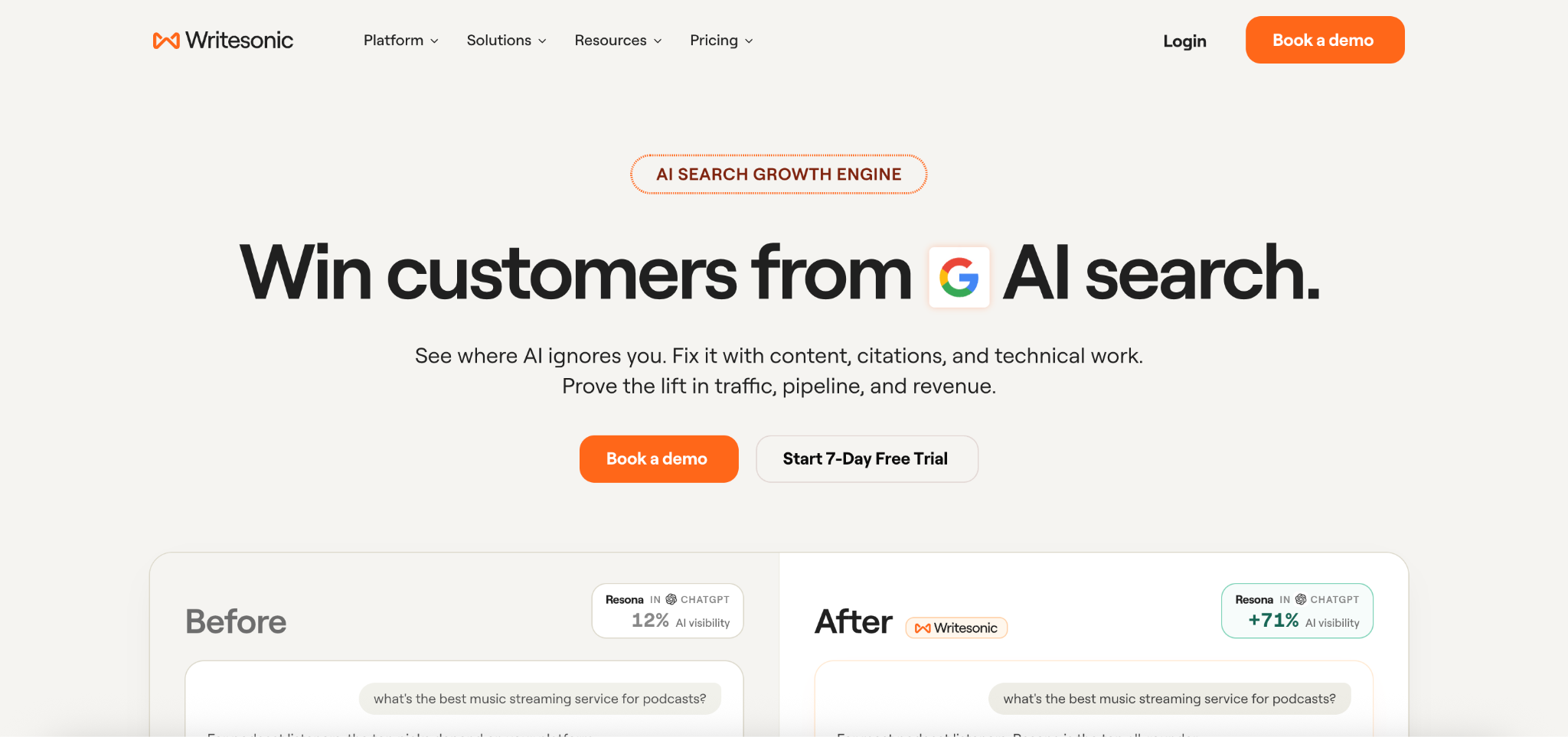
Writesonic GEO helps content teams that want to combine AI visibility tracking with content creation and optimization.
The platform monitors how your brand appears across ChatGPT, Claude, Gemini, Google AI, and other AI engines. It tracks mentions, citations, sentiment, competitive share of voice, and the prompts where competitors appear but your brand does not.
Writesonic then turns these gaps into content recommendations through its GEO Action Center. It can identify pages that should be updated, topics that require new content, technical issues affecting AI visibility, and third-party sources where competitors are earning mentions.
Writesonic’s existing writing platform can research a topic, create a content brief, generate an article, add internal links, and optimize the page for traditional and AI search. This makes it particularly useful for teams producing content at scale.
However, this broader content focus can also be a limitation. Companies looking primarily for detailed prompt tracking, custom reporting, or advanced competitive intelligence may find dedicated AI visibility platforms more specialized.
Why it stands out
- Combines AI visibility tracking with established content creation tools
- Identifies content and citation gaps
- Recommends pages to create or update
- Creates articles, briefs, and content updates
- Supports internal linking and on-page optimization
- Tracks mentions, citations, sentiment, and share of voice
- Suitable for content teams producing at scale
Limitations
- AI search optimization is part of a much broader content platform, which may feel excessive if you only need GEO capabilities.
- The lower plans include a limited number of users.
- Pricing can increase quickly as content and visibility requirements grow.
Pricing: GEO plans start at $99 per month.
3. Scrunch AI — Best for technical AI search optimization
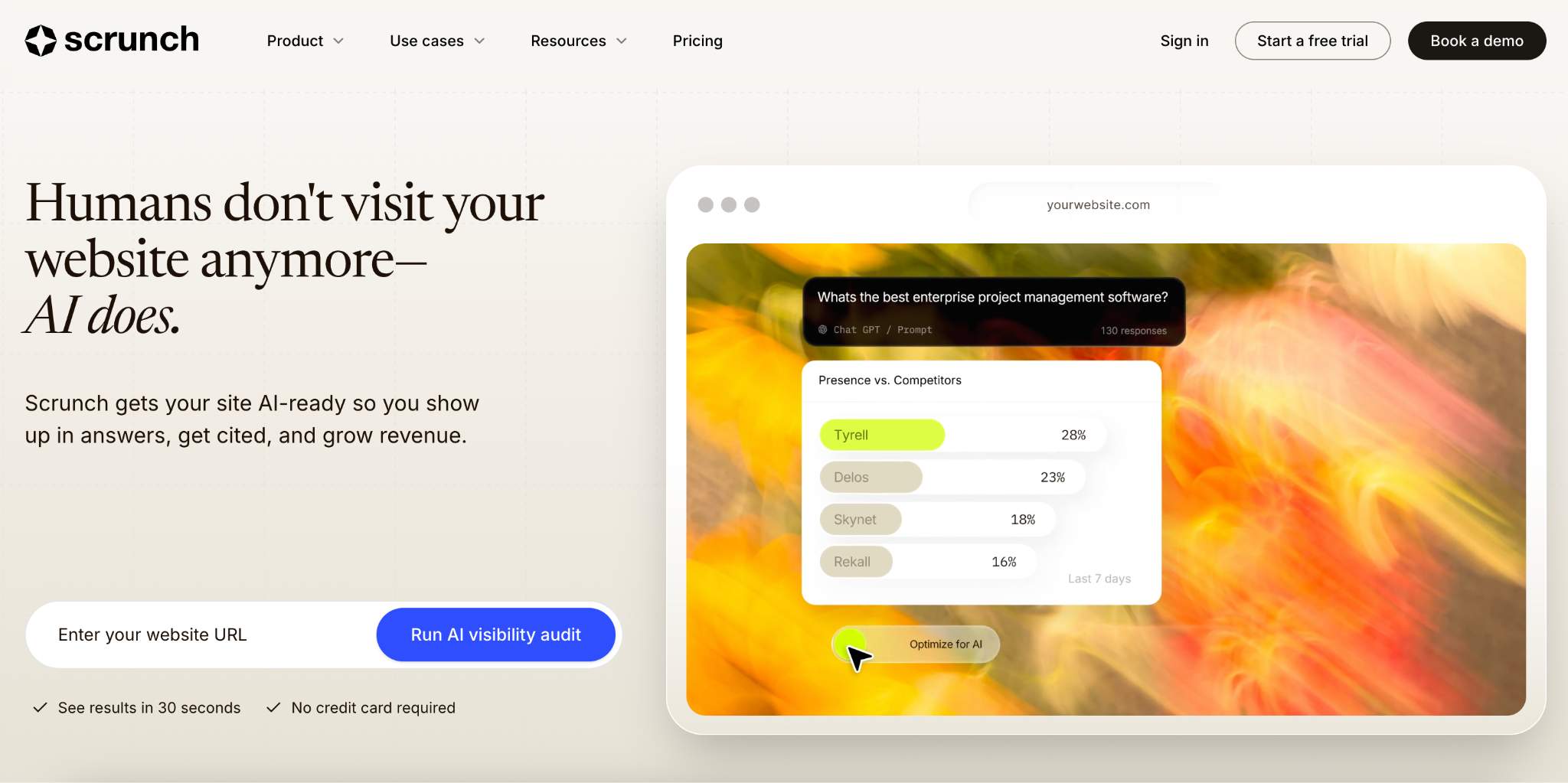
Scrunch AI is one of the most technically differentiated tools on this list.
Most AI search optimization platforms focus on content recommendations. Scrunch also addresses how AI crawlers access, interpret, and retrieve information from your website.
Its Agent Experience Platform creates a parallel, lightweight version of your website for AI agents. It removes unnecessary design elements, reduces JavaScript dependencies, clarifies dynamic content, and serves information in structured, server-rendered HTML that AI crawlers can process more easily.
Human visitors continue seeing the original website. The optimized version is delivered only when Scrunch detects AI-agent traffic at the CDN level.
This can be valuable for websites built with JavaScript-heavy frameworks, complex navigation, dynamic product information, or bot protection that makes content difficult for AI crawlers to access. Scrunch supports delivery through platforms including Cloudflare, Akamai, and Vercel.
The platform also provides AI visibility monitoring, citation analysis, competitor insights, agent-traffic reporting, and recommendations. This allows teams to identify where they are missing from AI answers and examine whether accessibility or content delivery is contributing to the problem.
The trade-off is that Scrunch is more technical and expensive than most tools on this list. Its Agent Experience Platform is also a specialized solution. It does not replace the need to improve the underlying quality, authority, and coverage of your content.
Why it stands out
- Creates a parallel, AI-optimized version of your website
- Delivers structured, server-rendered content to AI agents
- Reduces JavaScript and other elements that make pages difficult to parse
- Tracks how AI crawlers interact with your website
- Combines technical optimization with visibility and citation monitoring
- Supports enterprise CDN infrastructure
- Leaves the human website experience unchanged
Limitations
- More expensive than most AI search optimization platforms.
- Implementation may require involvement from technical teams.
- Optimizing content delivery does not replace content creation or authority building.
- Best suited to larger or technically complex websites.
Pricing: Scrunch starts at $300 per month when billed monthly. A seven-day trial is available.
4. AthenaHQ — Best for enterprise AI search optimization workflows
AthenaHQ is designed for companies that want to manage AI search optimization as an ongoing, cross-functional program.
The platform monitors brand visibility across more than eight AI engines and tracks mentions, citations, sentiment, competitors, and prompt-level performance. Its Prompt Volume feature helps teams identify which questions deserve attention rather than tracking every possible prompt equally.
AthenaHQ’s main differentiator is its Action Center. It converts AI visibility findings into structured recommendations covering content, citations, outreach, and other optimization opportunities. Teams can prioritize actions, organize them into projects, and manage progress from the same workspace.
The platform also analyzes which sources influence AI answers. This can help teams identify websites they should contribute to, pages that require stronger sourcing, and third-party publications that frequently shape recommendations in their category.
AthenaHQ is particularly relevant for organizations with several brands, markets, departments, or stakeholders involved in AI search. Its collaboration and reporting features provide more structure than a basic monitoring tool.
That structure comes at a cost. Smaller teams may not need such a workflow-heavy platform, particularly if one or two people are responsible for implementing every recommendation.
Why it stands out
- Tracks performance across more than eight AI engines
- Finds valuable prompts using prompt-volume data
- Converts visibility gaps into structured actions
- Supports content optimization and citation outreach
- Analyzes influential third-party sources
- Provides workflow and collaboration features
- Suitable for enterprise and multi-brand programs
- Includes reporting for larger stakeholder groups
Limitations
- The entry price is high for startups and smaller teams.
- The workflow may be more complex than necessary for a small marketing department.
- Some advanced features and usage levels depend on credits.
Pricing: Paid plans start at $295 per month. It also comes with a free limited plan.
5. Orchly AI — Best for autonomous SEO and AEO agents
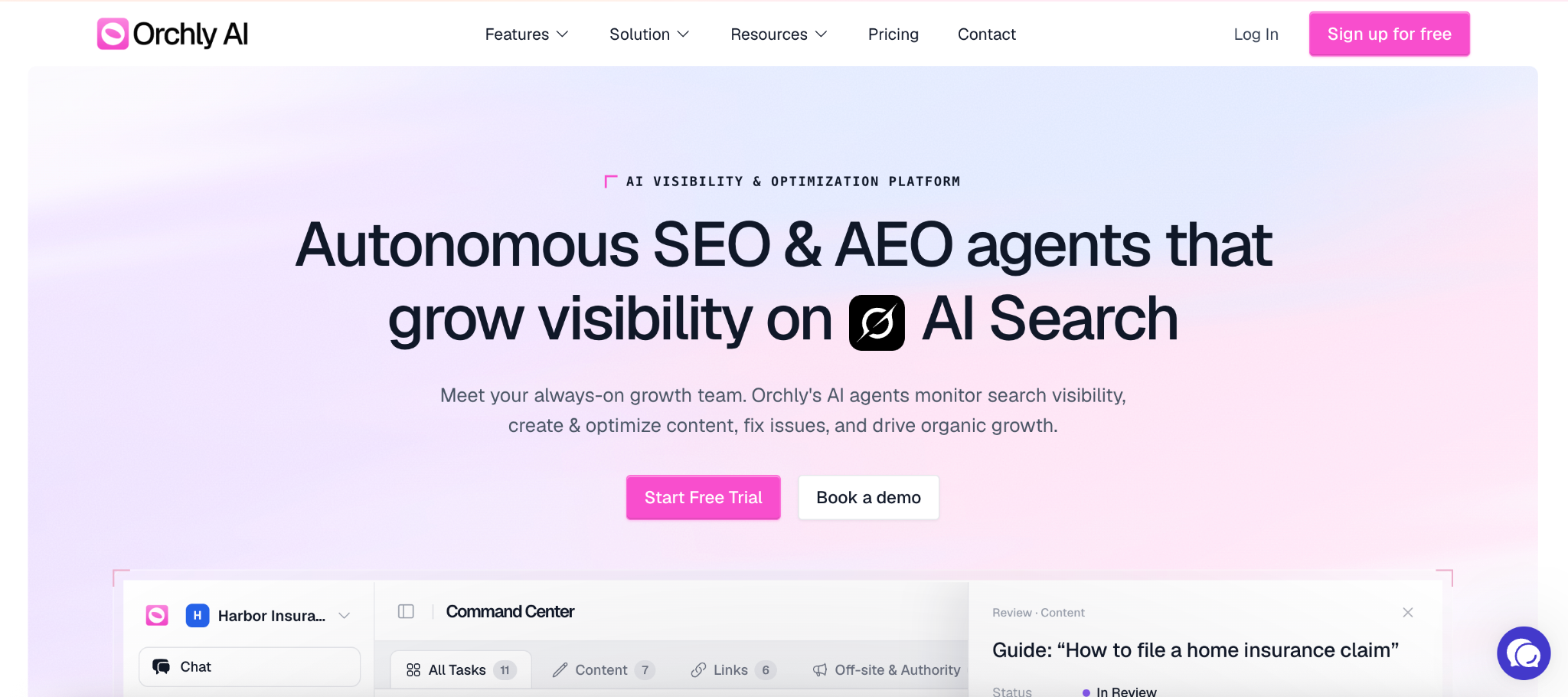
Orchly AI is built for teams that want AI agents to carry out more of their SEO and AI search optimization work.
The platform combines traditional SEO, Answer Engine Optimization, AI visibility monitoring, website auditing, and content workflows. Its agents continuously inspect your website, identify opportunities, prioritize tasks, and help implement improvements.
These actions can include creating new articles, updating underperforming pages, improving metadata, fixing internal links, refreshing outdated information, and optimizing product pages or documentation for both traditional and AI search.
Orchly also monitors visibility across platforms such as ChatGPT, Gemini, Claude, Perplexity, Google AI Overviews, AI Mode, Grok, and Microsoft Copilot. Competitor benchmarking and citation analysis help its agents determine why competing brands are being recommended and what could improve your position.
Teams can review and approve changes or establish more automated workflows. This makes Orchly appealing to lean marketing departments and agencies that want to reduce the amount of manual work involved in maintaining content.
Autonomous execution can save time, but it still requires oversight, especially for technical fixes and brand-sensitive content.
Why it stands out
- Uses specialized agents for SEO and AI search optimization
- Audits websites for technical, content, and GEO issues
- Creates, refreshes, and optimizes content
- Helps fix metadata and internal-linking issues
- Provides competitor and citation analysis
- Supports approval-based and automated workflows
- Combines traditional SEO and AI search optimization
- Includes agency and white-label capabilities
Limitations
- Automatically generated content and changes still require human review.
- Keyword and backlink research are not as comprehensive as dedicated SEO platforms.
- The broad feature set may be unnecessary for teams seeking only AI visibility tracking.
Pricing: Starts at $49 per month, with a free trial available.
6. Geoptie — Best affordable all-in-one GEO platform
Geoptie is an affordable option for startups and small teams that want both AI visibility monitoring and practical optimization tools.
The platform tracks prompts across ChatGPT, Claude, Gemini, and Perplexity. It measures brand mentions, citations, competitors, and share of voice so you can identify the topics where your brand is underrepresented.
Geoptie’s GEO audit examines whether your website and content are prepared for AI search. Its content checker evaluates an existing URL or draft and provides feedback on how clearly the page is structured for AI engines.
The platform also includes a content engine for creating new articles and improving existing pages. Unlike many entry-level AI visibility tools, Geoptie includes unlimited audit reports and content generations across its plans.
This makes it useful for a small team that wants to find visibility gaps, audit its content, and produce optimized pages without paying for several separate tools.
The main trade-off is coverage. Geoptie tracks the four major conversational AI engines but does not offer the same range as platforms that also track Google AI Overviews, Google AI Mode, Microsoft Copilot, Grok, and other emerging models.
Why it stands out
- Combines monitoring, audits, and content optimization
- Tracks ChatGPT, Claude, Gemini, and Perplexity
- Provides AI search content recommendations
- Checks published pages and content drafts
- Includes unlimited audits and content generations
- Tracks competitors, citations, and share of voice
- Offers relatively affordable self-service plans
Limitations
- Covers fewer AI platforms than several competitors.
- The Starter plan includes only 15 monitoring prompts.
- Does not provide advanced AI-crawler analytics.
- Its analytics are less extensive than enterprise-focused platforms.
Pricing: Starts at $49 per month. The Starter plan includes 15 monitoring prompts, two brands, unlimited audits, and unlimited content generations.
7. Rankshift — Best for agencies combining tracking, content, and crawler analytics
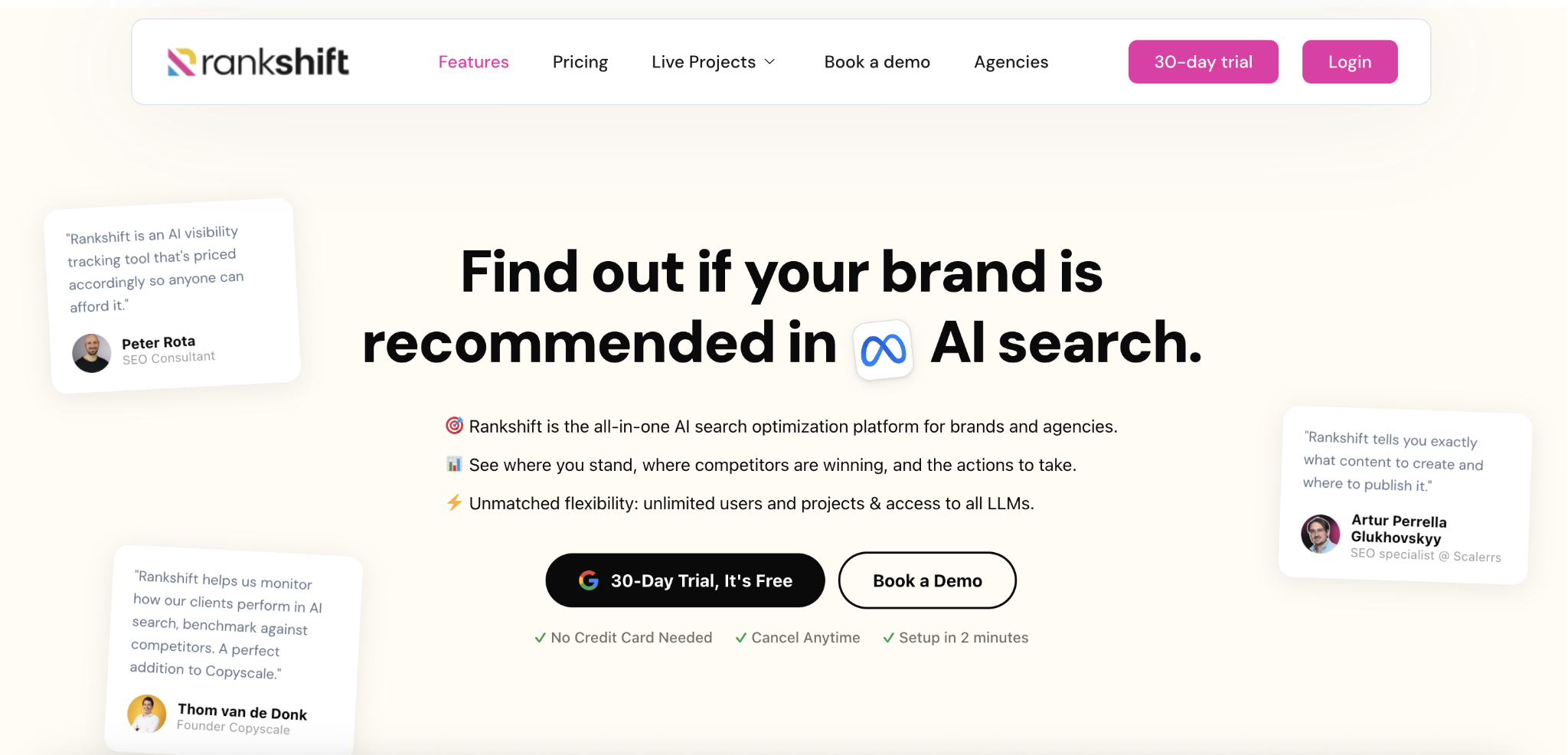
Rankshift is a good fit for agencies and SEO teams that need to manage several websites while combining AI visibility tracking with execution tools.
The platform tracks prompts across ChatGPT, Claude, Gemini, Perplexity, and other AI engines. It measures visibility, share of voice, citations, brand sentiment, competitor performance, AI referral traffic, and AI crawler activity.
Its crawler analytics help teams understand which AI bots access a website, which pages they visit, and where crawling or content-consumption gaps may exist. This adds a technical layer beyond standard prompt tracking.
Rankshift also includes a content brief generator and AI content writer. Once the platform identifies a topic where a brand is missing, teams can research the opportunity and create content without moving the workflow into a separate writing tool.
Unlimited projects and seats are especially valuable for agencies. Looker Studio integration, API access, MCP support, and reporting features also make it easier to incorporate Rankshift data into existing client workflows.
The main complication is credit-based pricing. Credits are used across prompts, engines, locations, and refresh frequencies. This provides flexibility, but teams need to estimate usage carefully—particularly when managing daily tracking for many clients.
Why it stands out
- Tracks major AI engines across every plan
- Includes unlimited projects and seats
- Provides AI crawler and referral-traffic analytics
- Tracks mentions, citations, sentiment, and share of voice
- Includes a content brief generator and AI writer
- Supports Looker Studio reporting
- Provides API and MCP access
- Well suited to multi-client agency workflows
Limitations
- Credit-based usage takes more planning than fixed prompt limits.
- Daily multi-model tracking can use credits quickly.
- The content tools may not replace a dedicated editorial platform for advanced teams.
Pricing: Starts at €69 per month with a 30-day trial.
Which AI search optimization tool should you choose?
The right tool depends on what is currently preventing your brand from appearing in AI-generated answers.
Before deciding, consider three questions:
- Does the tool only identify the problem, or can it help you solve it?
A visibility dashboard is useful, but it should lead to clear content, citation, technical, or outreach actions. - Does it cover the AI platforms your customers actually use?
Broader coverage is not automatically better. Prioritize the platforms that matter in your market, then compare how pricing changes when additional models are enabled. - Can you measure whether the work produces results?
Look for historical visibility tracking, prompt-level changes, citation data, AI referral traffic, and integrations that connect optimization work to engagement and conversions.
Turn AI search insights into measurable improvements
AI search optimization requires more than tracking mentions.
You need to know which prompts matter, why competitors are being recommended, which sources influence the answers, what needs to change, and whether those changes improve your visibility over time.
ZeroRank AI brings those steps together. It helps you research real prompts, monitor visibility across AI platforms, uncover citation and competitor gaps, prioritize on-page, off-page, and technical improvements, and turn those recommendations into content and automated workflows.
Try ZeroRank AI free and start improving how your brand appears in AI-generated answers.