Rankshift Pricing in 2026: Plans, Credits and Real Costs
Rankshift starts at $92 a month. Compare plan prices, calculate what your prompts actually cost to run, and see how Rankshift stacks up against ZeroRank AI.

Key Takeaways
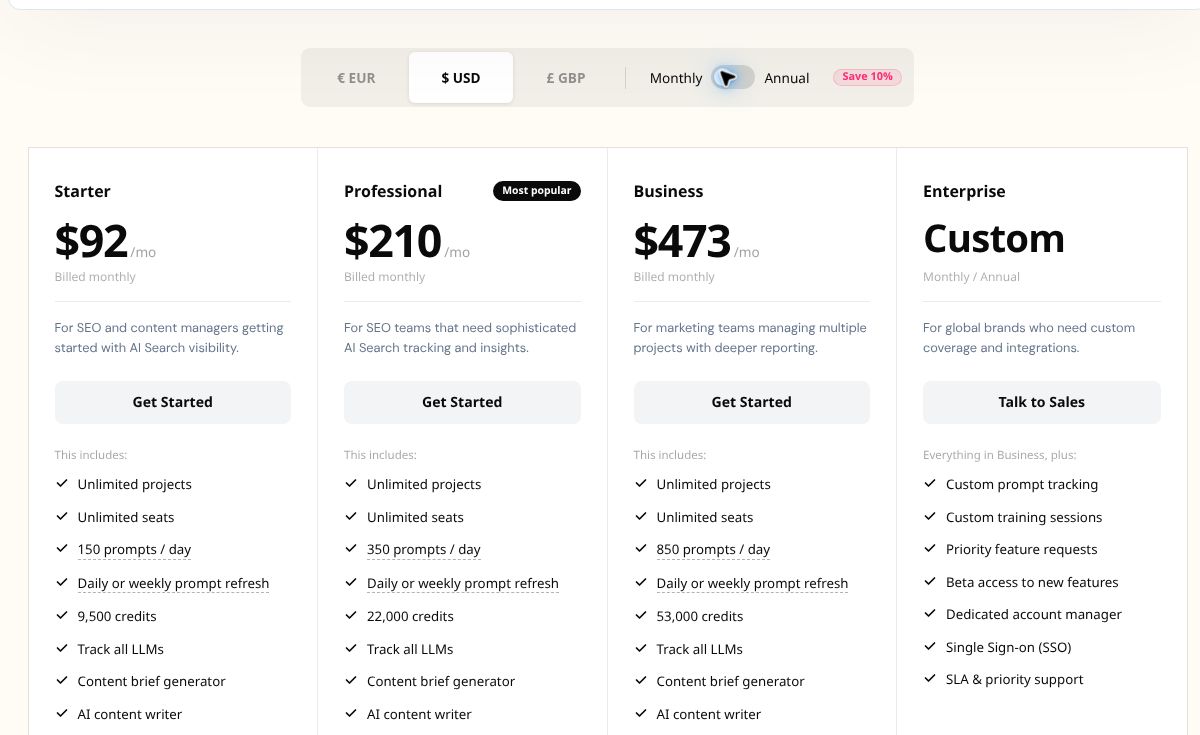
- Rankshift’s standard monthly plans cost $92, $210 and $473. Enterprise is custom.
- Starter has 9,500 monthly credits. Fifty daily prompts across three standard engines use 9,300. Swap one for Claude and the same setup uses 13,950, which needs Professional.
- Rankshift includes unlimited projects, and those projects share the plan budget. The agency program includes 1,000 credits per prospect pitch project.
- ZeroRank starts at $89 per month, with 4,500 answer-run units and a choice of 39 tracking models. It also helps teams act on citation gaps and monitor the changes.
Rankshift starts at $92 per month for 9,500 tracking credits. Professional costs $210 and Business costs $473. All three let you add unlimited projects and seats.
Fifty daily prompts can fit Starter or require Professional. In a 31-day month, three two-credit engines use 9,300 credits. Swap one for Claude and the same prompts use 13,950 credits.
ZeroRank Starter costs $89 per month. It includes 4,500 answer-run units, up to three workspaces and a choice of 39 tracking models.
Rankshift’s unlimited projects are worth weighing against how quickly the shared credits run down.
Rankshift pricing at a glance
Plan | Billed monthly | Monthly rate billed annually | Credits per month |
|---|---|---|---|
Starter | $92 | $82 | 9,500 |
Professional | $210 | $189 | 22,000 |
Business | $473 | $425 | 53,000 |
Enterprise | Custom quote | Custom quote | Custom |
Prices are in USD before applicable VAT.
Which Rankshift plan do you need?
Starter at $92 per month
Starter gives a solo marketer or small agency weekly and daily tracking, citation reports, crawler analytics, a content brief generator and an AI writer. Looker Studio, REST API access and Rankshift’s read-only MCP are included.
The 9,500 credits fit up to 51 daily questions across three two-credit engines for 31 days. With ChatGPT, AI Mode and Claude, the same allowance fits 34 daily questions.
For 40 daily prompts across three one-unit ZeroRank models over 31 days, Starter uses 3,720 units at $89. Rankshift uses 7,440 credits at $92 if all three engines charge two credits. Check the specific model weights before comparing the plans.
Professional at $210 per month
Professional has 22,000 credits. A daily set of 50 questions across ChatGPT, AI Mode and Claude uses 13,950, leaving 8,050 for other projects, questions or personas.
At the next tier, ZeroRank Growth costs $199 and includes 13,500 answer-run units and up to 10 workspaces. A schedule of 50 daily prompts across three one-unit models over 31 days uses 4,650 units. For a Claude-heavy setup, check the weight of the specific Claude model you select.
Business at $473 per month and Enterprise
Business includes 53,000 credits. Fifty daily questions on all nine engines in the calculator use 37,200. Enterprise adds custom tracking, a dedicated account manager, training, SSO and an SLA. Get the usage and support commitments in writing.
What Rankshift credits buy
A run checks one prompt on one engine. ChatGPT, Google AI Mode, AI Overviews, Gemini, Perplexity, Mistral and Meta AI each use two credits. Claude and Microsoft Copilot each use five.
50 prompts, one persona, 31 daily checks | Credits | Lowest standard plan |
|---|---|---|
ChatGPT, AI Mode and AI Overviews | 9,300 | Starter |
ChatGPT, AI Mode and Claude | 13,950 | Professional |
All nine engines in the calculator | 37,200 | Business |
Both three-engine setups produce up to 4,650 answers. Using Claude lifts credit use by 50%. Rankshift’s advertised 150 daily prompts on Starter assumes one two-credit engine.
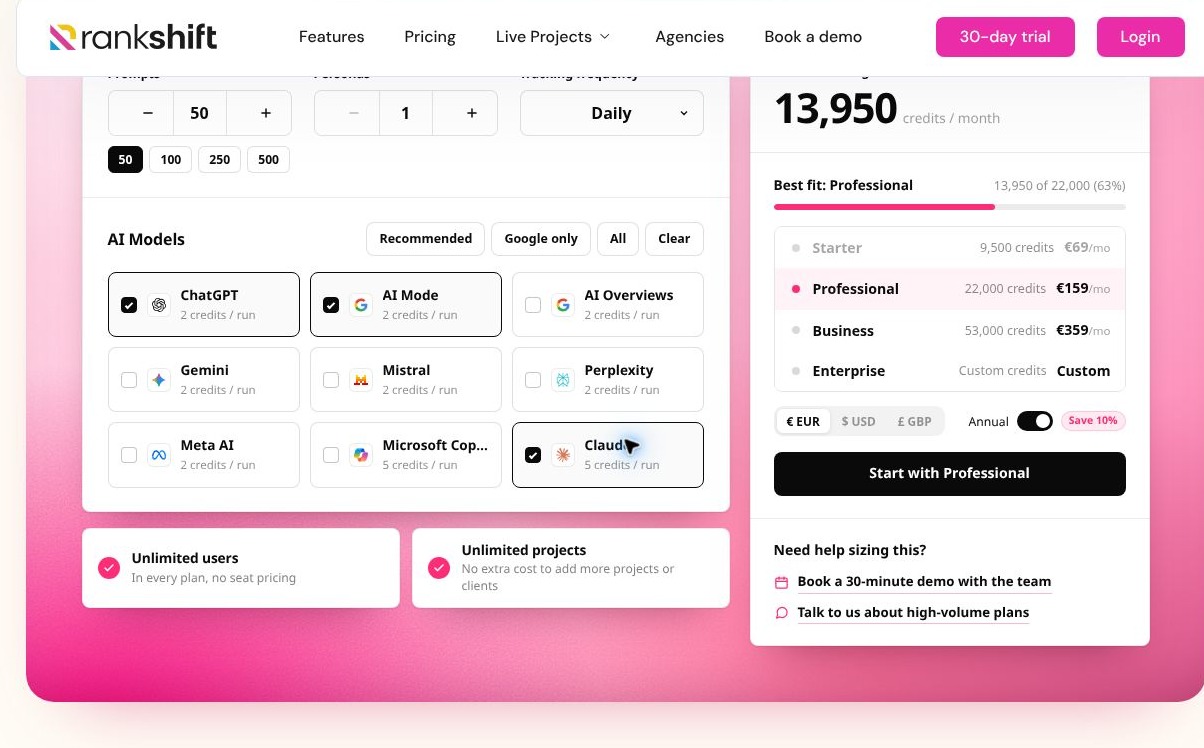
One way to keep Claude on Starter is to check 25 purchase questions daily and 25 broader questions five times a month. With ChatGPT and AI Mode alongside Claude, that comes to 8,100 credits.
Unused plan credits reset monthly. Rankshift offers one-time top-ups that don’t expire. Compare the top-up price with the $118 monthly jump to Professional.
ZeroRank also meters tracking by model, and its monthly content allowances are separate. If you’re comparing both tools for reporting and page updates, budget the tracking schedule and the content workload separately.
Rankshift agency pricing for one or five clients
Client projects share the subscription’s credit pool. For the examples below, each client tracks 20 daily prompts, with one persona and 31 checks per prompt on each engine.
Client setup | Credits per month | Plan and monthly bill |
|---|---|---|
One client, three two-credit engines | 3,720 | Starter · $92 |
Five clients, same engine mix | 18,600 | Professional · $210 |
Five clients, Claude replaces one engine | 27,900 | Business · $473 |
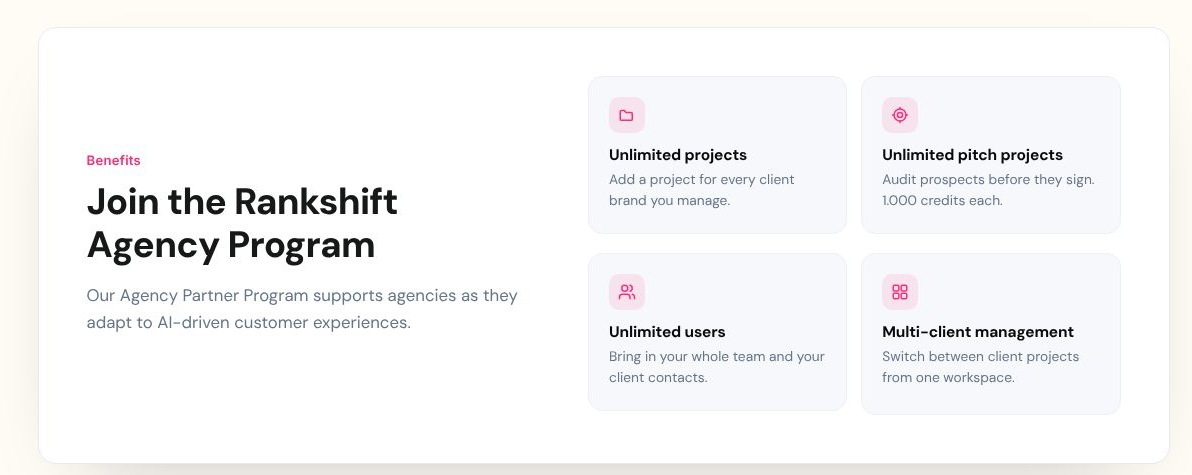
The Agency Partner Program advertises 1,000 credits per prospect pitch project and custom volume pricing. Size those audits separately from the daily monitoring you promise paying clients.
For the five-client example above, ZeroRank Growth costs $199 and has room for all five workspaces. At three one-unit models, that schedule uses 9,300 of its 13,500 units.
Rankshift Professional covers five clients at $210 on three two-credit engines. If you keep adding light-use client projects, Rankshift’s unlimited project count can matter more than the $11 difference.
What buyers can see in the free trial
Rankshift offers a 30-day trial without a credit card. Use it to measure one week of your actual prompts, engines and personas. Check how much of the credit balance the work consumes and whether you can trace a missed mention back to the cited pages.
ZeroRank has a seven-day trial. Run the same small prompt set and check the underlying answers and sources in both tools.
In a hands-on Rankshift review, Nathan Ojaokomo reported moving some prompts to weekly checks after daily tracking across multiple engines used up credits faster than he expected. If your reporting depends on daily checks, measure that usage before picking a tier.
Rankshift vs. ZeroRank pricing and capabilities
Starter plan | Rankshift | ZeroRank AI |
|---|---|---|
Standard monthly price | $92 | $89 |
Budget | 9,500 credits | 4,500 answer-run units |
Coverage | Nine engines in its calculator | 39 tracking models to choose from |
Projects or workspaces | Unlimited projects | Up to three workspaces |
MCP and API | Read-only MCP and REST API | MCP and REST API with scoped write tools |
Both tools expose tracking data through an API. ZeroRank’s MCP also supports scoped actions such as adding or running prompts from a connected assistant. ZeroRank MCP and REST API.
ZeroRank Growth costs $199 with 13,500 units and up to ten workspaces. Agency costs $499 with 31,500 units and unlimited workspaces. Every paid tier offers 39 tracking models, unlimited seats, MCP and REST API access. ZeroRank monthly plans.
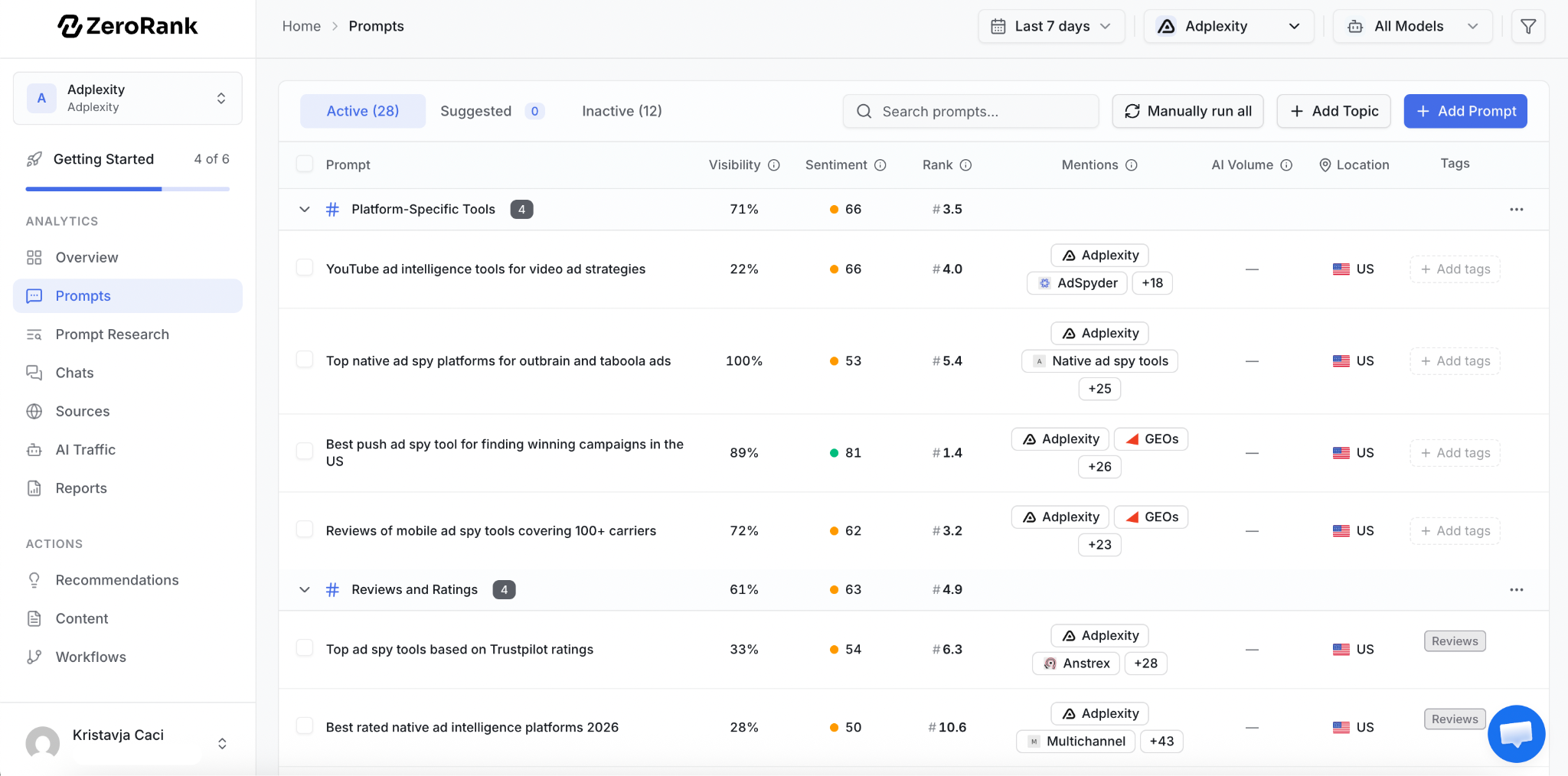
The Prompts view is where the tracking budget turns into something a team can use. In this Adplexity workspace, ZeroRank groups questions by topic and shows visibility, sentiment, rank and mentions for each one. That lets an agency open the specific question behind a change in the overall score.
Inside ZeroRank: turn a missing citation into a page refresh
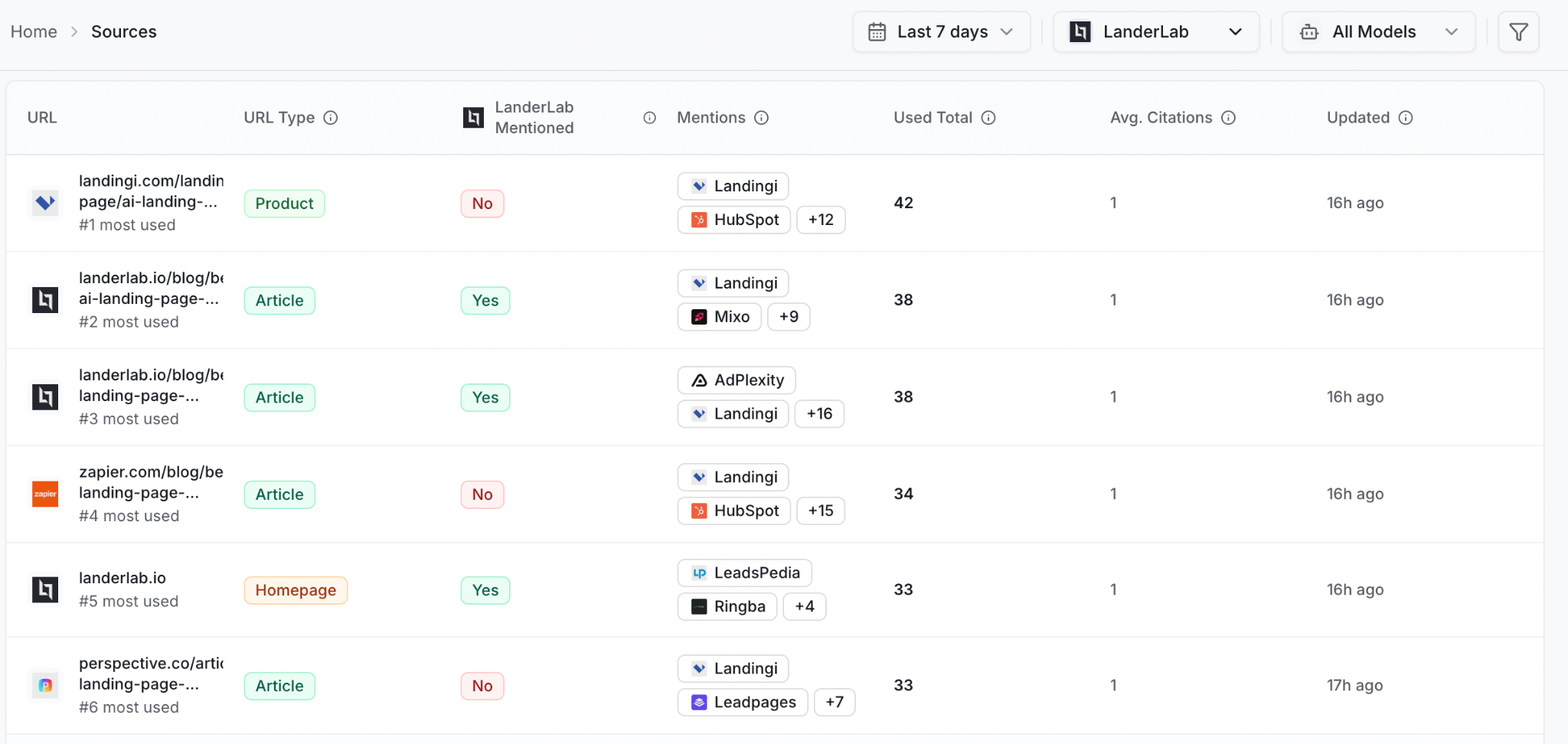
Here’s an example from the app. In ZeroRank’s Sources view for LanderLab, the URL table shows which pages are cited and which brands those pages mention. Landingi appears on the leading source for this view while LanderLab is missing from that page.
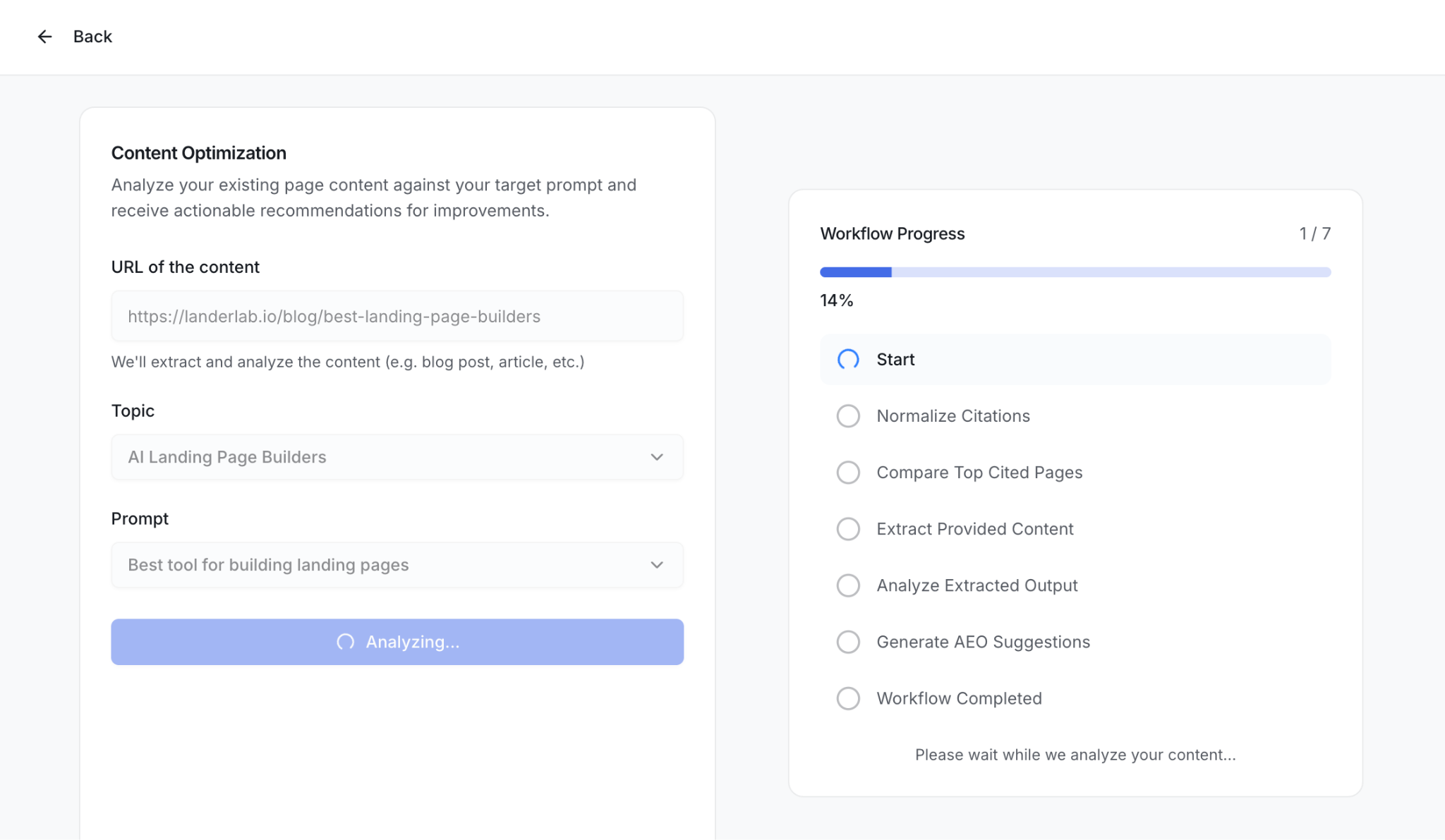
Next, a marketer can open Content Optimization with a URL and target prompt. The screen below shows LanderLab’s landing-page builders article being compared with the cited pages for “Best tool for building landing pages.”
After the team reviews and ships an update, it can keep checking the same question and return to Sources to see whether the citation mix changed. Starter includes three content optimizations and three article generations monthly, alongside its separate tracking budget.
You can also run your workflows via the ZeroRank MCP.
How a ZeroRank customer uses this evidence
3Bug Media worked with a restoration company that appeared in AI answers while its own site was absent from the leading sources. The agency used the cited pages to see what information the answers relied on and decide which gaps to address. Read 3Bug Media’s ZeroRank and Claude walkthrough.
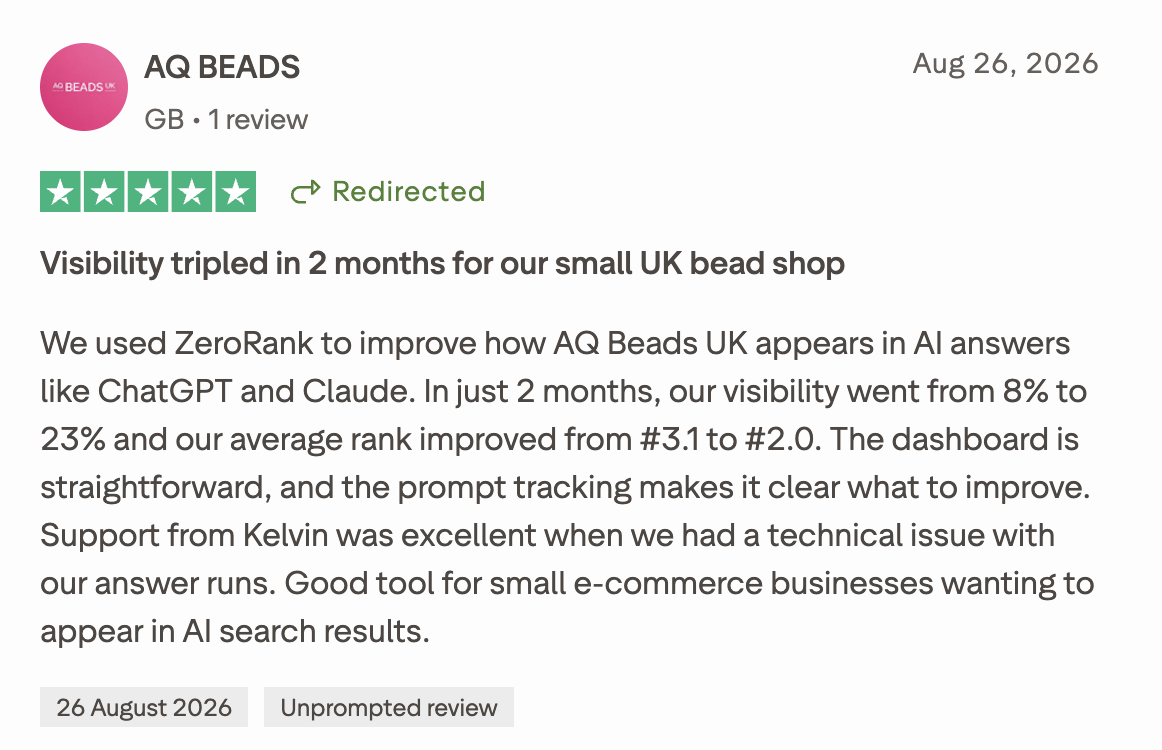
On Trustpilot, Anupam Krishna describes using ZeroRank to prioritize pages and share reports with leadership.
Is Rankshift worth it?
ZeroRank is the lower-priced option in the matched Starter and five-client examples above, under the stated model weights. It also gives you more tracking model options and includes tools to act on the gaps you find.
Rankshift’s unlimited projects and Looker Studio integration may matter if you manage more workspaces than the ZeroRank tier you are comparing. Price the setup you actually need, including any premium engines.
Run a free ZeroRank AI visibility report.
Filed under AI Search Tools
Keep reading
All posts AI Search Tools
Scrunch AI Pricing & Review: Is It The Right Choice For You?
Scrunch is a powerful but expensive AI visibility platform built for brands and agencies with more technical needs. This guide breaks down Scrunch AI pricing, what each plan includes, what users say, and why ZeroRank AI may be the better choice for most teams.
 AI Search Tools
23 Black Friday SaaS Deals for 2026 (With Codes and Dates)
Compare 22 Black Friday SaaS deals for 2026, with promo codes, deadlines, and plan details for marketing, AI visibility, and agency tools.

 AI Search Tools
Peec AI Pricing: What You Get for Your Money in 2026
What does Peec AI actually give you for the price? We break down its plans, tracking limits, model add-ons, and agency pricing, then compare the value with ZeroRank AI to help you choose the right tool for your budget.