The prompt set was rebuilt from real buying language rather than from the keyword list, which changed which pages mattered.
ClickFlare · Ad tracking & attribution
"We realized we were missing from a large share of relevant AI answers"
ClickFlare had no way of knowing how often assistants recommended it, or who they recommended instead. The first week of tracking answered both questions, and the second month tripled the number of answers it appeared in.
3xmore AI mentions
2 monthsto the result
35prompts tracked daily
5changes shipped
The problem
No idea how often the answer named them
Ad tracking is a category buyers research conversationally: "best click tracker for affiliates", "alternatives to the big attribution platforms", "tracker with server-to-server postbacks". ClickFlare was strong on review sites and in communities, and nobody could say whether that was reaching the models.
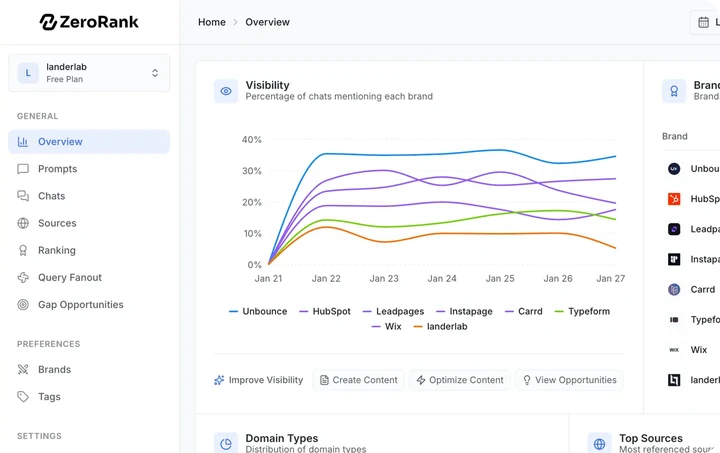
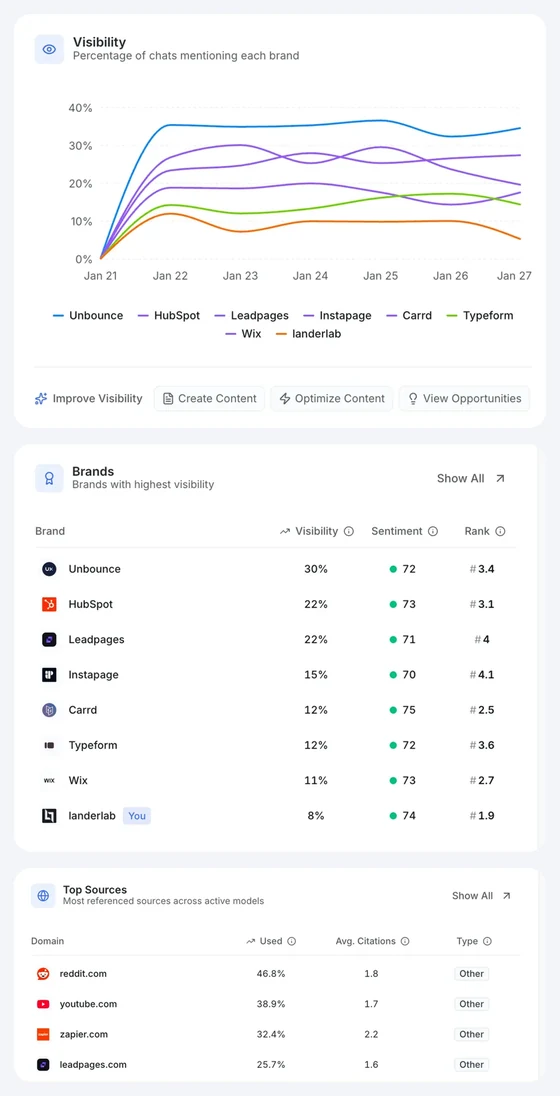
The first report put a number on it. Across 35 tracked prompts the brand appeared in a minority of answers, and the same three competitors came up in nearly all of them.
More useful than the score: the source list. The pages assistants leaned on for the category were a handful of comparison posts and one community thread — and ClickFlare was on almost none of them.
What we changed
Go where the answers were already looking
Most of the work was off-page, because most of the citations were.
The comparison posts and the community thread that answers kept quoting were the target, in that order, with the exact URL for each.
Feature claims became sentences with numbers in them, structured so a passage answers the question as asked.
A weekly workflow now flags any prompt where a competitor is cited and ClickFlare is not, with the answer attached.
The result
Three times the mentions, in two months
Same prompt set, same models, same daily cadence.
Before
- Named in a minority of tracked answers.
- Absent from the comparison pages assistants cited most.
- No visibility into which sources drove the category.
- Competitors named in nearly every answer.
After
- 3x more AI mentions across the tracked set.
- Cited on the pages that decide the category.
- A weekly alert when a rival takes a prompt.
- A source list the content team works from.
ZeroRank changed how we approach AI search. We realized we were missing from a large share of relevant AI answers. Within two months, our mentions grew 3x.
 Ervis BregasiCEO at ClickFlare
The method
The same four things, in every story
Different companies, different problems — but the sequence that moved the number was the same one, and it is the one you get on day one.
- Week onePrompt set built60Re-runDailyPlatforms17
Measure first. A real prompt set, on a schedule, so a change means something.
- best AI visibility trackerDailyChatGPTGeminiPerplexityClaude
Separate the two wins. Being named and being cited need different fixes.
Watch the rivals. Share of voice on the prompts that decide the category.
- Fix shippedMar 14 · 3 prompts
Keep the proof. Before and after on the prompt that failed, with the ship date on it.