
Google used to send people to websites. Today, it often answers the question itself.
Search for almost anything on Google and you'll often get an entire article's worth of information without ever clicking on a link. Same for AI search platforms like ChatGPT and Perplexity.
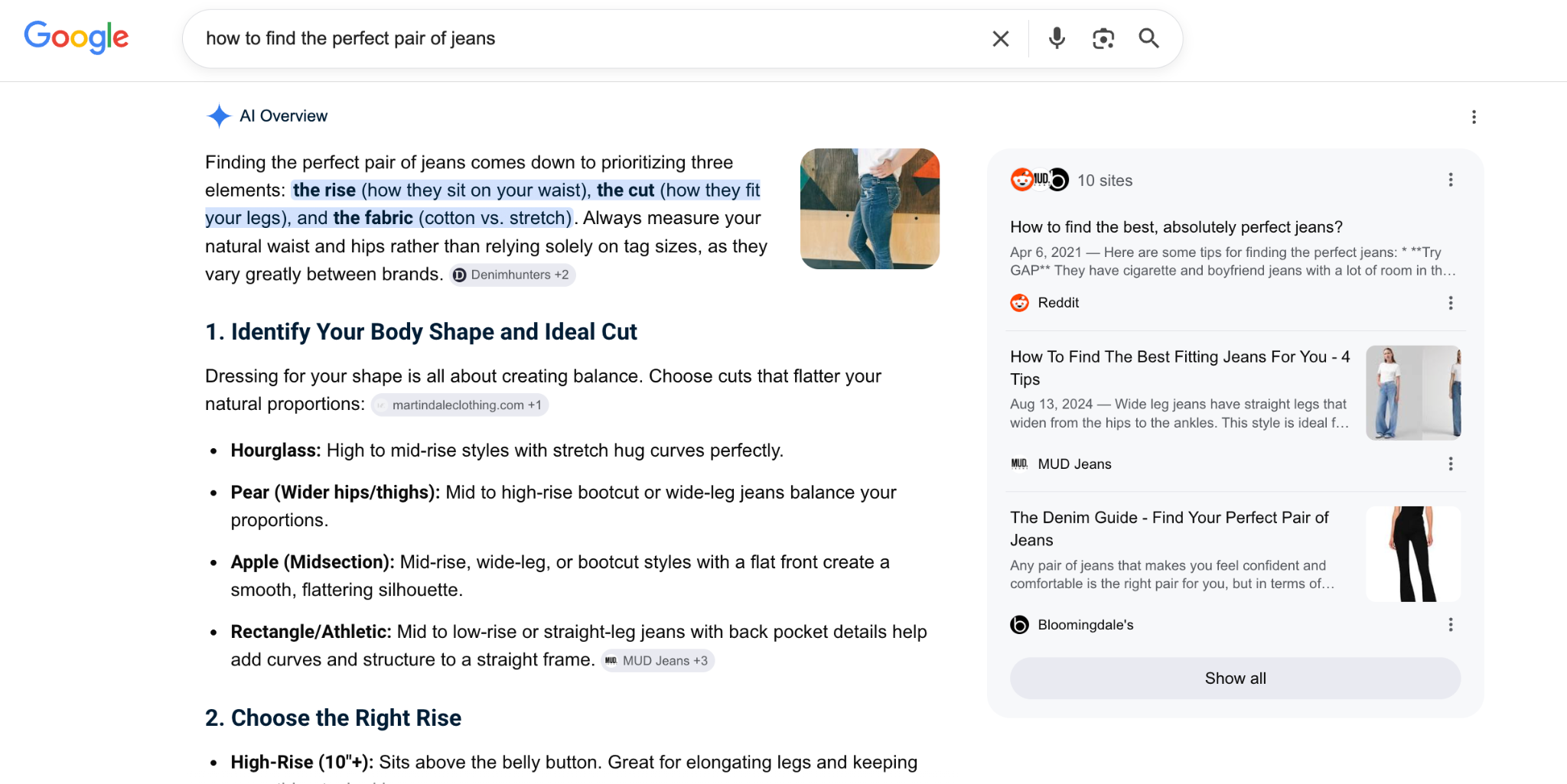
As a result, many teams are seeing fewer clicks despite continuing to invest in content and SEO. In fact, 68% of Google searches now end without a click.
But, declining traffic doesn't necessarily mean declining business impact.
Clicks and impressions have gone down but sales and leads have gone up.
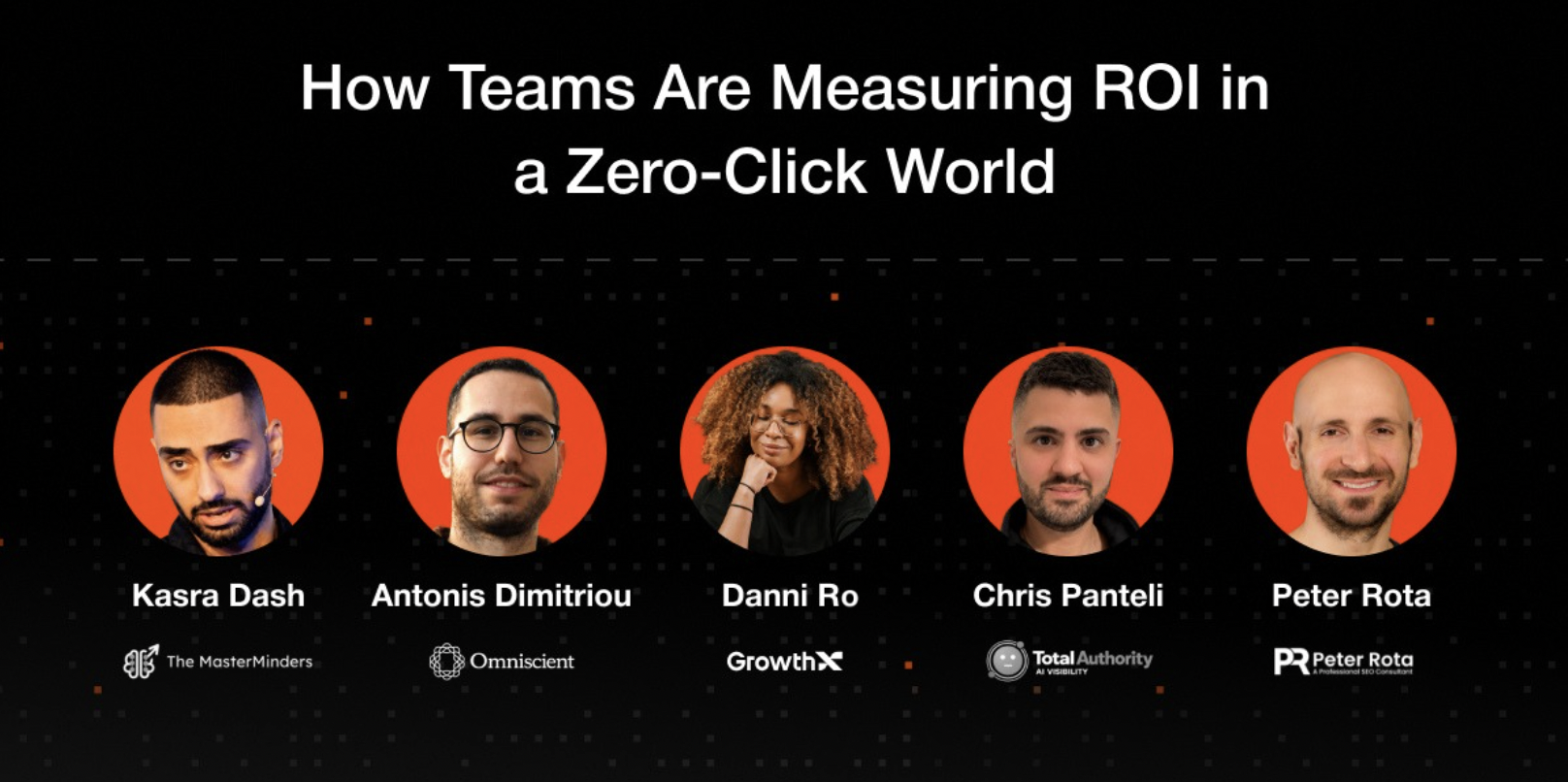
— Kasra Dash, Founder of The Masterminders
If traffic is no longer the best indicator of success, how do you measure SEO ROI?
I asked five SEO and growth experts what metrics they're using to measure ROI in a post-click world.
Visibility on BOFU topics matters more than traffic
According to recent data from Yotpo, AI search modes function with a staggering 93% zero-click rate. Users get their information directly from the AI and stay within the platform, making general informational content a dead-end for driving website traffic.
However, 37% of users immediately leave the AI tool and return to traditional search specifically to verify BOFU data, such as exact pricing, integration capabilities, and real user reviews.
So, when it comes to measuring SEO ROI, several experts pointed to a different area of focus: visibility for high-intent searches.
Try this
We are taking into account metrics like share of voice for BoFu terms, increasing product-based sections (the right way) to drive more mentions and considering the searcher will be going for branded-queries after seeing a brand mention.
– Antonis Dimitriou, SaaS SEO Manager @Omniscient Digital
So, first of all, I’d recommend prioritizing BoFU pages. Create alternative articles, product comparison pages, clear pricing, and informative product pages.
Content Type | Traditional SEO Role | AI Search Era Impact | Strategic Action |
Informational (TOFU) | High-volume traffic driver | Feeds the AI; drives zero clicks to your site | Focus on quality and AI-friendly formatting |
Commercial (MOFU/BOFU) | Conversion closer | Survives AI search; drives high-intent traffic | Prioritize; focus on ROI and pricing. |
To track if you are showing up for these commercial searches, build a list of high-intent prompts using:
- Keyword research
- Customer interviews
- Sales calls
- Competitor comparison pages
- Reddit discussions
- Product review sites
Then, use an AI search visibility platform to track the following metrics:
Metric | Why it matters |
Share of voice for BoFu prompts | Measures how visible you are for searches that influence purchasing decisions. |
Shows whether buyers are likely to encounter your brand during research. | |
Recommendations | Reveals whether AI sees your solution as a viable option for the user. |
Citation share | Indicates how often AI relies on your content when generating answers. |
Competitor visibility | Helps identify who is winning the conversation and where visibility gaps exist. |
For example, AI landing page builder LanderLab uses ZeroRank to track the visibility and citation share of BoFu prompts such as:
- "Which AI landing page tool is faster for creating responsive pages without coding?"
- "Best AI tools for building high-converting landing pages for lead gen campaigns in 2026"
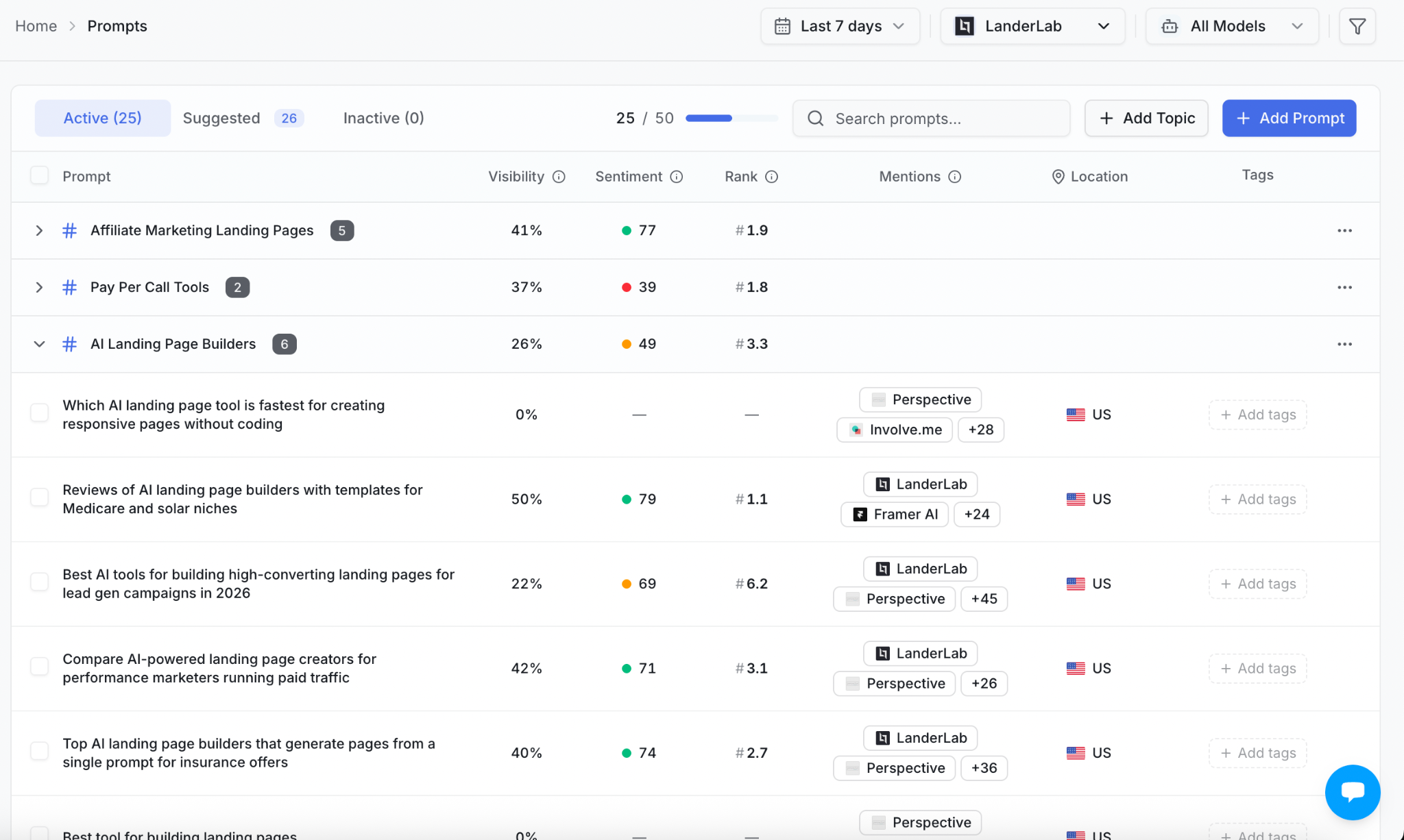
One client hit 21% citation share in about three months from a focused content push. That's now tracked alongside clicks as a primary metric.
– Danni Ro, GTM and Marketing Manager @GrowthX.ai
The goal is to understand whether your brand appears when buyers are actively evaluating solutions.
The clicks that remain are becoming more valuable
AI traffic is converting higher than traditional SEO traffic.
– Peter Rota, Senior Technical SEO Manager
Visitors coming to ZeroRank from ChatGPT spend an average of 6 minutes and 19 seconds on our site.
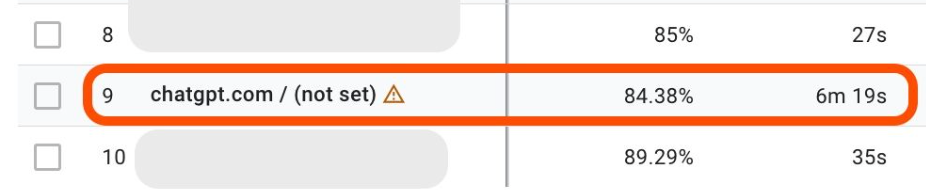
The volume is relatively small compared to Google Search.
But, would you rather have 1,000 visitors who barely engage, or 100 visitors who are actively evaluating your product?
Kasra Dash describes these visits as:
Unicorn clicks – someone who has already done their research on you and your competitors and is ready to buy when they land on your site.
Try this
Monitor engagement signals that indicate visitors are actively evaluating a solution rather than casually browsing.
Metric | What it tells you |
Engagement time | Are visitors spending meaningful time with your content? |
Pricing page visits | Are visitors evaluating the commercial side of your offering? |
Product page visits | Are they exploring your solution in detail? |
Comparison page visits | Are they actively researching alternatives? |
As traffic becomes less representative of business impact, these metrics can provide a much stronger signal that your content is attracting potential buyers rather than simply generating pageviews.
Branded demand is an increasingly stronger success signal
One metric that came up again and again in my survey responses is the increase of branded searches.
Zero-click visibility often creates demand before it creates a measurable click. Someone might see your brand in an AI answer, a media quote, a best-of list, a podcast, a byline, or a third-party recommendation, then come back later via direct search, branded search, referral, or even word of mouth.
– Chris Panteli, Founder of Total Authority
This helps explain why some companies are seeing fewer clicks while still generating more leads. Buyers may discover a brand through content, return later through a branded search, and convert through a completely different channel.
Try this:
Track branded search growth alongside your visibility for high-intent topics.
Metrics to watch out for:
Metric | What it tells you |
Branded search volume | Are more people actively looking for your brand? |
Direct traffic | Are more buyers returning intentionally? |
Returning visitors | Are prospects coming back during the buying process? |
No single metric proves that SEO generated a customer.
But if visibility for high-intent topics is increasing, engagement signals remain strong, and branded demand continues to grow, it's a strong indication that your content is influencing buying decisions.
How to prove all this contributes to revenue?
Visibility, engagement, and branded demand can all point in the right direction.
But how do you know they're actually translating into customers?
Many teams are validating these signals using a combination of analytics and direct customer feedback.
We track ChatGPT, Perplexity, and Gemini as separate referral sources in GA4. One client confirmed roughly half their leads in a given month came from SEO and AI referrals combined.
– Danni Ro, GTM and Marketing Manager @GrowthX.ai
Many teams also supplement analytics with a simple question on sign-up forms or demo requests:
“How did you hear about us?”
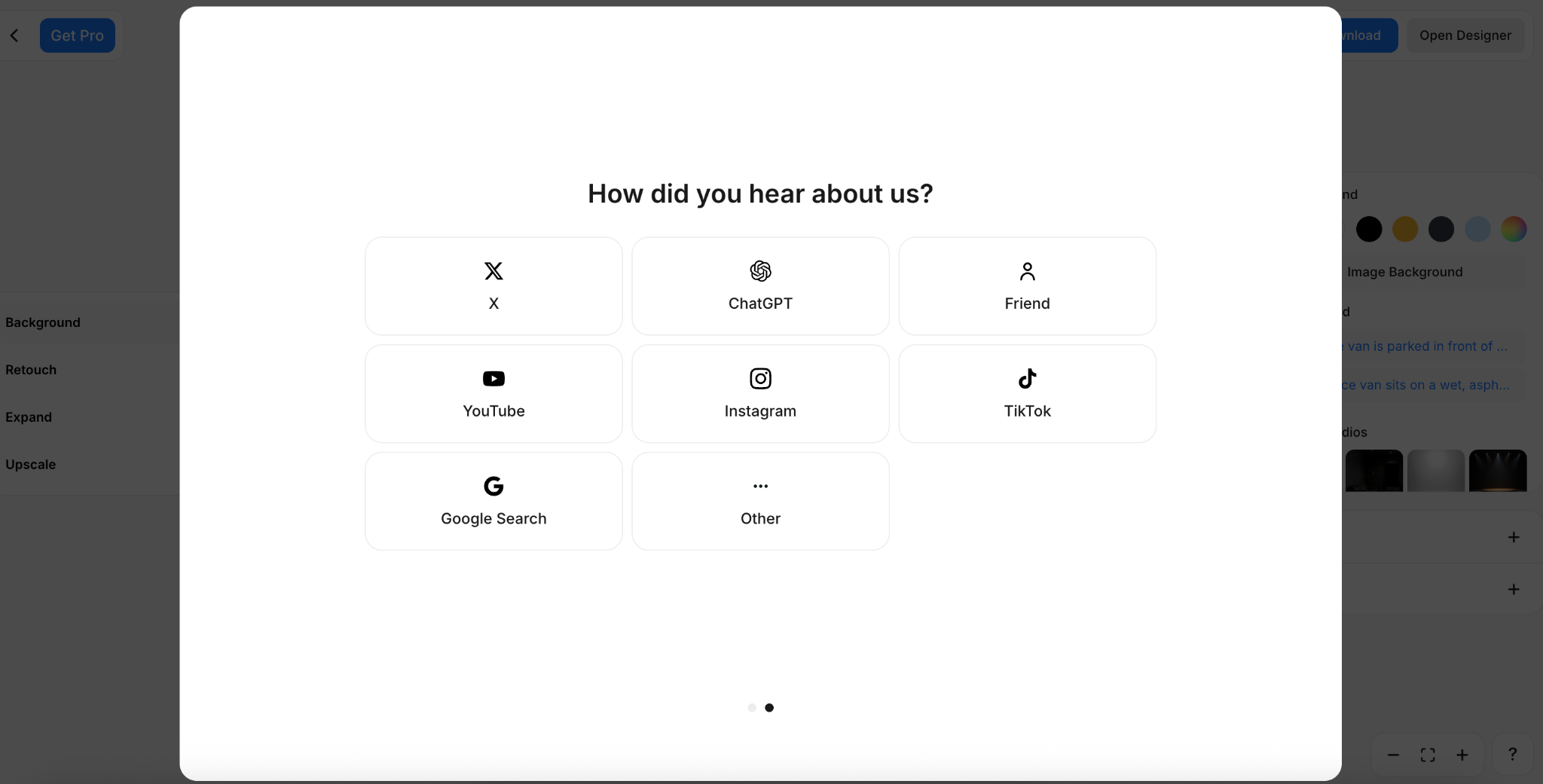
The answers often provide context that attribution reports can't.
Try this
Review these signals together rather than in isolation:
Signal | What to look for |
GA4 traffic data | Growth in high-quality organic and AI referral traffic |
Self-attribution surveys | How customers say they discovered you |
Leads and pipeline | Whether business results are moving in the right direction |
Final thoughts
Clicks were simply the easiest proxy we had for measuring the impact of SEO and content.
As that proxy becomes less reliable, teams are turning to a broader set of signals: visibility in buying conversations, engagement quality, branded demand, analytics data, and customer feedback.
No single traditional or AI search metric metric provides the answer.
But when multiple signals point in the same direction, it becomes much easier to connect SEO and content efforts to real business outcomes.


