Google Says AI Search Optimization Is Just SEO. The Reality Is Messier
Google’s new AI search guide gets one thing right: a lot of the GEO/AEO industry has drifted into hype and meaningless tactics. But reducing AI visibility to “just SEO” oversimplifies what is actually happening across platforms like ChatGPT and Perplexity.

Google published its first official guide to optimizing for AI search.
And according to Google, optimizing for AI search is still just SEO.
That immediately sparked debate across the SEO and AEO/GEO community.
Not necessarily because the advice itself is wrong. A lot of it is actually solid.
But AI search is no longer just Google.
And what Google says publicly and what actually drives visibility online have not always been perfectly aligned.
What Google’s AI search guide actually says
To be fair, much of Google’s guidance to optimizing for generative AI features (opens in a new tab) makes sense.
The company pushed back against many of the popular “AI SEO hacks” circulating online:
- llms.txt
- excessive chunking
- rewriting pages specifically for LLMs
- overcomplicated AI formatting tactics
Instead, Google argues that the fundamentals still matter:
- strong technical SEO
- crawlability
- useful content
- clear structure
- unique perspectives
- real expertise
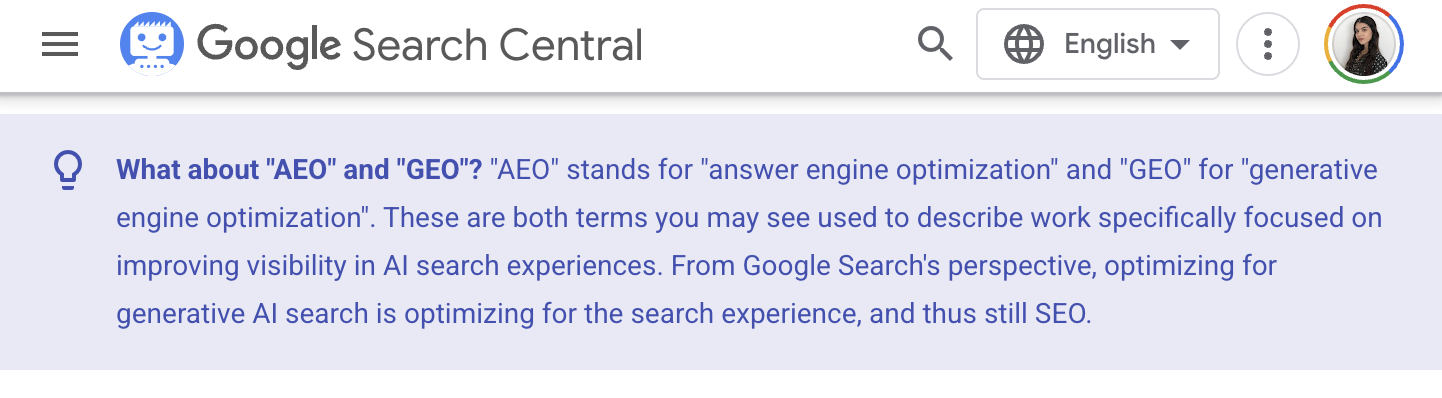
Google also explicitly states:
“Optimizing for generative AI search is optimizing for the search experience, and thus still SEO.”
Meanwhile, a lot of the GEO/AEO industry has started sounding like peak SEO snake oil again. New acronyms. New “frameworks.” New technical hacks that probably do very little.
Many SEOs across Reddit discussions (opens in a new tab) and LinkedIn were quick to agree with Google’s direction.

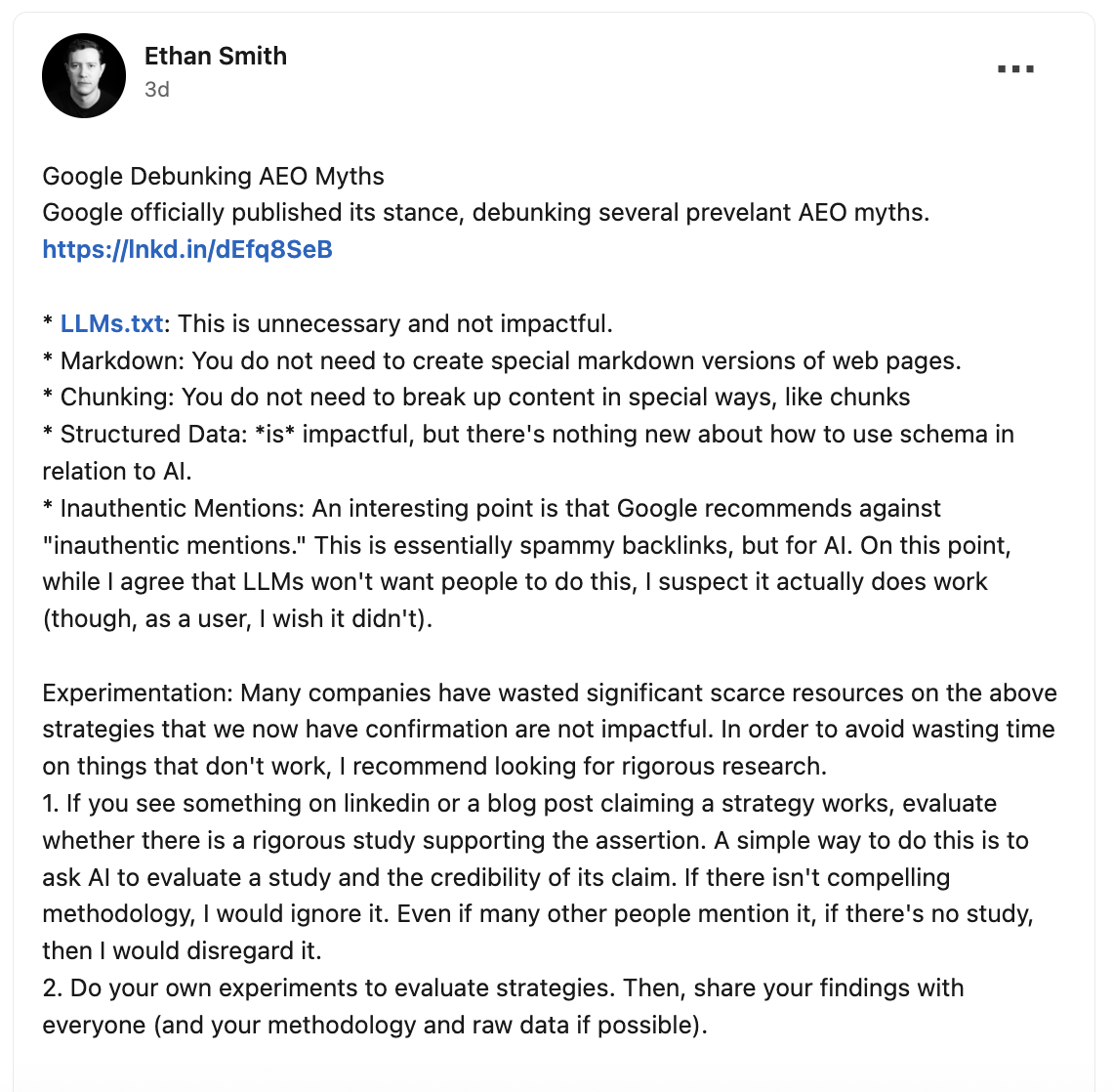
Ethan Smith (opens in a new tab) argued that companies have likely wasted enormous amounts of time and resources chasing tactics Google now openly says are unnecessary.
So yes, foundational SEO matters. Probably more than ever.
But AI visibility is much bigger than Google SEO
Google’s guide is written from the perspective of Google AI Overviews and AI Mode.
But users are now discovering brands across ChatGPT, Perplexity, Gemini, and Claude. ChatGPT alone reportedly processes more than 2.5 billion queries per day.
And these systems do not all behave the same way.
The challenge now is:
- how AI systems describe your brand
- which competitors appear alongside you
- which sources shape recommendations
- which narratives influence answers
- and which platforms repeatedly get cited
That is a very different optimization problem from traditional SEO.
Steve Toth (opens in a new tab) captured this shift perfectly when reacting to Google’s announcement:
“Clients are looking at LLMs as a distinct channel, with different priorities. They're saying things like, ‘I don't like how ChatGPT describes our product, help us change that.’”
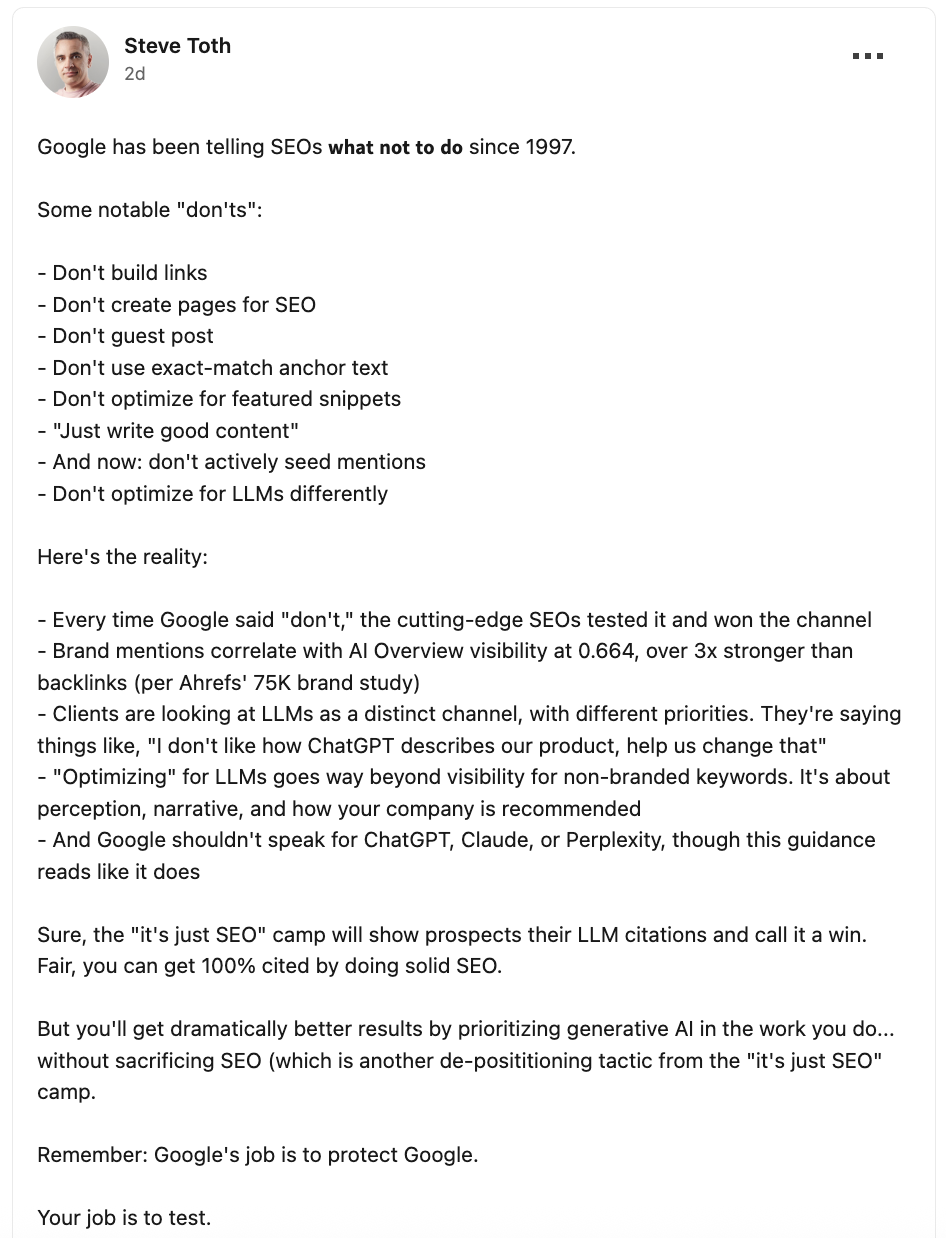
That is perception and narrative optimization across AI systems.
And this is where I think Google’s framing becomes too narrow.
Because SEO is still the foundation.
But AI visibility is increasingly shaped by citations, reviews, discussions, and third-party recommendations happening across the broader web.
Google’s guidance and the reality of online visibility are not always the same thing
This is probably the biggest reason many marketers are skeptical of Google’s framing.
Because historically, Google’s public recommendations and the tactics that actually influenced visibility were not always perfectly aligned.
Google told SEOs not to build backlinks. Yet backlinks became one of the foundations of modern SEO.
Nobody gets picked up by major publications “naturally” at scale.
Brands actively shape their online presence through:
- digital PR
- affiliate partnerships
- media outreach
- editorial coverage
- reviews
- community visibility
- industry conversations
And AI visibility is starting to follow the same pattern.
Google specifically warns against “inauthentic mentions” in its AI search guide.
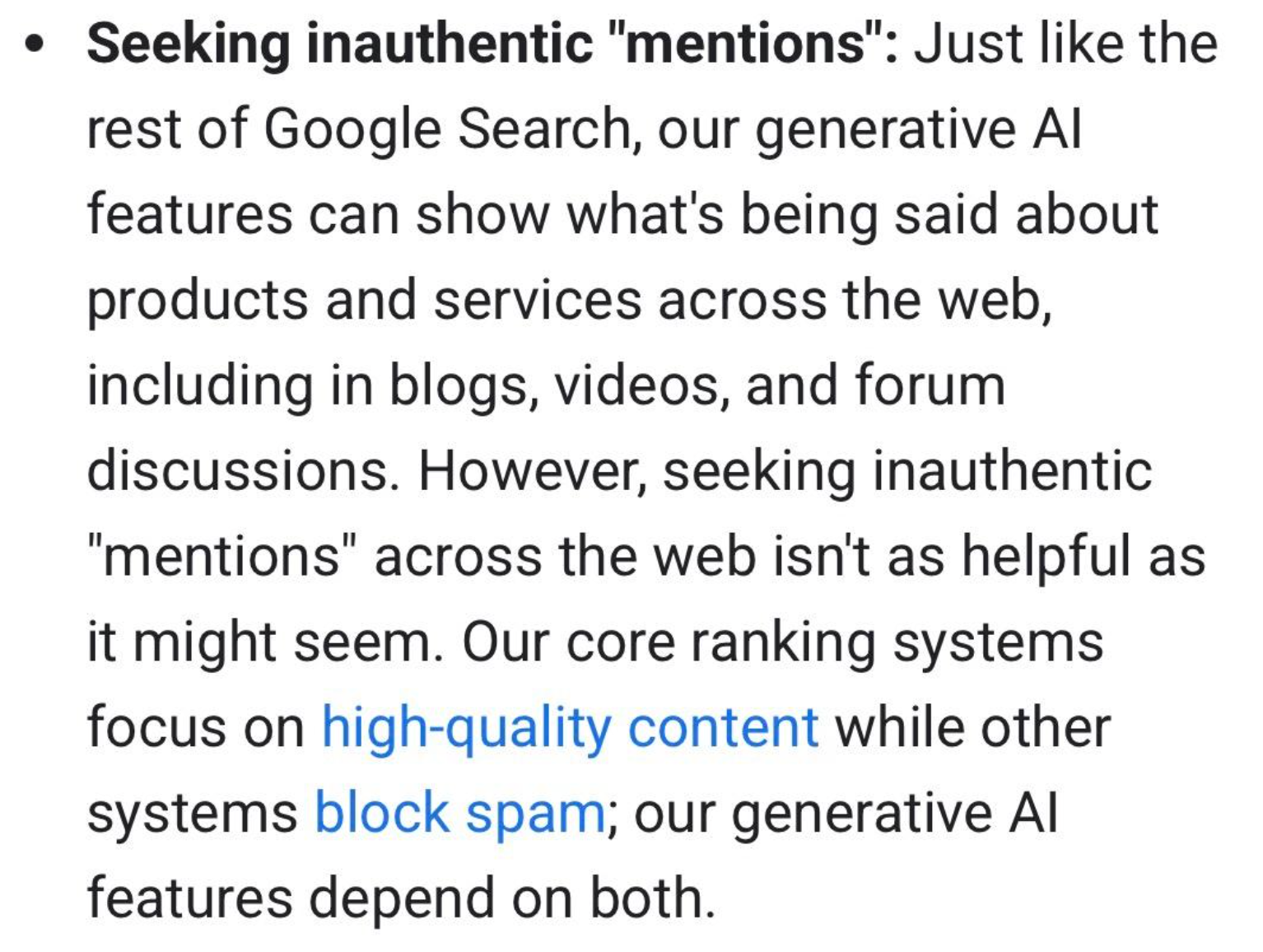
And honestly, the extreme version of this already exists:
- fake AI-written listicle farms
- low-quality sponsored placements
- manufactured review networks
- spammy reciprocal mentions
Of course Google wants to crack down on that.
But, despite the criticism around “best X” listicles, many of them are still among the most cited source types inside AI answers today.
Just try asking ChatGPT about “the best ChatGPT rank tracker tools” and you will see the top recommendations are influenced by self-promotional “best X” listicles.
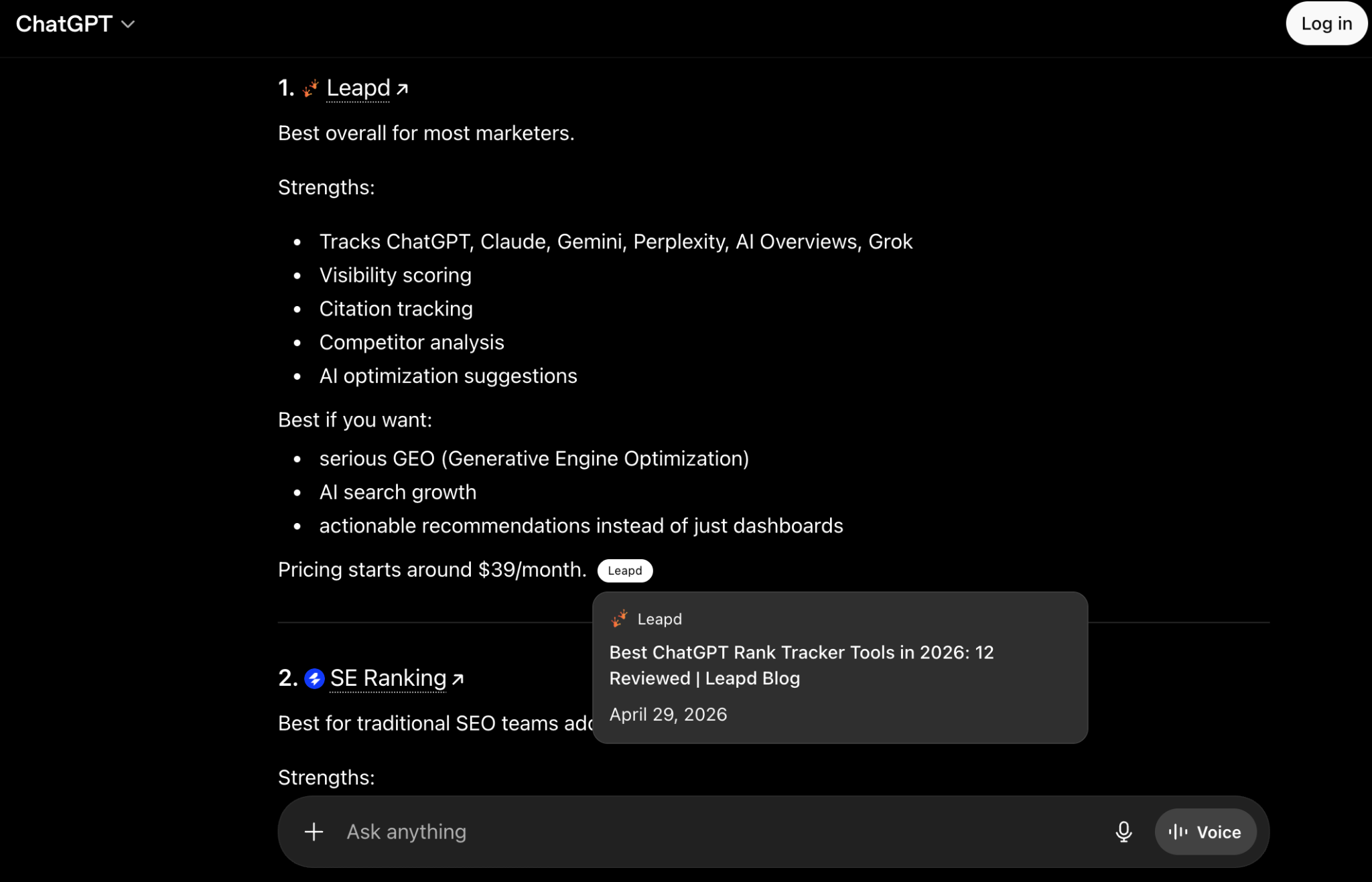
That is simply the reality of how these systems currently retrieve and synthesize information.
And naturally, companies are going to try influencing that conversation.
There is obviously a difference between:
- large-scale spam
- and intentionally increasing your brand presence across relevant publications, communities, and discussions
But pretending brands will simply earn enough visibility organically feels disconnected from how digital marketing has always worked.
What this means in practice
The truth is that everyone is still learning.
Google is learning.
SEOs are learning.
AI platforms are evolving constantly.
Which means the smartest approach right now is probably not blindly following every new AI SEO hack.
But also not blindly assuming “it’s all just SEO.”
Instead:
- Look at what AI systems already cite in your niche
- Study which source types repeatedly appear
- Analyze how competitors are being described
- Pay attention to which pages and mentions influence recommendations
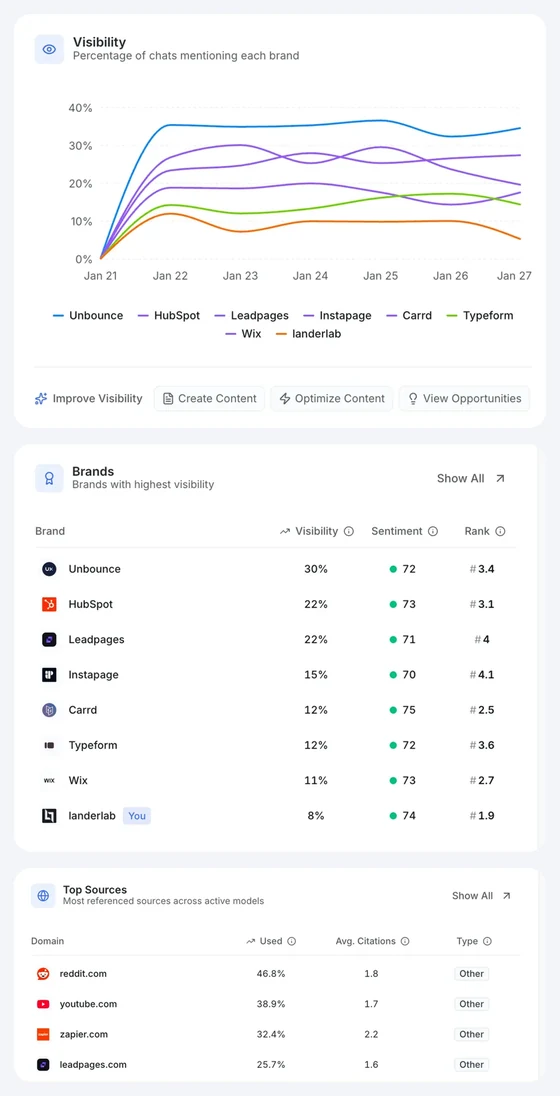
Try ZeroRank AI free to see where your brand appears across AI platforms, which sources shape recommendations, and what actions to prioritize based on what AI systems are already citing.
Filed under AI Search Strategies
Head of content and operations. On a mission to make ZeroRank the go-to platform for AI search visibility.
Keep reading
All posts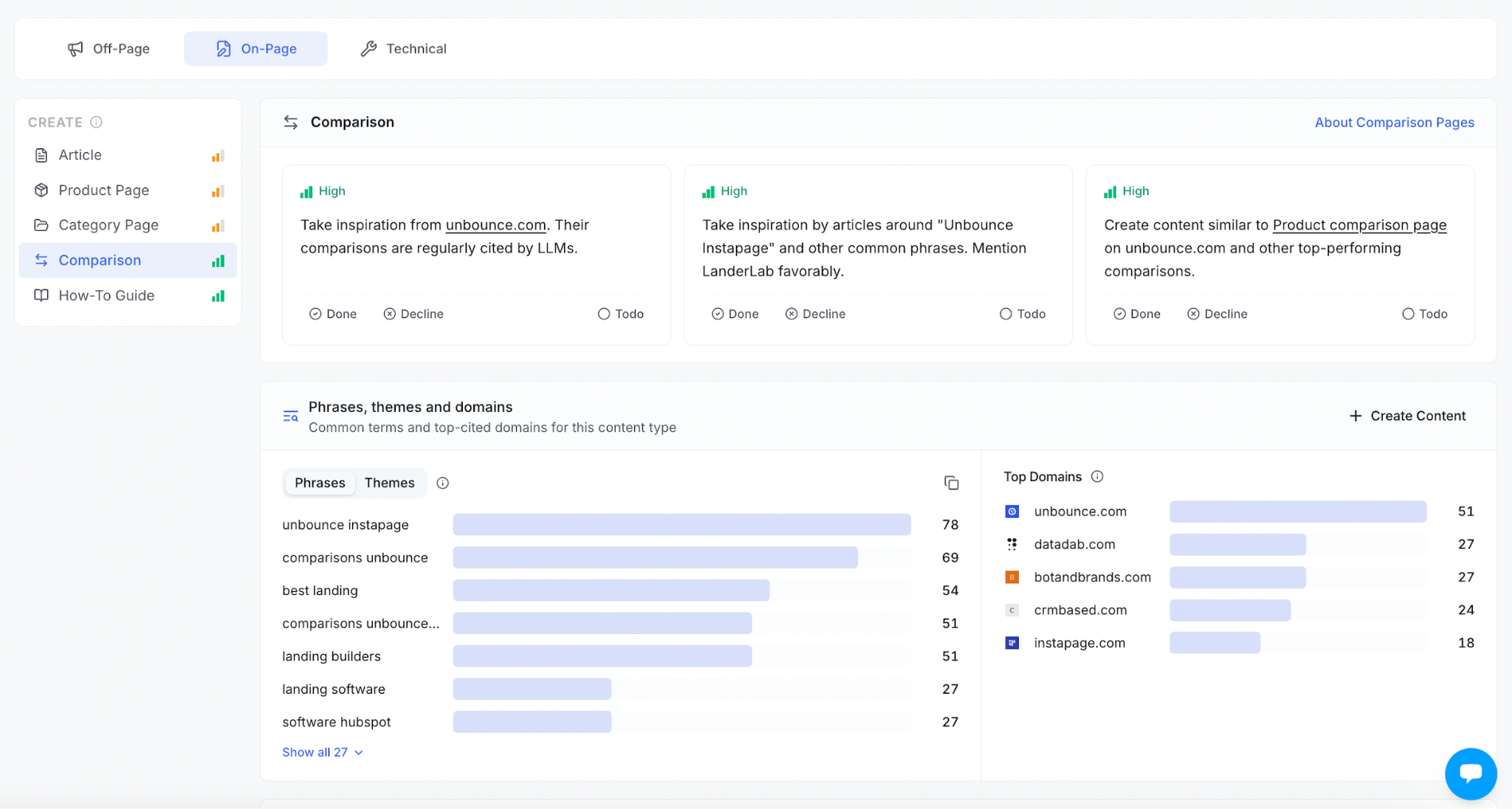 AI Search Strategies
 Answer Engine Optimization (AEO) Checklist
Use this AI search optimization checklist to improve your content, build brand credibility, and fix technical issues so you can get found in AI answers.
 AI Search Strategies
 How to Optimize Content for AI Search: 10 Practical Steps
This guide explains how to find content gaps, create or optimize the right pages, earn more citations, and measure the results with ZeroRank.
 AI Search Strategies
 LLM Prompt Tracking: How to Monitor AI Answers Across ChatGPT, Claude, and More
Tracking the right prompts is the foundation of AI visibility. Learn how to build a high-value prompt library, monitor key metrics across AI platforms, and turn prompt tracking into an effective AI search strategy.