Strategizing Content For Google AI Overviews
Appearing in AI Overviews requires a new approach to content strategy. This article explains how to evolve your SEO content to maximize visibility in AI-driven search.

Key Takeaways
- Visibility is no longer about ranking pages—it’s about being selected by AI. Zero-click search is now the default experience.
- AI prioritizes real expertise over generic SEO content. Pages that include sales knowledge, product details, risks, outcomes, and verified data are more likely to be shown in AI answers.
- To be effective, SEO keyword strategies must be translated into decision-based prompts. AI relies on content that helps users decide what to do next—not just broad education or topical coverage.
- Pairing the right prompts with the right content means understanding what details users actually need. Video, visuals, infographics, and data make content easier for AI to extract, reuse, and recommend.
- Content that builds clear context and confidence fastest earns trust from both users and AI systems.
Why the Google index is no longer the main target
Back in 2020, Google said it had already indexed more than 400 billion web pages.
That’s a number most people struggle to fully grasp.
If you printed every page in Google’s index and stacked them, the piles would reach the moon more than 50 times.
And that was before AI made it easy to create massive amounts of “perfectly optimized” content.
As AI-generated content exploded, Google needed a better way to help users find real answers without forcing them to visit endless pages.
Instead of only ranking links, Google now pulls the most useful and trustworthy answers and shows them at the very top of search results in the form of AI Overviews.
Research by Clear Spark Digital (opens in a new tab) shows that 68% of searchers trust AI overviews as much or more than organic search results.
This shift changes how visibility works. People often get answers before clicking a website, so planning for zero-click search and building content for visibility in AI Overviews is now required to show up at all.
If your content isn’t evolving for this new system, your brand doesn’t just lose traffic—it loses influence when it matters most.
In this article, we’ll explain how AI systems evaluate content and what your pages must contain to be trusted, referenced, and selected by Google’s AI-driven search systems.
What types of content can appear in Google AI overviews?
Rich AI answers and overviews may generate a range of media and content formats directly within search results. This improvement helps educate and inform users quickly on related subjects and tasks.
- Answer & Text Placements – clear, factual explanations written to directly answer a specific question
- Video Placements – short, helpful videos with clear titles, descriptions, and timestamped key moments that demonstrate or explain a task
- Visual Placements – original images, diagrams, and illustrations that clearly support understanding of a concept or process
- Structured Data & Table Placements – well-organized tables, lists, specs, and comparisons that are easy to extract and interpret
- Authority & Source Placements – content supported by expert insight, documentation, citations, and clear authorship or provenance
- Decision & Guidance Placements – content that explains options, tradeoffs, risks, limitations, and expected outcomes to help users make informed choices
AI prefers to specific formats for different types of searches.
How sales and product knowledge helps AI learn and improve results
Content built for AI visibility doesn’t just answer questions.
AI can already summarize public information quickly—and while that explains basic topics this is exactly where most SEO content stops.
To stay useful, AI systems need to rely on the most authoritative and trustworthy content available. They constantly scan pages to pull out specific details they can use when creating answers, such as:
- Sales & Product Knowledge
- Opinions of Verified Experts
- Buying Decisions & Shopping Logic
- Pricing, Risks & Outcomes
- Manuals, Instructions & Practitioner Guides
- Data, Facts & Numbers
This kind of information can’t be guessed or copied from summaries alone.
It comes from firsthand knowledge of how real decisions are made.
When content includes verified facts and industry-backed insight, it becomes reference-ready—the kind of content AI can confidently learn from, compare, and cite, far beyond surface-level SEO.
Strategizing content for targeting prompts
Instead of just picking blog topics, content teams now need to focus on what questions AI is trying to answer and how products or services get identified and vetted as the best choice.
Keywords help teams organize content around common topics and objections, but prompts reveal what users are actually deciding and how they verify which solution is right for them.
To do this well, teams should ask:
- What decision is the user trying to make, and what information do they need?
Reviews, product specs, budget, current situation - What makes our answer more believable than others?
Evidence, warranties, disclosed details, real information - What risks or concerns must be explained first?
Warnings, compliance requirements, product or service limits - Where is the industry falling behind, and how do we show we’re ahead?
Clear advantages, comparisons, outcomes, and proven track records
This approach focuses on proving credibility in context, not spinning facts or over-educating. It shows real experience with the outcomes users care about and helps users feel confident in their next step.
That kind of credibility can’t be faked—and it’s exactly what AI systems prioritize when choosing which answers to show.
Deciding the right content for specific prompts
Once your keyword strategy is organized into prompts, the next step is deciding what information users want and how it should be presented based on the question they’re asking or the task they’re trying to complete.
AI content needs to educate quickly and with as little effort from the user as possible. That means it’s not just about what a page includes—it’s about understanding the situation the user is in, how that situation unfolds, and how they weigh options, risks, and concerns before choosing a solution.
Before teams start filming videos or researching content, they should be clear on which formats best match each type of prompt.
Instructions — “How can I do this myself?”
- Video tutorials and walkthroughs
- Step-by-step instructional content
Context & Explanation — “Why does this matter?”
- Subject-matter expert interviews
- Infographics that explain comparisons or processes
- Verified research, benchmarks, and data
Education — “What is this and how does it work?”
- Images, diagrams, illustrations, and visual explanations
Verification — “When should this work and how will I know?”
- Fact-driven sales narratives that explain timing, outcomes, and expectations
Targeting prompts and creating content becomes more effective when teams clearly outline how their content helps users decide what to do next with confidence.
How AI overviews use different content formats in answers
Content becomes more authoritative when it includes the right media formats to build context quickly and help users understand their options.
- Video shows how something works
- Diagrams and illustrations show what it looks like and how parts connect
- Infographics explain why it matters at a glance
- Facts and data explain what happens and when
You can provide all the right information, but if it isn’t easy for AI systems to understand and reuse, your chances of showing up decrease.
Using charts, graphs, tables, visuals, and step-by-step formats gives your content more ways to be surfaced by AI—and more ways for users to trust and reference it.
Ready to build content AI can trust and recommend?
Showing up in AI Overviews takes real effort, and AI search is about more than ranking on Google.
To stay visible across tools like Google, ChatGPT, and Perplexity, you need more than a strategy—you need clear insight into what’s working and where gaps exist.
That’s why we built Zero Rank. It shows how your content—and your competitors’ content—actually appears in AI search, so you can see if you’re reaching the right audience.
Sign up today for a free onboarding session with our AI search experts.
Filed under AI Search StrategiesAI Search Content StrategiesAI Overviews
Creator of Authority OS. Driving technical SEO and marketing growth for AI brands.
Keep reading
All posts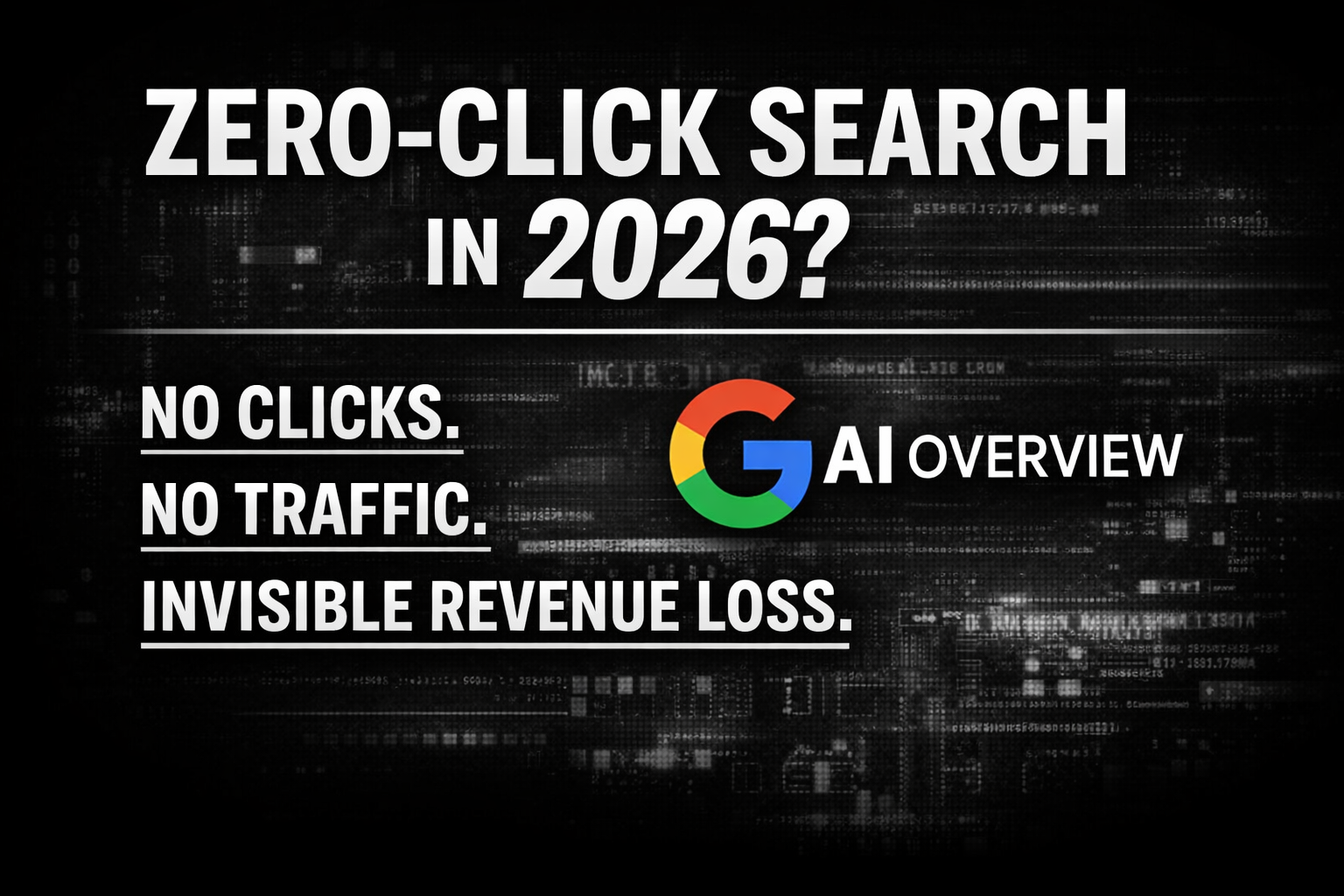 Zero-Click Search
 What is Zero-Click? Solving AI Search Visibility
Zero-click search sessions have quickly moved into the default user experience of the internet. This guide quickly educates how teams can shift strategy for visibility in AI Overviews and chat facing AI interfaces like Chat-GPT and Perplexity customers are researching and comparing products at scale.
 AI Search Strategies
 AI Citation Gap Analysis: Stop Losing Ground to Competitors
Find where AI answers cite competitors, investigate the sources behind them, and turn citation gaps into content updates, outreach and repeatable tracking.

 AI Search Strategies
 Answer Engine Optimization (AEO) Checklist
Use this AI search optimization checklist to improve your content, build brand credibility, and fix technical issues so you can get found in AI answers.